There is a very specific kind of heartbreak that only a gardener understands. You spend weeks nurturing your tiny seedlings on a sunny windowsill, carefully sowing (planting) each seed and watching for those first green shoots. Then, the big day arrives. You move them outside into your garden or onto your balcony, only to come out the next morning and find nothing but a few sticky silver trails and a row of bare stalks.
If you are searching for how to stop slugs eating plants, you are not alone. A typical damp UK summer is perfect for slugs and snails. You can manage them without harsh chemicals that might harm birds, hedgehogs, pets, or children.
Protecting your plants doesn't have to be a full-time job. Organic slug control is about lowering numbers and shielding the plants they love most, not wiping every slug off the planet. A few eco-friendly habits, plus a clearer idea of which slugs actually do the damage, will tip the balance back in your favour.
Understanding Our Slimy Neighbours
Before we look at how to stop them, it helps to understand why slugs and snails are so common in the UK. Our climate is essentially a five-star resort for them. They love the moisture, the mild temperatures, and the abundance of lush, green growth. While it feels like they are out to get us, they actually play a vital role in the garden ecosystem by breaking down decaying matter and turning it into nutrients for the soil.
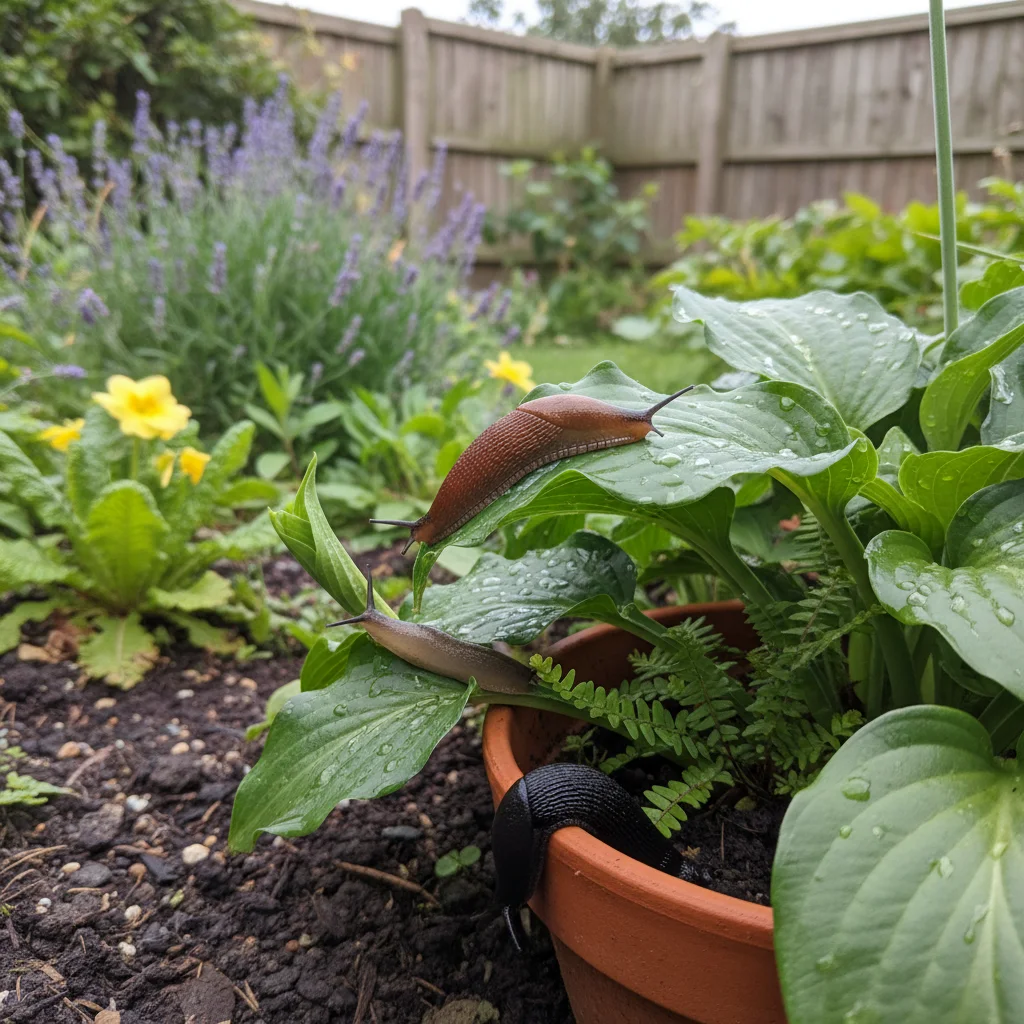
The problem arises when they decide our prize lettuce is more delicious than the old leaves on the ground. Most of the damage is done by a few specific species, such as the small field slug or the larger, darker garden slug. Snails are just as hungry, but because they have shells, they tend to hide in different places, often tucking themselves away in the gaps of a brick wall or under the rims of plastic pots.
You’ll notice that damage is usually worse after a rainy spell or in the early spring when new, tender growth is appearing. This is the time when you need to be most vigilant. By understanding that they are most active at night and love damp, dark hiding places, you can start to make your garden a little less inviting for them and a lot safer for your plants.
Not every slug is the enemy. Large leopard slugs mostly eat rotting matter and even other slugs. The real trouble is usually smaller field slugs and Spanish slugs, which prefer tender lettuce and hostas. Since the UK ban on metaldehyde pellets, ferric phosphate baits are still sold as a “safer” option, but they are easy to overuse around pets and in pots. Barriers, predators, and nematodes are the better first line, especially in small spaces.
Growing in pots? See slug proof containers. Protecting a veg patch? See stop slugs eating vegetables.
Building a Better Barrier
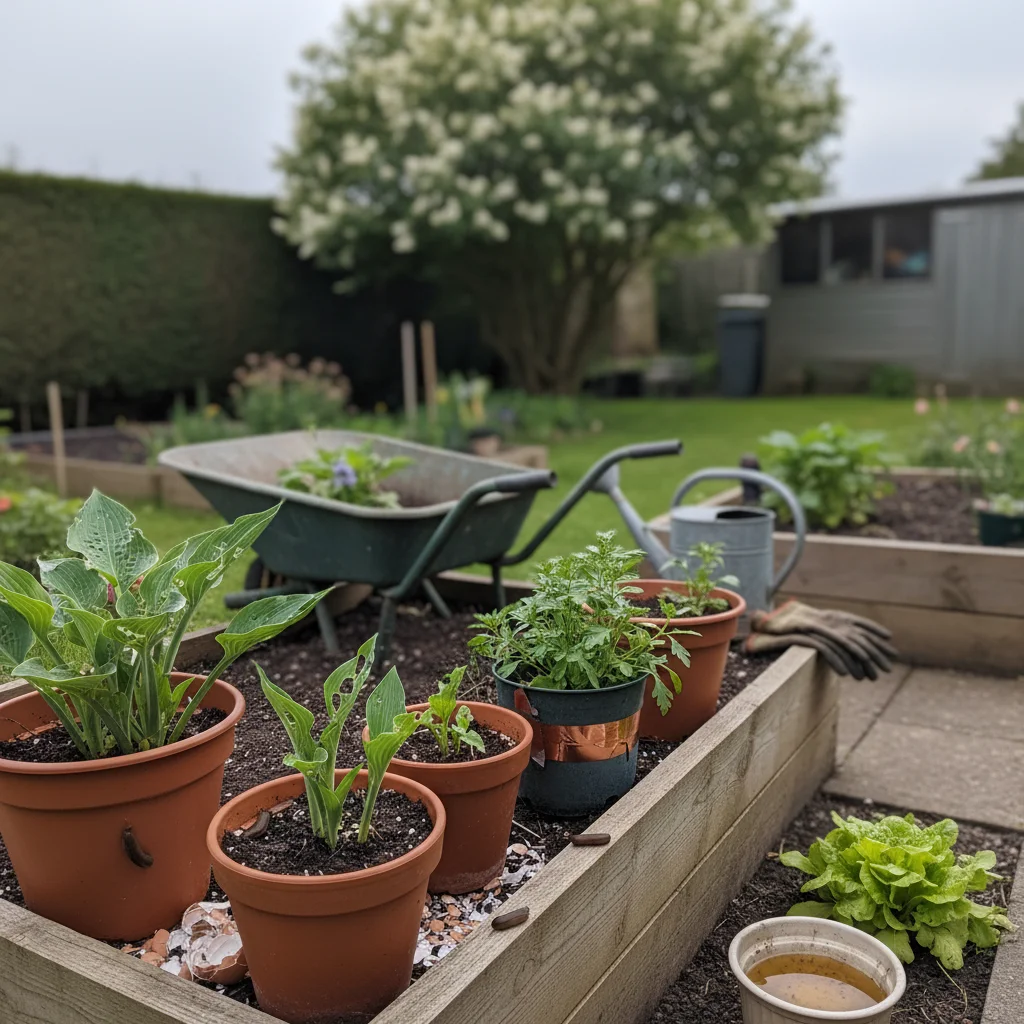
One of the simplest ways to protect a specific plant is to create a physical barrier that slugs and snails find difficult or unpleasant to cross. This is a great approach for beginners because it’s instant and doesn't require any special skills. Copper tape is a classic choice for pots and containers. When a slug touches the copper, it receives a tiny static-like shock that encourages it to turn around.
If you are growing in the ground, you might want to try grit or crushed eggshells. The idea is that the sharp edges are uncomfortable for the slugs to crawl over. However, in my experience on my own plot, these need to be kept very clean and dry to be effective. If they get covered in soil or washed away by a heavy downpour, the slugs will just glide right over them.
Another fantastic option that I’ve found works wonders in small Yorkshire gardens is sheep’s wool pellets. You can buy these in most garden centres. You spread them around the base of your plants, and as they get wet, they swell up into a felt-like mat. Slugs hate the texture because it draws the moisture out of their bodies. As an added bonus, the wool eventually breaks down and adds nitrogen to your soil, helping your plants grow even stronger.
The Magic of Natural Predators
The most effective and sustainable way to control slugs in the long term is to let nature do the hard work for you. In a healthy, balanced garden, there are plenty of creatures that think a slug is a gourmet meal. By making your space more attractive to these predators, you can significantly reduce the slug population without lifting a finger.
Frogs and toads are absolute champions when it comes to slug control. You don’t need a massive lake to attract them; even a small, shallow pond made from an old washing-up bowl can be enough to bring them into your garden. Make sure there are some stones or a ramp so they can get in and out easily. Once they move in, they’ll spend their nights patrolling your flower beds for snacks.
Birds, especially thrushes, are also great allies. You can encourage them by putting out food and water, and by leaving some areas of the garden a little bit "wild." A simple log pile in a quiet corner provides a home for ground beetles, which are another fierce predator of slug eggs. When we stop trying to make our gardens perfectly tidy, we create space for the very creatures that help us keep the pests under control.
Using Nematodes Effectively
If you have a serious slug problem that barriers and birds can’t solve, you might want to consider biological control in the form of nematodes. These are microscopic organisms that occur naturally in the soil. You buy them as a powder, mix them with water, and apply them to your soil using a watering can.
The nematodes seek out the slugs underground and infect them, stopping them from eating within a few days. It sounds a bit like science fiction, but it’s a very safe and targeted method. It doesn't harm humans, pets, or other beneficial insects like bees. It’s particularly effective for protecting root vegetables like potatoes, which slugs often attack beneath the surface where you can't see them.
The key to success with nematodes is timing and temperature. The soil needs to be at least 5°C, which usually means waiting until late spring or early summer in the UK. You also need to keep the soil moist for a couple of weeks after application so the nematodes can move around. It’s a bit more effort than copper tape, but the results can be life-changing for a frustrated gardener.
Plants That Slugs Simply Dislike
One of the smartest things you can do as a beginner is to choose plants that slugs generally find unappealing. While it’s tempting to fill your garden with hostas and delphiniums, these are like magnets for slugs. By mixing in some "slug-proof" varieties, you can ensure your garden stays looking green and healthy even during a wet week.
Slugs usually avoid plants with hairy leaves, strong scents, or tough, leathery foliage. They also tend to stay away from anything that is toxic to them. If you are struggling with holes in your borders, try incorporating some of these reliable favourites that I’ve found stand up well in a typical UK garden:
- Astrantia: These have beautiful, pincushion-like flowers and tough leaves that slugs rarely touch.
- Geraniums: The hardy perennial types (cranesbill) are fantastic ground cover and very resilient.
- Foxgloves: These are classic cottage garden plants that are naturally toxic to slugs.
- Euphorbia: These have a milky sap that acts as a natural deterrent.
- Sedums: Their thick, fleshy leaves are much too tough for most slugs to bother with.
By choosing the right plants from the start, you take a lot of the stress out of gardening. You can still grow the vulnerable things you love, but by surrounding them with these tougher varieties, you make it much harder for the slugs to find their way to the "good stuff."
Strategic Planting for Success
Sometimes, the best way to protect your favourite plants is to give the slugs something else to eat. This is known as "trap cropping" or "sacrificial planting." The idea is to plant something that slugs love even more than your vegetables, and place it a little distance away. French marigolds are a classic choice for this.
I often plant a few marigolds at the edge of my vegetable patch. The slugs flock to the marigolds, leaving my lettuces and beans in peace. Yes, the marigolds might end up looking a bit tatty, but they’ve done their job as a distraction. It’s a much kinder way to manage the problem, and it adds a lovely splash of orange and yellow to your garden at the same time.
Another strategic tip is to grow your seedlings on for a bit longer before planting them out. A tiny, two-leaf lettuce is a one-bite snack for a snail. However, if you keep that lettuce in a pot until it’s a bit bigger and stronger, it has a much better chance of surviving a few nibbles. I like to wait until my plants have at least four or five "true" leaves and a strong root system before they face the world.
Making Your Garden Less Welcoming
You can also reduce slug damage by changing how and when you maintain your garden. Slugs love dampness and shade, so anything you can do to improve airflow and let in more light will help. If your plants are crowded together, it creates a humid microclimate that slugs adore. Try to give your plants a bit of "breathing room" by following the spacing advice on the seed packet.
Watering is another area where a small change makes a big difference. Many people water their gardens in the evening, but this leaves the soil surface damp just as the slugs are waking up and looking for a meal. If you can, try to water in the early morning instead. This gives the surface of the soil time to dry out during the day, making it much harder for slugs to move around at night.
Tidiness also plays a role. While I’m a big fan of leaving some wild areas for predators, you should try to keep the areas immediately around your most vulnerable plants clear of debris. Remove fallen leaves, old pots, and pieces of wood where slugs might hide during the day. By removing their "hotels," you force them to move further away to find shelter, leaving your seedlings safer.
The Nightly Patrol
If you really want to get a handle on your slug population, there is no substitute for the nightly patrol. It might sound a bit strange if you’re new to gardening, but heading out into the garden with a torch after dark is the most direct way to see what’s going on. It’s actually quite a peaceful way to spend ten minutes before bed.
When you go out on a damp evening, you’ll be amazed at how many slugs and snails you can find. You can simply pick them up (wear gloves if you’re squeamish!) and move them to a compost heap or a patch of woodland away from your prize plants. Some people prefer to use beer traps: small containers filled with cheap lager or a mix of water, sugar, and yeast. Place them a few metres away from the plants you want to save, not right beside them, or you will draw more slugs toward the crop. Keep the rim about an inch above the soil so ground beetles do not fall in.
- Go out after 9 PM: This is when they are most active.
- Check under leaves: Look at the undersides of your most vulnerable plants.
- Look at the pots: Check the rims and bases of any containers.
- Use a dim light: A very bright torch can sometimes make them retreat.
- Be consistent: Doing this for just a few nights in a row can make a huge difference.
While it’s not the most glamorous part of gardening, it is incredibly effective. It gives you a chance to see exactly which plants are being targeted and which methods are working. Plus, it’s a great way to spot other garden visitors, like the occasional hedgehog or a beautiful night-flying moth.
Starting Small and Staying Positive
The most important thing to remember is that you don’t have to win every battle to have a successful garden. Even the most experienced gardeners in the UK lose a few plants to slugs every year. It’s part of the rhythm of growing things. If you lose a row of carrots, don't be discouraged—just sow some more and try a different protection method next time.
Start small by picking one or two methods that feel manageable for you. Maybe you’ll start by putting copper tape on your pots, or perhaps you’ll commit to watering in the morning instead of the evening. Every little change helps create a more resilient garden. Over time, you’ll find the balance that works for your specific space, whether it’s a tiny balcony in the city or a breezy allotment.
Gardening is a journey of learning, and the slugs are just one of the teachers along the way. They remind us to pay attention to the soil, to the weather, and to the wider world of nature that we are a part of. With a bit of patience and these eco-friendly tips, you’ll soon find that you’re harvesting more than the slugs are, and there’s no better feeling than that.
The next time you see a dark cloud gathering, don't worry about your plants. Instead, take it as a prompt to check your barriers or perhaps plan your first nightly patrol. You have all the tools you need to protect your hard work, and before you know it, those tiny seedlings will be thriving, flower-filled plants that bring you joy every single day.