We have all been there. You spend a weekend at the garden centre, pick out the most beautiful lavender or a tray of healthy-looking tomato starts, and get them home with high hopes. You dig a hole, tuck them in, and wait for the magic to happen. But a few weeks later, the lavender is looking sad and yellow, or the tomatoes just aren't putting on any height. Often, the culprit isn't your gardening skills or even the British weather—it is the soil.
Think of your soil as the engine room of your garden. If the engine isn't well-maintained or doesn't have the right fuel, the whole thing struggles to move. In my years growing veg on a small Yorkshire plot, I have learned that looking after the dirt is actually more important than looking after the plants. If the soil is happy, the plants usually take care of themselves.
Understanding what you are working with is the first step to a thriving garden. You don't need a degree in geology to figure it out, either. Whether you have a tiny urban patio with a few raised beds or a sprawling allotment, the principles are the same. We want to create a home for our plants that is full of nutrients, holds just enough water, and allows roots to breathe.
Finding Out What You Have
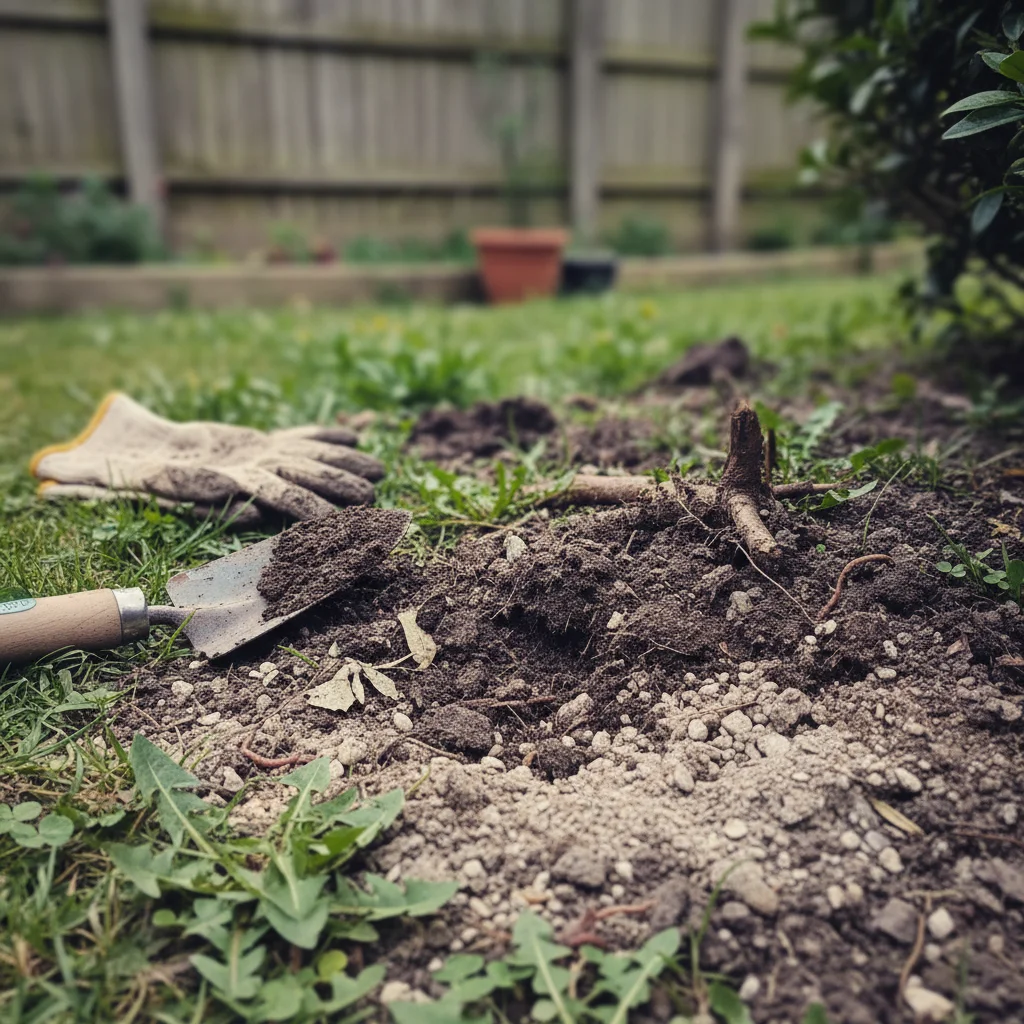
Before you start adding fertilisers or buying new plants, you need to know what kind of soil is currently under your fingernails. Most UK gardens fall into one of a few categories: clay, sand, silt, or the "holy grail" known as loam. You might also have chalky or peaty soil depending on where you live in the country.
The easiest way to tell is the "squeeze test." Take a handful of damp soil and give it a firm squeeze in your palm. If it stays in a solid, sticky lump and feels greasy, you likely have clay. If it falls apart the moment you open your hand, it is sandy. If it holds its shape but crumbles easily when poked, you are lucky enough to have loam.
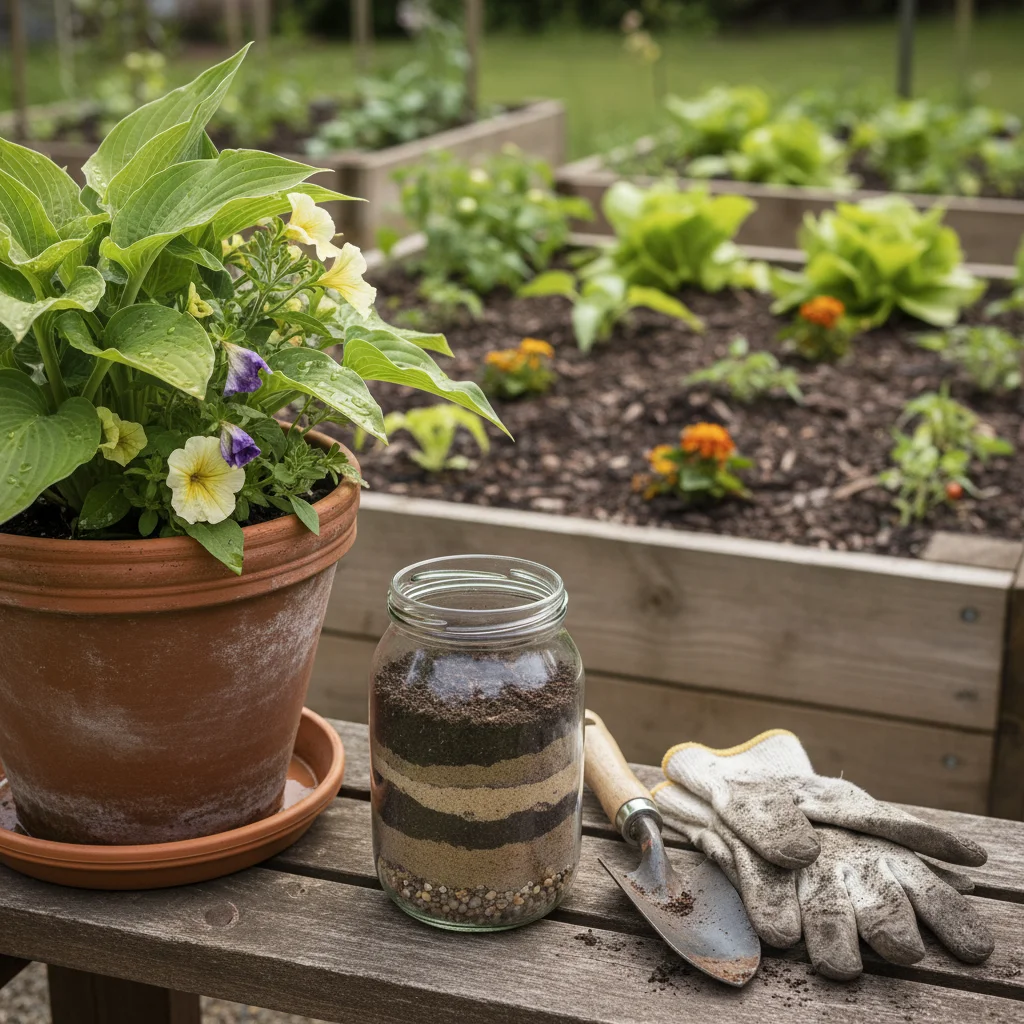
If you want to be a bit more scientific without spending a penny, you can try the jar test. This is a brilliant activity to do with kids, but it’s just as useful for us grown-ups to see exactly what is going on underground. It helps you see the different layers of particles that make up your garden's foundation.
- Find a clean glass jam jar and fill it about halfway with a sample of your soil.
- Fill the rest of the jar with water, leaving a small gap at the top.
- Add a single drop of washing-up liquid to help the particles separate.
- Put the lid on tight and shake the jar vigorously for a minute until everything is mixed.
- Set the jar on a flat windowsill and leave it completely still for 24 hours.
- Look at the layers: sand settles first at the bottom, then silt, then clay at the top.
Living with Heavy Clay
If you found a thick layer of clay in your jar, don't despair. Clay is actually very fertile soil because it holds onto nutrients well. The problem is that the particles are so tiny and packed so tightly together that water has a hard time draining away. In a typical UK winter, clay soil can become a soggy, cold mess that drowns plant roots.
In the summer, clay does the opposite. It bakes hard and cracks, making it difficult for water to get down to where it is needed. I remember my first year gardening in heavy clay; I felt like I needed a pickaxe just to plant a few bulbs. It can be back-breaking work, but clay is actually a powerhouse once you learn how to manage it.
The secret to clay is never to work it when it’s soaking wet. If you walk on it or dig it when it’s saturated, you squeeze all the air out, turning it into something resembling concrete. Instead, focus on adding "organic matter"—which is just a fancy way of saying rotted plant stuff like compost or manure. Over time, this helps the tiny clay particles clump together, creating bigger gaps for air and water to move through.
Making the Most of Sandy Soil
Sandy soil is the complete opposite of clay. It is made of large, gritty particles that don't stick together. This means it drains incredibly fast. While this is great because it warms up quickly in the spring—letting you get your seeds in the ground earlier—it also means that nutrients wash away every time it rains.
If you have sandy soil, you might find yourself watering your pots and borders constantly during a dry spell. You’ll also notice that your plants might look a bit "hungry" or pale because the rain has carried all the goodness down past the roots. It’s like trying to fill a bucket with a hole in the bottom.
To fix this, we use the same solution as we do for clay: organic matter. Adding plenty of well-rotted manure or garden compost helps the sand hold onto moisture like a sponge. It also adds the "glue" needed to keep those nutrients in place. If you have a sandy garden, mulching is your best friend. A thick layer of compost on top of the soil in spring will stop the sun from drying it out too fast.
The Dream of Loam and Silt
Loam is what every gardener dreams of. It is a near-perfect mix of sand, silt, and clay. It holds moisture but drains well, it is full of nutrients, and it is easy to dig. If you have loam, your main job is simply to keep it that way by not over-digging it and adding a little bit of compost every year to replace what the plants use up.
Silt is the middle ground. It feels smooth and silky to the touch, almost like flour when it’s dry. It is more fertile than sand but can still get compacted if you walk on it too much. Silt is common near old riverbeds or in valleys. It is lovely to work with, but like all soils, it benefits from a regular "feed" of organic material to keep its structure healthy.
No matter which of these you have, the goal is always to move closer to that loamy texture. You don't need to buy expensive topsoil to achieve this. Most of the time, the "waste" from your kitchen and garden is exactly what you need to transform your ground. It’s a slow process, but seeing your soil go from grey and lifeless to dark and crumbly is one of the most satisfying parts of gardening.
Why pH Matters for Your Plants
You might have heard people talking about "acid" or "alkaline" soil. This is the pH level, and it affects how easily your plants can "eat" the nutrients in the ground. Most garden plants are happy in a neutral soil, but some are very picky. For example, blueberries and azaleas love acid soil, while clematis and brassicas (like broccoli) often prefer things a bit more alkaline.
In the UK, if you have chalky soil, it will be alkaline. You’ll know you have this if you see white bits of flint or lime in the earth. Chalky soil drains very well but can be quite shallow. On the other hand, if you live near moorland or pine forests, your soil might be peaty and acidic. Peaty soil is dark, holds lots of water, and is fantastic for certain types of fruit.
You can buy a simple pH testing kit from any garden centre for a few pounds. It usually involves mixing a bit of soil with a testing liquid and comparing the colour to a chart. It’s a great way to avoid the heartbreak of planting something that simply cannot survive in your specific ground. If you have alkaline soil and really want to grow acid-loving plants, it is often easier to grow them in pots using "ericaceous" compost rather than trying to change the pH of your entire garden.
The Magic of Organic Matter
I’ve mentioned organic matter a few times now, and that’s because it truly is the "magic' fix for almost every soil problem. Whether your soil is too wet, too dry, too hard, or too thin, adding rotted plant material will improve it. It feeds the worms and the microscopic fungi that do the heavy lifting for us underground.
You don't have to spend a fortune on bags of compost from the shop. In fact, making your own is one of the best things you can do for your plot. It turns your potato peelings and grass clippings into "black gold." If you don't have space for a compost bin, many local councils or farms sell well-rotted manure for a very low price. Just make sure it is "well-rotted"—it should look like dark soil and not smell like a farmyard.
- Garden compost: Great for all-round feeding and improving texture.
- Well-rotted manure: Excellent for hungry veg like pumpkins and roses.
- Leaf mould: Made from fallen leaves, this is the best conditioner for soil structure.
- Mushroom compost: Good for acidic soils as it often contains lime.
- Green manures: Plants like clover that you grow specifically to dig back into the earth.
Better Soil with Less Effort
One of the best things I ever did for my garden was moving to a "no-dig" approach. Traditionally, we were told to dig over the soil every winter, turning it over with a spade. But we now know that this actually damages the soil's natural structure and wakes up weed seeds that were happily sleeping deep underground.
Instead of digging, you simply spread a thick layer of organic matter (about 5cm or 2 inches) over the surface of your beds once a year. The worms do all the work for you, pulling that goodness down into the soil. This keeps the "soil food web" intact and makes your life much easier. It’s perfect for busy people or those of us who find heavy digging a bit much for our backs.
If you are starting a new bed on top of grass, you don't even need to dig the turf out. You can lay down plain brown cardboard (remove the plastic tape first!) to smother the weeds and grass, then pile your compost on top. By the time you are ready to plant, the cardboard will have rotted away, and the soil underneath will be soft and full of worms.
Taking the First Step
Improving your soil isn't a one-time job; it’s a bit of a journey. But don't let that overwhelm you. You don't have to fix the whole garden this weekend. Start with one small flower bed or a single raised bed. Once you see the difference in how the plants grow—how much greener the leaves are and how much bigger the harvests become—you’ll be hooked on the "soil-first" way of gardening.
The best time to start is right now. If it’s autumn, start collecting leaves to make leaf mould. If it’s spring, get a layer of compost down before the weeds take hold. Your plants will thank you for it, and you'll find that gardening becomes much more about enjoying the growth and much less about struggling with the ground.
If you’re ready to get started, why not head outside and try the squeeze test? Knowing whether you’re dealing with clay or sand is the first step toward the best garden you’ve ever had. Once you know what you have, you can start choosing the plants that will truly love living in your garden.