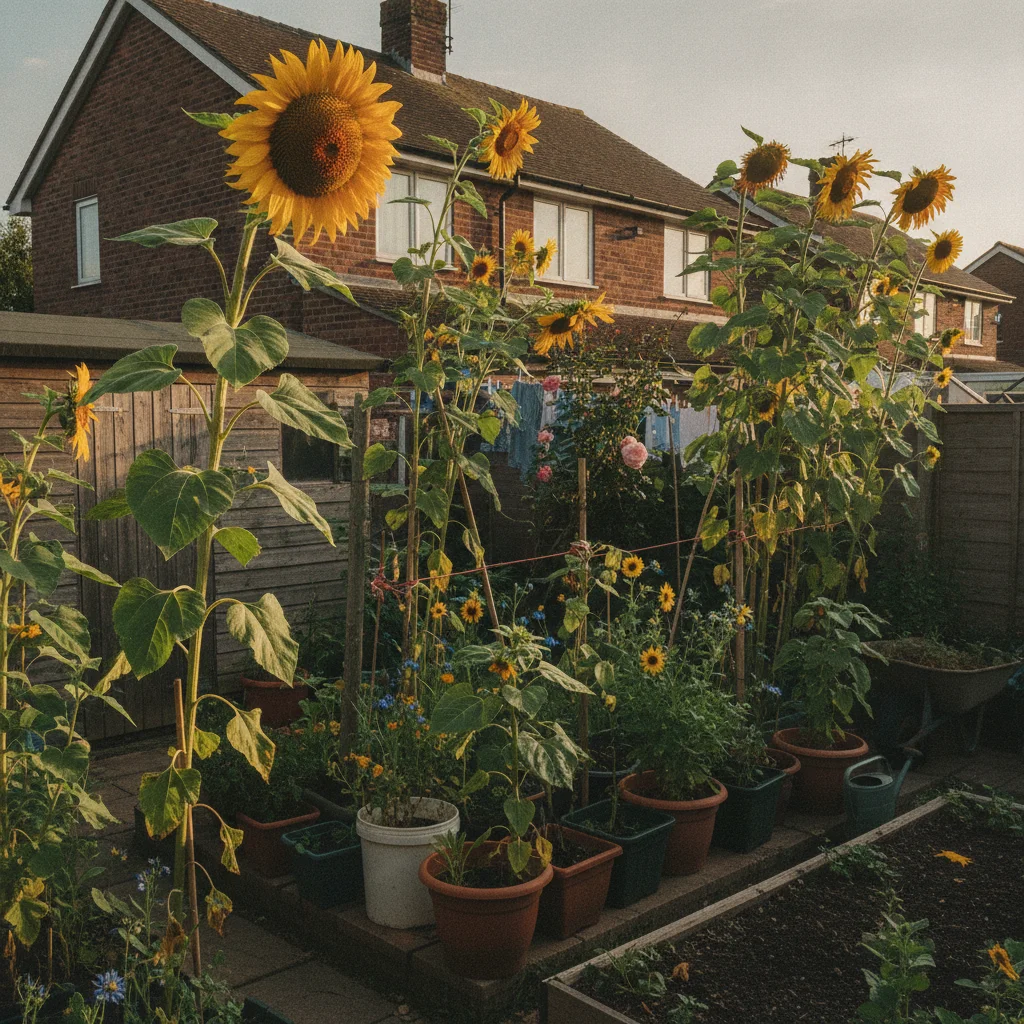
There is something undeniably joyful about a sunflower that forces you to crane your neck just to see the face of the bloom. In a small urban garden or on a sunny balcony, these giants provide more than just a splash of colour; they offer a sense of wonder that reminds us why we started gardening in the first place. You don't need a sprawling country estate or a massive allotment to achieve this. Even with a few large pots and a bit of vertical ambition, you can grow sunflowers that will eventually tower over your garden fence and impress everyone on your street.
Growing giant sunflowers in the UK comes with its own set of unique challenges, from our unpredictable spring frosts to the gusty winds that can whip through city streets. However, by understanding the specific needs of these heavy feeders and choosing the right varieties, you can turn a tiny seed into a three-metre-tall behemoth in just a few months. It is one of the most rewarding projects for any city gardener because the results are so visible and so rapid.
We often think of sunflowers as simple plants that take care of themselves, but if you want to reach record-breaking heights, you need a strategy. It starts with the soil and ends with a bit of structural engineering to keep those heavy heads from drooping. Whether you have a small patch of soil by the back door or a south-facing patio, these tips will help you reach new heights this summer.
Choose the right seeds for giant results
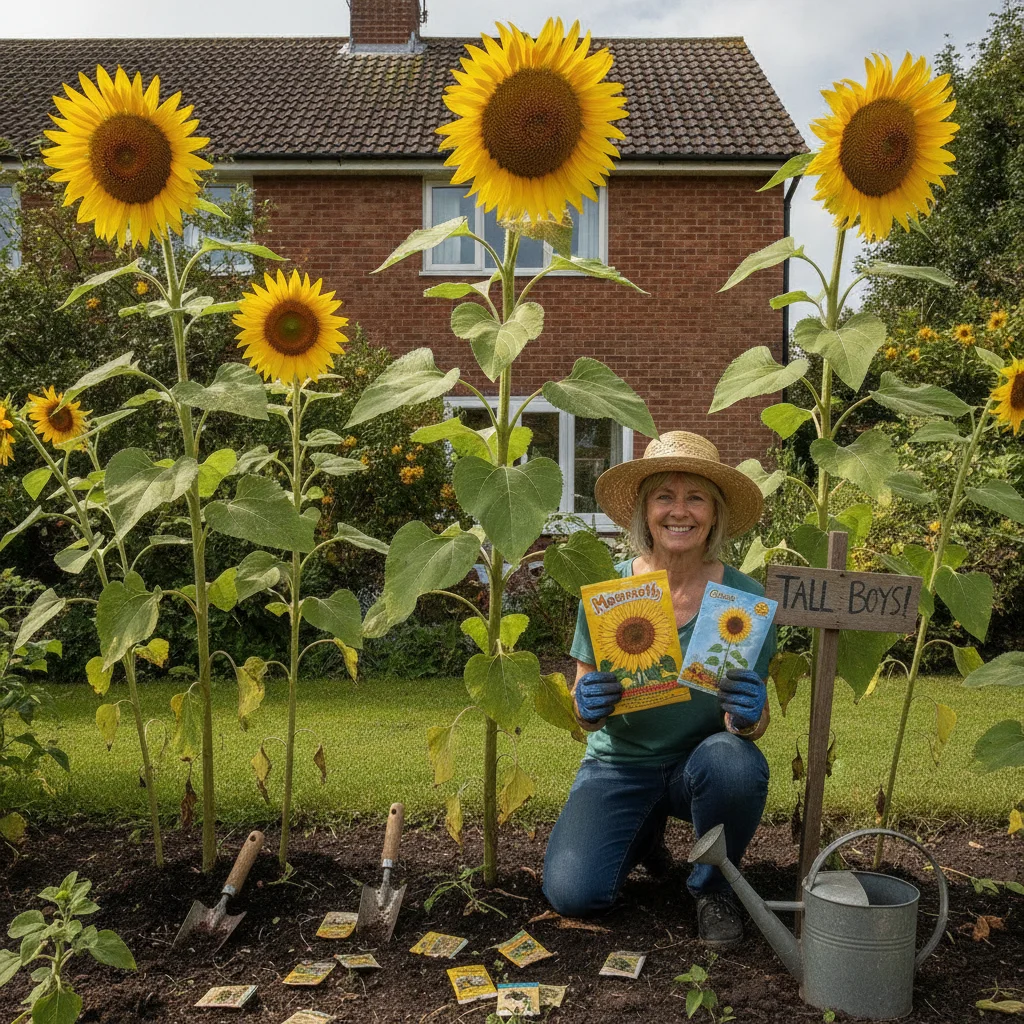
If you want a sunflower that reaches the first-floor windows, you cannot simply pick up a generic packet of seeds from the supermarket. Many sunflowers are bred to be "dwarf" varieties, specifically designed for small pots and table displays. While they are lovely, they will never give you the height you are looking for. You need to look for specific "giant" varieties that have the genetic potential to keep growing skyward.
In the UK, we have access to some fantastic heritage and modern varieties that thrive in our climate. When you are browsing seed catalogues or your local garden centre, look for names that suggest scale. These plants are bred to produce thick, sturdy stalks that can support the massive weight of a flower head the size of a dinner plate.
- Mongolian Giant: One of the biggest available, often reaching over 4 metres with huge seeds.
- Russian Giant: A classic choice that is very reliable in the UK and produces stunning yellow petals.
- Titan: Known for having exceptionally large flower heads alongside its impressive height.
- American Giant: This variety is bred for strength and can withstand slightly breezier conditions.
- Tall Single: A simple, elegant option that is fantastic for pollinators and very easy to grow.
When to start your sunflower journey
Timing is everything when it comes to the British growing season. While it is tempting to get seeds in the ground as soon as the first spring sun appears in March, patience usually pays off. Sunflowers are incredibly sensitive to frost. A single cold night can kill a young seedling, so we need to work around the last frost dates, which vary depending on where you are in the UK.
For those of us in London or the South, you can usually start seeds indoors in mid-April. If you are further north, waiting until early May is a safer bet. I always recommend starting your giants in individual pots rather than sowing them directly into the ground. Urban gardens can be haven for slugs and snails, and a tiny sunflower sprout is their favourite midnight snack. By growing them on a windowsill or in a small cold frame until they are about 20cm tall, you give them a much better chance of survival.
Once the risk of frost has completely passed—usually by late May—you can move your sunflowers to their final home. If you are planting them in the ground, make sure the soil has warmed up. If you are using containers, ensure they are moved to the sunniest spot available. Sunflowers need at least six to eight hours of direct sunlight every day to reach their maximum potential.
Growing giants in pots and small spaces
Many people assume that you need a deep border to grow a giant sunflower, but that isn't strictly true. You can grow a very impressive specimen in a container, provided the container is large enough. For a sunflower intended to grow over two metres tall, you need a pot that holds at least 15 to 20 litres of compost. A large bucket with drainage holes drilled in the bottom works perfectly if you are on a budget.
The main constraint with pot-grown sunflowers is stability and nutrients. Because the plant will become top-heavy, a lightweight plastic pot might tip over in the wind. I often recommend placing a few heavy stones at the bottom of the pot before adding your compost. This lowers the centre of gravity and helps keep the plant upright when it eventually reaches its full height.
In a small garden, we also have to consider the "rain shadow" effect. If your pots are tucked up against a wall or a fence, they might not get as much rainwater as you think. You will need to be diligent with the watering can, especially during a dry British July. Pot-grown plants dry out much faster than those in the ground, and a thirsty sunflower will quickly wilt and lose its lower leaves.
The feeding schedule for massive growth
To grow something taller than a person in just ten weeks, the plant needs an enormous amount of energy. Think of your sunflower as a high-performance athlete; it needs the right fuel at the right time. Start with a high-quality, peat-free multi-purpose compost. Before planting, I like to mix in a handful of slow-release fertiliser granules or some well-rotted manure if you can get hold of it.
Once the plant is about a metre tall, it will start to get really hungry. This is the point where you should start a weekly liquid feeding routine. A high-potash feed, like the kind you use for tomatoes, is ideal. Potash encourages strong stalk growth and helps the plant develop that massive flower head later in the season.
- Week 1-4: Focus on nitrogen-rich seaweed feed to build strong green leaves.
- Week 5-8: Switch to a balanced feed to support the rapidly lengthening stalk.
- Week 9 onwards: Use tomato feed every 7 days to encourage the flower to open.
- Daily: Check soil moisture; a giant sunflower can drink several litres of water a day.
- Monthly: Add a mulch of compost to the surface of the pot or soil to retain moisture.
Protecting your sunflowers from city winds
One of the biggest heartbreaks for an urban gardener is waking up after a stormy night to find your prize sunflower snapped in half. In the city, wind can funnel between buildings, creating surprisingly strong gusts even on relatively calm days. Because giant sunflowers have such large leaves, they act like sails, catching the wind and putting immense pressure on the stalk.
The solution is to stake your plants early and often. Don't wait until the plant is leaning; get a sturdy bamboo cane or a wooden stake in the ground at the time of planting. As the sunflower grows, use soft garden twine to tie the stalk to the stake every 30cm or so. Make sure the ties are loose enough to allow the stalk to thicken—sunflower stems can get as wide as a human wrist—but tight enough to provide support.
If you are growing against a fence, you can use eyelets and wire to create a support system that the sunflower can be tied to directly. This is often more secure than a single cane. Another trick for balcony gardeners is to use the railings as a support. Just be mindful of your neighbours; a giant sunflower head nodding over someone else’s balcony might be a lovely surprise, but the falling seeds and petals later in the year can be messy.
Keeping pests away from your prize blooms
In the UK, the number one enemy of the sunflower is the slug. They seem to have a sixth sense for when a sunflower seedling has been planted out. To protect your hard work, try using copper tape around the rim of your pots or creating a barrier of crushed eggshells or grit around the base of the plant. If you are gardening in a small space, "night patrols" with a torch to manually remove slugs can be incredibly effective.
As the plant grows taller, you might notice aphids (greenfly) clustering around the growing tip. While a few aphids won't kill a giant sunflower, a heavy infestation can distort the growth and stunt the plant. A quick blast with a garden hose or a spray of diluted dish soap is usually enough to clear them off. Encourage ladybirds into your garden, as they are natural predators that will do the hard work for you.
Later in the summer, you might see a white, dusty coating on the leaves. This is powdery mildew, a common fungal issue in the UK when the weather is warm and humid. It usually starts at the bottom of the plant where air circulation is poorest. To prevent this, try to water the soil directly rather than wetting the leaves, and ensure there is enough space between your plants for air to flow freely.
Preparing for the final bloom
As your sunflower approaches its peak, you will see the large green bud begin to turn downwards. This is perfectly normal; the weight of the developing seeds is significant. At this stage, the plant will stop growing upwards and put all its energy into the flower. You might notice the very top of the plant tracking the sun across the sky from east to west—a phenomenon known as heliotropism.
Once the petals begin to unfurl, the display is truly spectacular. This is the moment to take your photos and show off your hard work. Beyond the visual appeal, your giant sunflower is now a vital resource for local wildlife. Bees and hoverflies will flock to the central disc to collect nectar and pollen, which is especially important in urban areas where forage can be scarce.
Don't be tempted to cut the head off as soon as the petals start to fade. If you leave the flower head on the stalk, the seeds will ripen and provide a high-energy feast for birds like goldfinches and tits. In a city garden, watching the birds acrobatically cling to a giant sunflower head to pull out the seeds is just as much fun as watching the plant grow in the first place.
Growing giant sunflowers is a brilliant way to make a big impact in a small space. It proves that you don't need acres of land to grow something record-breaking and beautiful. By following these simple steps—choosing the right seeds, feeding heavily, and providing sturdy support—you can transform your patio or garden into a vertical forest of gold. Now is the perfect time to grab a packet of seeds and start your own race to the sky.