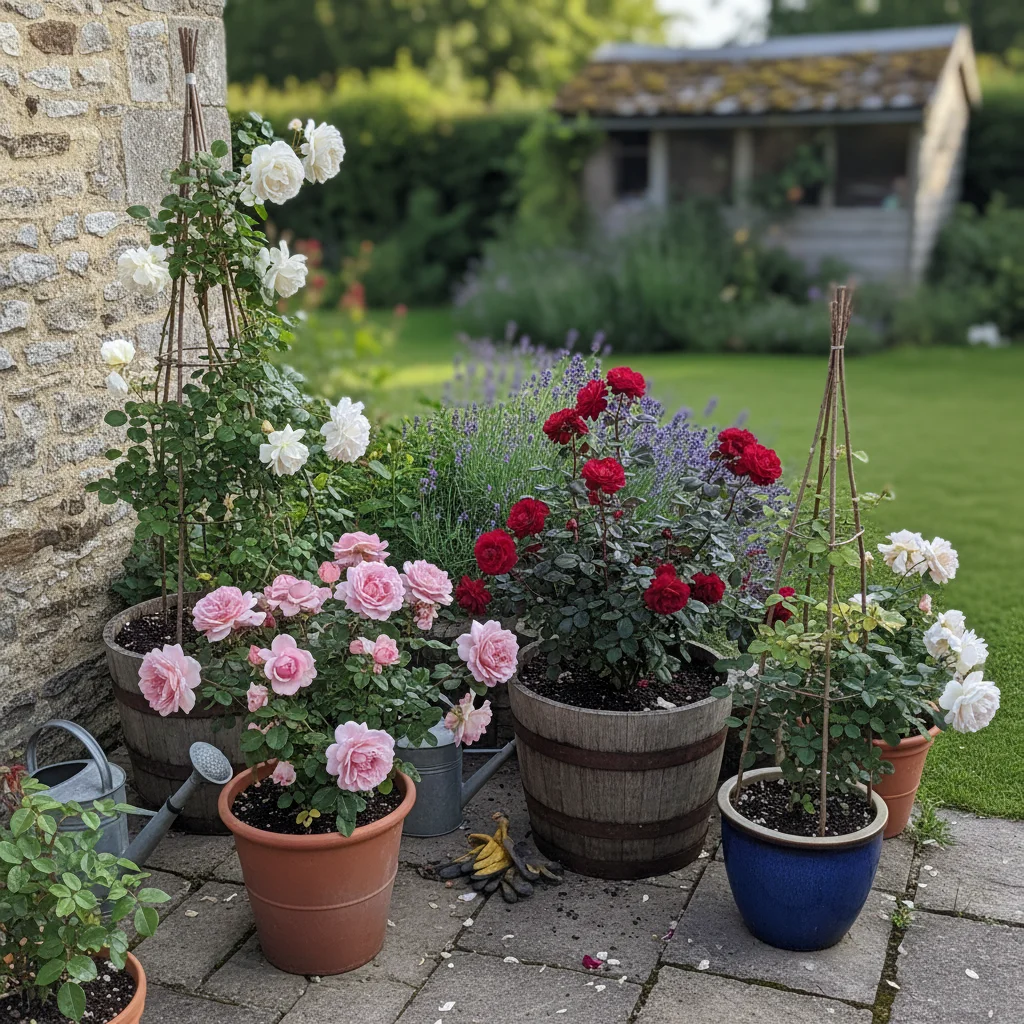
We often associate roses with sprawling English country estates, climbing over ancient stone walls or filling massive herbaceous borders. But for those of us living in the city, with nothing more than a balcony, a small patio, or a paved courtyard, that dream can feel a little out of reach. I used to think the same until I realised that roses are actually incredibly tough and perfectly happy to live in a pot if you treat them right.
You don’t need a massive lawn or a potting shed to enjoy the scent of a fresh bloom on a June morning. Whether you have a sunny balcony in South London or a tiny basement lightwell, you can grow roses that look just as good as those in a professional catalogue. The secret isn't in the size of your garden, but in choosing the right variety and staying on top of a few simple urban gardening habits.
Growing in containers actually gives us a bit of an advantage. We can control the soil quality perfectly, move the pots to catch the best of the British summer sun, and keep them away from the worst of the wind. If you’ve been hesitant to try roses because you lack space, this is your sign to grab a trowel and get started.
Choosing the Right Rose for Your Space
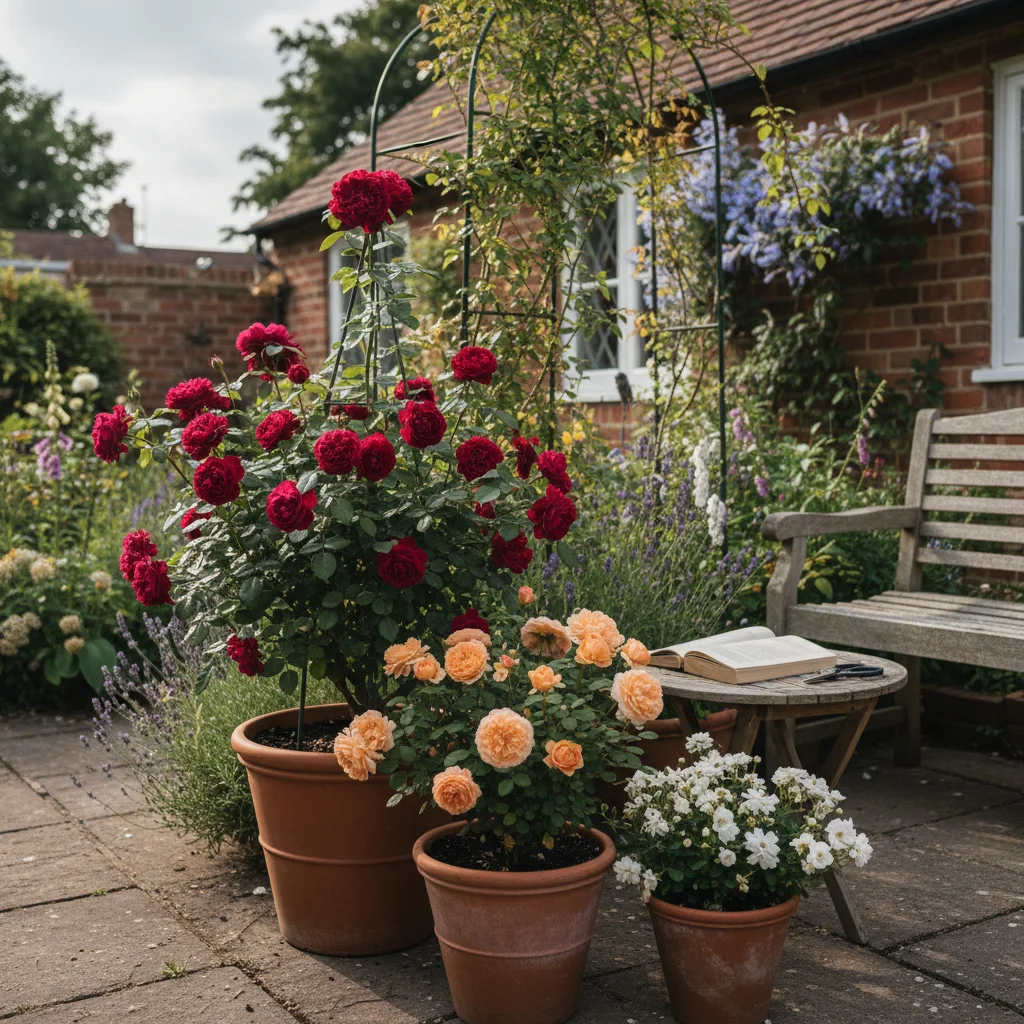
The most common mistake urban gardeners make is picking a rose based solely on a pretty picture without checking how big it actually gets. A vigorous climbing rose will quickly outgrow a standard pot and become a tangled, unhappy mess on a small balcony. For containers, we want varieties that are naturally compact or specifically bred for smaller footprints.
Patio roses and miniature roses are the obvious choices, usually staying under 50cm in height. However, don't overlook "ground cover" roses or smaller floribundas, which offer a more classic look while remaining manageable. Many modern breeders now offer "balcony" ranges specifically designed for the constraints we face in the city.
When you are browsing your local garden centre or ordering online, look for the Royal Horticultural Society (RHS) Award of Garden Merit. This tells you the plant is reliable and performs well in UK conditions. Since we are often dealing with less-than-ideal light in built-up areas, choosing a disease-resistant variety is essential to keep your foliage looking green and healthy.
Top Rose Varieties for Containers
If you are looking for specific names to search for, these varieties are tried and tested in smaller pots and urban settings:
- Flower Carpet Roses: These are incredibly tough, disease-resistant, and come in various colours like pink, gold, and white.
- Sweet Dream: A beautiful apricot-coloured patio rose that stays compact and flowers repeatedly throughout the season.
- The Alnwick Rose: A David Austin variety that works well in larger pots if you want that classic, multi-petalled English rose look.
- Nice Day: A "patio climber" that is perfect if you have a trellis on a balcony wall but don't want a monster plant.
- Little Flirt: A vibrant orange and yellow miniature rose that fits perfectly on a sunny windowsill or small bistro table.
Selecting the Perfect Pot
In a small garden or on a balcony, the container is just as important as the plant itself. Roses have deep taproots, which means they need more depth than your average bedding plant. A shallow pot will lead to a stunted rose that dries out far too quickly in the summer heat.
Aim for a pot that is at least 40cm deep and 40cm wide for most patio varieties. If you are growing a larger shrub rose, you might need something even bigger. Material matters too; terracotta looks beautiful and traditional, but it is heavy and porous, meaning it dries out fast. If you are on a high-floor balcony with weight limits, lightweight glass-fibre or high-quality plastic pots are a much smarter choice.
Drainage is the one thing you cannot compromise on. Roses hate "wet feet," and sitting in waterlogged soil over a cold British winter is a quick way to kill them. Ensure your pot has large drainage holes at the bottom. We always recommend "pot feet" or even just a few flat stones to lift the container off the ground, allowing water to escape freely.
The Best Potting Mix for Success
You might be tempted to use whatever bag of multi-purpose compost is on sale, but roses are hungry plants that need something more substantial. In a container, nutrients are washed out every time you water, so the initial soil quality is vital. We always recommend using a loam-based compost like John Innes No. 3.
John Innes No. 3 is heavier and holds onto nutrients and moisture much better than peat-free multi-purpose mixes. Because it contains real soil, it also adds some much-needed weight to the pot, which prevents your roses from blowing over during a gusty autumn day. It provides the structural integrity that rose roots love.
If you want to give your rose the best possible start, mix in a handful of well-rotted manure or a dedicated rose fertiliser at the bottom of the pot. Just make sure the roots aren't sitting directly on the fertiliser, as this can scorch them. A little bit of grit mixed in can also help with drainage, especially if you live in a particularly rainy part of the UK.
How to Plant Your Rose
Once you have your pot and your soil ready, planting is a straightforward process. If you’ve bought a "container-grown" rose, it can be planted at any time of year, though spring or autumn is usually best. If you have a "bare root" rose—which is often cheaper and arrives looking like a bunch of sticks—you’ll need to plant it between November and March.
Start by soaking the root ball in a bucket of water for about half an hour before planting. Fill the bottom of your pot with your John Innes mix, then place the rose in the centre. You want the "union"—the knobbly bit where the stems meet the roots—to be just below the surface of the soil.
Firm the soil down gently with your hands to remove any air pockets, but don't stomp it down too hard. Leave a couple of inches of space between the top of the soil and the rim of the pot. This "watering gap" ensures that when you water the plant, the liquid doesn't just spill over the sides before it can soak in.
Watering and Feeding in the City
Watering is where most urban rose growers struggle. Pots dry out significantly faster than garden beds, and the "urban heat island" effect means city balconies can get incredibly hot. During a dry British summer, a rose in a pot might need watering every single day, sometimes even twice if it's particularly windy.
The best way to check is the finger test. Stick your finger a couple of inches into the soil; if it feels dry, it’s time to water. Always aim for the base of the plant rather than the leaves. Wetting the foliage can encourage fungal diseases like black spot, which spreads quickly in the humid air between city buildings.
Feeding is equally important because roses are "gross feeders," meaning they consume a lot of energy to produce those beautiful blooms. Start feeding with a liquid rose fertiliser every fortnight from late spring until the end of summer. This consistent supply of potassium will keep the flowers coming back all the way into September or October.
Pruning for Beginners
Pruning often scares people, but it’s actually very hard to kill a rose by cutting it. The goal of pruning is simply to remove dead wood and encourage the plant to grow in a shape that allows air to circulate. In a small space, pruning also helps keep the plant from becoming an obstacle on your patio.
The best time to prune is late winter, usually February or March, just as the buds are starting to swell but before the leaves appear. Use a sharp pair of secateurs to make clean cuts. You want to cut about 5mm above a bud, sloping the cut away from the bud so that rainwater runs off rather than sitting on it.
For patio roses, you can simply cut the whole plant back by about a third to a half of its height. Remove any thin, spindly stems that look like they won't support a flower. If you see any stems crossing over and rubbing against each other, remove one of them to prevent wounds where disease can enter.
Managing Pests and Disease
In a city environment, roses can face a few specific challenges. Lack of airflow in enclosed courtyards can lead to powdery mildew, while the warmth of the city often means aphids (greenfly) appear earlier than they do in the countryside. The key is to catch these issues early before they take over your small space.
Aphids can usually be dealt with by a sharp blast of water from a spray bottle or simply squashing them with your thumb if you aren't squeamish. If you see black spots appearing on the leaves, pick them off and put them in the bin—never the compost heap. This prevents the fungal spores from overwintering and returning next year.
We also love to encourage a bit of nature to help us out. Even on a high balcony, ladybirds and hoverflies will find your roses if you don't use harsh chemical sprays. These beneficial insects are the best pest control you can get, and watching a ladybird clear a stem of aphids is one of the small joys of urban gardening.
Winter Care for Pots
While roses are generally hardy, their roots are more vulnerable when they are in a pot above ground. In a very cold winter, the soil in a container can freeze solid, which can damage the roots. If a heavy frost is forecast, you might want to wrap your pots in a bit of bubble wrap or hessian to provide some insulation.
Move your pots to the most sheltered part of your balcony or patio, ideally tucked against a house wall which will radiate a little bit of warmth. Make sure the pots are still lifted on feet so that winter rain can drain away. A waterlogged, frozen pot is the most common cause of rose failure over the winter months.
You don't need to worry about the bare branches looking a bit sad in January. This is just the plant resting. Once the spring sun starts to warm up your patio, you’ll see those first red shoots appearing, promising another summer of incredible fragrance and colour right outside your door.
Essential Kit for Urban Rose Growing
You don't need a shed full of tools to keep your roses happy. A few basics will see you through the whole year:
- Sharp Secateurs: Essential for clean pruning and deadheading spent blooms.
- Long-Handled Trowel: Useful for planting and refreshing the top layer of soil.
- A Sturdy Watering Can: Ideally with a "rose" attachment (the nozzle with holes) for gentle watering.
- Rose Fertiliser: Either a slow-release granular type or a liquid feed for the flowering season.
- Gardening Gloves: Roses have thorns, and city skin isn't always as tough as we'd like to think!
- Pot Feet: To keep your containers off the ground and ensure perfect drainage.
Growing roses in pots is one of the most rewarding things you can do with a small outdoor space. There is something uniquely satisfying about sitting on a balcony with a coffee, surrounded by the scent of flowers you grew yourself. It turns a simple concrete area into a proper garden, proving that you don't need an acre of land to be a "real" gardener.
If you start with one healthy plant in a good-sized pot, you’ll soon find yourself wanting more. The beauty of container gardening is that you can grow your collection one pot at a time, creating a lush, fragrant sanctuary in the heart of the city. Pick out a variety this weekend and give it a go—your future summer evenings will thank you for it.