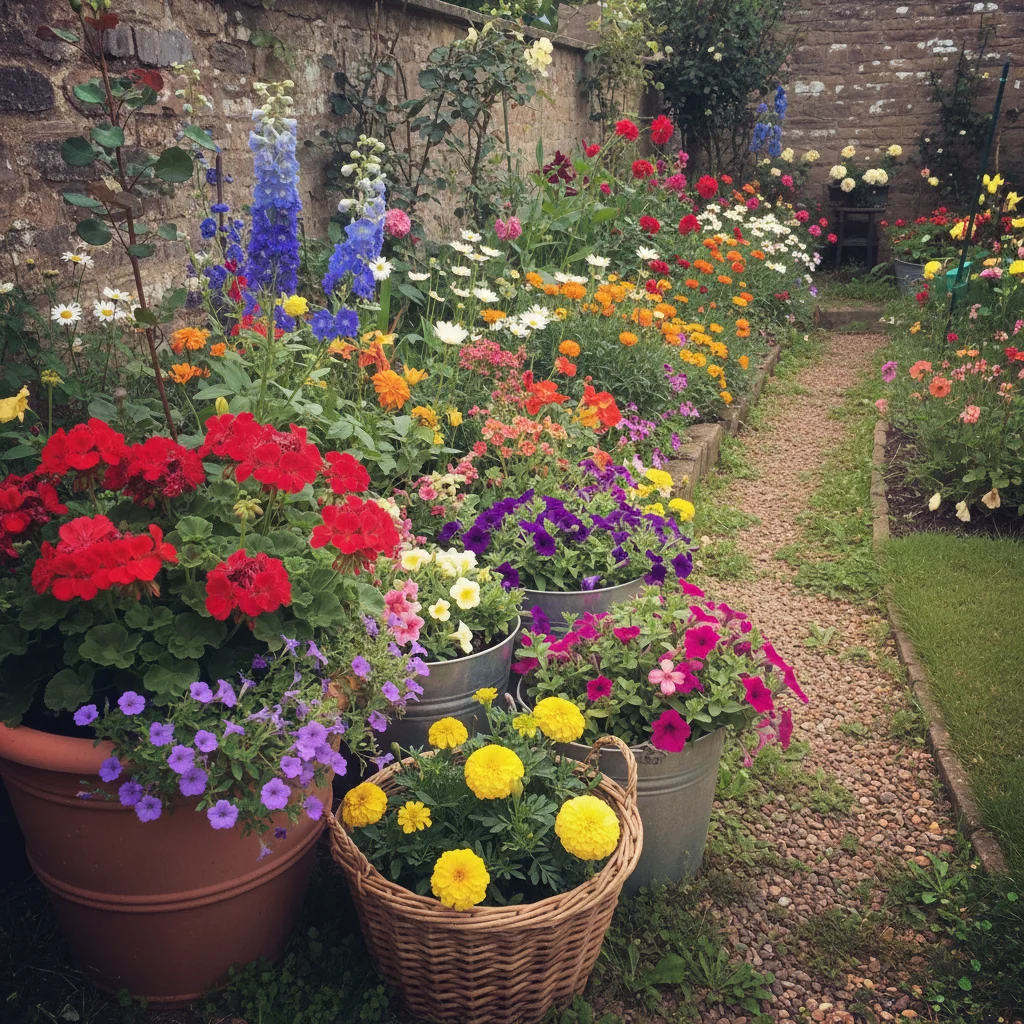
We often think that a spectacular summer display requires a sprawling country estate and a team of gardeners. The reality is that some of the most vibrant and cheering summer displays happen in the smallest of spaces. Whether you have a tiny paved courtyard, a sunny balcony, or just a few window boxes overlooking a busy street, you can create a lush, colourful sanctuary that lasts from June until the first frosts of October.
In my years of gardening in London, I have learned that the secret to a successful urban summer isn't about how much land you have. It is about choosing the right plants that can handle the unique challenges of container life. We deal with wind tunnels between buildings, reflected heat from brick walls, and the occasional week where we simply forget to water. By selecting tough, high-performance varieties, you can ensure your space stays bright and beautiful all season long.
Summer gardening in the UK is a balancing act. We have to prepare for those rare but intense heatwaves while also keeping an eye out for the inevitable rainy spells that can turn delicate blooms into mush. The following suggestions are picked specifically for their resilience and their ability to thrive in pots and troughs. You don't need a lawn to feel like you’re sitting in a meadow; you just need a few well-chosen pots and a bit of enthusiasm.
Making Every Inch Count in Small Gardens
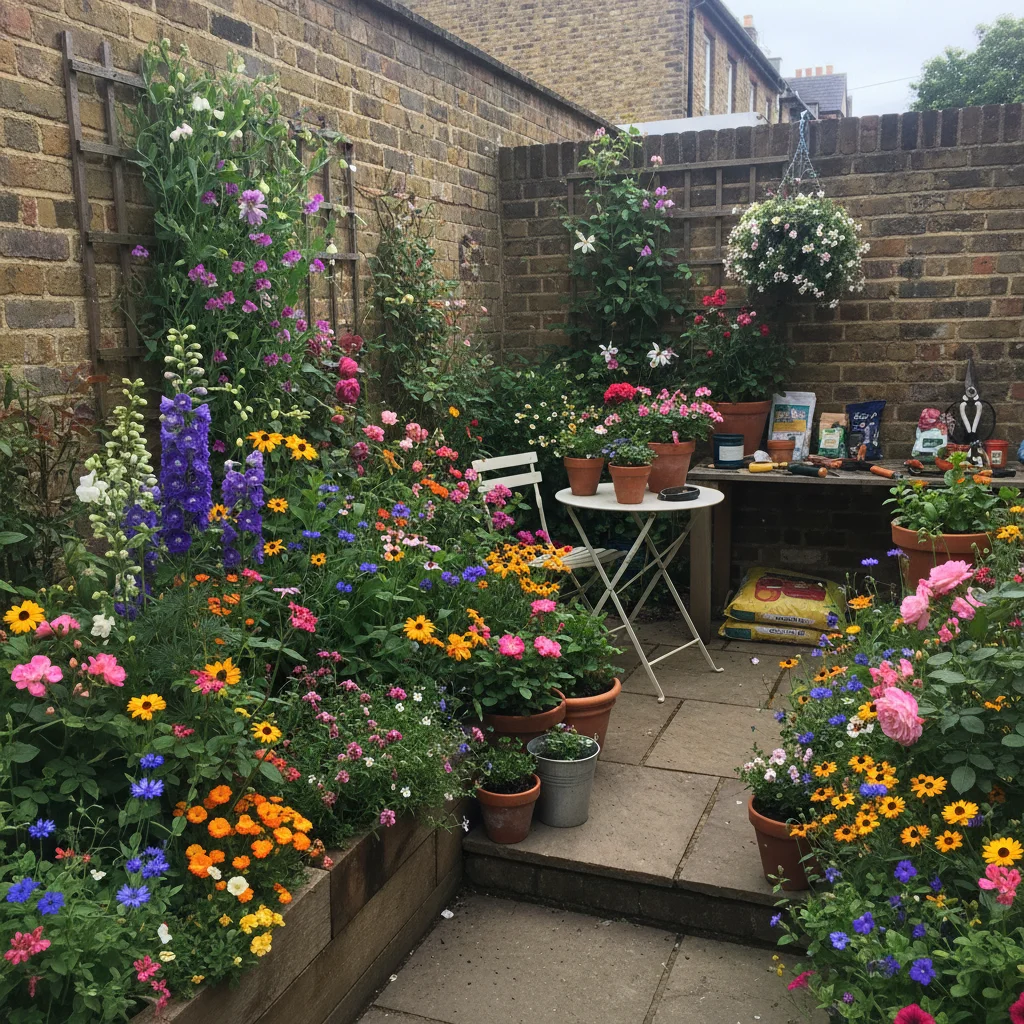
When space is at a premium, every plant has to earn its keep. I always look for "hard-working" plants—those that flower for months rather than weeks. In a large garden, you can afford to have a shrub that only looks good for ten days in May. In a small garden or on a balcony, that is wasted real estate. We want plants that start pushing out buds in early summer and don't stop until the nights draw in and the autumn chill arrives.
Vertical space is your best friend when you’re gardening in the city. If your "garden" is actually a balcony, look at your railings and walls. Hanging baskets and over-the-rail planters allow you to surround yourself with colour without tripping over pots on the floor. It’s also worth considering the weight of your containers if you’re gardening on a balcony. Plastic or resin pots that mimic terracotta are much lighter and safer than heavy stone or ceramic.
Before you head to the garden centre, take a moment to observe how much light your space actually gets. A "sunny" balcony might only get three hours of direct light if it’s blocked by a neighbouring building. Conversely, a south-facing patio can become a literal oven in July. Knowing your conditions will save you money and heartbreak. We’ve all bought a tray of sun-loving petunias only to realize our backyard is a permanent shade trap.
Sun Loving Stars for Balconies and Patios
If you are lucky enough to have a south-facing spot, you have the pick of the most vibrant summer flowers. Pelargoniums, often called bedding geraniums, are the undisputed kings of the sunny balcony. They are incredibly drought-tolerant, which is a lifesaver if you spend your weekends away. Their thick, fleshy stems store water, meaning they won't wilt the moment the sun hits them. I particularly love the trailing 'Ivy-leaf' varieties that spill over the edges of pots in clouds of red, pink, and white.
Petunias and their smaller cousins, Calibrachoa (often sold as 'Million Bells'), are essential for that classic summer look. Calibrachoa is particularly good for urban gardeners because it is "self-cleaning," meaning the old flowers drop off naturally so you don't have to spend every evening deadheading. They come in almost every colour imaginable, from deep velvet purples to bright neon yellows. They love the heat and will flower profusely as long as you give them a weekly liquid feed.
For something a bit more architectural, look at Salvias. Varieties like 'Hot Lips' or 'Amistad' are fantastic in larger pots. They produce tall, elegant spikes of flowers that catch the breeze and add movement to your display. They are also absolute magnets for bees. Seeing a bumblebee hovering around a Salvia on a fourth-floor balcony is one of the great joys of urban gardening. It’s a reminder that even in the middle of a city, we can provide a vital pitstop for wildlife.
Bringing Colour to Shady Corners
Many of us in the UK have north-facing gardens or spaces overshadowed by trees and buildings. This doesn't mean you’re stuck with just ivy and moss. Begonias are the secret weapon for shady spots. The 'Non-Stop' varieties do exactly what they say on the tin, producing huge, rose-like blooms in brilliant shades of orange, yellow, and red. They actually prefer a bit of shelter from the midday sun, which can scorch their leaves.
Fuchsias are another classic choice for cooler, shadier spots. There is something incredibly charming about their nodding, bell-like flowers. If you have a hanging basket in a spot that doesn't get much sun, a trailing fuchsia like 'Seventh Heaven' will thrive. They appreciate a bit of humidity, so they often do better in our damp British summers than the sun-worshippers do. Just keep an eye out for fuchsia gall mite, and choose resistant varieties if you can.
For a more contemporary look in the shade, try New Guinea Impatiens. Unlike the old-fashioned "Busy Lizzies" that suffered from mildew, these modern hybrids are tough and produce large, flat flowers over dark, handsome foliage. They bring a tropical feel to a dark corner. I find that planting them in white or pale grey pots helps to bounce what little light there is back onto the plant, making the flowers pop even more.
Scented Flowers for Window Boxes
In a small space, scent is just as important as colour. When you open your window on a warm July evening, you want to be greeted by something delicious. Sweet Alyssum is a tiny plant that packs a massive punch. It forms a low carpet of white or purple flowers that smell strongly of honey. It’s perfect for tucking into the edges of window boxes or larger pots to soften the lines.
Nemesia is another personal favourite of mine. Modern varieties like the 'Wisley Vanilla' or the 'Sunshine' series have a scent that can drift across an entire patio. They look quite delicate, with flowers that resemble tiny orchids, but they are surprisingly hardy. If they start to look a bit leggy in mid-August, you can just shear them back by half, give them a feed, and they will be back in bloom within a couple of weeks.
If you have a bit more room, perhaps a large pot by the door, consider a night-scented stock or a Heliotrope, often called the 'Cherry Pie' plant because of its incredible vanilla-almond fragrance. These plants might not be the showiest from a distance, but up close, they are intoxicating. We often focus so much on what a garden looks like that we forget how it should smell. In a city, these scents provide a wonderful distraction from the smell of traffic and hot tarmac.
Essential Kit for Small Space Summer Gardening
You don't need a shed full of tools to keep a summer display looking great. Most urban gardening can be done with a very basic set of equipment. I keep my kit in a small decorative crate under a bench, and it's all I've ever needed for my balcony.
- A high-quality hand trowel with a comfortable grip for potting up.
- A pair of sharp snips or secateurs for deadheading and pruning.
- A long-reach watering can, which is vital for getting water to the back of deep shelves.
- A concentrated liquid seaweed fertiliser for weekly feeding.
- A small pressure sprayer for misting plants or dealing with occasional pests.
Watering and Feeding for Success
This is the part where most of us struggle. Containers dry out much faster than the ground, and in the height of summer, a small pot can go from damp to bone-dry in a matter of hours. The "finger test" is your best tool here. Stick your finger an inch into the soil; if it feels dry, it’s time to water. I prefer to water in the early morning or late evening. Watering in the heat of the day is often a waste of time as much of it evaporates before the roots can take it up.
If you have a balcony, be mindful of your neighbours below. Nobody likes an unexpected shower from a leaky hanging basket while they’re trying to enjoy their own coffee. Use saucers under your pots to catch excess water, or invest in "self-watering" pots that have a reservoir at the bottom. These are a game-changer for busy people, as they can often keep a plant happy for three or four days without intervention.
Feeding is the other non-negotiable. Most potting compost only has enough nutrients to last about six weeks. After that, your plants are essentially living in a desert. To keep those summer flowers coming, you need to use a high-potash fertiliser (like tomato feed) once a week. This encourages the plant to focus on making flowers rather than just growing more leaves. It’s the difference between a pot that looks "okay" and one that looks like a professional display.
Keeping the Display Going All Summer
Deadheading is the single most effective thing you can do to prolong the flowering season. When a flower fades, the plant starts putting its energy into making seeds. By snipping off the dead heads, you "trick" the plant into thinking it hasn't finished its job yet, so it produces more buds. I make it a habit to do a five-minute "deadhead walk" every evening with my snips. It’s a great way to decompress after a day of work.
Sometimes, despite our best efforts, a plant might just "go over" or succumb to a pest. Don't be afraid to pull it out and replace it. One of the joys of container gardening is that it’s modular. You can pop down to the local garden centre in July and find "instant impact" plants to fill a gap. Gardening should be fun, not a chore, and there is no shame in starting fresh if a particular plant isn't working out in your space.
As we move into late August, some plants might start to look a bit tired. This is the time to give them a bit of TLC. Check for aphids or spider mites, which love the dry, stagnant air of urban balconies. A quick spray with a mix of water and a drop of dish soap is often all you need to keep them at bay. Keep up the feeding and watering, and you'll find that many of your summer stars will keep going right through September, especially with the "urban heat island" effect keeping city temperatures slightly higher.
Quick Tips for Long Lasting Blooms
If you want to ensure your summer display stays vibrant for as long as possible, keep these simple rules in mind. Consistency is usually more important than grand gestures when it comes to plant care.
- Check your pots daily during heatwaves to prevent total wilting.
- Always remove faded flowers to encourage new buds to form.
- Apply a liquid feed every seven to ten days from June to September.
- Group pots together to create a humid microclimate and reduce evaporation.
- Rotate your pots occasionally so all sides of the plant get equal light.
Inviting Bees and Butterflies to Your Plot
Even on a high-rise balcony, you can do your bit for urban biodiversity. Pollinators are surprisingly good at finding flowers in the city. By choosing single-flowered varieties where the pollen is easily accessible, you turn your small space into a vital resource. Avoid "double" flowers where the petals are so tightly packed that bees can't get inside. Lavender is a fantastic choice for this; it loves the sun, smells incredible, and is almost always covered in bees.
Erigeron karvinskianus, also known as Mexican Fleabane, is another urban essential. It’s a tiny, daisy-like flower that grows in cracks in walls and spills over the edges of pots. It flowers for months and provides a constant source of nectar for smaller insects. It’s tough as nails and has a wonderful, informal feel that softens the hard edges of a city patio. Plus, it self-seeds easily, so you’ll often find little "volunteers" popping up in other pots next year.
Adding a small water feature, like a shallow bowl filled with stones and water, can also help. Birds and insects need a drink too, especially during a hot British summer. It’s these small touches that turn a collection of plants into a living ecosystem. There is something deeply satisfying about sitting outside and hearing the hum of life around you, knowing that your few pots have made the city a slightly better place for nature.
Dealing with Wind and Urban Weather
One thing we don't talk about enough is wind. If you’re gardening on a balcony or a roof terrace, the wind can be a bigger killer than the sun. It dries out leaves and can snap tall, brittle stems. If your space is particularly breezy, choose low-growing, mound-forming plants like Scaevola (Fan Flower) or Lantana. These are much more aerodynamic than tall Lilies or Sunflowers.
Heavy pots are also essential in windy spots. If you’re using lightweight plastic pots, put a few heavy stones or a brick in the bottom before adding compost to stop them from blowing over. You can also use "pot feet" to allow water to drain away freely; this prevents the base of the pot from becoming waterlogged during our famous summer downpours. Good drainage is just as important as regular watering.
Finally, remember that the "British Summer" is unpredictable. We can have a frost in late May and a heatwave in June. Keep some horticultural fleece handy just in case of a late cold snap, and be prepared to move your most prized pots into a sheltered spot if a summer storm is forecast. A little bit of foresight goes a long way in protecting your hard work.
Once you have your pots planted and your watering routine established, the most important thing to do is actually enjoy it. We spend so much time "doing" the gardening that we sometimes forget to sit still and appreciate the result. Grab a cold drink, find a comfortable chair, and take in the colours and scents you’ve created. Your small space is now a thriving, vibrant retreat from the bustle of the city, and you’ve earned the right to sit back and watch it bloom.