When we think about garden design, our minds often jump to sprawling country estates, manicured hedges, and professional landscaping crews. For those of us living in urban environments, that vision can feel completely out of reach. We might only have a narrow balcony, a small concrete patio, or a tiny patch of shaded ground behind a terrace house.
The good news is that garden design isn't just for people with rolling hills and a ride-on lawnmower. It is simply the process of making your outdoor space work for you, no matter how small it is. Even a few well-placed pots on a window sill or a single grow bag on a balcony can be "designed" to provide beauty and food.
You don't need a huge budget or a degree in horticulture to get started. All you need is a bit of observation and a realistic plan that fits your lifestyle. Let’s look at how we can turn that grey corner into a green sanctuary without the overwhelming stress of traditional landscaping.
Work with your existing space
The biggest mistake many of us make is trying to force a garden style onto a space where it doesn’t belong. We see a beautiful photo of Mediterranean lavender fields and try to recreate it in a damp, shaded London courtyard. It usually ends in disappointment and a lot of dead plants.
Start by looking at what you actually have. If you are on a third-floor balcony, your biggest constraints will be wind and weight limits. If you have a tiny basement yard, your main challenge will be light. Acknowledging these limitations isn't a negative thing; it actually makes your design choices much easier.
We have to be honest about how much time we can commit to maintenance. If you work long hours or travel often, a high-maintenance rose garden might not be the best choice. A few hardy evergreens and some drought-tolerant succulents in containers might be much more successful for your lifestyle.
Track the sun across your plot
Before you buy a single bag of compost, you need to know where the sun goes. In the UK, the "sunny spot" can be elusive, especially when tall buildings or neighbouring trees are casting long shadows. Spend a Saturday watching how the light moves across your space from morning to evening.
South-facing spaces are the gold standard for sun-loving vegetables like tomatoes or chillies. However, they can also become heat traps in the height of a British summer. If you have a south-facing balcony, your pots will dry out incredibly fast, meaning you'll need to think about irrigation or larger containers that hold moisture longer.
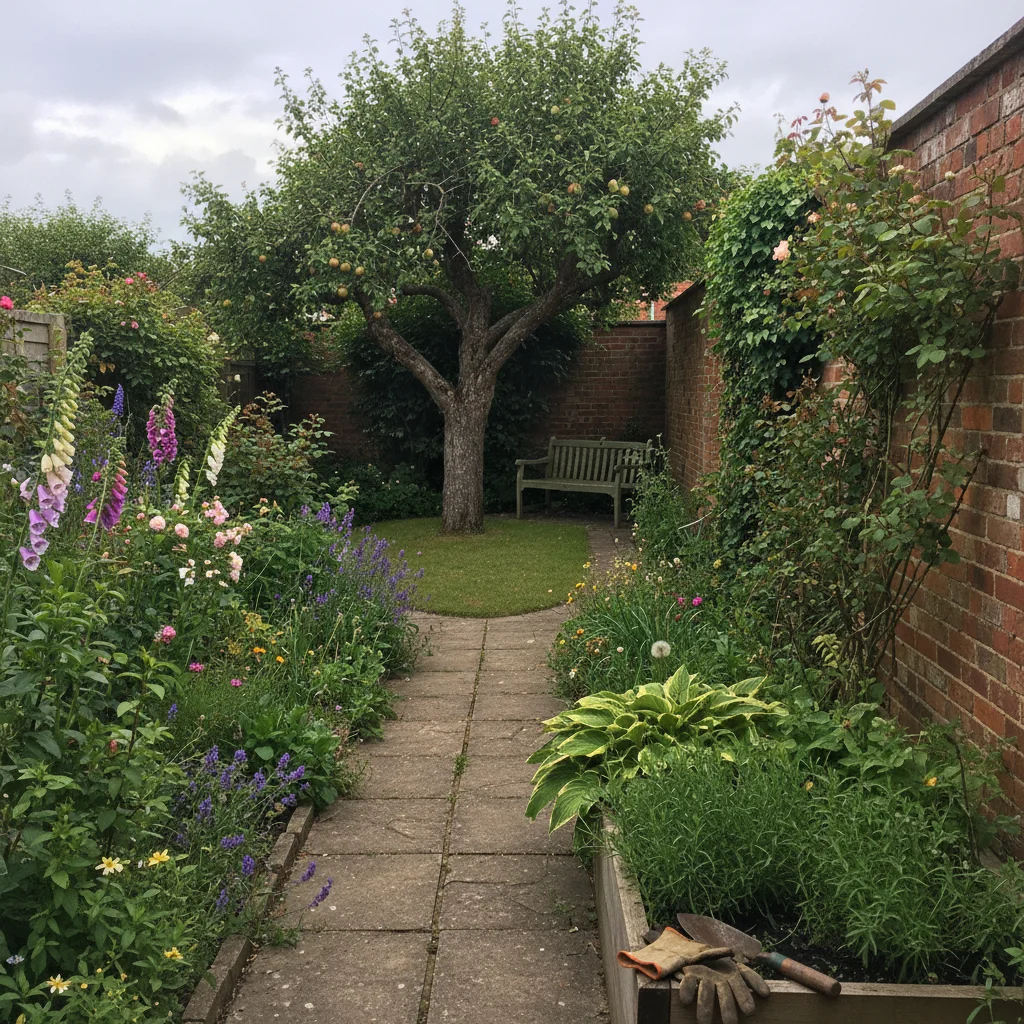
North-facing spaces are often dismissed as "difficult," but they are actually great for lush, green foliage. Ferns, hostas, and certain types of ivy thrive in the cooler, damper conditions of a shaded yard. Knowing your light levels prevents you from wasting money on plants that are destined to struggle.
Dealing with the urban wind
Wind is an often-overlooked factor in urban garden design. If you are gardening on a balcony or a roof terrace, the wind can be much more damaging than the cold. It dries out leaves, topples tall pots, and can snap the stems of delicate climbers like clematis.
To combat this, look for "low-profile" plants that hug the ground or the pot. Instead of tall, top-heavy shrubs, choose compact varieties that offer more resistance. You can also use permeable screening, like willow hurdles or trellis, to break the force of the wind without blocking it entirely.
If you are using pots in a windy spot, weight is your friend. Heavy terracotta or stone pots are less likely to blow over than lightweight plastic ones. If you are worried about the weight limit of your balcony, you can secure lighter pots to the railings or use "pot feet" to keep them stable and well-drained.
Create a simple wish list
Before you start sketching out where things go, think about what you actually want to do in the space. Because urban gardens are small, they usually need to work twice as hard as a large garden. We often need a place to sit, a place to grow some herbs, and perhaps a spot to dry the laundry.
It is helpful to narrow down your priorities so you don't clutter the space. Trying to fit a dining table, a potting shed, and a vegetable patch into a three-metre square garden will only make the space feel cramped and unusable. Pick two or three main goals and stick to them.
To help you focus, consider these common priorities for small urban spaces:
- A comfortable spot for a morning coffee or an evening drink.
- A "kitchen garden" corner with easy-access herbs and salad leaves.
- Vertical greenery to hide an ugly fence or provide privacy from neighbours.
- Low-maintenance plants that look good even in the middle of winter.
- Pollinator-friendly flowers to bring a bit of nature into the city.
Use the vertical dimension
When floor space is limited, the only way is up. This is the secret weapon of every successful small-space gardener. Walls, fences, and railings are all prime real estate for growing. A single trellis can support a climbing rose or a crop of runner beans, taking up almost no footprint on the ground.
Hanging baskets are another classic solution, but they do require frequent watering. For a more modern approach, look into wall-mounted planters or "living wall" kits. These can turn a boring brick wall into a lush tapestry of ferns or succulents, creating a focal point that doesn't eat into your seating area.
Even your choice of plants can help with verticality. Instead of wide, bushy shrubs, look for "fastigiate" or columnar varieties that grow tall and thin. You can also use tiered plant stands to display a collection of smaller pots, giving you a dense "jungle" feel without needing a large flower bed.
Choose containers wisely
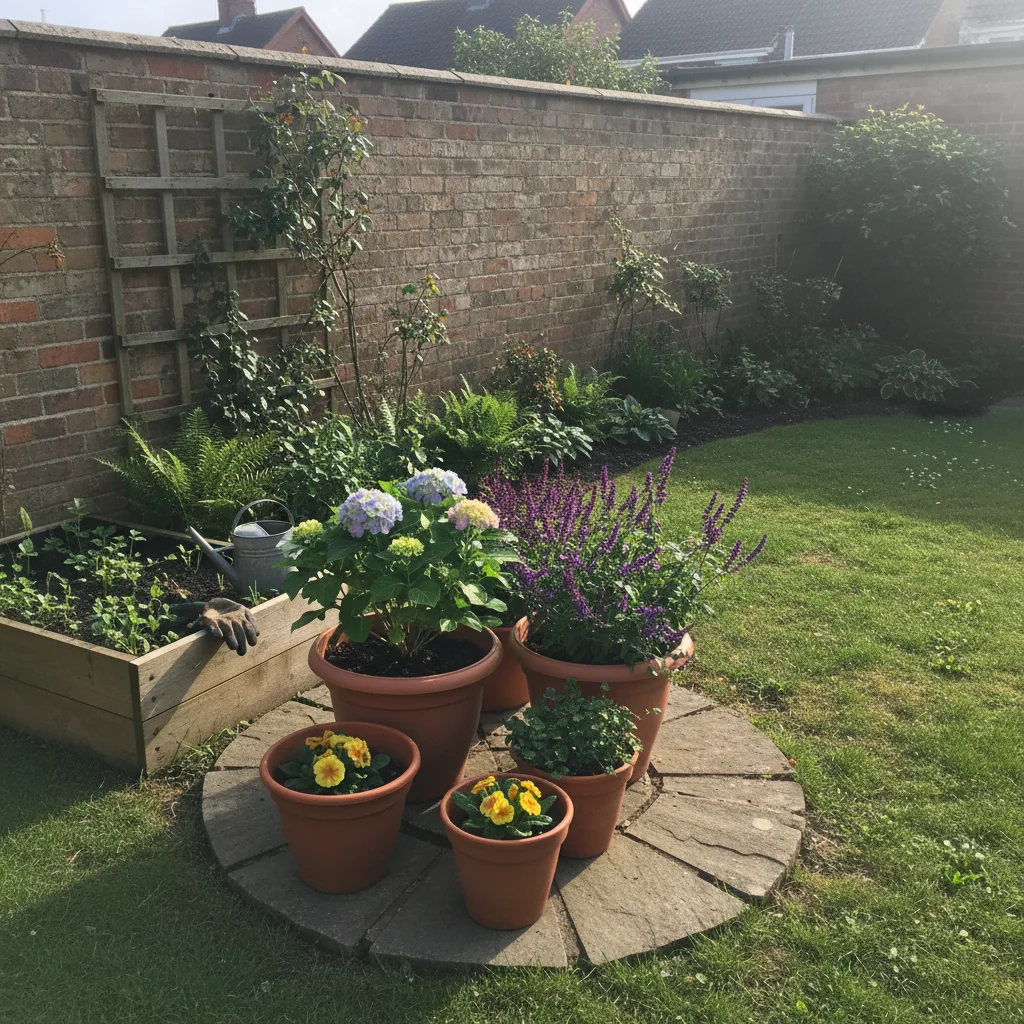
For most beginners in the UK, especially those in flats or rented accommodation, container gardening is the most practical starting point. Pots give you total control over the soil quality and can be moved around if you find they aren't getting enough sun. They also mean you can take your garden with you if you move house.
Don't feel like you have to buy matching designer pots. Some of the best urban gardens use a mix of reclaimed items, from old wooden crates to galvanised buckets. Just ensure everything has adequate drainage holes. Without drainage, the roots will rot in the damp British weather, and your plants won't survive the winter.
When choosing containers, bigger is almost always better. Small pots dry out in a matter of hours during a summer heatwave. Larger containers hold more compost and moisture, providing a more stable environment for your plants' roots. A few large, impactful pots usually look better than twenty tiny ones scattered around.
Selecting the right plants
This is the part where most people get carried away. It's easy to go to the garden centre and buy everything that looks pretty on the day. However, a designed garden needs a bit more restraint. Try to stick to a limited colour palette or a specific theme to make the space feel cohesive.
For a beginner, it is wise to start with a mix of "reliable" plants. These are the varieties that can handle a bit of neglect or a sudden frost. In the UK, things like lavender, rosemary, and hardy geraniums are fantastic choices. They are tough, they smell great, and they provide food for urban bees.
If you want to grow food, start with the high-value crops. There is no point using your limited space for main-crop potatoes that are cheap to buy. Instead, grow things that taste much better fresh, like 'Patio' tomatoes, spicy salad leaves, or handfuls of fresh mint and basil.
| Plant Type | Best for Small Spaces | Why it Works |
|---|---|---|
| Herbs | Mint, Chives, Thyme | Compact, edible, and very hardy. |
| Climbers | Star Jasmine, Clematis | Adds height and scent without taking floor space. |
| Vegetables | 'Patio' Tomatoes, Chillies | Specifically bred for pots and balconies. |
| Flowers | Erigeron (Seaside Daisy) | Softens edges and flowers for months. |
| Evergreens | Sarcococca (Sweet Box) | Provides structure and winter scent. |
Keeping it simple and sustainable
One of the joys of a small garden is that it doesn't have to be a chore. If you design it with maintenance in mind, you can spend more time enjoying it than working in it. Use a good quality, peat-free multi-purpose compost to give your plants the best start, and consider adding a layer of mulch (like decorative gravel or bark) to the top of pots to keep moisture in.
Watering is the most important task in an urban garden. If you have an outdoor tap, a simple drip irrigation system on a timer can be a lifesaver. If not, make sure your watering can is easy to fill and not too heavy to carry through the house. We’ve all been in that position where the thought of five trips to the kitchen sink stops us from watering the plants.
Finally, remember that a garden is a living thing, not a finished product. Some things will thrive, and some will inevitably fail—that is all part of the learning process. If a plant dies, don't see it as a failure; see it as an opportunity to try something new in that pot next season.
Designing your first garden is really just about giving yourself permission to try. You don't need a massive budget or a landscape architect to create a space that makes you feel better every time you look out the window. Start with one or two pots this weekend, observe how the light hits them, and you’ll find that your garden grows naturally alongside your confidence.