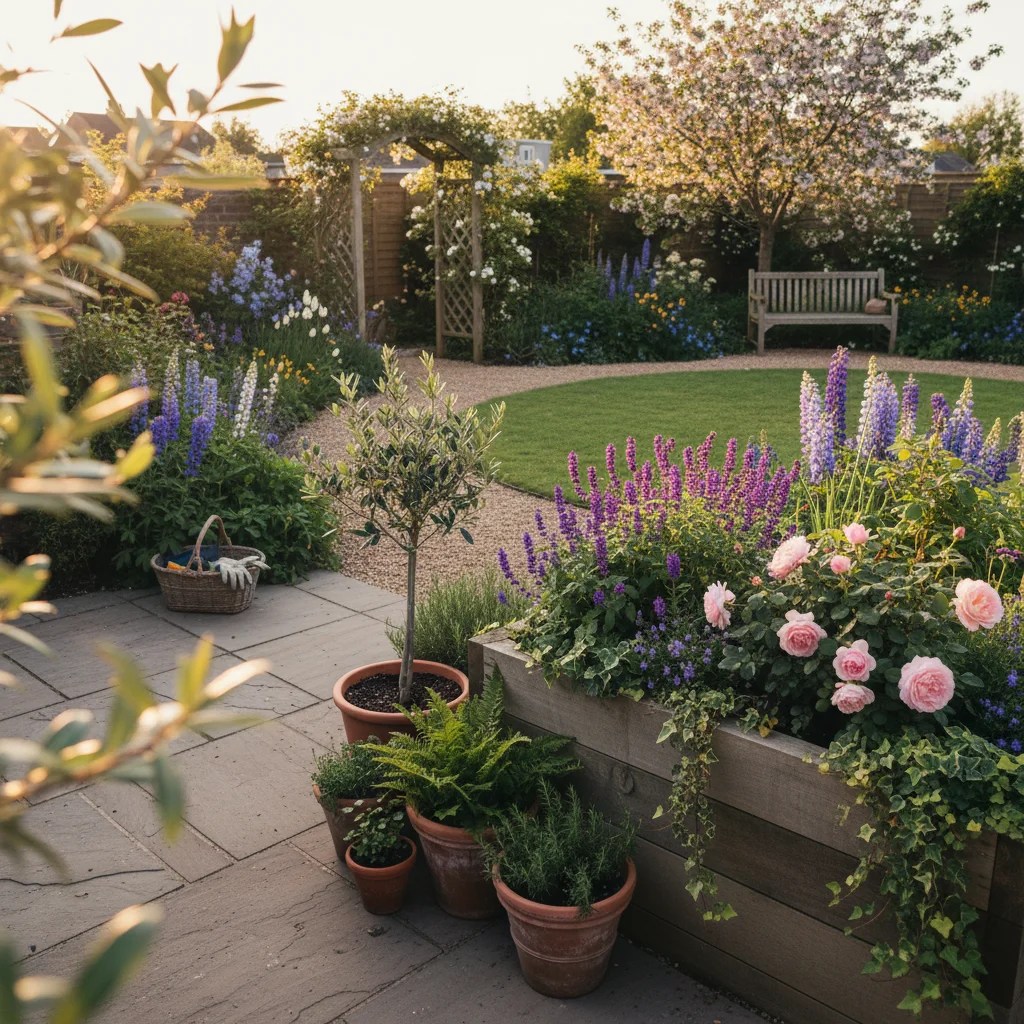
Most of us don’t have the luxury of a rolling country estate or a perfectly level half-acre plot. In reality, we are often working with a breezy balcony, a narrow side-return, or a concrete patio that gets exactly three hours of sun a day. It is easy to feel like these spaces don't need a "plan" and that you can just wing it with a few bags of compost and some impulse-bought pansies.
However, a bit of intentional layout planning is actually more important in a small space than a large one. When every square inch counts, you need to know that your seating won't block your watering access and that your sun-loving tomatoes aren't stuck in a permanent shadow. Planning your layout helps you avoid the "clutter" feel that often plagues urban gardens.
We have all been there, dragging a heavy terracotta pot across a deck only to realise it blocks the door or sits right under a leaky gutter. Taking the time to sketch things out on paper first saves your back and your budget. It allows you to visualize how you will actually move through the space on a busy Tuesday morning or a lazy Saturday afternoon.
Start with the space you have
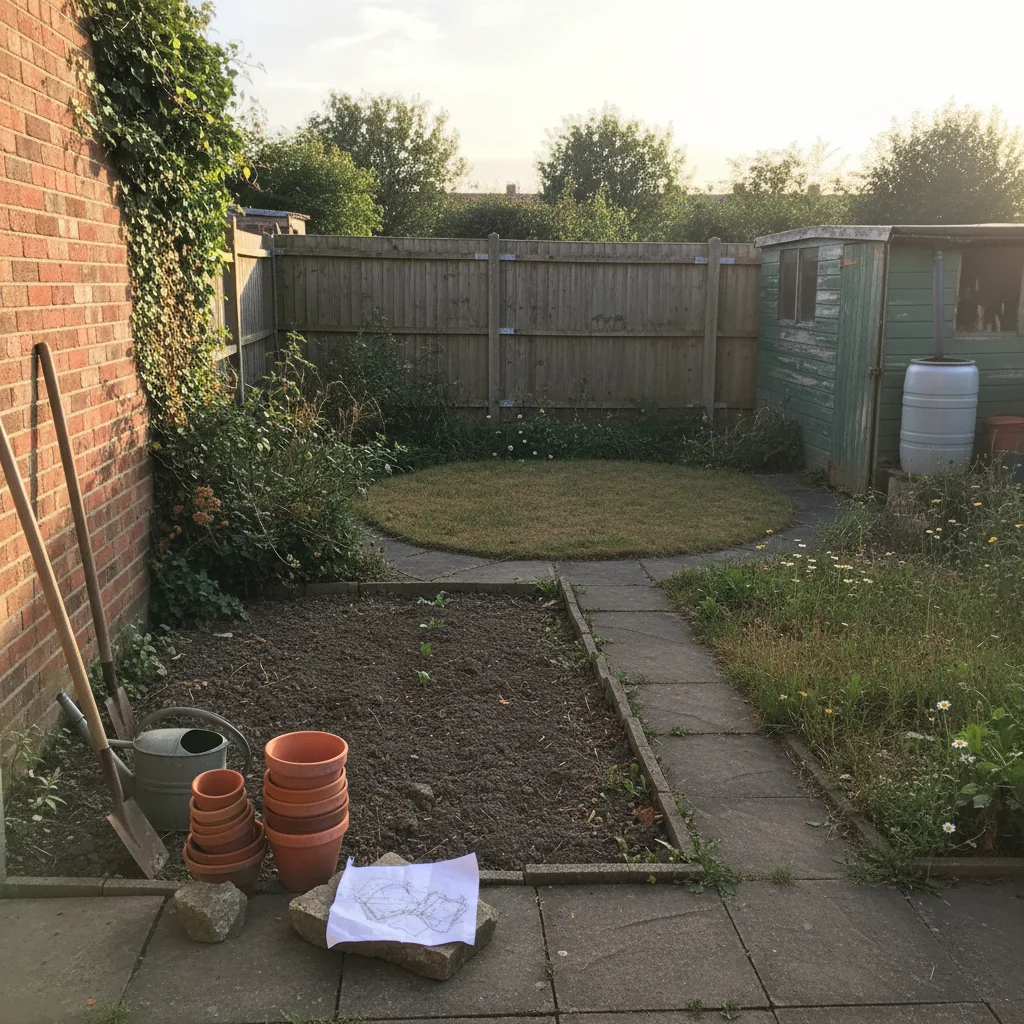
Before you even think about plant varieties, you need to get the measurements of your "canvas" down on paper. If you are working on a balcony or a roof terrace, this is also the time to check your weight limits and drainage points. It is much better to find out now that you can’t have a massive stone trough than after you’ve paid for delivery.
Grab a long tape measure and a notebook to record the main dimensions of your area. Don't just measure the perimeter; mark down where the fixed features are, such as drainpipes, outdoor taps, or vents. If you have a patio, check if the ground is level or if it slopes significantly away from the house, as this will affect where you place your pots.
For those of us in city flats, "space" often includes the vertical kind. Measure the height of your railings and the width of any wall space where you might want to hang a trellis or a vertical planter. Even a tiny window sill can be part of your layout if you plan for it to hold a long, narrow herb box.
Gather your planning toolkit
You don't need expensive architectural software to design a brilliant garden layout. In fact, some of the best urban designs start on the back of a cereal box or a scrap of graph paper. Keeping things simple ensures you actually finish the plan rather than getting bogged down in technical details.
To get the best results, you only really need a few basic items to move from an idea to a workable design. Having these ready will make the process feel like a creative project rather than a chore.
- A tape measure at least five metres long
- Graph paper to help keep your sketch to scale
- A pencil and a good eraser for inevitable changes
- A compass or a phone app to check sun direction
- Coloured pens to mark out different zones
Understand your light and wind
The biggest mistake we make in UK urban gardening is underestimating the power of microclimates. Your balcony might be south-facing, but if a taller building across the street blocks the light until 2 PM, it behaves like a north-facing garden. Spend a day observing where the light actually hits the ground and the walls at different times.
Wind is another silent killer of city plants, especially on higher floors. A layout that places a tall, top-heavy plant right in a wind tunnel between two buildings is asking for a smashed pot. Identify the most sheltered corners of your space and mark them on your sketch as "safe zones" for more delicate greenery.
Shadows change throughout the year, so keep the British seasons in mind. A spot that is sunny in June might be in total darkness by October when the sun sits lower in the sky. If you want to grow winter salads or keep evergreens happy, you need to plan for that shift in light early on.
Map out your garden zones
Even a tiny patio can be divided into zones to make it feel larger and more functional. Think about how you want to use the space: do you need a spot for a morning coffee, a place to dry laundry, or a dedicated "veg patch" of pots? Giving each activity its own zone prevents the space from feeling like a storage area.
Place your most frequently used items closest to the door. If you have a window box of herbs, you want it within easy reach of the kitchen so you can grab a handful of mint without putting on your shoes. Conversely, storage for extra compost bags or empty pots can go in the least accessible or darkest corner.
Try to keep the "traffic lanes" clear so you can walk through the garden without shimmying past a prickly rose bush. If you have a very narrow space, consider a "linear" layout where everything hugs the walls, leaving a clear path down the middle. This creates a sense of depth and makes the garden feel like a destination rather than a corridor.
Choose the right containers and plants
Once you know where your zones are, you can start picking the hardware. In a small garden, it is usually better to have three or four large pots rather than twenty tiny ones. Large pots hold more moisture, which is vital during a hot British summer when small pots can dry out in hours.
Think about the "weight" of your choices, both literally and visually. If you are on a balcony, lightweight resin or glass-fibre pots are your best friends as they look like stone but won't stress the structure. For a patio, you might choose heavy timber raised beds that double as extra seating when you have guests over.
When it comes to plants, look for varieties that are bred for small spaces. Compact varieties like 'Patio' tomatoes or 'Little Gem' lettuce are perfect for containers because they don't try to take over the whole garden. We often want to grow everything, but a successful layout focuses on a few star performers that look good across multiple seasons.
Sketch your final design
Now it is time to put all that information onto your graph paper. Start by drawing the outline of your space to scale, for example, letting one square on the paper represent ten centimetres of real space. Draw in the fixed elements like doors and taps first so you know what you are working around.
Use circles to represent your pots and rectangles for furniture or raised beds. This is the stage where you can play "musical chairs" with your layout without lifting anything heavy. If you realize the table and chairs don't actually fit alongside your tomato planters, it is much easier to rub out a pencil mark than to return a furniture set.
Don't forget to leave space for "human" needs. You need enough room to pull out a chair, to turn around with a watering can, and to access your plants for pruning. A layout that looks beautiful but is impossible to maintain will eventually become a source of stress rather than joy.
Consider the vertical dimension
If you run out of floor space, look up. Vertical gardening is the secret weapon of the urban gardener and should be a core part of your layout plan. Walls, fences, and even the sides of sturdy sheds can become productive growing spaces with the right support.
Plan for trellises or wall-mounted troughs that can host climbing plants like clematis or even runner beans. Using the vertical space draws the eye upward, which makes a small garden feel much taller and more airy. It also provides a bit of extra privacy from the neighbours, which is always a bonus in a crowded city.
Be mindful of how you will water these higher plants. If you put a beautiful trailing basket way above head height, you need to make sure you have a step stool or a long-reach watering wand handy. A layout is only as good as your ability to keep the plants alive once they are in place.
Layout rules for success
Designing a garden is a creative process, but following a few "golden rules" can help ensure your layout works in the long run. These tips are based on common mistakes that many of us make when we are excited to get started.
- Keep the centre of the space open to create a feeling of roominess
- Group pots together in odd numbers to create a more natural look
- Ensure your heaviest pots are placed over structural beams on balconies
- Place scented plants like lavender near seating areas for maximum enjoyment
- Leave a small gap between pots and walls to prevent damp and improve airflow
Refine the plan for year-round interest
A great layout works in the bleak mid-winter just as well as it does in the height of July. In the UK, we spend a lot of time looking at our gardens through a window rather than sitting in them. Position your most attractive pots or a structural evergreen where you can see it from your favourite indoor chair.
Think about "layers" in your design. You might have spring bulbs tucked under a summer-flowering shrub, or a trellis that looks like a piece of art even when the climbers have died back for the winter. This ensures your layout doesn't look like a graveyard of empty pots once the first frost hits in November.
Check your plan one last time for practicalities. Is there a clear spot for your watering can to sit? Is there a place to put a small compost bin if you want to recycle your kitchen scraps? These small details are what turn a "nice looking" garden into a functional outdoor room that fits perfectly into your urban life.
Now that you have a plan on paper, the hard part is over and the fun begins. You can start sourcing your pots and plants with the confidence that they will actually fit and thrive in the space you have. Grab your tape measure this weekend and take that first step toward turning your patch of grey into a thriving green sanctuary.