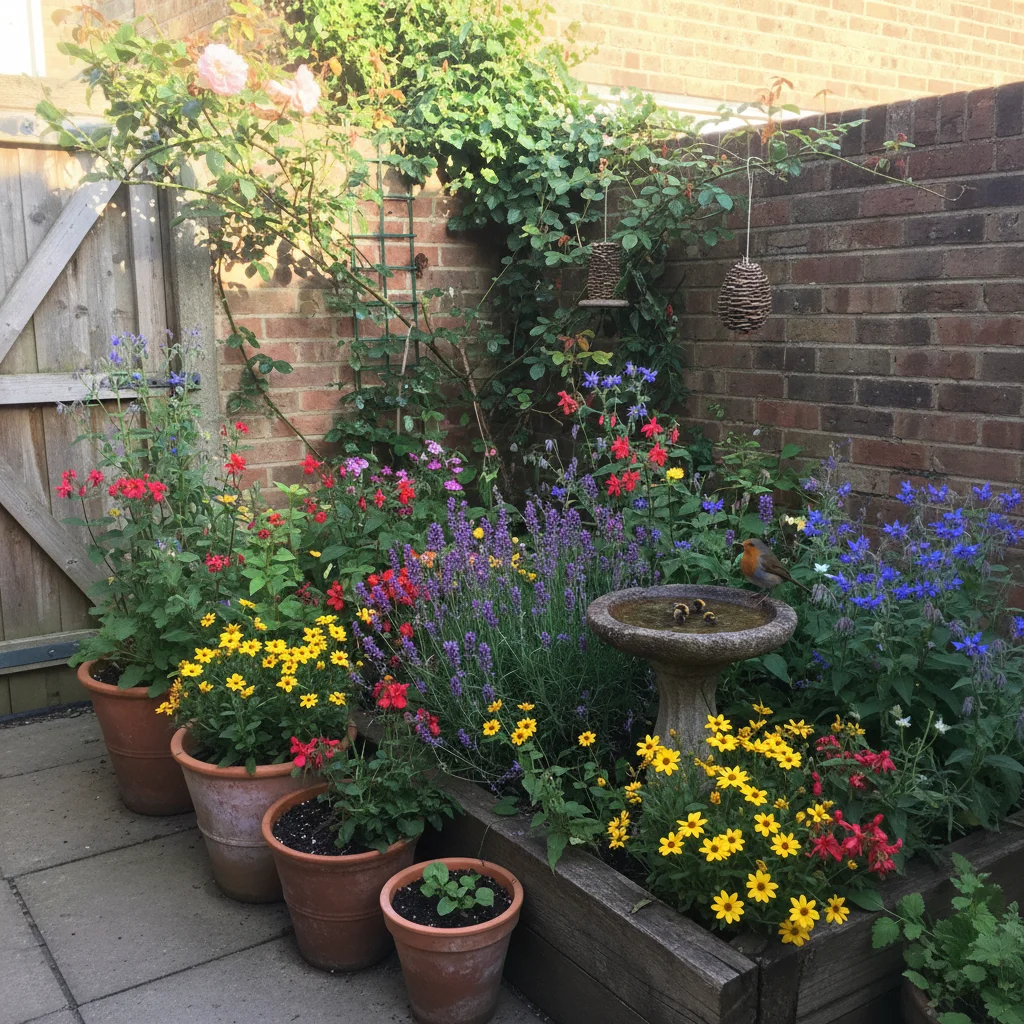
You don’t need a rolling acre of British countryside or a sprawling wildflower meadow to make a real difference to our local wildlife. In fact, some of the most important work for our declining bee and bird populations happens right in the heart of our cities, on balconies, in paved courtyards, and across tiny terrace gardens. When we garden with nature in mind, we aren't just helping the planet; we’re creating a much more vibrant, living space for ourselves to enjoy.
Living in London, I’ve seen how a single window box of lavender can become a motorway service station for a tired bumblebee. We often think of wildlife gardening as something that requires a "wild" or messy look, but that isn't the case at all. You can maintain a sleek, modern balcony or a tidy patio while still providing the essential food and shelter that our feathered and buzzy friends need to survive the British seasons.
The secret lies in thinking vertically and making every square inch of your potting compost count. By choosing the right plants and adding a few simple features, you can turn a sterile outdoor area into a thriving ecosystem. It’s about moving away from the idea of the garden as a static room and seeing it as a living, breathing part of the local environment.
Why urban wildlife needs your help
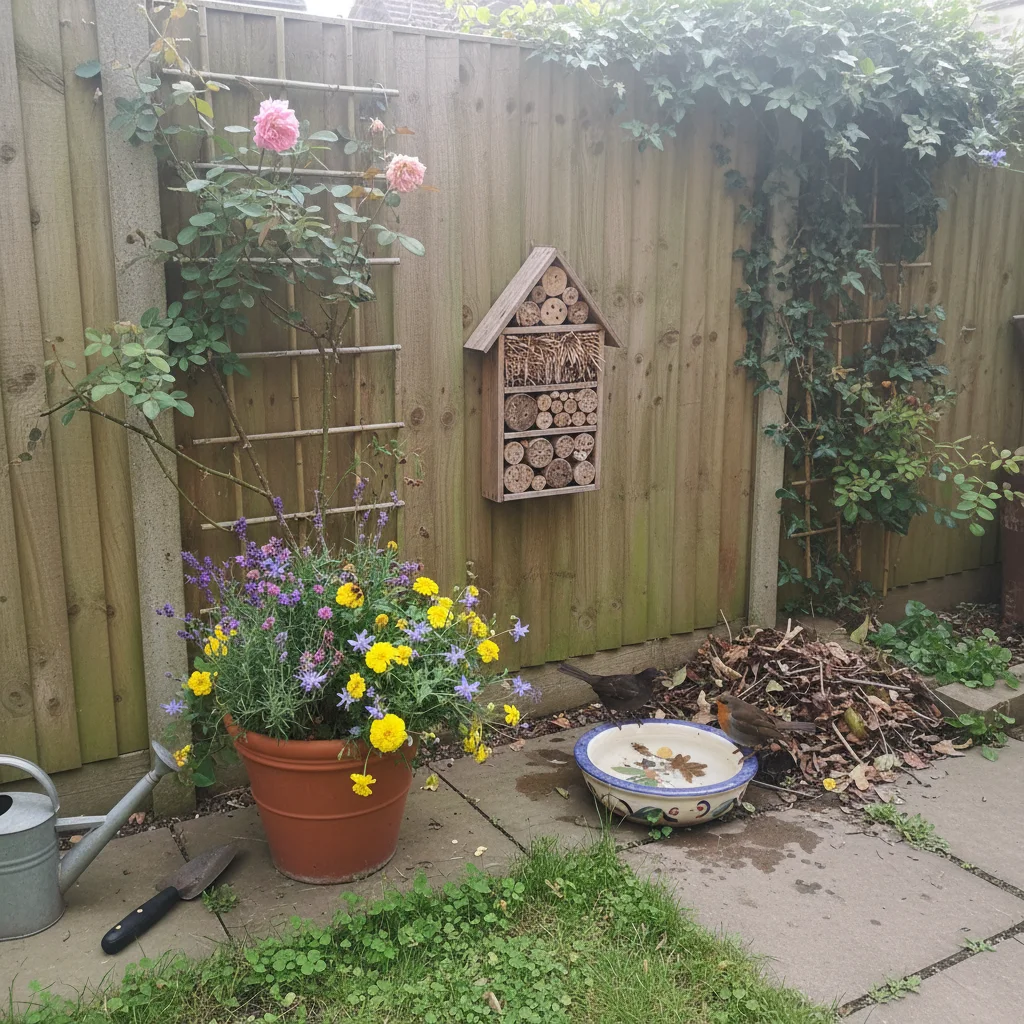
Our urban spaces are becoming increasingly important "wildlife corridors." As traditional habitats in the countryside are lost, the network of gardens across our towns and cities provides a vital safety net. For a bird or an insect, your balcony isn't just a place for a morning coffee; it’s a potential nesting site or a much-needed source of hydration during a dry British summer.
We often underestimate the impact of small-scale gardening. When you plant a nectar-rich flower in a pot, you are connecting your home to the garden three doors down, and the park around the corner. This connectivity allows wildlife to move through the city safely, finding food and mates along the way. Without these "stepping stones," many species would find themselves trapped in isolated pockets of green.
Supporting wildlife also brings a sense of joy and calm that you just don't get from plastic grass or gravel. There is something incredibly grounding about watching a blue tit forage among your herbs or seeing a peacock butterfly land on your buddleja. It reminds us that even in the middle of a concrete jungle, we are part of something much bigger and more beautiful.
Choosing the best plants for pollinators
When space is at a premium, you have to be picky about what you grow. In a small garden, every plant should ideally do two things: look fantastic and provide food for pollinators. The best way to achieve this is to focus on "single" flowers. Many highly bred ornamental flowers have "double" blooms, which look like ruffled pom-poms. While they are pretty, they are often useless for bees because the nectar is hidden behind too many layers of petals.
Instead, look for flowers where you can clearly see the central landing pad. Plants like Erigeron karvinskianus (the Mexican fleabane) are perfect for urban spaces because they grow in the tiniest cracks and spill over the edges of pots, flowering from May right through to the first frosts. They are an absolute magnet for hoverflies and small bees, and they require almost no maintenance once they are established.
Herbs are another brilliant double-duty choice for the small-space gardener. Most of the herbs we love to cook with, such as rosemary, thyme, and oregano, are native to the Mediterranean and produce flowers that are packed with high-quality nectar. If you have a sunny windowsill or a south-facing balcony, a few pots of flowering herbs will provide a feast for you and the bees alike. Just remember to let a few of the stems go to flower rather than harvesting them all for the kitchen.
Creating a tiny watering hole
Water is often the missing piece of the puzzle in urban wildlife gardens. We think about food and shelter, but every living thing needs to drink and bathe. You don't need a dug-in pond to make a difference; a simple "pond in a pot" can be just as effective and much safer for those of us with limited space or weight restrictions on balconies.
To create a mini-pond, find a watertight container—an old ceramic pot with the hole plugged or a galvanized zinc bucket works well. Fill it with water and add a couple of aquatic plants, such as a miniature water lily or some oxygenating weed. It’s crucial to provide an escape route for any creatures that might fall in, so pile up some stones or bricks on one side so they can easily climb out.
Even simpler than a pond is a shallow pebble bowl. Find a wide, shallow dish and fill it with stones, then pour in enough water so the tops of the stones are still dry. This creates a safe landing spot for bees and butterflies to drink without the risk of drowning. We’ve all seen a thirsty bee struggling on a hot day, and this small addition to your patio can be a genuine lifesaver during a heatwave.
Shelter and nesting in small spaces
Shelter is the third pillar of a wildlife-friendly garden. In a larger garden, you might leave a pile of logs or a patch of long grass, but that isn't always practical when your garden is the size of a rug. Instead, we can use the "vertical real estate" of our walls and fences to provide homes for birds and insects.
A bird box tucked away under the eaves of a balcony or high up on a wall can provide a safe haven for swifts or blue tits. Just make sure it’s positioned away from direct sunlight and strong winds, and out of reach of any local cats. If you don't have room for a bird box, consider planting a climbing plant like ivy or honeysuckle. Ivy is one of the most underrated plants for wildlife; it provides dense evergreen cover for nesting birds and is a vital late-season food source for bees.
Bug hotels have become very popular, and you can find compact versions that hang like a picture frame. These provide nesting tubes for solitary bees, like the red mason bee, which are fantastic pollinators and don't live in colonies. Unlike honeybees, these solitary bees are very docile and rarely sting, making them perfect neighbours for a small garden. You can even make your own by bundling together hollow bamboo canes and tucking them into a dry corner of a bookshelf or a wall-mounted planter.
Essential features for a wildlife balcony
While we want our gardens to be beautiful, certain functional items make a massive difference to the success of your wildlife haven. If you are just starting out, try incorporating these elements into your layout to see an immediate uptick in visitors.
- A nectar-rich climbing plant like Trachelospermum jasminoides (Star Jasmine) to provide scent for you and food for moths.
- A bird feeder with a seed tray to prevent mess on your patio while supporting local finches and sparrows.
- Peat-free compost in all your pots to protect the natural peat bogs that are home to rare UK wildlife.
- A small patch of "wild" space even if it’s just one pot where you let the weeds grow or leave the dead flower heads over winter.
- Reflective surfaces or mirrors placed carefully to bounce light into shady corners, helping sun-loving insects stay warm.
Managing the seasons in the city
The "hungry gap" is a term gardeners use for the late winter and early spring when there is very little food available for wildlife. In the city, temperatures are often a few degrees warmer than the countryside, which can trick bees into emerging from hibernation early. If there are no flowers for them to forage on, they can quickly starve.
To combat this, we should aim to have something in bloom for as many months of the year as possible. Spring bulbs are your best friend here. Tucking crocuses, snowdrops, and grape hyacinths into your pots in the autumn will ensure a burst of energy for early pollinators in February and March. For the other end of the year, plants like Hylotelephium (formerly Sedum) and Michaelmas daisies provide a vital sugary boost for butterflies before they hibernate.
In the autumn, resist the urge to "tidy up" too thoroughly. We often want to cut everything back to the ground as soon as it looks a bit brown, but those hollow stems and seed heads are exactly where insects like to spend the winter. If you can leave the cleanup until the spring, you’ll be providing a warm, dry hotel for countless ladybirds and lacewings that will help you tackle aphids when the weather warms up again.
Natural pest control without chemicals
One of the biggest mistakes we can make in a wildlife garden is reaching for the chemical sprays as soon as we see a greenfly. If you want to attract birds and bees, you have to accept that there will be some "pests" in your garden too. In a healthy ecosystem, the predators will eventually show up to do the work for you.
When you stop using pesticides, you allow a natural balance to form. Those aphids on your roses are a primary food source for ladybirds and their larvae. If you kill the aphids, the ladybirds have nothing to eat and won't visit your garden. Similarly, many small birds rely on caterpillars and grubs to feed their chicks in the spring. By tolerating a bit of nibbled foliage, you are essentially providing a buffet for the very creatures you want to attract.
If a particular plant is really struggling, try a blast of water from a spray bottle or a physical barrier instead of chemicals. We’ve all had that moment of panic when the lilies are covered in beetles, but taking a few minutes to pick them off by hand is much better for the environment. Over time, you'll find that your garden becomes more resilient as the "good bugs" move in to keep the "bad bugs" in check.
Maximising the vertical dimension
When you don't have a lot of floor space, the only way is up. Vertical gardening is a game-changer for urban wildlife. Using trellises, wall-mounted planters, and even hanging baskets can significantly increase the amount of forage you can offer. This is particularly useful for attracting butterflies, who prefer to feed in sunny, elevated positions away from the shadows of the ground.
Climbers like Clematis montana or the native honeysuckle (Lonicera periclymenum) are brilliant for covering ugly fences or balcony railings. They provide a massive amount of blossom in a very small footprint. If you have a shady wall, Hydrangea anomala subsp. petiolaris (climbing hydrangea) is a fantastic choice. Its lacy white flowers are loved by hoverflies, and its peeling bark provides excellent overwintering spots for small insects.
Don't forget the potential of your balcony railings. Specialized planters that straddle the rail can be filled with trailing nasturtiums or lobelia. These not only provide a splash of colour but create a "living curtain" that can act as a windbreak. Wind is a major issue for insects in high-rise gardens, so providing these sheltered pockets of calm will make your space much more attractive to delicate flyers like dragonflies or moths.
Supporting the night shift
We often focus on the creatures we see during the day, but a wildlife-friendly garden is just as busy after dark. Moths are incredibly important pollinators, and many of them are in steep decline. To support them, we need to think about plants that release their scent in the evening.
Plants like evening primrose, tobacco plants (Nicotiana), and night-scented stock are famous for their intoxicating fragrance that begins just as the sun goes down. These white or pale-coloured flowers are easier for moths to spot in the moonlight. By adding a few of these to your pots, you’ll be turning your garden into a 24-hour sanctuary.
Avoid using bright outdoor security lights if possible, as these can disorientate nocturnal insects and disrupt their natural behaviours. If you need lighting for your own use, consider low-intensity solar lights or warm-toned LEDs that point downwards. Creating a dark, scented haven will not only help the moths but might even attract a hungry bat or two, who will happily help clear your garden of gnats and mosquitoes.
Creating a wildlife-friendly garden is one of the most rewarding things you can do with a small outdoor space. It changes the way you look at your plants, turning a simple hobby into a meaningful contribution to your local environment. Start by adding just one nectar-rich plant or a small water dish this weekend, and you’ll be amazed at how quickly nature finds its way to your door. Every pot counts, and every bee you help is a victory for the city's biodiversity.