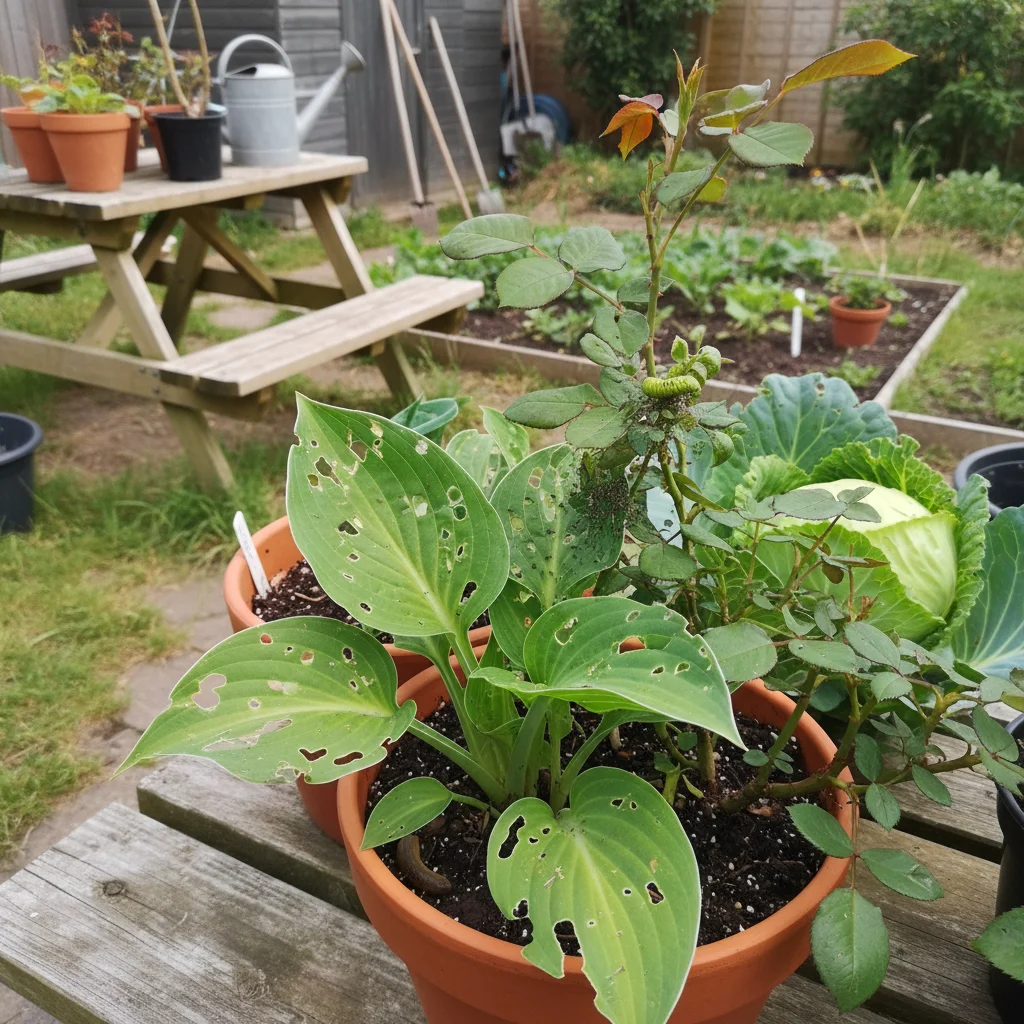
Garden pests leave clues: ragged holes, slime trails, or plants vanishing overnight. Identify the animal before you spray — slugs, caterpillars, and vine weevil need different responses.
There is a specific kind of heartbreak that comes with walking into the garden on a spring morning only to find your prize hostas reduced to lace or your young bean plants vanished entirely. We have all stood there, trowel in hand, wondering what exactly happened under the cover of darkness. Identifying the culprit is the first step toward reclaiming your outdoor space and ensuring your hard work doesn't go to waste.
In my years as a head gardener, I have learned that a pest-free garden is an impossible (and perhaps undesirable) goal. Instead, we aim for balance. When we understand the life cycles and habits of the creatures eating our plants, we can intervene effectively without nuking the entire ecosystem. Whether you prefer a strictly organic approach or are open to targeted chemical controls, the strategy remains the same: identify, monitor, and manage.
Reading the signs of plant damage
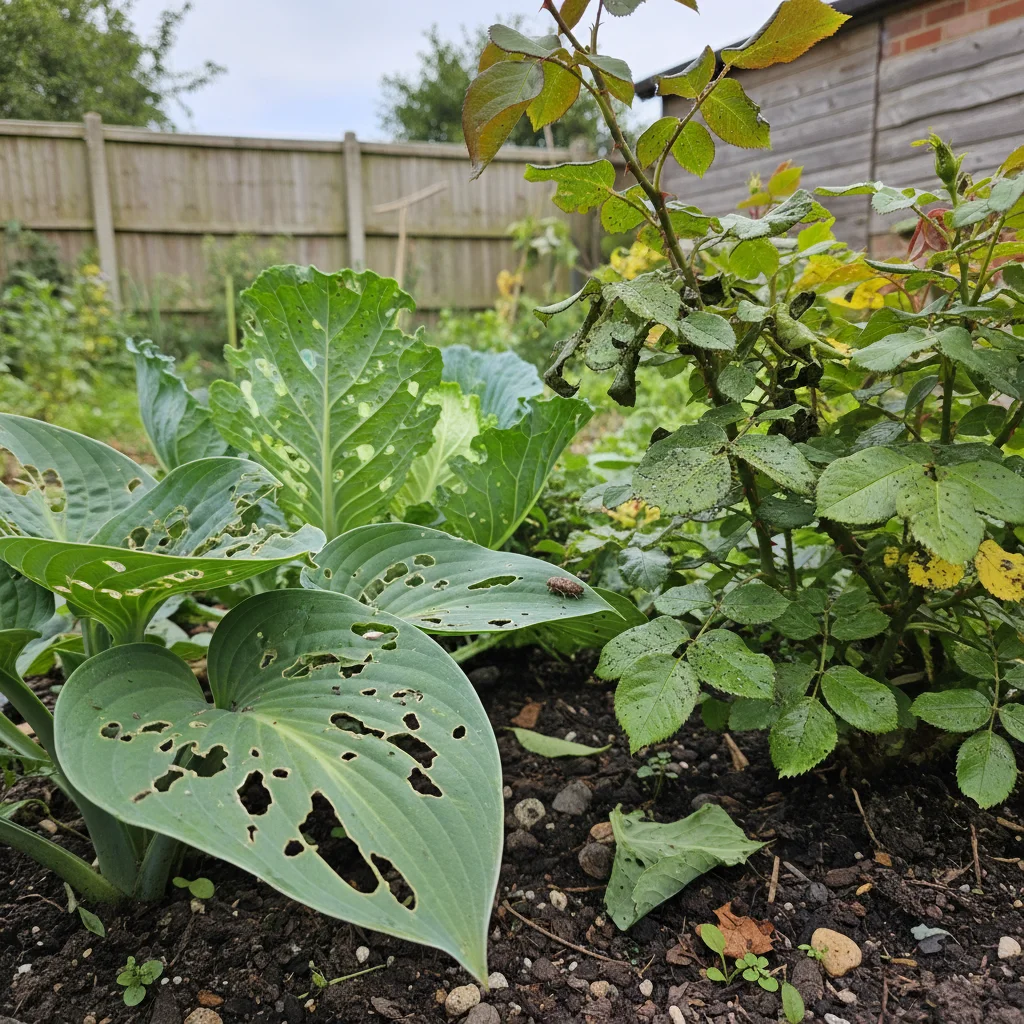
Before you reach for a spray or a trap, you must play detective. Different pests leave very specific calling cards that tell you exactly who has been visiting. While some insects are large enough to spot during the day, many of our most destructive garden visitors are nocturnal or hide deep within the foliage.
Look closely at the type of damage on the leaves. Large, ragged holes often suggest slugs or snails, especially if you can see a dried silvery trail nearby. If the leaves are curled, sticky, or turning yellow, you are likely dealing with sap-sucking insects like aphids. Circular notches cut out of the edges of leaves are the classic signature of the adult vine weevil, while tiny "windowpane" holes where only the upper layer of the leaf is eaten often point to young caterpillars or sawfly larvae.
Managing slugs and snails
Slugs and snails are arguably the most persistent adversaries for the British gardener. Our damp, temperate climate provides the perfect environment for them to thrive year-round. They are particularly fond of tender new growth, which is why your delphiniums and lettuces are often the first to suffer in the spring.
For an organic approach, I always recommend encouraging natural predators. Creating a small garden pond can attract frogs and toads, while leaving a small log pile can provide a home for ground beetles and hedgehogs, all of whom consider slugs a delicacy. If you need a more direct intervention, beer traps buried with the rim slightly above the soil level can be very effective for catching large numbers of slugs overnight.
If you choose to use pellets, please opt for those containing ferric phosphate. These are approved for organic gardening and are much safer for birds and hedgehogs than the older metaldehyde pellets, which are now banned in the UK. Apply them sparingly around the base of vulnerable plants rather than scattering them across the entire border.
Controlling aphids and greenfly
Aphids are small, soft-bodied insects that congregate in large numbers on the undersides of leaves and on juicy new stems. They damage plants by sucking the sap, which weakens the plant and can transmit viral diseases. You might also notice a sticky substance called honeydew on the leaves, which often leads to the growth of a black, unsightly sooty mould.
The simplest way to control a small infestation is to squash them between your thumb and forefinger or blast them off with a sharp jet of water from the garden hose. This disrupts their feeding and often kills the more delicate individuals. For larger outbreaks, a spray made of water and a small amount of horticultural soap can be very effective as it coats the insects and prevents them from breathing.
In a healthy garden, ladybirds, lacewings, and hoverflies will usually arrive to feast on the aphids. I always suggest planting "insectary" plants like calendula or fennel nearby to attract these beneficial predators. If you must use a chemical insecticide, try to use a systemic one only on non-flowering plants to avoid harming bees and other pollinators.
Dealing with the vine weevil
Vine weevil is a particularly devious pest because the most significant damage happens out of sight. While the adult beetles nibble the edges of leaves, their larvae live in the soil and eat the roots of your plants. This is a major problem for container-grown plants like heucheras, primulas, and strawberries, which can suddenly wilt and die because they no longer have a root system to take up water.
The best organic control for vine weevil larvae is the use of pathogenic nematodes. These are microscopic worms that you mix with water and apply to the soil or compost when the temperature is above 12°C, usually in late spring or autumn. The nematodes seek out the grubs and kill them from the inside out, providing a biological solution that is safe for children, pets, and wildlife.
For the adult beetles, which are flightless and nocturnal, you can head out at night with a torch and pick them off the plants by hand. They are about 10mm long, dull black with a textured shell, and they tend to "play dead" if disturbed. Clearing away leaf litter and debris from around the base of pots can also remove their hiding spots.
The box tree caterpillar challenge
If you grow box hedging (Buxus sempervirens), you are likely familiar with the box tree caterpillar. This relatively new arrival to the UK can strip a hedge bare in a matter of days. The caterpillars are greenish-yellow with black stripes and are often found hidden within dense webbing they create between the leaves.
Essential steps for managing garden pests
- Check your plants at least twice a week for early signs of damage.
- Clear away dead leaves and garden debris where pests like to hide.
- Water your plants at the base rather than over the foliage to reduce humidity.
- Use physical barriers like copper tape or fine mesh for vulnerable crops.
- Encourage biodiversity by planting a wide variety of flowering species.
Pheromone traps are a brilliant tool for monitoring the presence of the adult moths. While the traps won't stop an infestation on their own, they tell you when the moths are active so you can start looking for the eggs and young caterpillars. For control, many gardeners now use a biological spray containing Bacillus thuringiensis (often sold as XenTari), which specifically targets caterpillars without harming other insects.
Protecting lilies from the red beetle
The scarlet lily beetle is impossible to miss due to its bright red colour, but don't let its beauty fool you. Both the adults and their larvae can cause devastating damage to lilies and fritillaries. The larvae are particularly unpleasant, as they cover themselves in their own black excrement to deter predators.
The most effective way to manage lily beetles is regular hand-picking. Check your lilies daily from early spring onwards and squash any red beetles you find. Be careful, as they have a habit of dropping off the leaf onto their backs when they sense movement, making them very hard to see against the soil. You should also wipe away any orange eggs or black larval "muck" from the undersides of the leaves using a damp cloth or gloved hand.
Embracing cultural controls
Cultural control is a fancy way of saying "good gardening habits." By growing healthy, vigorous plants, you make them much more resilient to pest attacks. A plant struggling in the wrong soil or suffering from drought stress produces chemical signals that actually attract pests like aphids and spider mites.
Ensure your soil is healthy by adding plenty of organic matter, such as well-rotted garden compost or leaf mould. This improves the soil structure and supports a vast network of soil life that helps protect plant roots. Proper spacing is also vital; overcrowding plants creates a humid microclimate that encourages pests and diseases to spread rapidly from one plant to the next.
Choosing between organic and chemical
The decision to use chemicals is a personal one, but I always urge gardeners to consider the wider impact. Most broad-spectrum insecticides don't distinguish between a pest and a pollinator. If you do decide that a chemical intervention is necessary, look for targeted products and apply them in the evening when bees are less active.
Common garden pests and their characteristics
| Pest | Plants affected | Damage | When to act |
|---|---|---|---|
| Slugs | Lettuce, hosta, delphinium | Ragged holes, slime trails | Spring and autumn |
| Aphids | Roses, beans, new growth | Curled leaves, sticky residue | Spring and summer |
| Vine weevil | Pots, heuchera, strawberry | Leaf notches, root death | Late summer (grubs) |
| Lily beetle | Lilies, fritillaries | Total defoliation | Early spring onwards |
| Sawfly | Gooseberries, roses | Rapid stripping of leaves | Late spring |
Organic methods often take a little longer to show results, but they build a more stable garden environment in the long run. By using barriers, traps, and biological controls, you are working with nature rather than against it. This approach preserves the ladybirds, hoverflies, and birds that do much of the pest control work for us for free.
Building a resilient garden ecosystem
Ultimately, the best way to stop pests from eating your plants is to create a garden that is full of life. When we stop using harsh chemicals and start providing habitats for predators, the pest populations rarely reach a level where they cause significant harm. It is about moving away from the idea of "eradicating" pests and toward a mindset of "managing" them.
Try to tolerate a little bit of damage here and there. A few holes in a leaf won't kill a healthy plant, and those caterpillars might eventually turn into beautiful butterflies. By observing your garden closely and intervening only when necessary, you will develop a much deeper understanding of the complex world living right outside your back door.
The more you practice these identification and control techniques, the more intuitive they will become. You will start to notice the subtle changes in your plants before a problem becomes a crisis, allowing you to take simple, effective action. This proactive approach not only saves your plants but also makes gardening a far more relaxing and rewarding experience.
Frequently asked questions
How do I tell slugs from caterpillars?
Slugs and snails leave slime and feed at night. Caterpillars are usually on the plant in the day. Vine weevil notches leaves and the grubs eat roots in pots.
Do I need chemicals?
Often no. Night patrols, barriers, wool pellets, and encouraging wildlife deal with a lot of slug damage. Persistent, unexplained collapse in pots is when you look harder.
When should I hire help?
If fruit trees or hedges are being stripped, or you have an infestation you cannot identify. A gardener can confirm the pest and whether it is a one-off or a habitat issue.