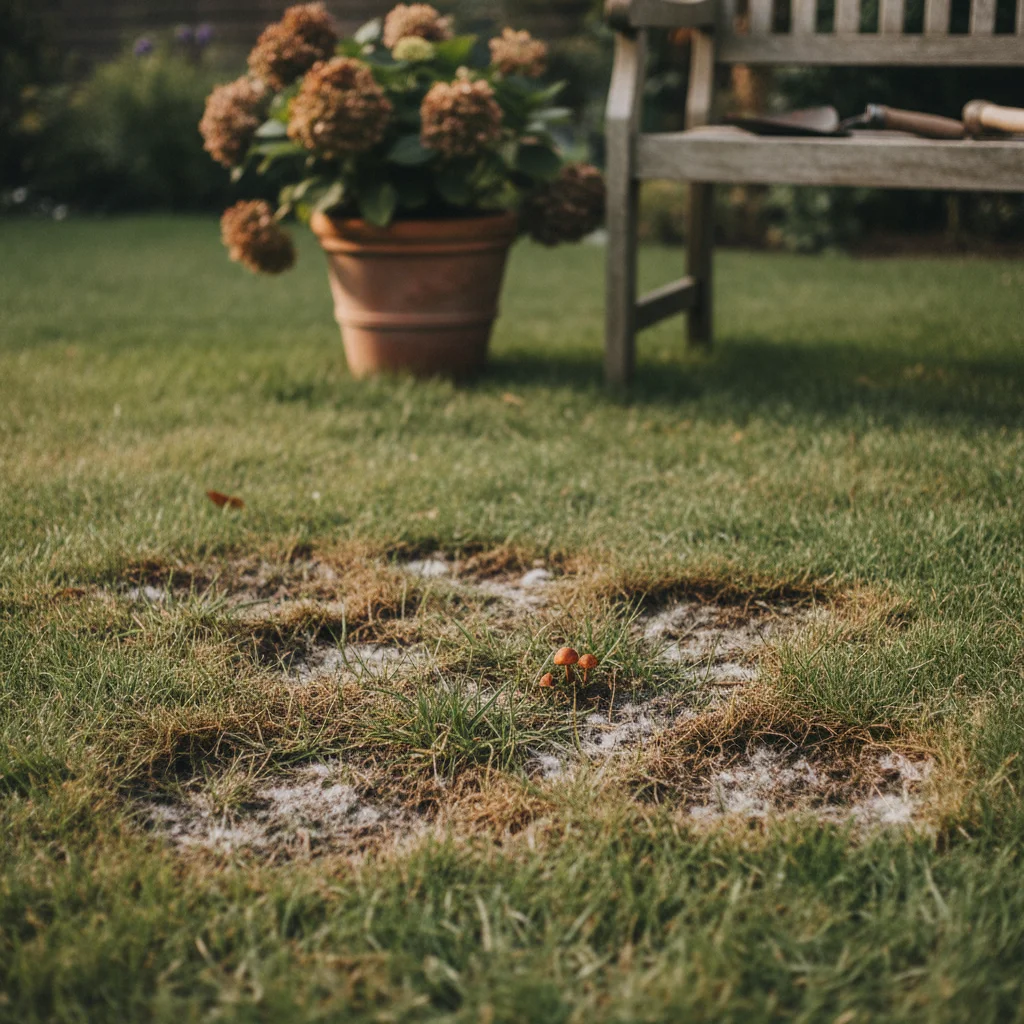
Lawn fungus treatment starts with identifying the pattern — rings, spots, or snow mould — then changing how you mow, feed, and water. A bottle of fungicide is rarely the first move on a UK lawn.
There is nothing quite as disheartening for a gardener as looking out over a once-pristine lawn only to see mysterious brown patches, white mould, or strange pinkish threads appearing. We invest a great deal of time in mowing, feeding, and edging, yet fungal diseases can take hold with frustrating speed, often triggered by the unpredictable British weather. Whether it is a damp, mild autumn or a humid summer spell, the conditions in our gardens are frequently a playground for fungal spores.
Understanding that a fungal outbreak is usually a symptom of an underlying issue rather than just bad luck is the first step toward a permanent cure. Fungi thrive when the grass is stressed, the soil is compacted, or the drainage is poor. By shifting our focus from quick-fix chemicals to long-term soil health and proper cultural practices, we can not only clear up the current infection but ensure it never returns.
In my years as a head gardener, I have learned that the "disease triangle"—the presence of a host, a pathogen, and the right environmental conditions—is the key to troubleshooting. If we can remove just one of those elements, the disease cannot survive. Most often, the easiest element for us to change is the environment, specifically the moisture levels and the nutrient balance within the turf.
Identifying the most common lawn diseases
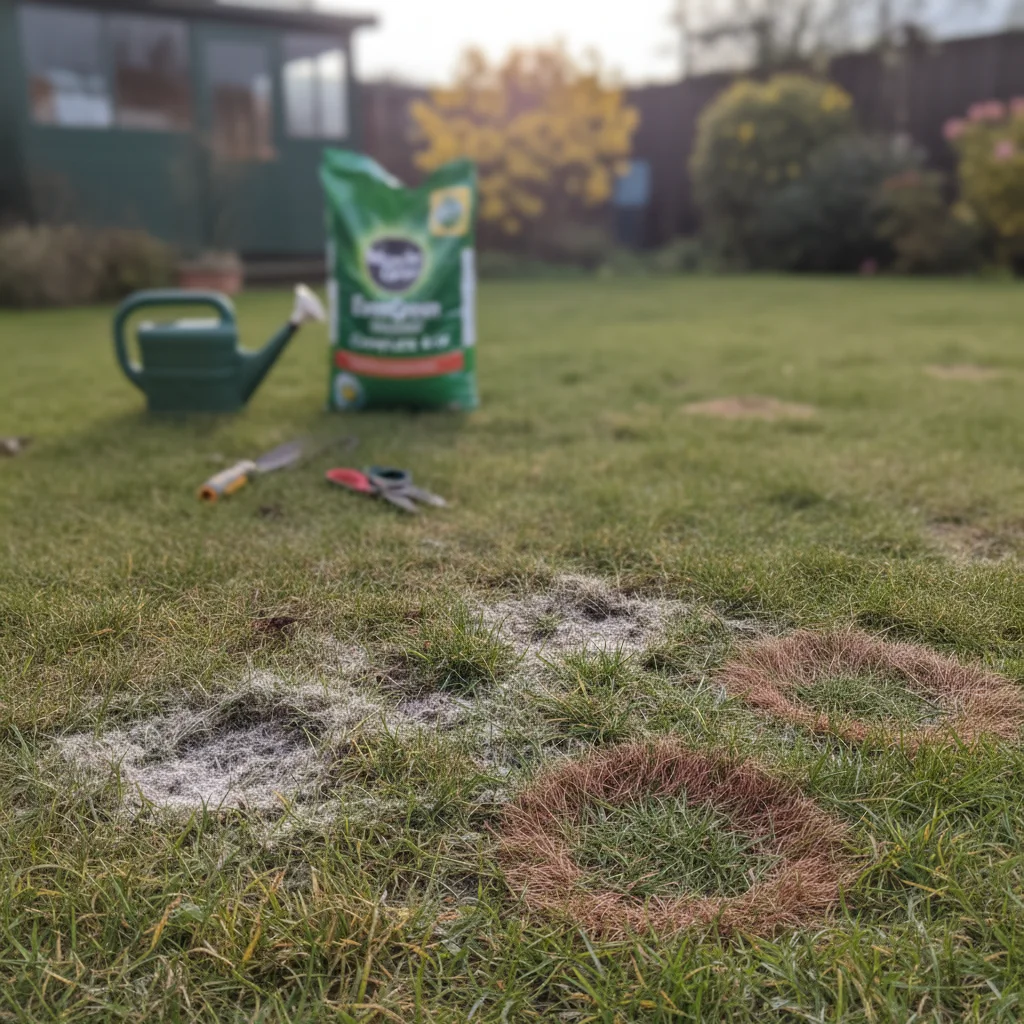
Before we can treat the problem, we must know exactly what we are dealing with. In the UK, the most frequent visitor is Red Thread (Laetisaria fuciformis). You will notice this when patches of your lawn start to take on a bleached, tan appearance, and upon closer inspection, you see tiny, coral-pink needles or "threads" sticking out from the grass blades. It is particularly common in late summer and autumn when the weather is warm and wet.
Red Thread is generally a sign that your grass is "hungry" and lacking in nitrogen. Nitrogen (the 'N' in the NPK ratio found on fertiliser bags) is responsible for leafy green growth. When nitrogen levels are low, the grass grows slowly, allowing the fungus to take hold. Because Red Thread does not usually kill the crown of the grass plant, it is one of the easier diseases to recover from simply by improving your feeding regime.
Another common issue, particularly as we move into the cooler months, is Fusarium Patch, often called Snow Mould (Monographella nivalis). This appears as small, water-soaked patches that rapidly turn yellow or brown. In very damp conditions, you might even see a white or pinkish fluffy growth, which is the fungal mycelium. This disease loves stagnant air and high moisture, which is why it often appears after a period of snow cover or in gardens with poor air circulation.
Improving drainage and aeration
The primary reason fungi take hold is excess moisture sitting on the leaf blade or around the roots. If your soil is heavy clay or has become compacted through heavy foot traffic, water cannot drain away, and the grass roots struggle to breathe. Compaction is the enemy of a healthy lawn, as it creates a literal "hard pan" that prevents nutrients and water from reaching the root zone, leaving the grass weak and susceptible to attack.
Aeration is the professional’s secret weapon for curing almost any fungal issue. By using a hollow-tine aerator, you remove small plugs of soil from the lawn, which immediately relieves pressure and allows oxygen to reach the roots. This gas exchange is vital for the beneficial soil microbes that help fight off pathogenic fungi. For most UK lawns, I recommend doing this in the autumn or spring when the ground is moist enough to allow the tines to penetrate deeply.
After aerating, it is often beneficial to apply a top-dressing of sharp sand or a sand-compost mix. This helps to keep those newly created holes open, permanently improving the structure of the soil. By ensuring that the top 10cm of your soil profile is free-draining, you make it much harder for water-loving fungi like Fusarium to establish themselves. It is a methodical, physical task, but the results are far more effective than any bottled spray.
Managing thatch and air circulation
Thatch is a layer of dead grass, moss, and organic debris that builds up between the green vegetation and the soil surface. A little thatch is normal, but when it exceeds 1cm in thickness, it acts like a sponge, holding onto moisture and providing a perfect nursery for fungal spores. If your lawn feels "spongy" underfoot, you likely have a thatch problem that is contributing to your fungal issues.
Scarification is the process of vigorously raking out this debris. While it can make your lawn look a bit "beaten up" in the short term, it is essential for long-term health. By removing the thatch, you allow the grass to dry out more quickly after rain or dew. You also ensure that any fertilisers or treatments you apply actually reach the soil rather than being absorbed by a layer of dead organic matter.
Improving air circulation around the lawn is another simple but overlooked cure. If your lawn is surrounded by dense hedges or overhanging trees, it can create a humid microclimate. Thinning out the lower branches of trees or pruning back heavy shrubs can allow more sunlight and wind to reach the grass. This helps the morning dew evaporate faster, which is often enough to stop the spread of Red Thread and Leaf Spot without any further intervention.
Essential steps for fungal recovery
When you are in the middle of an outbreak, it helps to have a clear sequence of actions to follow. These steps focus on strengthening the plant and making the environment as hostile as possible for the fungus.
- Check the sharpness of your mower blades, as ragged cuts from dull blades create open wounds that fungi can easily enter.
- Avoid watering your lawn in the evening; instead, water in the early morning so the grass can dry out during the day.
- Collect and dispose of grass clippings during an active fungal outbreak to prevent spreading spores across the garden.
- Apply a balanced fertiliser suited to the season to boost the plant's natural immunity and growth rate.
- Avoid walking on the lawn when it is covered in frost or excessively waterlogged to prevent damaging the grass crowns.
Feeding for resilience and health
Nutrition plays a massive role in how well your lawn survives a fungal attack. We often talk about NPK—Nitrogen, Phosphorus, and Potassium—and each has a role to play in disease resistance. As I mentioned earlier, Red Thread is often cured simply by applying a nitrogen-rich feed in the spring or summer. However, you must be careful with nitrogen in the autumn.
Applying a high-nitrogen fertiliser too late in the year can actually cause an outbreak of Fusarium. This is because nitrogen encourages "soft" lush growth, which is easily attacked by fungi during the damp winter months. In the autumn, you should switch to a "Winter Protector" style feed, which is lower in nitrogen and higher in potassium. Potassium (K) helps to strengthen the cell walls of the grass, making it physically tougher and more resistant to cold and disease.
I always advocate for using organic or slow-release fertilisers where possible. These products break down slowly over several months, providing a steady stream of nutrients rather than a sudden "flush" of growth. This results in a much heartier, more resilient plant. Furthermore, organic feeds help to build the population of beneficial bacteria and fungi in the soil, which act as a natural defence system against the "bad" fungi we are trying to eliminate.
Dealing with Fairy Rings and Toadstools
Fairy Rings are perhaps the most mysterious of lawn problems. They appear as circles of dark green grass, often accompanied by a ring of brown, dying grass or a circle of toadstools. This is caused by a fungus living in the soil that breaks down organic matter. As it grows outwards, it releases nitrogen (causing the green ring), but it also creates a thick, hydrophobic (water-repellent) mat of mycelium in the soil.
The real danger with Fairy Rings is that the soil inside the ring becomes so dry that the grass dies of thirst, even if it rains. To treat this, you need to break through that hydrophobic layer. I recommend using a garden fork to spike the area deeply and then applying a "wetting agent"—essentially a specialized soap that helps water penetrate the soil. In severe cases, the only cure is to dig out the affected soil, but for most domestic gardens, persistent spiking and heavy watering will manage the problem.
It is worth noting that common toadstools appearing in your lawn are usually not a cause for alarm. They are simply the fruiting bodies of fungi that are busy breaking down old roots or bits of wood in the soil. They don't actually harm the living grass and are often a sign of a biologically active, healthy soil. You can simply mow over them or brush them away if you find them unsightly.
Sustainable lawn care and fungicides
In the UK, the domestic use of chemical fungicides is becoming increasingly restricted, and for good reason. These chemicals are often "broad-spectrum," meaning they kill the beneficial soil life along with the disease. In my experience, relying on chemicals is a short-term fix that often leads to a cycle of dependency. Once the chemical wears off, the lawn is even more vulnerable because its natural defences have been stripped away.
Instead, I encourage a more sustainable, holistic approach. If you are struggling with persistent fungal issues, consider the pH of your soil. Most lawn grasses prefer a slightly acidic to neutral pH (around 6.0 to 7.0). If your soil is too alkaline, it can encourage certain diseases. You can buy a simple pH testing kit at most garden centres; if your soil is significantly off-balance, adding a bit of sulphate of ammonia (to lower pH) or garden lime (to raise it) can make a world of difference.
We should also think about the varieties of grass we are growing. If you have a shaded garden and are trying to grow a "luxury" fine-fescue lawn, you will likely face a constant battle with moss and fungus. In those areas, it is much better to overseed with shade-tolerant species like Poa trivialis or certain types of Perennial Ryegrass. Choosing the right plant for the right place is the cornerstone of sustainable gardening and will save you hours of troubleshooting in the long run.
Restoring the lawn after treatment
Once the fungus has been halted, you will likely be left with some bare or thinning patches. It is important to fill these gaps as quickly as possible, or weeds and moss will simply move in. Once the weather is mild (usually April or September in the UK), lightly rake the surface of the bare patches to create a fine tilth. Sow a high-quality grass seed over the area and cover it with a thin layer of peat-free compost to protect it from birds.
Keep these newly seeded areas moist, and you will see fresh green shoots within a week or two. By filling in the gaps, you are creating a dense sward that is much harder for fungal spores to penetrate in the future. A thick, healthy lawn is its own best defence. Regular maintenance, including sensible mowing heights—never removing more than one-third of the leaf blade at a time—will keep the grass strong and capable of outcompeting any pathogens.
By following these methodical steps—identifying the specific fungus, improving the physical structure of your soil, and providing the right nutrients at the right time—you can transform a diseased lawn into a resilient, verdant space. It takes a little more effort than a quick spray, but the reward is a healthier garden that works in harmony with nature. Now is the perfect time to head outside, check your lawn for those early signs of stress, and begin the process of restoring its natural health and vigour.
Frequently asked questions
Is every brown patch fungus?
No. Dogs, drought, leatherjackets, and dull mower blades all make brown patches. Fungus often has a pattern, mushrooms, or a time of year attached.
Should I use a fungicide?
Sometimes for confirmed disease on a valuable lawn. For most domestic lawns, aeration, less nitrogen at the wrong time, and removing thatch do more.
When should I get help?
If the patches are spreading fast across a large lawn, or you cannot tell pest from disease. A lawn specialist will look at thatch, drainage, and recent feeding.