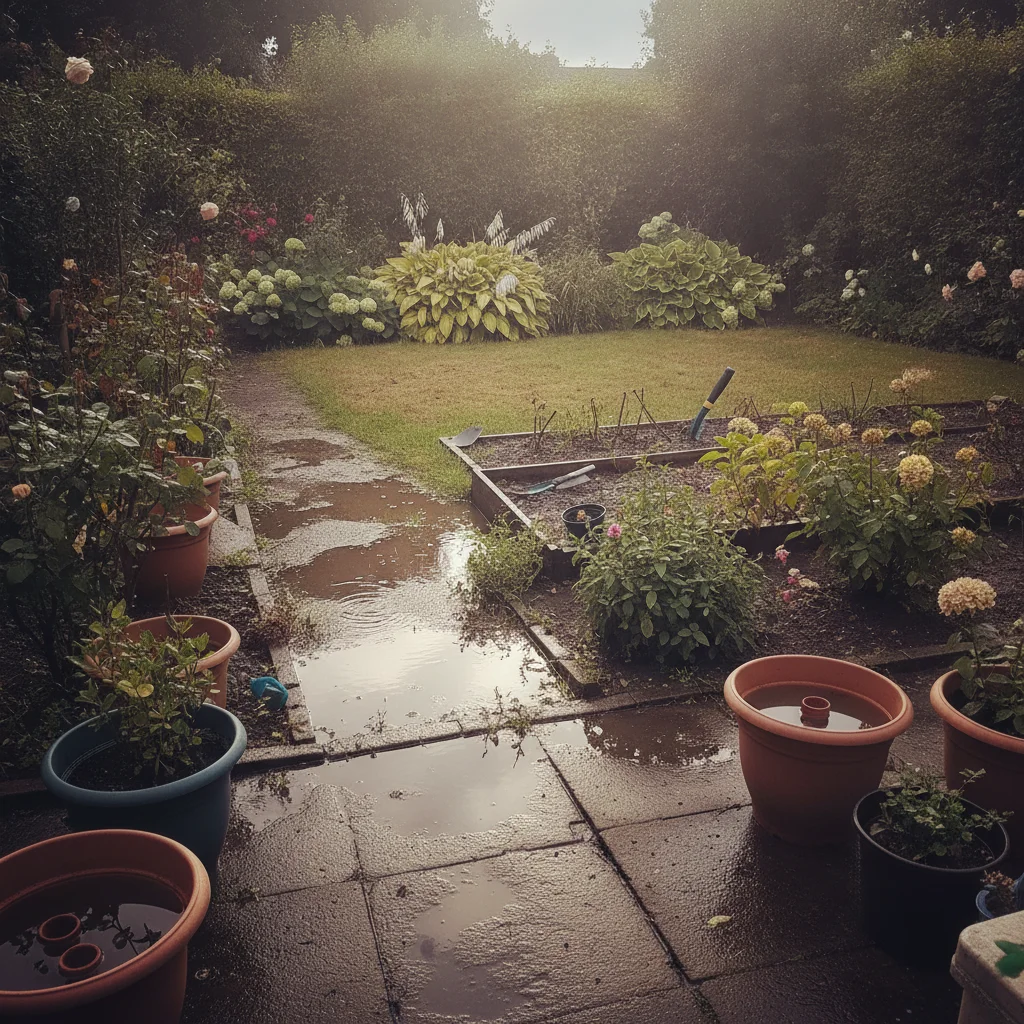
Soil waterlogged after rain means water cannot leave the root zone. Forking when it is wet makes it worse. Wait, then add organic matter, check levels, and only then think about land drains.
Heavy rainfall is an inescapable part of gardening in the UK, but seeing your prized borders or lawn submerged under a layer of standing water can be disheartening. When soil becomes waterlogged, the air spaces between soil particles fill with water instead of oxygen. This essentially suffocates the root systems of your plants, leading to a host of problems that can be difficult to reverse if left unaddressed for too long.
As a former head gardener, I have spent many winters and springs managing heavy clay soils that seemed determined to turn into a marsh. The key to managing waterlogged soil is a combination of immediate damage limitation and long-term structural improvement. Understanding how water moves through your specific garden environment allows you to make informed decisions that protect your plants and preserve the delicate biology of your soil.
The Golden Rule of Wet Soil
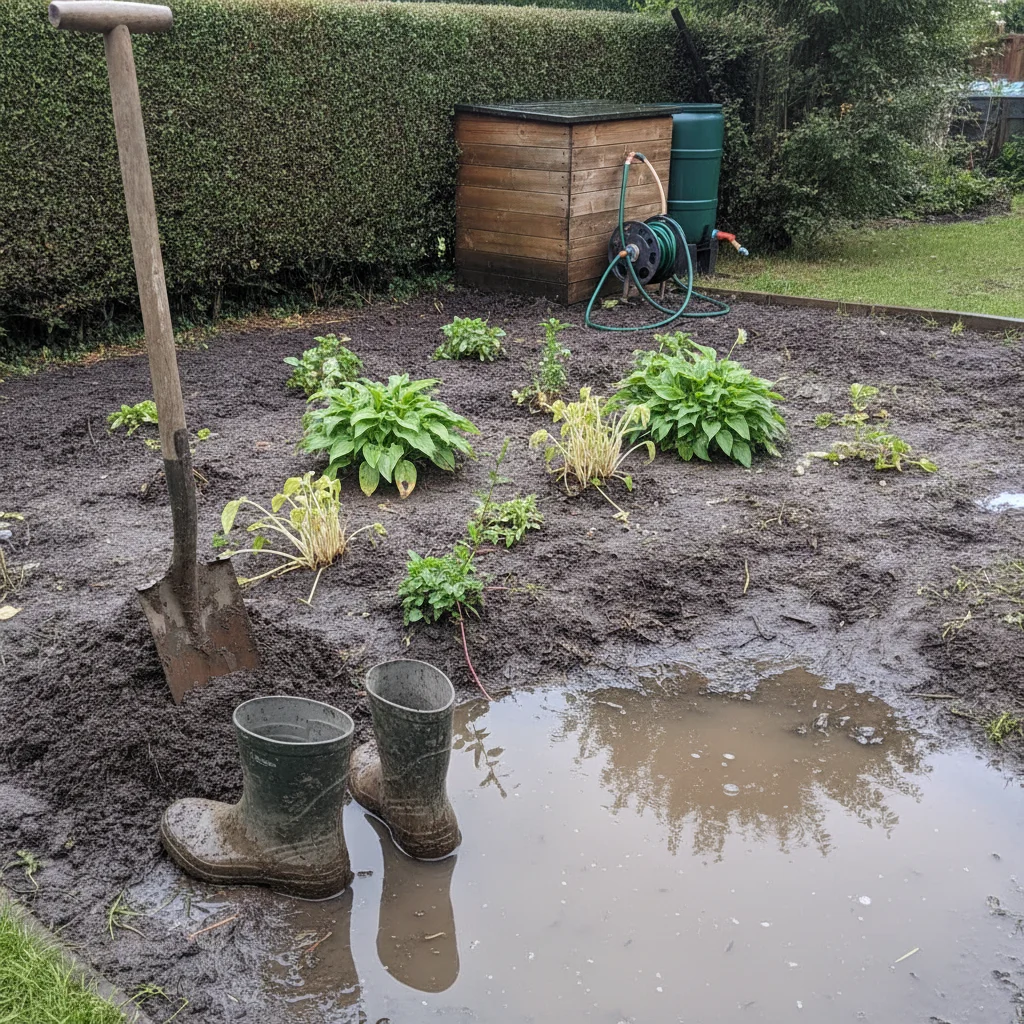
The most important thing you can do when your garden is underwater is nothing at all—at least in terms of physical movement. Walking on waterlogged soil is the quickest way to destroy its structure. When you apply the weight of your body to saturated ground, you compress the soil particles and squeeze out the remaining air pockets. This creates a compacted layer that acts like a seal, making it even harder for water to drain away in the future.
If you must access certain areas of the garden to rescue a particular plant or clear a blocked drain, always use "staging" or temporary paths. Laying down wide wooden planks or even thick sheets of plywood distributes your weight across a larger surface area. This prevents your boots from sinking in and causing deep compaction that could take years of aeration to fix.
Assessing the Damage to Your Plants
Not every plant reacts to a flood in the same way. Some species are remarkably resilient, while others will begin to show signs of distress within forty-eight hours of their roots being submerged. You should look for yellowing leaves, a drooping habit that looks like wilting despite the abundance of water, or a distinct smell of rot coming from the base of the plant.
Signs your soil is struggling
- Standing water that remains for more than six hours after rain stops.
- A foul, sulphurous smell like rotten eggs when you disturb the surface.
- A thick growth of liverworts or moss across the surface of your borders.
- Plants that appear stunted or exhibit "dieback" at the tips of their branches.
- A slimy, blue-grey appearance to the soil when you dig a small test hole.
When oxygen is absent, anaerobic bacteria begin to thrive. these bacteria produce gases that are often toxic to plant roots. If you notice the rotten egg smell mentioned above, it is a clear indicator that the soil has become anaerobic and needs urgent attention once the water levels recede.
Immediate Steps to Improve Drainage
Once the standing water has started to soak away, you can begin the process of aeration. For lawns, this is best achieved using a garden fork or a dedicated hollow-tined aerator. Drive the fork into the ground at intervals of about 10cm to 15cm and gently wiggle it back and forth. This creates deep channels that allow air to reach the root zone and provides a path for surface water to move deeper into the subsoil.
In your flower borders, you can achieve a similar effect by very gently "cracking" the surface with a hand fork. You aren't looking to turn the soil over, as this would be too disruptive while it is still wet. Instead, you are simply breaking the surface tension and any capping that has occurred. Capping is when a hard crust forms on top of the soil after heavy rain, which prevents both air and water from moving freely.
Understanding Your Soil Texture
To fix drainage issues permanently, you must understand what you are working with. Most UK gardens fall into the categories of clay, silt, or sand. Clay soils are made of tiny, flat particles that pack together tightly, making them naturally prone to waterlogging. Sandy soils have large, irregular particles with plenty of space between them, meaning they drain almost too quickly and rarely suffer from saturation.
You can perform a simple "ribbon test" to identify your soil type. Take a handful of moist soil and try to roll it into a sausage shape in your palm. If it crumbles immediately, you have sandy soil. If it forms a long, flexible ribbon that you can bend into a circle without it breaking, you are dealing with heavy clay. Most gardeners aim for "loam," which is a balanced mix of all three particle sizes and offers the perfect compromise between drainage and nutrient retention.
Improving Structure With Organic Matter
The most sustainable way to improve drainage in the long term is the regular addition of organic matter. It might seem counter-intuitive to add something that holds moisture to a wet garden, but organic matter like well-rotted manure, leaf mould, or peat-free compost actually improves soil structure. It encourages soil particles to bind together into "aggregates," creating larger pores through which water can drain.
I recommend applying a thick mulch of organic matter every autumn and spring. You don't need to dig it in; the worms and other soil organisms will do the hard work for you. This "no-dig" approach is particularly beneficial for heavy soils because it preserves the existing networks of drainage channels created by roots and earthworms. Over time, this builds a resilient soil profile that can handle heavy downpours without becoming a bog.
Essential Tools for Managing Wet Ground
Having the right equipment on hand makes the task of managing a wet garden much more manageable. You don't need a shed full of expensive machinery, but a few well-chosen items will save you a lot of physical effort and prevent unnecessary damage to your garden.
Practical tools for drainage maintenance
- A high-quality garden fork with sturdy, forged steel tines.
- A hollow-tine aerator for removing small plugs of soil from the lawn.
- Wide wooden planks for creating temporary walkways over wet borders.
- A sharp spade for digging temporary "grips" or shallow drainage furrows.
- A wheelbarrow with a wide pneumatic tyre to prevent sinking into soft turf.
When using a garden fork for aeration, ensure the tines are clean and sharp. Rusty or blunt tines will struggle to penetrate heavy clay and can actually cause more compaction as you force them into the ground. A quick rub with an oily rag after each use will keep your tools in top condition for the next rainy spell.
Creating Long Term Drainage Solutions
If your garden suffers from persistent waterlogging every winter, you may need to consider more permanent structural changes. One of the most effective methods is the installation of a French drain. This involves digging a trench in the lowest part of the garden, lining it with a permeable geotextile membrane, and filling it with rounded stones or gravel. This creates a low-resistance path for water to flow away from your plants and towards a more suitable soakaway or drain.
Another excellent option for heavy clay areas is the use of raised beds. By lifting the growing area 20cm to 30cm above the natural ground level, you ensure that the majority of the plant's root system stays above the "water table" of the surrounding soil. You can fill these beds with a high-quality mix of topsoil and compost, giving your plants the best possible start regardless of the conditions of the ground beneath them.
Choosing the Right Plants for Damp Spots
Sometimes, the best way to deal with a wet garden is to stop fighting nature and start working with it. There are many beautiful plants that thrive in "damp-to-wet" conditions. If you have a corner of the garden that is consistently soggy, consider planting moisture-loving species like Cornus alba (Dogwood), which offers stunning winter stem colour, or Salix (Willow) varieties.
Herbaceous perennials such as Iris sibirica, Persicaria amplexicaulis, and various types of Primula actually prefer having "wet feet" during the growing season. By choosing the right plant for the right place, you reduce the stress on the plant and the amount of maintenance you need to perform. This ecological approach to gardening is often more rewarding than trying to force a dry-loving lavender to survive in a waterlogged clay border.
Managing Your Lawn After a Downpour
Lawns are often the first part of the garden to show signs of waterlogging, usually in the form of squelchy patches or "puddling" on the surface. In addition to the aeration techniques mentioned earlier, you can improve lawn drainage by "top-dressing." This involves spreading a mixture of sharp sand and well-rotted organic matter over the surface of the lawn after you have aerated it.
The sand falls into the holes created by your fork or aerator, keeping them open for longer and allowing water to bypass the thatch layer. If you do this consistently every autumn, you will gradually change the composition of the upper layer of your lawn, making it much more resilient to heavy rain. Remember to avoid mowing your lawn when it is saturated, as the heavy weight of the mower will cause significant compaction and can even "scalp" the grass if the ground is soft and uneven.
Recovering After the Water Recedes
Once the weather dries up and the soil returns to a workable state, it is time to help your plants recover. Waterlogging often leaches essential nutrients, particularly nitrogen, out of the soil. Once the soil has warmed up in the spring, apply a balanced organic fertiliser to help your plants replace the lost nutrients and stimulate new root growth.
Keep a close eye on your plants for the rest of the season. Sometimes the damage from waterlogging doesn't show up immediately but manifests later in the summer as the plant struggles to take up water during a dry spell because its root system was compromised in the winter. Providing a little extra care, such as mulching to retain moisture in the summer and pruning out any dead wood, will help your garden bounce back stronger than ever.
By taking these steps to understand and improve your soil, you can transform a garden that struggles with every rain shower into a thriving, resilient space. Whether you are installing a new drainage system or simply committing to a regular mulching routine, the effort you put into your soil today will pay dividends in the health and beauty of your plants for years to come.
Frequently asked questions
Should I walk on waterlogged soil?
Avoid it. You compact clay into a pan that holds even more water. Stay off beds and lawns until they stop squelching.
Will sand fix it?
Not as a dusting on top. Serious waterlogging needs somewhere for water to go, plus organic matter over time. Sand mixed badly into clay can make a worse cement.
When do I hire drainage?
If water sits for days, or it is affecting the house or a neighbour. A landscaper can assess falls, soakaways, and whether a French drain is justified.