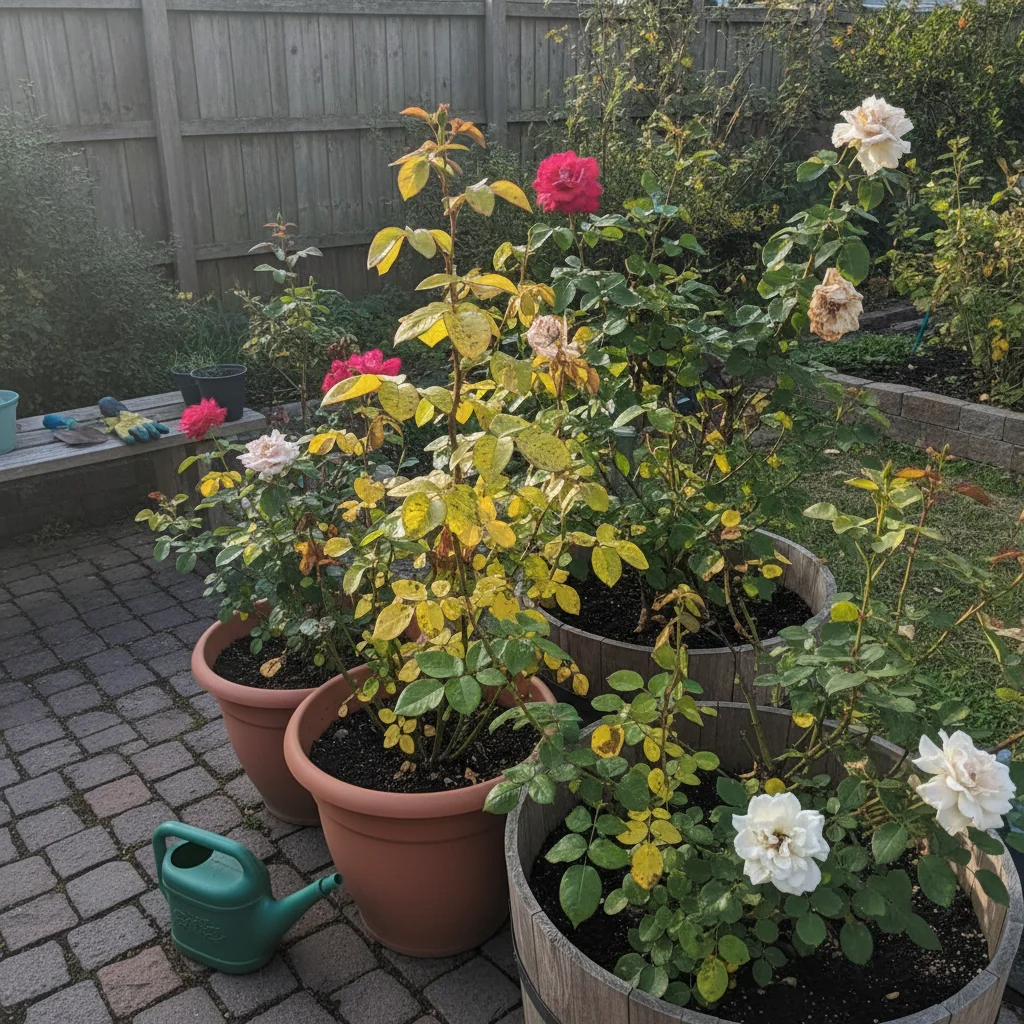
Yellow leaves on roses can be nutrient shortage, waterlogging, or blackspot — they are not one problem. Look at the pattern on the leaf, the soil moisture, and whether the plant is otherwise growing.
Seeing the once-vibrant foliage of your favourite rose bush turn a sickly shade of yellow is enough to make any gardener feel a sense of dread. It is a common sight in British gardens, often appearing just as the first flush of blooms begins to fade or during the height of a humid summer. This yellowing, known technically as chlorosis, is essentially the plant’s way of telling you that something is interfering with its ability to produce chlorophyll.
When chlorophyll production drops, the plant can no longer photosynthesise efficiently, which eventually leads to stunted growth and fewer flowers. However, a yellow leaf is rarely a death sentence for the plant. Instead, think of it as a diagnostic signal that requires a methodical approach to solve. By observing the pattern of the yellowing and the overall state of the soil, we can usually pinpoint the culprit and take action.
The causes range from simple environmental stress to complex nutrient lockouts in the soil. In my years as a head gardener, I have found that most rose problems stem from the ground up. Before you reach for a bottle of chemical spray, it is vital to understand whether the issue is a lack of food, a lack of air around the roots, or a common fungal visitor like black spot.
How to Spot Nutrient Deficiencies
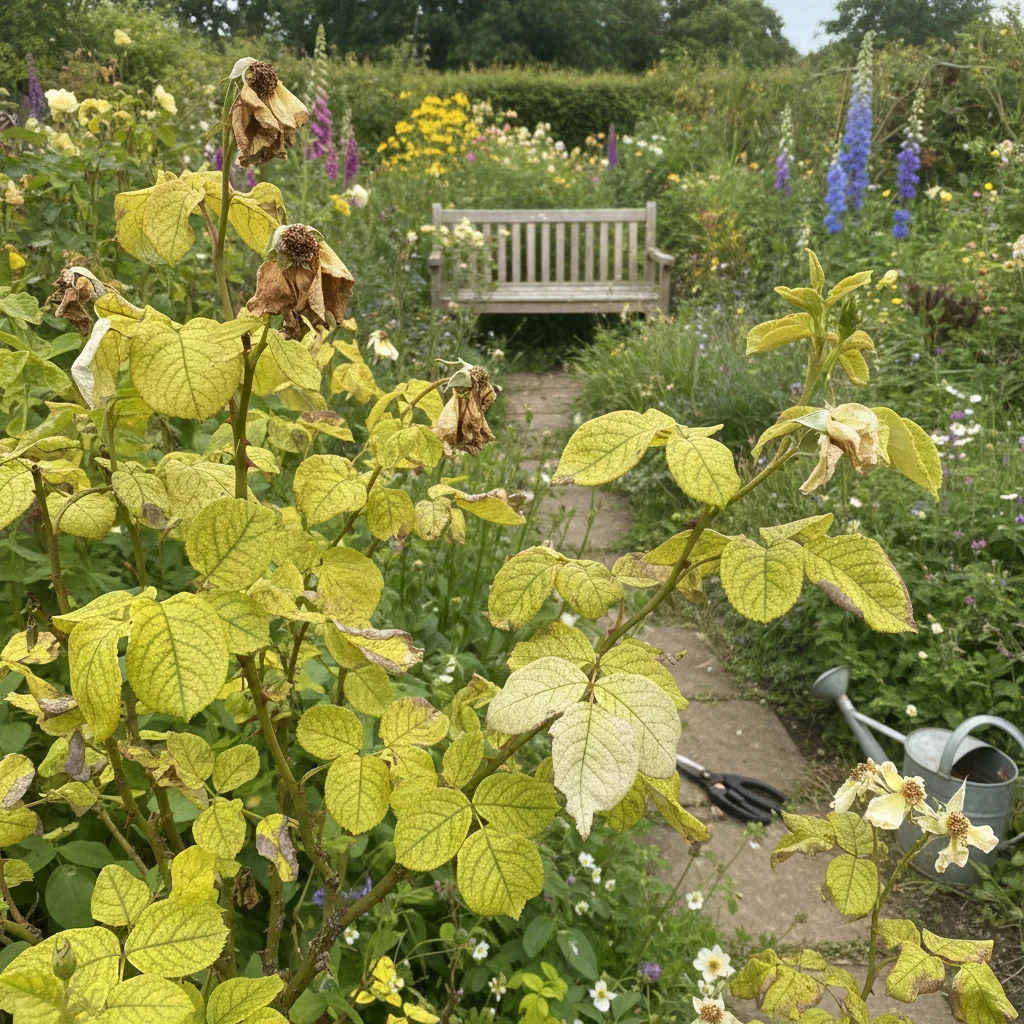
One of the most frequent reasons for yellow leaves is a lack of essential minerals. Roses are hungry plants, often described as "gross feeders" in horticultural circles. They require a steady supply of nitrogen, phosphorus, and potassium (NPK), along with trace elements like iron and magnesium, to maintain their lush appearance.
If the older leaves at the bottom of the plant are turning a uniform pale yellow while the rest of the plant looks relatively healthy, you are likely looking at a nitrogen deficiency. Nitrogen is a mobile nutrient, meaning the plant will pull it from old growth to support new shoots. To remedy this, apply a balanced organic fertiliser or a top-dressing of well-rotted manure in early spring and again in mid-summer.
Interveinal chlorosis is a slightly different beast, where the leaf tissue turns yellow but the veins remain a sharp, distinct green. This is almost always a sign of a trace element deficiency, typically iron or magnesium. Magnesium deficiency often shows up on older leaves first, sometimes with a reddish tint at the edges, whereas iron deficiency tends to strike the youngest leaves at the tips of the branches.
The Role of Soil pH
It is a mistake to assume that yellow leaves always mean the soil is empty of nutrients. Often, the minerals are present in the ground, but the rose simply cannot "unlock" them. This is usually down to the pH of your soil. Roses prefer a slightly acidic to neutral environment, ideally between 6.0 and 6.5 on the pH scale.
In many parts of the UK, particularly across the chalky soils of the South Downs or the Cotswolds, the soil is naturally alkaline. When the pH rises above 7.0, iron becomes chemically bonded to the soil particles and unavailable to the plant's roots. This is why you might see roses struggling with yellowing leaves in a garden that otherwise looks well-fed.
If you suspect your soil is too limey, you can use a simple home testing kit to confirm the pH. For roses in alkaline soil, I recommend applying a sequestered iron tonic or top-dressing with composted pine needles or sulphur chips to gently lower the pH. Long-term health is best maintained by regularly adding plenty of organic matter, such as garden compost, which helps buffer the pH and improve nutrient availability.
Managing Water and Drainage
Roses are surprisingly resilient, but they have very specific requirements when it comes to their roots. They enjoy "cool feet," meaning they like moist soil, but they absolutely loathe sitting in stagnant water. If your garden has heavy clay soil, which is common in many UK regions, poor drainage can quickly lead to root rot.
When roots are starved of oxygen due to waterlogged soil, they begin to die back. The first sign of this underground distress is often a sudden yellowing of the leaves, sometimes followed by the leaves dropping off entirely while still appearing somewhat succulent. Check the soil by digging down about 5cm; if it feels sodden and smells slightly sour, your drainage is the issue.
Conversely, underwatering during a dry British spell can cause similar stress. In drought conditions, the plant will sacrifice its older leaves to conserve moisture for the stems and roots. The key is consistency. Aim to water deeply once or twice a week rather than giving a light sprinkle every day. This encourages the roots to grow deeper into the soil where it stays cooler and more humid.
Identifying Black Spot and Fungal Issues
If the yellowing on your roses is accompanied by dark, circular blotches, you are dealing with black spot (Diplocarpon rosae). This is perhaps the most widespread fungal disease in the UK, thriving in the warm, damp conditions of our summers. The fungus produces chemicals that cause the leaf to turn yellow and drop prematurely.
Prevention is far better than cure when it comes to fungi. Start by ensuring there is plenty of space between your rose bushes to allow for good air circulation. This helps the foliage dry quickly after rain or morning dew, making it much harder for fungal spores to take hold. When pruning, always aim for an open "goblet" shape to keep the centre of the bush clear.
Hygiene is your best tool for managing black spot sustainably. Never leave fallen, diseased leaves on the ground over winter, as the spores will happily sit in the soil and reinfect the new growth in spring. Collect them all and put them in your green waste bin rather than your home compost heap, as domestic heaps rarely get hot enough to kill the spores.
Common Pests and Leaf Discolouration
Sometimes the yellowing isn't uniform but appears as a fine, pale mottling or stippling on the surface of the leaf. This is frequently the work of sap-sucking insects like spider mites or leafhoppers. Spider mites are particularly fond of roses grown in sheltered spots or greenhouses where the air is dry and still.
Check the undersides of the leaves for tiny webs or small, moving specks. If you find them, increasing the humidity around the plant can help, as can a firm blast of water from the garden hose to dislodge the colony. For a more serious infestation, an organic fatty-acid spray can be effective without harming the wider ecosystem of your garden.
- Nitrogen lack: Uniform yellowing starting on the oldest, bottom leaves.
- Iron/Magnesium lack: Yellow tissue with prominent green veins.
- Waterlogging: Yellowing accompanied by wilting and a damp, heavy soil feel.
- Black Spot: Yellowing surrounding distinct dark brown or black circular spots.
- Natural cycle: General yellowing in late autumn as the plant enters dormancy.
Sustainable Feeding and Mulching
To keep your roses in peak condition and prevent yellowing before it starts, we must look at the long-term health of the soil. A rose that is "stressed" by poor nutrition is far more likely to succumb to pests and diseases. I am a firm believer in the power of mulching to solve a multitude of garden sins.
Every spring, after you have finished your annual pruning, apply a 5-10cm layer of organic matter around the base of your roses. This could be well-rotted farmyard manure, peat-free garden compost, or even leaf mould. This mulch does three vital jobs: it suppresses weeds, retains moisture during the summer, and slowly releases nutrients into the soil as it breaks down.
During the growing season, you can give your roses an extra boost with a liquid seaweed feed every fortnight. Seaweed is a fantastic sustainable resource that contains a broad spectrum of trace elements and growth stimulants. It strengthens the cell walls of the leaves, making them tougher and more resistant to both the piercing mouthparts of aphids and the entry of fungal spores.
Seasonal Changes and Light Requirements
It is worth remembering that not all yellow leaves are a cause for alarm. As we move into late September and October, roses will naturally begin to shut down for the winter. This involves withdrawing nutrients from the leaves, causing them to turn yellow, orange, or brown before they fall. This is a perfectly healthy part of the plant's life cycle.
Light levels also play a significant role. If a rose is planted in too much shade, it may struggle to maintain its lower foliage. The plant will naturally shed the leaves that aren't receiving enough sunlight to pay for their own "upkeep" through photosynthesis. If your rose is becoming very leggy with yellowing at the base, it might be time to consider moving it to a sunnier spot or pruning back overhanging branches from nearby trees.
When moving a rose, always do so during the dormant season, typically between November and March. Use a handful of mycorrhizal fungi in the planting hole to help the roots establish quickly in their new home. This symbiotic relationship between fungi and roots significantly improves the plant’s ability to take up water and minerals, acting as a natural insurance policy against future yellowing.
By taking the time to observe the specific patterns of yellowing on your roses, you can move away from guesswork and provide exactly what the plant needs. Whether it is a simple adjustment to your watering routine or a more focused approach to soil pH, most rose problems are easily solved with a bit of patience and the right organic amendments. Your reward will be a garden filled with the deep green foliage and heavy, scented blooms that make the rose the undisputed queen of the British garden.
Frequently asked questions
Is it blackspot or a feeding problem?
Blackspot is usually dark blotches then yellowing. Pale yellow between veins with no spots is more often nutrient or pH. Wet feet yellows the whole plant.
Should I strip yellow leaves?
Pick up diseased leaves from the plant and the soil so spores do not sit there. Do not strip a plant bare in panic; improve air flow and watering first.
When do I replace the rose?
If it is chronically diseased in a damp, still corner, move or replace with a more resistant variety. Feeding a sick rose in the wrong spot is a yearly ritual, not a fix.