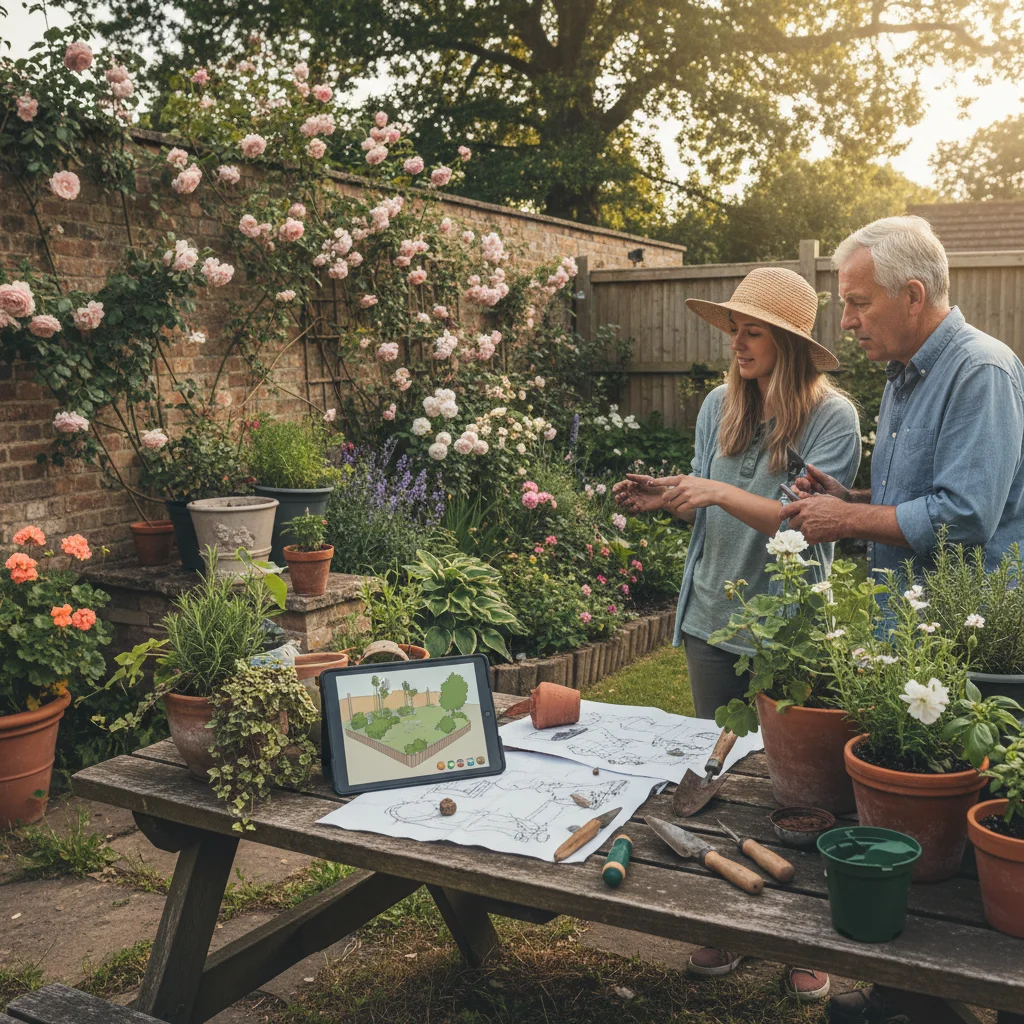
3D garden design lets you walk through a proposed layout on screen before anyone breaks ground, so you can check levels, paving, planting, and cost before you hire.
In my years as a head gardener and consultant, I have seen many homeowners struggle to translate a flat, two-dimensional paper plan into a living, breathing space. It is a common challenge because gardens are fundamentally three-dimensional environments defined by height, depth, and the changing light of the seasons. You might look at a circle on a drawing and know it represents a tree, but it is much harder to feel how that tree’s canopy will shade your patio on a July afternoon.
This is where 3D garden design and visualisation have changed the landscape for the better. By using sophisticated modelling techniques, designers can now build a digital twin of your outdoor space before a single spade hits the soil. It allows you to step inside your future garden, walk along the proposed paths, and understand the relationship between different levels and structures. This clarity is not just a luxury; it is a vital tool for ensuring the final result matches your expectations and your lifestyle.
When we talk about visualisation, we are moving beyond simple sketches. We are talking about a process that takes the guesswork out of the design phase. For many of my clients, the peace of mind that comes from seeing a realistic representation of their investment is worth as much as the design itself. It bridges the gap between a professional's creative vision and your personal understanding of how you will use the space.
What to expect from 3D outputs
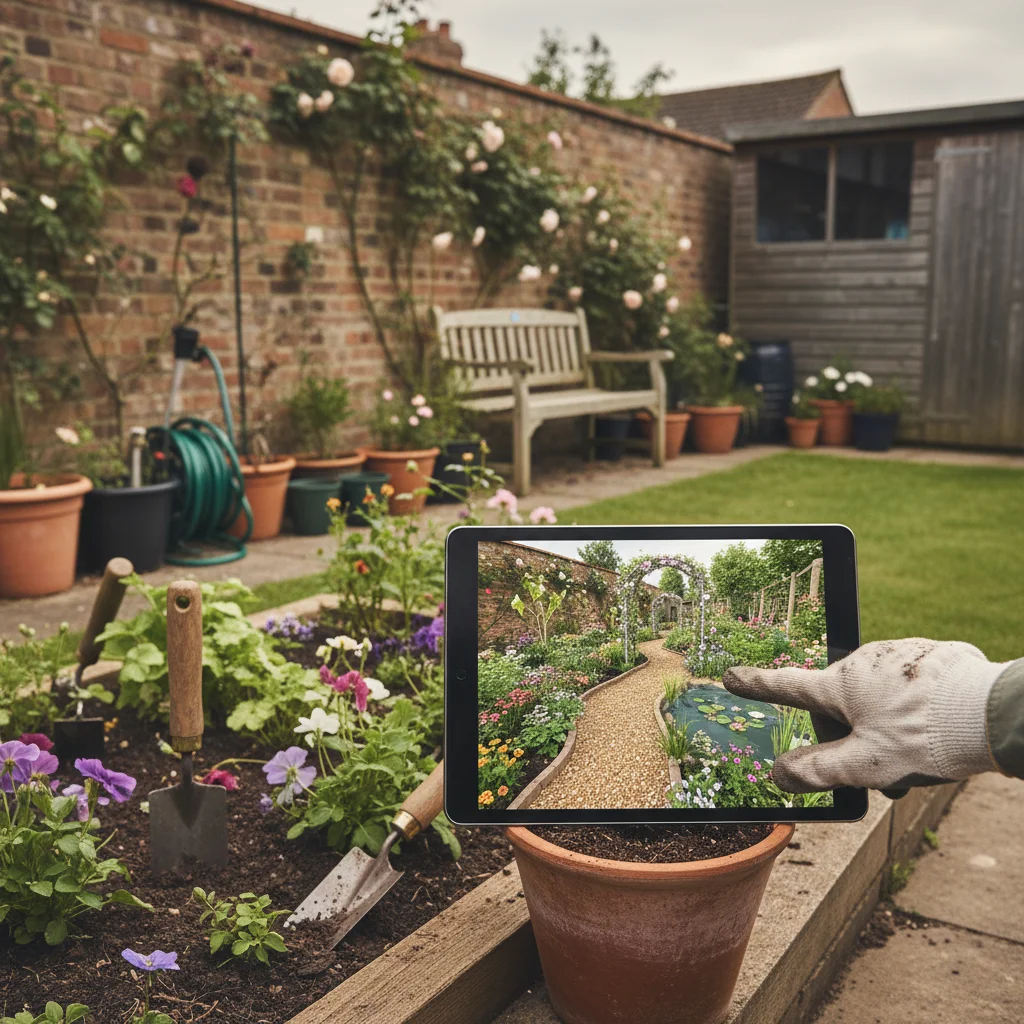
When you commission a 3D design, the designer will typically provide a suite of different visual assets. These are created after an initial site survey where the boundaries, levels, and existing features of your garden are precisely measured. The first thing you will likely see are "stills" or renders, which are high-resolution images taken from specific viewpoints within the digital model. These act like photographs from the future, showing you exactly how a new terrace might look from your kitchen window or how a water feature fits into a corner.
Beyond static images, many designers now offer immersive walkthroughs. These are essentially short films where the "camera" moves through the garden at eye level. This is particularly helpful for understanding the flow of a space. You can see how one "room" of the garden leads into another and whether the proportions of a pergola feel right when you are standing underneath it. It provides a sense of scale that is almost impossible to achieve with 2D drawings alone.
Some designers also provide 360-degree panoramas. These allow you to stand in one spot in the digital garden and look around in every direction, often using a tablet or even a virtual reality headset. It is a powerful way to check for "sightlines"—ensuring that a beautiful view is framed correctly or that an unsightly shed in the neighbour's garden is properly screened by new planting.
- High-resolution renders showing materials and lighting in detail.
- Video walkthroughs that simulate the experience of moving through the space.
- Sun path simulations that show where shadows fall at different times of day.
- 360-degree interactive views for a fully immersive perspective.
How 3D fits with traditional 2D plans
It is important to understand that 3D visualisations do not replace traditional 2D plans; rather, they work alongside them. The 2D "Master Plan" remains the most important document for the actual build. It is the birds-eye view that contains all the precise measurements, annotations, and technical specifications that a landscaper needs to quote for and build the project. If you only had a 3D render, your contractor would struggle to know exactly where to set out the foundations or how many square metres of paving to order.
Think of the 2D plan as the map and the 3D model as the photograph of the destination. The map tells the professionals how to get there, while the photograph tells you what it will feel like when you arrive. A good designer will use the 3D model to refine the 2D plan. If a 3D view reveals that a retaining wall looks too imposing, they can go back to the 2D drawing and adjust the levels before any stone is actually laid.
This integrated approach is particularly useful for complex sites with significant changes in level. In the UK, many of our gardens are sloped, and managing these levels is often the most expensive part of a build. A 2D plan shows steps and walls as lines, but a 3D model shows the true height of those elements. It helps you realise if a proposed terrace requires a safety railing or if a slope is too steep for comfortable mowing.
The benefits of sun path analysis
One of the most practical aspects of 3D visualisation is the ability to simulate the movement of the sun. In our climate, we want to make the most of every bit of sunshine we get. A 3D model can be geo-located to your exact coordinates, allowing the designer to show you where the shadows will fall at 10:00 AM in March versus 6:00 PM in August. This is invaluable for deciding where to place your main seating area or where to build a greenhouse.
I have seen many gardens where a beautiful stone terrace was built in a spot that looks perfect on paper, only for the owners to realise it sits in the shadow of the house for most of the afternoon. By using 3D sun studies, we can avoid these mistakes. It also helps with the health of your plants. If the model shows that a particular border is in deep shade for most of the day, we can choose shade-tolerant species like ferns and hostas rather than sun-loving lavender that would eventually fail.
This level of detail also extends to artificial lighting. Designers can add digital "lights" to the 3D model to show how your garden will look after dark. This allows you to plan the position of uplights for trees or path lights for safety, ensuring the garden is a functional space in the evening. It transforms the garden from a daytime-only feature into an extension of your home that provides a beautiful view from the house throughout the night.
Limitations versus on-site reality
While 3D visualisation is incredibly helpful, it is essential to remember that it is a representation, not a perfect replica of reality. Digital models often use "idealised" versions of plants and materials. For example, the digital rendering of a sandstone patio will look perfectly clean and uniform. In reality, natural stone has variations in colour, texture, and veining that no software can perfectly capture. Over time, that stone will also weather and develop a patina, which is something a static render rarely shows.
Plants are the most significant variable. In a 3D model, every plant is usually shown in its prime, perfectly pruned and in full bloom. In a real UK garden, plants grow at different rates, lose their leaves in winter, and are subject to the whims of the weather. A designer might show you a "year five" view where the hedge has filled in perfectly, but you must remember that in year one, those same plants will look much smaller and more sparse.
There is also the matter of the surrounding environment. While a designer will try to model your house and the immediate neighbouring structures, they may not include every distant tree or telephone wire. The "feel" of a garden—the sound of the wind through the leaves, the smell of the damp earth, or the noise from a nearby road—cannot be captured in a digital render. You should use the 3D model as a guide for layout and volume, but keep an open mind about the organic textures and atmosphere of the physical site.
Making better decisions and saving costs
The primary reason to invest in 3D design is the ability to make informed decisions early in the process. Changing your mind about the position of a wall or the type of paving is free when it happens on a computer screen. Changing your mind once the materials have been delivered and the foundations have been poured is incredibly expensive. Visualisation allows you to "try on" different materials and layouts to see what truly resonates with you.
For example, you might be torn between a contemporary porcelain tile and a traditional reclaimed brick. A designer can swap these textures in the 3D model with a few clicks, allowing you to see which one complements your house's architecture more effectively. This visual evidence often makes it much easier for partners or family members to agree on a direction, reducing the stress that often accompanies a large home improvement project.
It also helps with the "human scale" of the garden. We can place digital figures within the model to show how much space is left on a patio once a six-seater dining table and a barbecue are added. If the space looks cramped in the 3D view, we know we need to increase the size of the paved area or choose more compact furniture. This prevents the common disappointment of finishing a garden only to find it doesn't quite function the way you intended.
- Experiment with different material colours and textures before purchasing.
- Test the scale of furniture and structures to ensure comfortable movement.
- Communicate clearly with contractors to ensure they understand the vision.
- Identify potential privacy issues with neighbours before planting or building.
The role of 3D in sustainable design
From my perspective as a horticulturist, 3D design is also a fantastic tool for sustainability. By accurately modelling the topography of your site, we can better plan for water management. We can see where rainwater is likely to pool and design "rain gardens" or soakaways that manage runoff naturally. This prevents the wasteful use of concrete and ensures that your garden works with the local environment rather than against it.
We can also use the model to plan for the long-term health of the soil and local wildlife. By visualising the height of different planting layers—from ground covers to the shrub layer and the tree canopy—we can create a more diverse habitat. The 3D view helps us ensure we aren't over-planting, which leads to competition for nutrients and water, or under-planting, which leaves the soil exposed to erosion and weeds.
Ultimately, 3D garden design is about confidence. It allows you to invest in your outdoor space knowing that the end result will be a harmonious, functional, and beautiful environment. It turns the daunting task of a garden renovation into an exciting journey of discovery. When you can see the potential of your land in such vivid detail, the process of bringing that garden to life becomes much more rewarding for everyone involved.
By embracing these modern tools, you are not just buying a set of pictures; you are ensuring that every pound spent on your garden contributes to a space that will bring you joy for years to come. Whether you are planning a small urban courtyard or a large country estate, seeing it in 3D is the first step toward making your vision a reality. Talk to your designer about how they can use these visualisations to help you refine your ideas and create a garden that truly feels like home.
Frequently asked questions
What is 3D garden design used for?
It is a visualisation of a proposed garden — paths, levels, planting, and structures — so you can approve the layout before construction starts.
Do I need 3D visuals to hire a garden designer?
Not always. Simple planting plans can be drawn in 2D. 3D is most useful for expensive hard landscaping, tight spaces, or when several people need to agree the look.
How do I find 3D garden design locally?
Ask designers whether they model in 3D, what is included in the fee, and browse gardeners and landscapers on Spadeshire for your area.