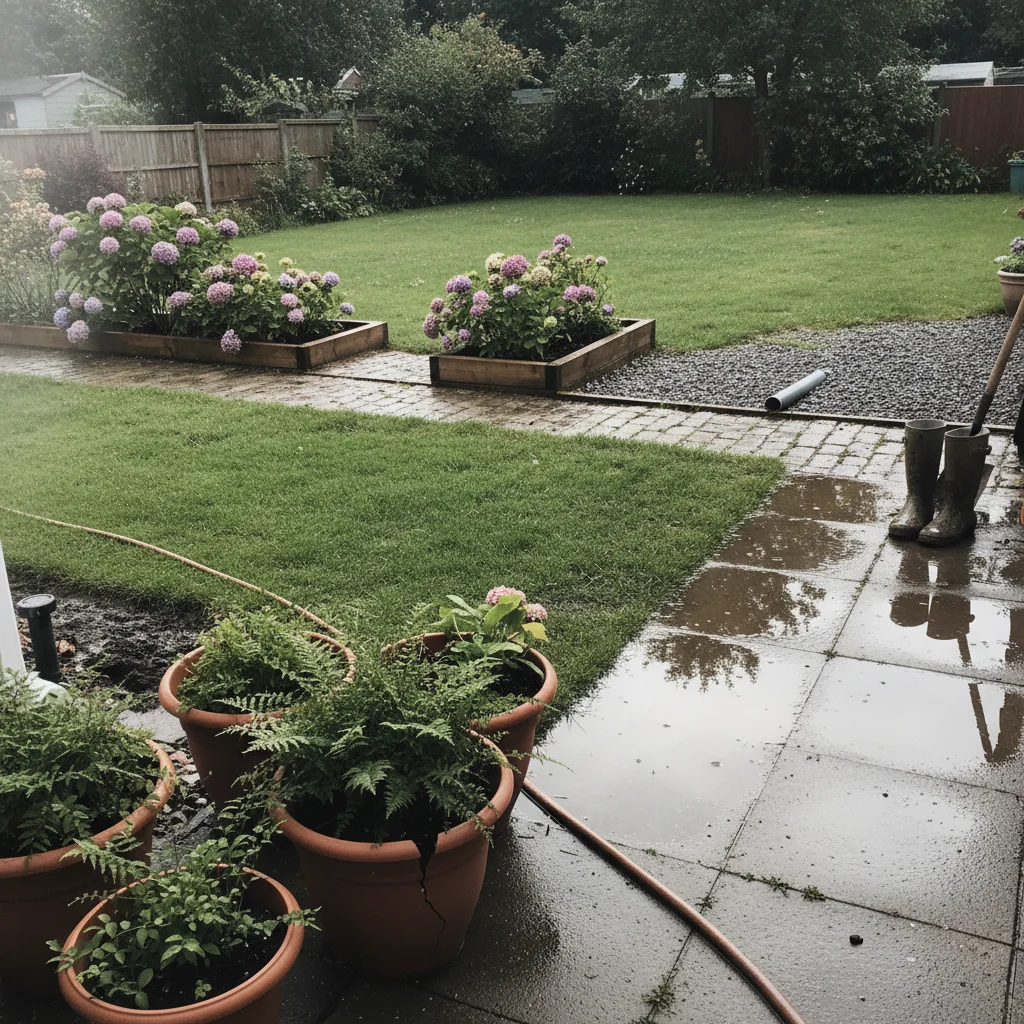
Garden drainage problems show up as puddles, a squelching lawn, or water sitting on paving after rain. The fix is usually a mix of soil improvement, falls, and somewhere for the water to go — not just more holes in the lawn.
The British weather is a constant talking point for a reason. While our frequent rainfall keeps our landscapes lush and green, it also presents a significant challenge for the average homeowner. When the heavens open and the rain doesn't stop, many of us find our gardens transformed into something resembling a marsh rather than a place for relaxation.
A waterlogged garden is more than just a nuisance that keeps you indoors. It can lead to the death of prized plants, the destruction of a healthy lawn, and even structural issues if water pools too close to your home's foundations. Understanding why your garden isn't coping with the wet stuff is the first step toward reclaiming your outdoor space and ensuring it remains functional all year round.
Why your garden stays wet
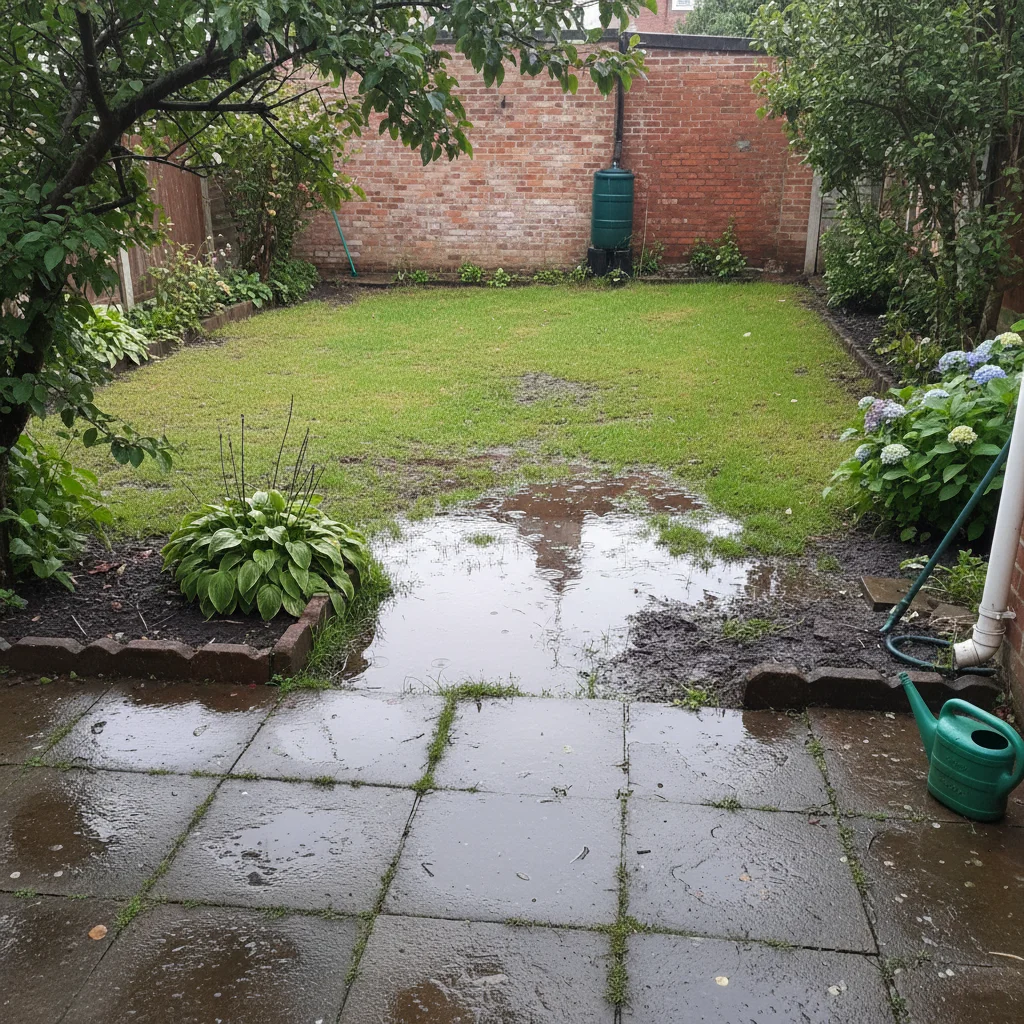
Most drainage problems in the UK stem from the fundamental makeup of our soil. If you live in an area with heavy clay, you likely know the struggle well. Clay is composed of tiny, flat particles that pack together tightly, leaving very little space for air or water to move through. When it rains, these particles swell, essentially creating an impermeable barrier that keeps water sitting on the surface.
Beyond the soil type, your garden's history plays a massive role. New-build properties often suffer from "subsoil compaction," where heavy machinery used during construction has crushed the earth into a dense, solid mass. Even if a thin layer of topsoil and turf is laid over the top, the water has nowhere to go once it hits that compacted layer. This creates a "perched water table" where the top few centimetres of your garden stay perpetually squelchy.
Landscape levels are the final piece of the puzzle. Water will always follow the path of least resistance, flowing from high points to low points. If your garden sits at the bottom of a slope, or if it has been landscaped without a slight "fall" to guide water away, you will inevitably end up with standing pools. Identifying these low spots is essential before you can decide on a solution.
The impact of poor drainage on your plants
We often think of water as the lifeblood of the garden, but too much of it is just as deadly as a drought. Plant roots need oxygen to survive, which they usually find in the tiny air pockets between soil particles. When your soil is saturated, those pockets fill with water, effectively drowning the roots. This leads to anaerobic conditions, where the lack of oxygen causes roots to rot and beneficial soil microbes to die off.
You might notice your plants looking yellow, wilting despite the wet ground, or simply failing to grow. This is often misdiagnosed as a lack of nutrients, but in reality, the plant is unable to "breathe" or take up the goodness already in the soil. Over time, a waterlogged garden will only support a limited range of moisture-loving weeds and moss, while your ornamental shrubs and perennials slowly decline.
The soil structure itself also suffers when it stays wet for too long. Saturated soil loses its "crumb" or tilth, becoming a sticky, anaerobic mess that is impossible to work with. If you try to dig or walk on it while it is in this state, you only worsen the compaction, creating a vicious cycle that is hard to break without professional intervention.
Signs that your garden has a drainage problem
It isn't always as obvious as a giant puddle in the middle of the lawn. Sometimes, the signs of poor drainage are more subtle and develop over several seasons. Recognising these early indicators can help you act before the problem causes permanent damage to your landscaping or home.
- Persistent moss growth: While moss loves shade, its primary requirement is consistent moisture; a lawn that is more green-brown moss than grass is a classic sign of drainage issues.
- The squelch test: If the ground feels spongy or makes a squelching sound underfoot more than 24 hours after the rain has stopped, your soil is not draining effectively.
- Surface puddling: Water that sits on the surface of your lawn or patio for hours after a downpour indicates that the ground below is either saturated or impermeable.
- Yellowing grass and plants: When roots are starved of oxygen, foliage often turns a sickly yellow or pale green as the plant enters survival mode.
- Cracking in dry weather: Paradoxically, heavy clay that gets waterlogged in winter often shrinks and cracks deeply during summer dry spells.
Managing a waterlogged lawn
The lawn is usually the first place we notice drainage issues. Because grass has relatively shallow roots, it is highly susceptible to the "drowning" effect of standing water. If your lawn is a no-go zone for six months of the year, it is likely suffering from a combination of compaction and poor soil structure.
Aeration is the most common professional recommendation for improving lawn drainage. This involves creating deep holes in the soil to allow air and water to penetrate the root zone. While a garden fork can be used for small areas, professional "hollow tining" is much more effective. This process removes small cores of soil, which are then replaced with a free-draining "top dressing" like horticultural sand or a sandy loam.
Over time, this changes the physical makeup of your lawn's upper layer. It creates permanent channels for water to move through, bypassing the compacted surface. However, if the problem is deep-seated or caused by a high water table, surface aeration alone might not be enough. In these cases, you may need to look at more structural solutions that move water away from the lawn entirely.
Dealing with patio and hardscape runoff
Patios and driveways are non-porous surfaces, meaning every drop of rain that hits them has to go somewhere. If your patio was installed without a proper gradient, or "fall," water will pool in the centre or, worse, flow back toward your house walls. This can lead to damp issues inside the home or cause the paving slabs to become dangerously slippery with algae.
Modern building regulations are quite strict about where this water goes. You aren't usually allowed to simply direct patio runoff into the public sewer system, as this contributes to urban flooding. Instead, water should be directed toward a "soakaway" or a permeable area of the garden. A professional landscaper will often install "ACO drains"—those narrow metal or plastic grates you see at the edge of paving—to catch the water and channel it safely away.
The base beneath your patio is just as important as the surface. If the sub-base is made of the wrong materials or hasn't been compacted correctly, it can trap water beneath the slabs. This leads to "frost heave" in the winter, where freezing water expands and lifts the paving, causing it to crack or become uneven. A well-drained sub-base ensures that any water that finds its way between the joints can pass through into the ground.
The role of French drains and land drains
When surface treatments like aeration aren't enough, we have to look at underground solutions. The most common of these is the French drain. Conceptually, a French drain is a trench filled with gravel or rock that contains a perforated pipe. It acts as a subterranean highway, collecting groundwater and directing it to a lower point, such as a soakaway or a dedicated water course.
These drains are particularly effective at intercepting "sheet flow"—water that moves across the surface of a slope—before it reaches your lawn or patio. By burying the drain at the edge of a problem area, you can catch the water and move it elsewhere before it has a chance to saturate the soil. It’s a methodical, invisible way to manage large volumes of water without changing the look of your garden.
Land drains are similar but are often laid in a "herringbone" pattern across a large, flat area like a lawn. These pipes sit in trenches filled with shingle, drawing water out of the surrounding soil like a sponge. Because these systems involve significant excavation and precise calculations of "fall" to ensure the water actually moves, they are projects best handled by professionals with the right surveying equipment.
Sustainable water management in the garden
As gardeners, we have a responsibility to manage water in a way that doesn't just pass the problem on to our neighbours. Sustainability is at the heart of modern drainage design. Instead of simply piping water away as fast as possible, we can use "SUDS" (Sustainable Urban Drainage Systems) to slow the water down and let it return to the earth naturally.
Rain gardens are a beautiful way to achieve this. These are shallow depressions planted with specific species that don't mind being temporarily flooded. They act as a natural basin, catching runoff from roofs or patios and allowing it to soak into the ground over 24 to 48 hours. Plants like Iris pseudacorus (Yellow Flag Iris) or Cornus alba (Red-barked Dogwood) thrive in these conditions and help filter pollutants out of the water.
Using permeable paving is another excellent choice for the eco-conscious gardener. These systems use specially designed blocks and aggregates that allow water to pass directly through the surface into the ground below. This reduces the need for complex pipework and helps recharge the local groundwater, keeping your soil healthier in the long run.
When to call in a professional
While a bit of light spiking on a lawn is a great weekend task, significant drainage issues require an expert eye. There is a real risk of property damage if drainage is handled incorrectly. For example, digging a trench too close to a house or incorrectly directing water toward a neighbour’s boundary can lead to serious legal and structural headaches.
A professional drainage expert or landscaper will start by surveying your garden. they look at the "topography"—the highs and lows of the land—and perform "perc tests" (percolation tests) to see exactly how fast your soil can absorb water. This data allows them to design a system that is sized correctly for the amount of rainfall your specific area receives.
Professionals also have access to the machinery needed to move tonnes of soil and shingle without destroying the rest of your garden. They understand the intricacies of "outfalls" and soakaways, ensuring that your new drainage system complies with local building regulations and environmental standards. Investing in a professional solution might seem like a big step, but it is the only way to ensure a permanent fix.
Reclaiming your outdoor space
Fixing your garden's drainage is one of the most rewarding investments you can make. It transforms a muddy, unusable swamp into a functional extension of your home. Once the water is under control, you’ll find that your lawn stays greener, your plants grow more vigorously, and you can actually enjoy your patio after a summer shower without wading through puddles.
Good drainage is the foundation of a healthy garden. By addressing the underlying issues of soil compaction and water flow, you are creating an environment where nature can thrive. If you’re tired of looking at a waterlogged lawn every time it rains, now is the time to look into a long-term solution that will protect your home and your plants for years to come.
The best time to address drainage is before the heavy rains of autumn and winter arrive. Taking action now means your soil will have time to settle and your lawn will have the chance to recover its strength. Reach out to a local professional to discuss a survey and take the first step toward a drier, healthier, and more beautiful garden today.
Frequently asked questions
Why is my garden waterlogged after rain?
Compaction, clay, a patio laid without fall, or a downpipe dumping onto the lawn. Water has to leave the surface somehow; if it cannot, it sits.
What does a garden drainage job include?
Diagnosis first: soakaway, channel drain, French drain, or re-levelling. A good tradesperson will not sell pipework before checking the cause.
When do I need a professional?
Hire if water is entering the house, the lawn is a bog for weeks, or you need excavation. Light aeration and adding organic matter can help milder clay lawns.