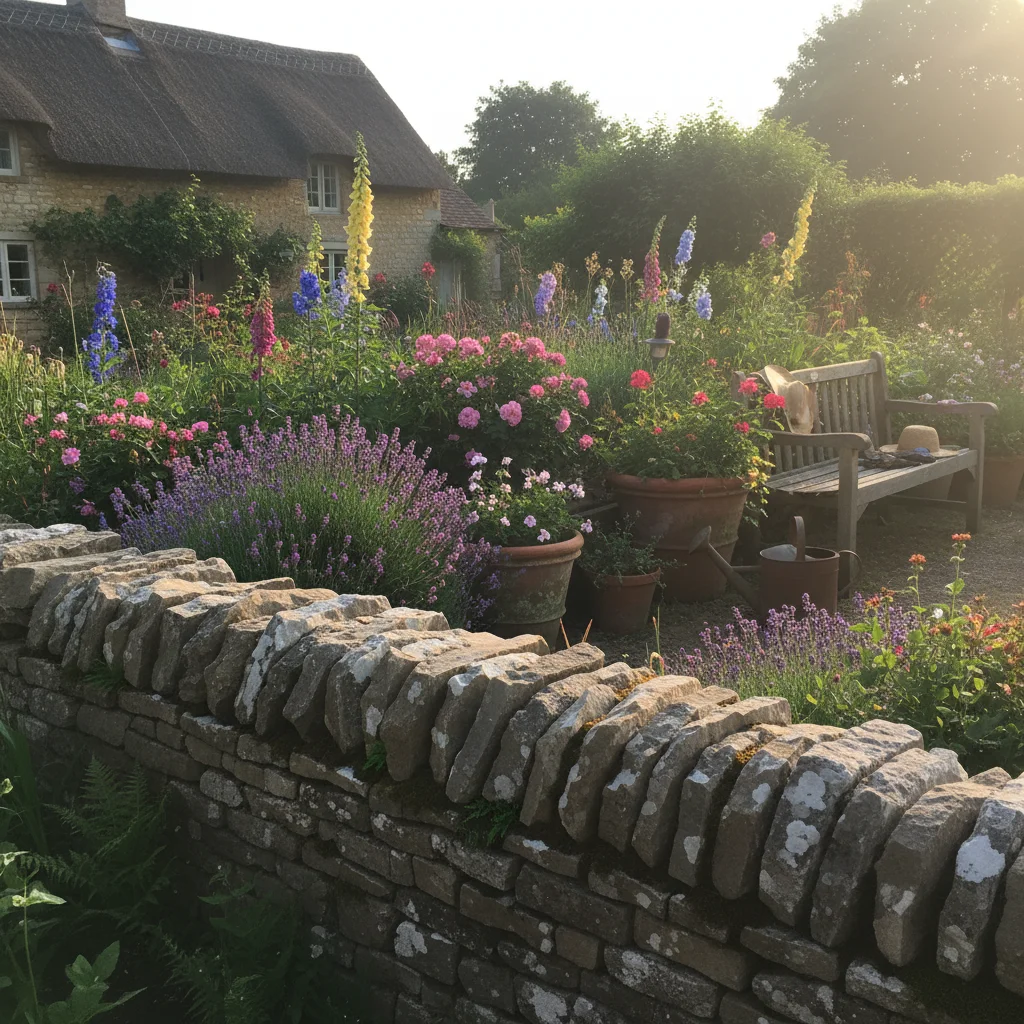
Dry stone walling is a specialist craft: no mortar, stones packed so the wall stands on friction and weight. Hiring someone who has built retaining or boundary walls in your local stone is the difference between heritage and a collapse.
When you walk through the Peak District, the Cotswolds, or the rugged highlands of Scotland, the landscape is defined by a ribbons of stone that seem to grow directly out of the earth. These dry stone walls are more than just simple boundaries; they are a testament to a craft that has remained largely unchanged for millennia. In an era of quick-fix garden solutions and mass-produced fencing, the dry stone wall stands apart as a sustainable, permanent, and deeply evocative choice for any British garden.
As a horticulturist, I have always admired the way these structures sit in harmony with the natural environment. Unlike a brick wall held together by rigid mortar, a dry stone wall is a living thing that flexes with the seasons and breathes with the soil. It relies entirely on the skill of the craftsman to interlock individual stones, using nothing but gravity and friction to create a barrier that can easily last for two hundred years or more.
Choosing to install or restore a dry stone feature is an investment in the long-term character of your property. Whether you are looking to create a traditional boundary, a tiered retaining wall for a sloping lawn, or a bespoke garden feature like a stone seat, understanding the mechanics and the heritage of this craft is the first step toward a successful project.
The mechanics of a mortar free structure
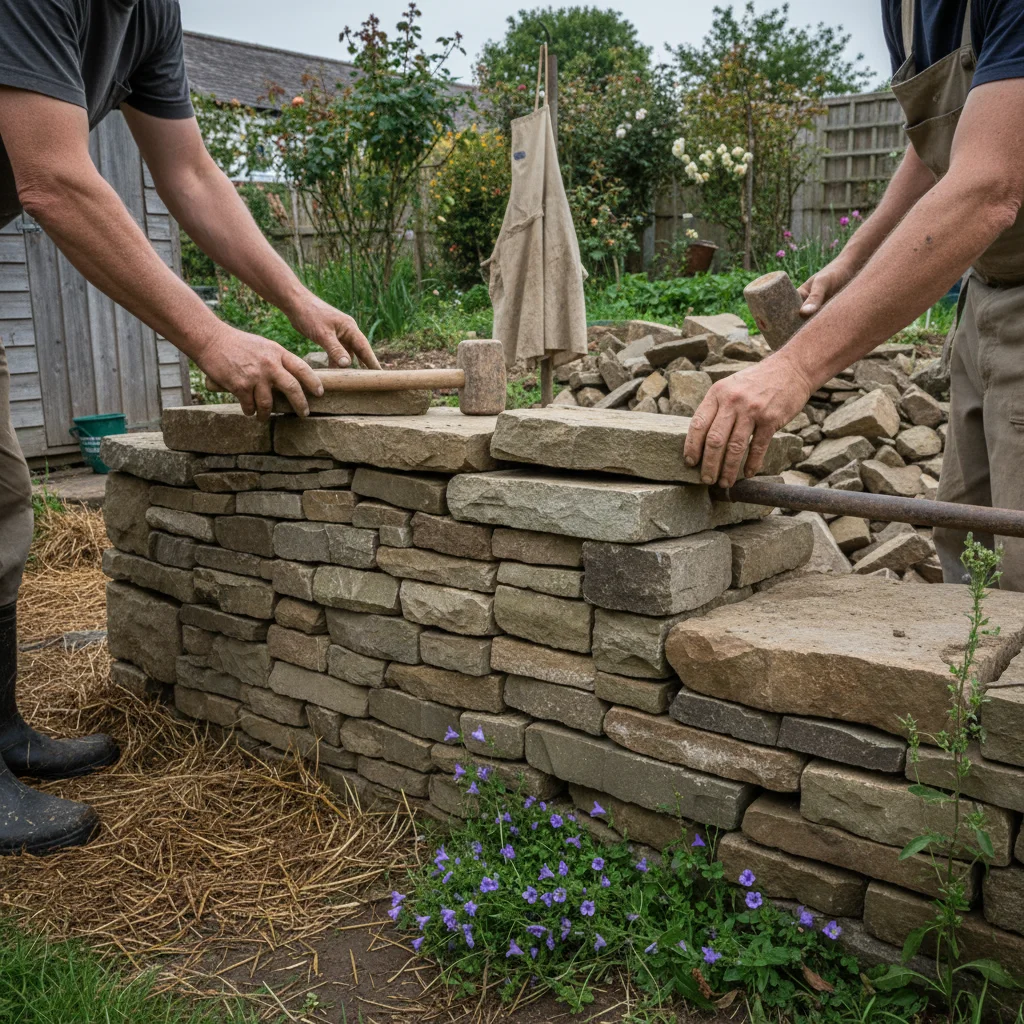
The most common question people ask is how these walls stay standing without a single drop of cement or mortar. The secret lies in the internal geometry of the wall. A professional waller does not just pile stones on top of one another; they build two separate faces that lean slightly inward toward each other, a technique known as the batter.
The space between these two faces is filled with "hearting," which consists of smaller, jagged stones packed tightly together. This internal core is the backbone of the wall, providing the weight and friction necessary to lock the larger face stones in place. Without proper hearting, a wall is merely a decorative shell that will eventually collapse under its own weight or the pressure of the earth behind it.
Another critical component is the use of "through-stones." These are long stones that span the entire width of the wall, tying the two faces together at regular intervals. They act like structural anchors, preventing the two sides from bulging outward over time. Finally, the wall is topped with "coping stones" or "toppers," which provide weight to the top of the structure and protect the smaller hearting stones from being dislodged by wind or livestock.
Natural drainage and structural stability
One of the greatest advantages of dry stone walling is its inherent ability to manage water. In our often damp UK climate, traditional mortared walls frequently suffer from hydrostatic pressure. This occurs when water becomes trapped behind the wall, freezes, expands, and eventually causes the mortar to crack and the bricks to spall.
A dry stone wall is naturally porous, allowing water to filter through the gaps between the stones without causing any damage. This makes them the gold standard for retaining walls on sloping sites. Instead of building up pressure, the water simply seeps through the hearting and out the front face, keeping the soil behind the wall stable and preventing the "blowouts" so common in modern masonry.
This flexibility also allows the wall to settle and move slightly with the ground. In areas with heavy clay soils that shrink and swell, or in heritage settings where the ground may be uneven, a dry stone wall can adjust to these minor shifts. A rigid wall would crack under the same stress, but a dry stone structure maintains its integrity because it is composed of thousands of individual moving parts.
Regional stone and heritage styles
The look of a dry stone wall is dictated entirely by the geology of the local area. In the UK, we are blessed with an incredible variety of stone, each requiring a different technique. In the Cotswolds, the honey-coloured oolitic limestone is often laid in thin, flat courses, resulting in a neat and refined finish that suits formal gardens beautifully.
In contrast, the dark, rugged gritstone of the Pennines or the granite of Cornwall often results in a much more massive, irregular appearance. The stones are larger and more rounded, requiring a different approach to interlocking. When you are planning a wall, it is almost always best to use stone sourced from a local quarry to ensure the feature looks like it belongs in the landscape.
Using local stone is also the most sustainable choice you can make. It reduces the carbon footprint associated with transporting heavy materials across the country and supports local rural industries. Furthermore, weathered stone often carries its own ecosystem of lichens and mosses, which will quickly colonise a new wall if the material is chemically compatible with the local environment.
Creating a sanctuary for garden wildlife
We often talk about "living walls" in modern design, but a dry stone wall is the original version. The countless nooks and crannies within the structure provide essential habitats for a vast range of beneficial garden wildlife. From overwintering ladybirds and solitary bees to toads and newts seeking a damp, cool retreat, these walls are a boon for biodiversity.
The thermal mass of the stone also creates microclimates within your garden. On a sunny afternoon, the stones soak up heat, which they slowly release into the surrounding soil and air during the evening. This can be particularly beneficial for planting "wall shrubs" or climbers nearby, as the radiated warmth can help protect more tender species from the worst of the frosts.
If you are a fan of alpine plants or ferns, a dry stone wall is the perfect canvas. Species like Aubrieta, Campanula, and Asplenium scolopendrium (Hart’s-tongue fern) will happily tuck their roots into the small gaps where a little soil and moisture have gathered. Over time, the wall becomes a vertical garden, softening the hard lines of the stone with textures and colours that change throughout the seasons.
Maintaining your stone features
While dry stone walls are incredibly durable, they are not entirely maintenance-free. The most common enemy of an old wall is invasive vegetation. While a little moss or a few small ferns are harmless, deep-rooted woody plants like ivy, brambles, or elder can cause significant problems.
As these plants grow, their roots thicken and exert incredible pressure inside the wall, slowly pushing the stones apart. If left unchecked, they can eventually cause a section of the wall to "belly" or bulge outward. It is a good habit to gently remove any woody saplings while they are still small, ensuring you don't pull out the hearting stones along with the roots.
| Feature to Check | What to Look For | Action Required |
|---|---|---|
| Wall Face | Bulging or "bellying" | Specialist assessment needed |
| Coping Stones | Loose or missing toppers | Replace or re-set to protect core |
| Vegetation | Ivy or woody saplings | Remove carefully to protect structure |
| Hearting | Gaps where stones have fallen out | Infill with small stones to maintain weight |
| Foundation | Sinking or soil erosion at base | Consult a waller to prevent collapse |
You should also keep an eye on the coping stones at the top. These are the most exposed part of the wall and can sometimes be knocked loose by climbing pets or heavy weather. If a topper falls off, it leaves the internal hearting exposed to the rain, which can wash out the smaller fill and weaken the entire section. Replacing a fallen stone as soon as you notice it is a simple way to prevent a much larger repair bill later on.
Briefing a dry stone specialist
When you decide to commission a dry stone wall, it is vital to hire a specialist rather than a general builder. Dry stone walling is a specific craft that requires years of experience to master. A general mason who is used to working with mortar may struggle to understand the nuances of the "dry" technique, which can lead to structural failure within just a few years.
The gold standard for professionals in the UK is certification from the Dry Stone Walling Association (DSWA). They maintain a register of certified wallers who have passed rigorous practical exams. When you speak to a potential contractor, ask about their experience with the specific type of stone you intend to use, as the technique for slate is very different from the technique for flint or limestone.
Before the work begins, you should have a clear idea of the wall's purpose. Is it a purely decorative boundary, or will it be retaining a significant amount of earth? Retaining walls require a much wider base and a more pronounced batter to handle the lateral pressure of the soil. A good specialist will be able to advise you on the necessary dimensions and the amount of stone required, which is usually measured by the tonne or by the "rood" (a traditional measurement of length).
To ensure your project runs smoothly and meets your expectations, consider discussing these specific points with your chosen professional:
- The source and type of stone to ensure it matches local heritage styles.
- The planned height and width of the wall, including the depth of the foundations.
- Whether you require any specific features like "lunky" holes for water passage or wildlife.
- The style of coping stones you prefer, such as flat, upright, or "cock-and-hen."
- How the wall will terminate, whether into a gatepost, a building, or a rounded end.
- The expected timeline and how the stone will be delivered to the site.
By focusing on these details, you ensure that the finished wall is not only structurally sound but also a beautiful addition to your home. A well-built dry stone wall is one of the few garden features that actually improves with age, as it weathers, settles, and becomes an integral part of the local ecology. It is a slow, methodical craft that rewards the patient homeowner with a boundary that will stand as a landmark for generations to come.
Investing in this traditional skill preserves a vital part of our rural heritage while providing your garden with a structure of unmatched character and resilience. Whether you are restoring a collapsed boundary or creating a new focal point, the presence of hand-dressed stone will bring a sense of permanence and timelessness that no other material can replicate.
Frequently asked questions
Is dry stone walling structural?
Freestanding boundary walls and low garden walls are common. Retaining walls holding back soil need a thicker build, proper batter, and often a specialist — not a general landscaper guessing.
Why does it cost more than a mortared wall?
It is slow, skilled labour and needs the right stone. You are paying for someone who can sort, face, and heart a wall so it sheds water and does not bulge.
Can a general gardener repair a dry stone wall?
Small slips sometimes, yes. Rebuilding a length, especially if it retains a bank, should go to a dry stone waller.