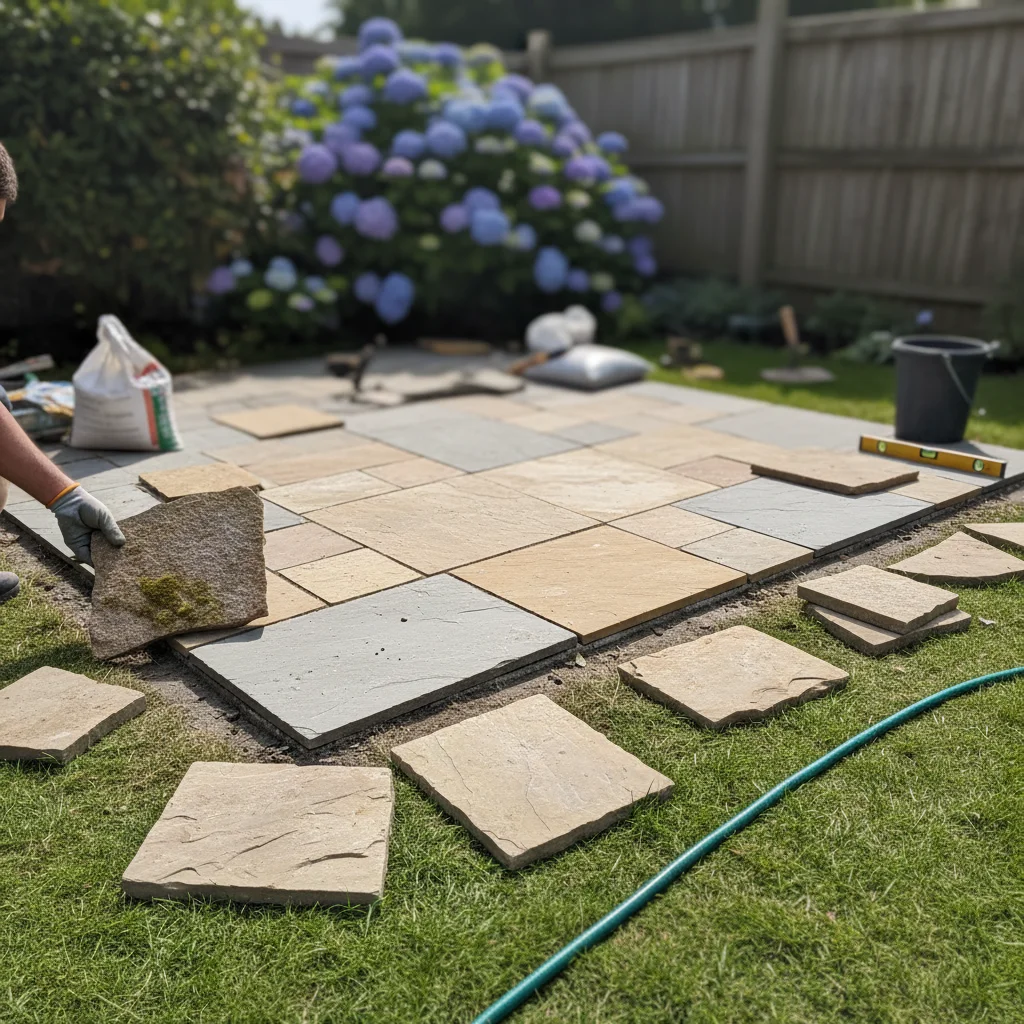
Patios and paving last when the sub-base, fall, and jointing match UK rain. The slab you like in the merchant is the cheap part; the groundwork is what you are really hiring.
A well-designed patio is far more than just a flat surface for a garden table; it is the functional anchor of your outdoor space. In the UK, where our weather shifts from torrential rain to hard frosts and occasional heatwaves, a patio must be engineered as much as it is designed. It serves as a bridge between the comfort of your home and the natural beauty of your garden, providing a stable, clean area to enjoy the fresh air.
When we approach a new paving project, we must look beyond the aesthetics of the stone. We have to consider what lies beneath the surface, how water will move across the area, and how the materials will react to our specific climate. Getting these technical details right at the start prevents the common headaches of sinking slabs, puddles, or slippery surfaces that can ruin an investment.
Choosing Natural Stone
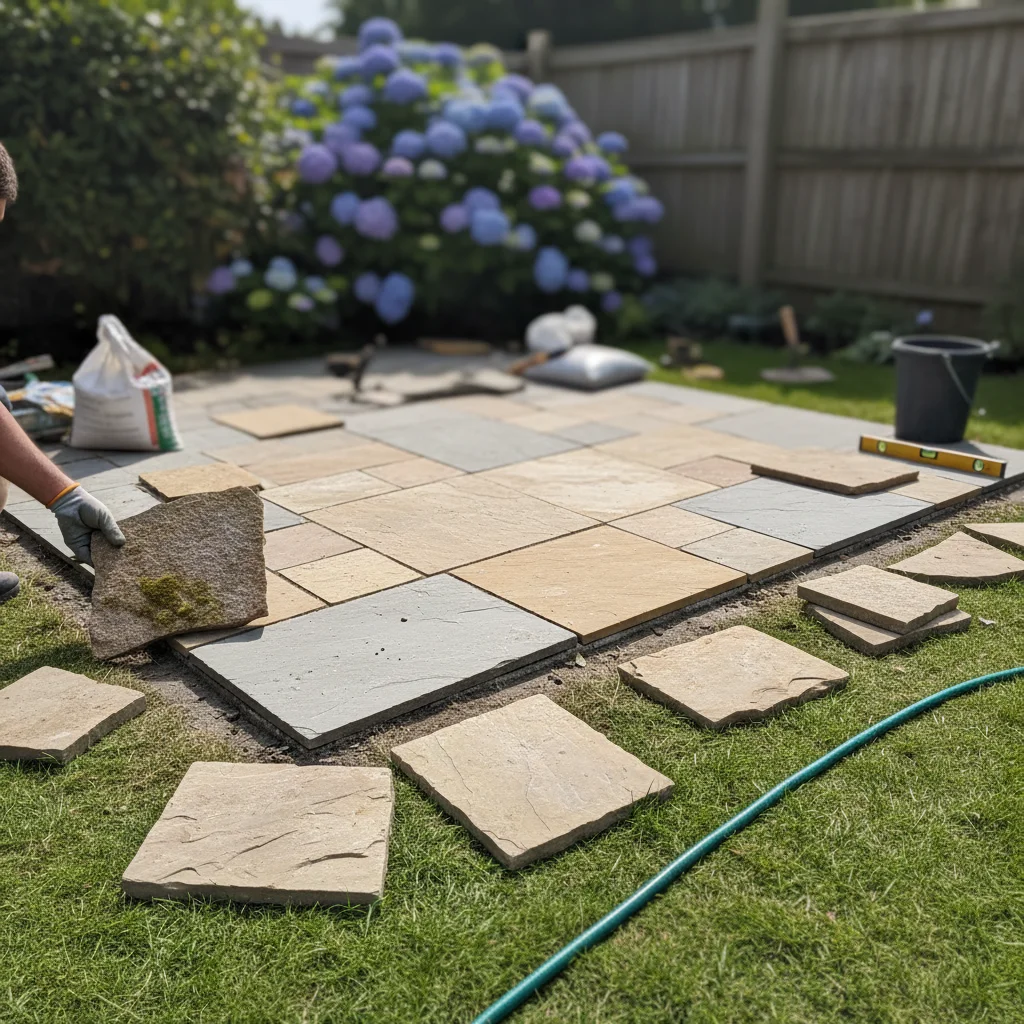
Natural stone remains a favourite for UK gardens because of its unique character and the way it settles into a landscape over time. Each slab of sandstone, limestone, or slate carries its own geological history, with variations in tone and texture that manufactured products struggle to replicate. Sandstone is particularly popular for its warm hues and natural slip resistance, though it is porous and requires regular cleaning to prevent algae growth.
Limestone offers a more uniform finish and often comes in sophisticated greys and blacks, which look stunning in contemporary designs. However, you should be aware that some darker limestones can fade under UV light over time, taking on a softer, weathered appearance. Slate provides a very different aesthetic, with its rich, dark tones and riven texture, making it an excellent choice for traditional or woodland-style gardens.
From a sustainability perspective, I always encourage gardeners to look at the provenance of their stone. Ethically sourced natural stone ensures that the quarrying process respects both the environment and the workers involved. While imported stone is common, we should also consider beautiful British stones like Yorkstone or Purbeck limestone, which have a significantly lower carbon footprint due to reduced transport distances.
The Benefits of Porcelain
Porcelain has revolutionised the UK paving market over the last decade, offering a level of durability and precision that was previously hard to achieve. These tiles are made from highly refined clay fired at extremely high temperatures, a process called vitrification. This results in a material that is almost entirely non-porous, meaning it does not absorb water and is naturally resistant to frost, stains, and moss.
For a busy household, porcelain is often the most practical choice because it requires very little maintenance beyond an occasional wash with soapy water. Because the tiles are manufactured to exact dimensions, they allow for very narrow, clean joints, creating a sleek and modern look. This precision also makes it easier to create a seamless transition from indoor flooring to an outdoor terrace, effectively extending your living space.
One of the most important factors for the UK climate is the slip resistance of porcelain. Unlike indoor tiles, outdoor porcelain is specifically engineered with a textured surface to provide grip even when wet. When selecting your tiles, you should look for an R-rating, which indicates the level of slip resistance provided by the manufacturer.
| R-Rating | Slip Resistance Level | Recommended Use |
|---|---|---|
| R9 | Low | Indoor use only; very slippery when wet. |
| R10 | Medium | Sheltered outdoor areas or indoor utility rooms. |
| R11 | High | Standard choice for UK patios and walkways. |
| R12/13 | Very High | Steep ramps, pool surrounds, or commercial areas. |
Versatile Block Paving
Block paving is a stalwart of British landscaping, prized for its incredible strength and the endless variety of patterns it allows. While we often associate it with driveways, it is an excellent material for garden paths and smaller seating areas where a more intricate, textured look is desired. The blocks are typically made from concrete or clay, with clay pavers offering superior colour retention over many decades.
The real strength of block paving lies in its flexibility. Because the surface is made of many small units bedded on grit sand, it can "flex" slightly with the ground, making it less prone to cracking than large-format slabs if there is minor soil movement. It is also one of the easiest surfaces to repair; if a single block is stained or damaged, it can be lifted and replaced without disturbing the rest of the patio.
For those concerned about environmental impact and drainage, permeable block paving is a fantastic solution. These systems are designed with larger gaps between the blocks, filled with specific aggregates that allow rainwater to filter directly into the ground. This reduces the pressure on our shared drainage systems and helps replenish the local water table, which is a key principle of sustainable garden design.
Managing Levels and Falls
One of the most common mistakes in DIY paving is failing to account for the "fall" of the patio. In our climate, water must never be allowed to sit on the surface of the paving, as standing water leads to slippery algae, salt staining (efflorescence), and potential frost damage. Every patio must be built with a subtle slope that directs water away from your house and towards a suitable drainage point or garden border.
A standard fall for a patio is usually between 1:60 and 1:80. This means for every 60cm of width, the patio should drop by 1cm. This slope is often invisible to the naked eye, but it is enough to ensure that gravity does its job during a downpour. We also have to be mindful of the Damp Proof Course (DPC) of your home; the finished surface of your patio should be at least 150mm below the DPC to prevent moisture from bridging into your walls.
If your garden is sloped, you may need to incorporate multiple levels or retaining walls into your design. This is where the expertise of a professional is invaluable, as they can calculate the necessary heights and ensure that each level is structurally sound. Tiered patios can actually add a great deal of visual interest to a garden, creating distinct "rooms" for dining, lounging, or gardening.
Effective Drainage Solutions
Drainage is the "invisible" part of a patio that determines its lifespan. If your garden has heavy clay soil, water won't naturally soak away quickly, meaning you need a more robust drainage strategy. This might involve installing ACO drains—those slim, grated channels you often see at the edge of a patio—which collect surface water and redirect it to a soakaway or the main storm drain.
A soakaway is essentially a large pit filled with coarse stone or plastic crates, located at least five metres away from any building. It allows water to collect and then slowly percolate back into the soil at a natural rate. In the UK, Sustainable Drainage Systems (SuDS) are increasingly important; we want to manage as much water as possible within the boundaries of our own property rather than sending it all into the overstretched Victorian sewer systems.
The sub-base is another critical component of drainage. A proper patio is built on a layer of compacted MOT Type 1 (a specific mix of crushed stone), which provides a solid foundation while still allowing some vertical drainage. If a contractor suggests laying slabs directly onto soil or a thin layer of sand, it is a significant red flag; without a proper sub-base, your patio will inevitably sink and hold water.
Briefing Your Paving Contractor
When you are ready to turn your plans into reality, hiring the right professional is the most important decision you will make. A good contractor won't just give you a price; they will ask about your soil type, check the levels of your house, and discuss how you plan to use the space. They should provide a detailed written quote that breaks down the work, including the depth of the sub-base and the type of jointing compound they intend to use.
Modern jointing compounds, often called polymeric sands or resins, are far superior to the old sand-and-cement mixes. They remain slightly flexible, which prevents cracking, and they are much better at inhibiting weed growth between the slabs. Ensure your contractor specifies which method they are using, as this will affect the long-term maintenance requirements of your new space.
To ensure you get the best possible result, it helps to have a clear list of requirements ready before you meet. Clear communication at this stage prevents misunderstandings later and ensures the quote you receive is accurate.
- What is the intended primary use for the space (e.g., heavy furniture, children playing, or a quiet retreat)?
- Are there any known drainage issues or areas where water currently pools in the garden?
- Do you have a preference for natural stone or a low-maintenance manufactured product like porcelain?
- Will the patio need to support any heavy structures in the future, such as a pergola or a hot tub?
- What is your preferred layout or pattern (e.g., random length, herringbone, or a formal grid)?
- Are there specific access requirements, such as avoiding steps or incorporating a ramp?
By taking the time to understand the materials and the technical requirements of a patio, you are ensuring that your garden remains a beautiful, functional space for decades to come. Whether you choose the timeless appeal of natural stone or the crisp lines of modern porcelain, the secret to success always lies in the preparation. Once the sub-base is compacted and the falls are set, you can look forward to many years of enjoying your garden from the comfort of a perfectly laid terrace.
Frequently asked questions
What should a patio quote include?
Excavation, sub-base, laying course, paving, jointing, and edge restraints. Drainage and waste are the items cheap quotes leave out.
Porcelain, sandstone, or concrete?
Porcelain is low maintenance and needs a rigid base. Sandstone is traditional and weathers. Concrete flags are honest and repairable. All of them fail the same way if water cannot run off.
Can I lay a patio myself?
A small, dead-level patio with a clear fall can be DIY. Large areas, steps, and anything against the house damp-proof course is landscaper work.