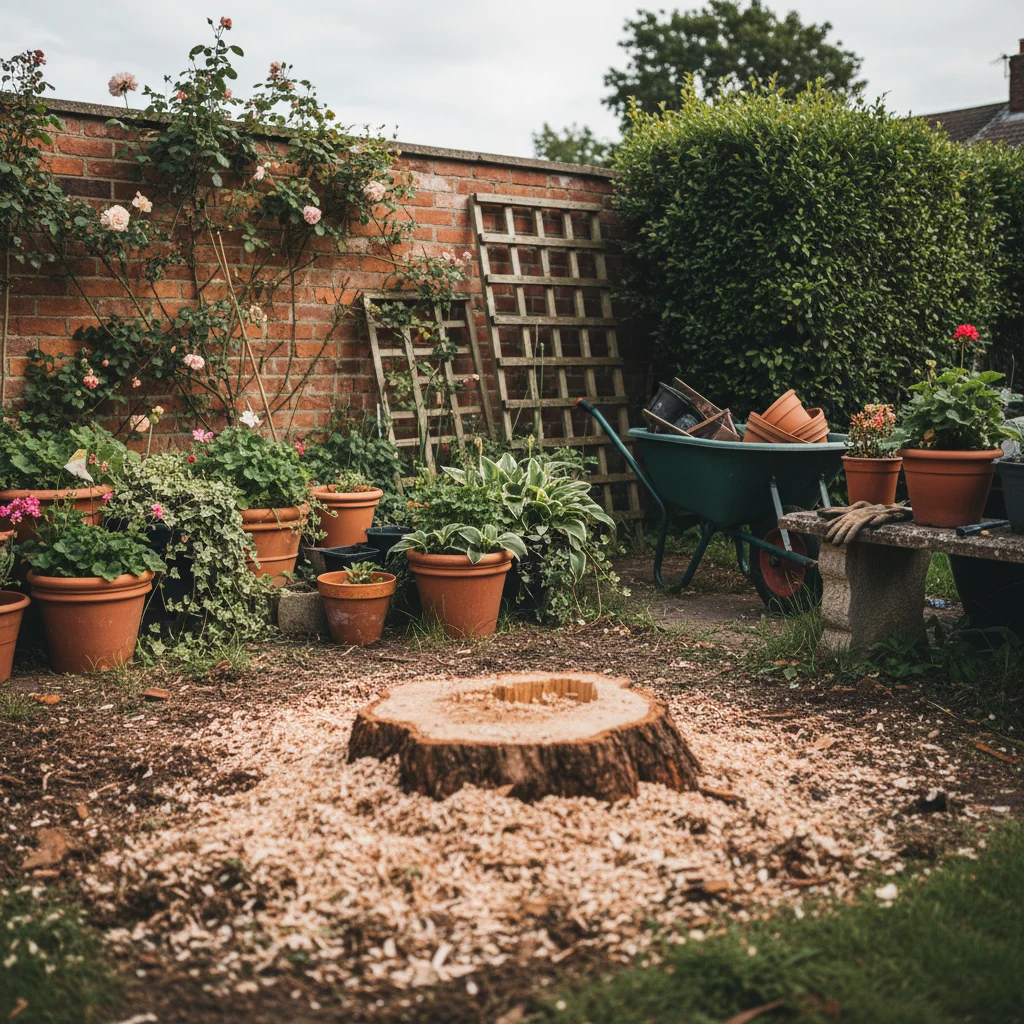
Stump grinding chews the stump down below soil level so you can turf or plant over it. It is the usual follow-on after tree work, and cheaper than digging the whole root plate.
When a tree is felled in your garden, the job is only half-finished. While the canopy and trunk may be gone, the stump remains as a physical reminder of the past and a potential obstacle for the future. Many homeowners find themselves at a crossroads, wondering whether to simply grind the stump away or invest in a full removal. Both options have their merits, and the right choice depends entirely on what you plan to do with that patch of ground next.
Leaving a stump to rot naturally might seem like the most eco-friendly route, but in a managed garden, it can lead to complications. Old stumps can become host to various fungi, including the dreaded honey fungus (Armillaria), which can spread through the soil to infect your healthy shrubs and trees. Beyond the health of your plants, there is the simple matter of aesthetics and safety. A stump is a trip hazard and a barrier to a perfectly level lawn or a new flower bed.
Understanding the stump grinding process
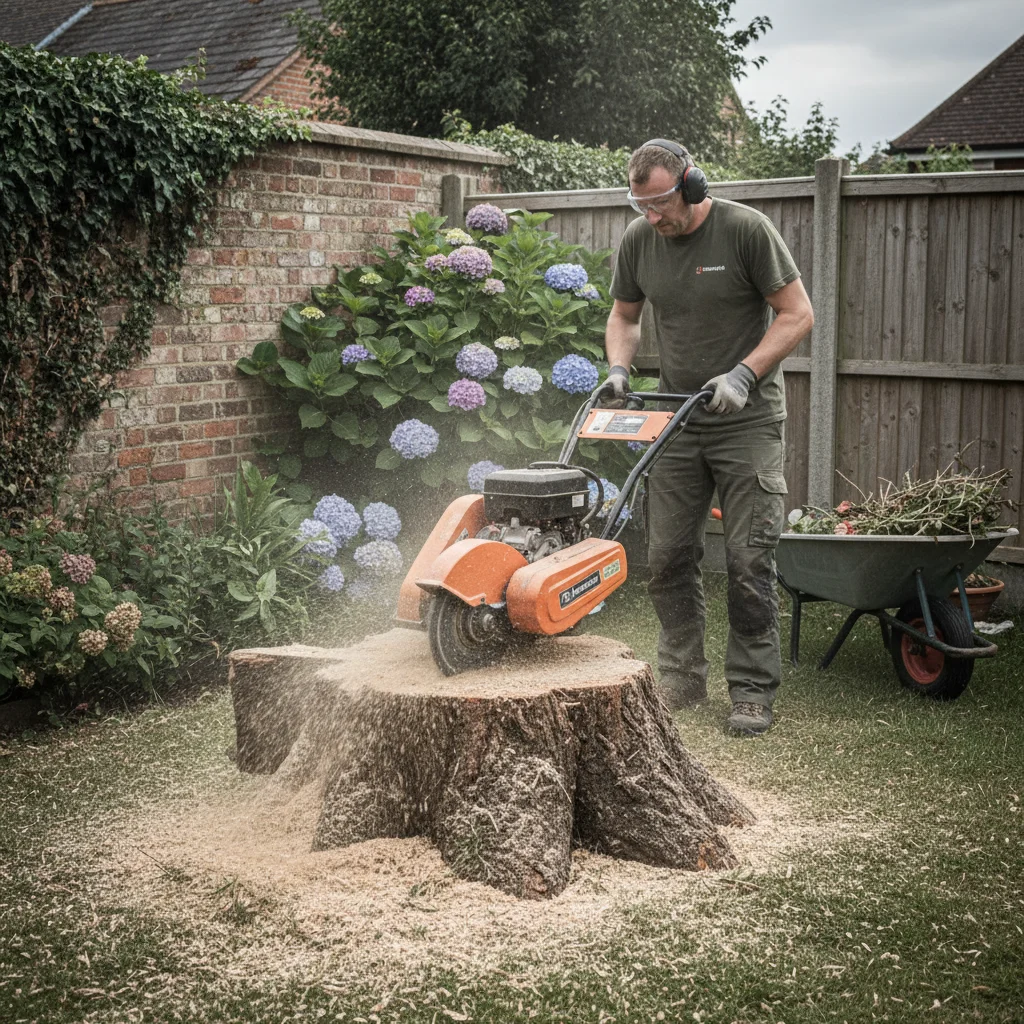
Stump grinding is the most common method for dealing with the remnants of a tree. It involves a high-speed machine with a heavy, rotating steel wheel studded with carbide teeth. This wheel literally chews the wood into small chips, working its way back and forth across the surface of the stump. We typically grind the wood down to a depth of about 15 to 30 centimetres below the soil level, which is more than enough for most gardening tasks.
The result of this process is a large pile of "grindings"—a mixture of wood chips and soil. This material is excellent for the garden, though it shouldn’t be used as a mulch immediately around young plants. Because the wood is fresh, it can temporarily tie up nitrogen in the soil as it begins to break down. I usually recommend composting these chips first or using them to mulch established woodland paths where nitrogen levels are less critical.
One of the greatest benefits of grinding is that it is relatively non-invasive. The machines come in various sizes, including narrow-access models that can fit through a standard 70cm garden gate. This means we can reach stumps in back gardens or tight corners without needing to dismantle fences or bring in heavy excavators. It is a precise, surgical approach to clearing the ground.
When to opt for full stump removal
Full stump removal is a much more intensive process than grinding. Rather than just taking the top off the stump, this method involves extracting the entire root ball from the earth. This is usually achieved using a mini-digger or a winch, and it is a significant undertaking that leaves a substantial hole in your garden. We generally only recommend this when the ground needs to be completely clear for construction work.
If you are planning to build an extension, a garden room, or a heavy stone wall exactly where the tree once stood, full removal is often necessary. Foundations cannot be poured over decaying wood, as the ground will eventually settle and shift as the roots rot away. Similarly, if you are installing deep drainage or utility pipes, you cannot have large lateral roots obstructing the path.
The trade-off for this total clearance is the mess and the impact on your soil structure. Pulling a large root ball out of the ground disrupts the delicate mycorrhizal networks and soil layers that have formed over decades. It also requires much more space for machinery to operate. If your garden is small or has limited access, full removal might not even be a physical possibility without significant collateral damage to your lawn or borders.
Managing access and garden logistics
Before booking any stump work, we need to consider the practicalities of getting the equipment to the site. UK gardens are famously varied, ranging from wide-open rural plots to narrow terraced backyards with no side access. A standard stump grinder is about the size of a large lawnmower, but some of the more powerful professional units are much wider.
If your only access is through the house, stump grinding becomes much more difficult, though not impossible with manual tools. We also need to be aware of what lies beneath the surface. Before we start grinding or digging, we must identify the location of any underground services like water pipes, gas lines, or internet cables. Grinding into a main power cable is a dangerous and expensive mistake that we avoid through careful site assessment.
The "mess" factor is another logical consideration for homeowners. Grinding creates a lot of debris, but it is contained within a relatively small area. We use screens to prevent chips from flying into your windows or across your neighbour's pristine lawn. Full removal, by contrast, involves moving large volumes of soil and heavy wood, which can be quite a muddy process, especially during the damp UK winter months.
Preventing regrowth and suckering
Some tree species are remarkably resilient and will attempt to grow back even after the main trunk has been removed. Species like Willow, Poplar, and certain fruit trees like Cherry are notorious for "suckering." This is when the remaining root system sends up new shoots in an attempt to survive. If you only grind the top of the stump, these roots remain alive and active in the soil.
To prevent this, we often suggest a two-pronged approach for these persistent species. Grinding the stump deep enough will kill the main growing point, but the lateral roots may still need attention. In some cases, a targeted stump treatment can be applied to the freshly cut wood before grinding to ensure the entire root system is decommissioned.
| Tree Species | Regrowth Risk | Recommended Action |
|---|---|---|
| Oak or Beech | Low | Standard grinding is usually sufficient |
| Willow or Poplar | High | Deep grinding plus root treatment |
| Cherry or Plum | Moderate | Grinding followed by monitoring for suckers |
| Conifers | Very Low | Simple grinding; they rarely regrow from roots |
| Ash | Moderate | Deep grinding to remove the crown |
Soil health and replanting after tree work
Once the stump is gone, you are left with a patch of ground that needs a little care before it can host new life. If you have opted for grinding, you will have a hole filled with wood-rich spoil. I always advise my clients not to plant a new tree in the exact same spot immediately. The decaying wood chips will use up the available nitrogen, which can leave a young sapling looking yellow and stunted.
If you must plant in the same area, it is vital to remove as much of the woody debris as possible and replace it with fresh topsoil mixed with well-rotted garden compost. This restores the nutrient balance and improves the soil structure. For those who choose to return the area to lawn, the spoil should be firmed down well. If you don't compact the soil in stages as you fill the hole, you will find a depression forming in a year or two as the organic matter settles.
From a sustainability perspective, keeping the wood chips on-site is always the best option. They make a fantastic carbon-rich addition to your compost heap when balanced with green waste like grass clippings. By keeping the biomass in your own garden, you are cycling the nutrients back into your soil rather than paying for them to be hauled away as waste. This "closed-loop" approach is something every gardener should strive for.
Choosing the right method for your garden
Deciding between these two paths often comes down to your long-term vision for the space. If you simply want to mow your lawn without hitting an obstacle or plant some herbaceous perennials, stump grinding is the most cost-effective and least disruptive choice. It solves the immediate problem, removes the trip hazard, and leaves you with useful mulch for your borders.
However, if your garden project involves heavy engineering or construction, the extra investment in full removal is a necessary insurance policy against future ground subsidence. We always start with a site visit to measure access and assess the tree species. This allows us to give you a clear expectation of the timeframe and the likely impact on your surrounding plants.
Whether you choose to grind or remove, the goal is to leave your soil in the best possible condition for whatever comes next. By removing the stump, you are not just clearing an eyesore; you are opening up new possibilities for your garden's design and ensuring the long-term health of your landscape. If you are ready to reclaim your garden space, the first step is a professional assessment to determine which machine is best suited for your specific access and soil type.
Frequently asked questions
Is stump grinding the same as stump removal?
Grinding reduces the stump to chips below ground. Full removal digs out the roots and leaves a larger hole. Most gardens only need grinding.
Can I plant a tree in the same spot?
Not immediately in the chip pile, and not the same species if disease was involved. Wait, refresh the soil, or plant slightly offset.
Does a tree surgeon include grinding?
Ask. Felling quotes often exclude stumps. Access for the grinder matters — narrow side returns can change the price.