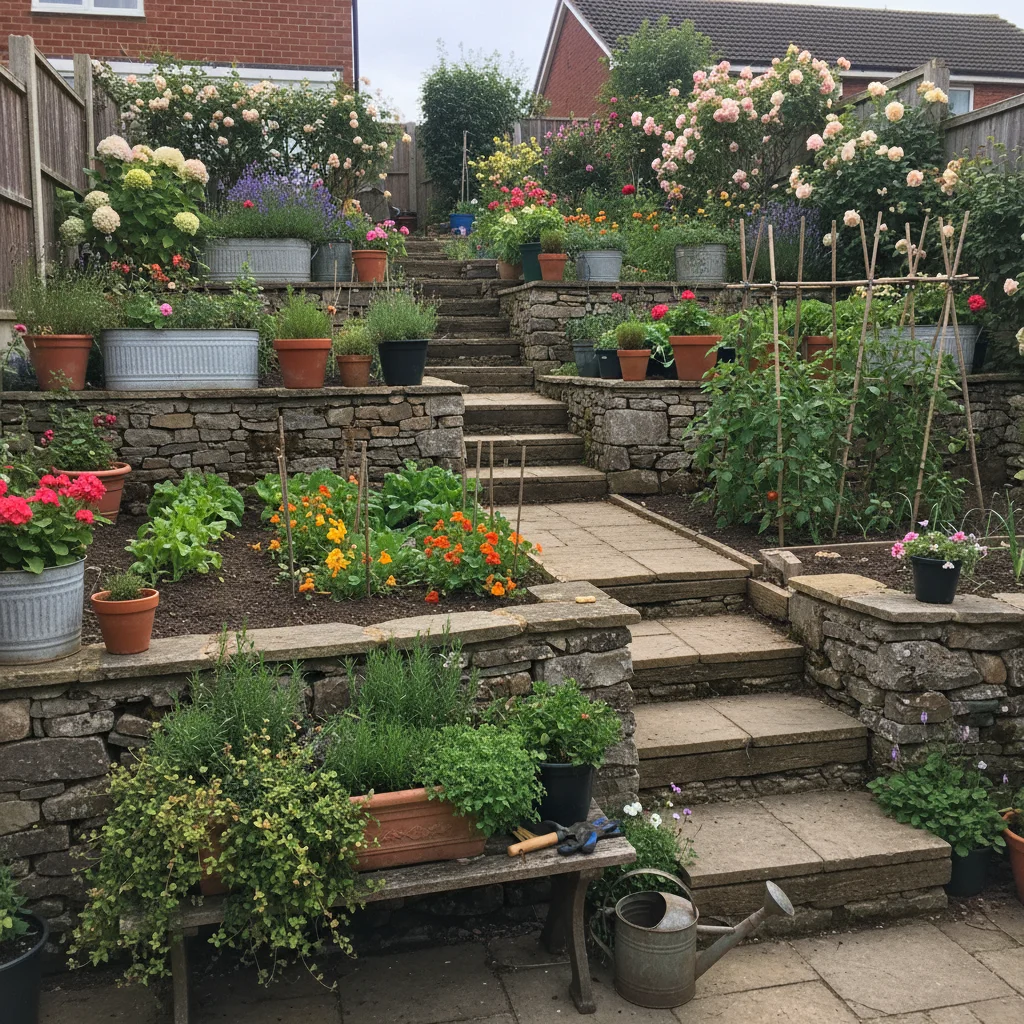
Garden terracing turns a slope into level lawns or beds using retaining edges and proper drainage. It is groundworks and walls, not a few sleepers stood on end.
Many UK gardens are far from flat. Whether you are dealing with a gentle incline or a dramatic hillside, a sloping garden often feels like a missed opportunity. Without a level surface, it is difficult to place a garden table, the lawn becomes a challenge to mow, and heavy rain can wash away your valuable topsoil. Terracing is the most effective way to reclaim this space, turning a steep gradient into a series of functional, beautiful "rooms."
When we talk about terracing, we are essentially discussing the creation of flat platforms supported by retaining walls. This is a significant undertaking that moves beyond simple gardening and into the realm of civil engineering. It involves shifting tonnes of earth and managing the immense pressure that soil exerts when it is wet. Understanding the basics of how this works will help you have a more informed conversation when you begin inviting tradespeople to quote for the work.
Understanding the mechanics of terracing
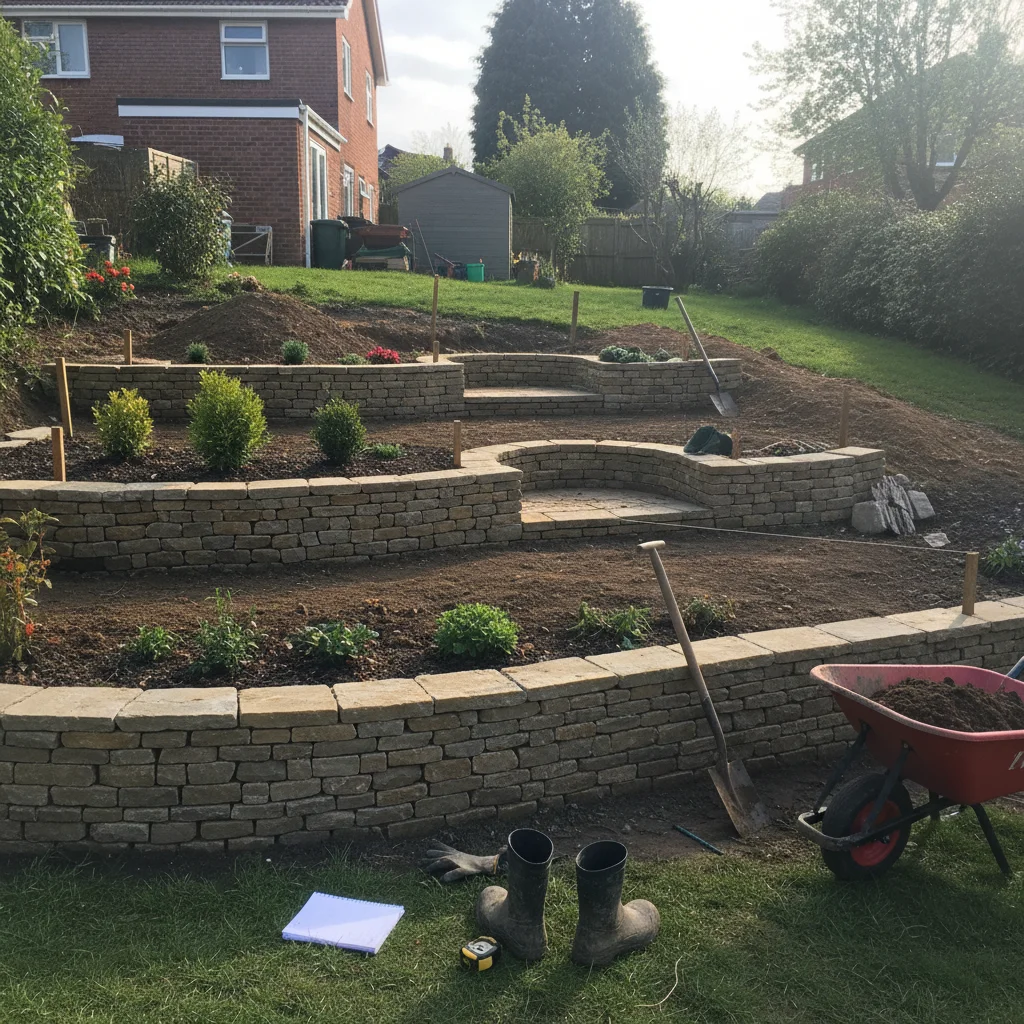
The core principle of terracing is often referred to as "cut and fill." This involves excavating soil from the higher part of a slope (the cut) and moving it to the lower part (the fill) to create a level area. While this sounds straightforward, the balance must be carefully managed. A professional will look at your existing soil profile to ensure the "fill" section is properly compacted so it doesn't sink over time.
Retaining walls are the backbone of any terraced system. These structures must be strong enough to hold back the weight of the earth behind them, which increases significantly after a heavy British downpour. If a wall is not built with the correct "batter" (a slight backward lean) or sufficient structural footings, it risks bowing or even collapsing under the weight. This is why terracing is usually a job for a specialist landscaper or a builder with experience in groundworks.
Why you might need to terrace your garden
The most common reason for terracing is to create usable living space. A steep slope is often "dead space" where you cannot sit, play, or grow much. By introducing terraces, you can create a dedicated area for a patio, a level lawn for children, or deep borders for planting. It allows you to move through the garden safely via integrated steps, rather than struggling with slippery grass banks.
Beyond aesthetics, terracing is a vital tool for managing erosion and drainage. In the UK, we often see heavy rainfall that can strip nutrients from the soil as water rushes down a slope. Terraces slow this water down, allowing it to soak into the ground rather than washing away the tilth. This protects the health of your plants and prevents the bottom of your garden from becoming a boggy mess every winter.
The critical role of drainage
If there is one thing I have learned in my years as a head gardener, it is that water is the greatest enemy of a retaining wall. When soil becomes saturated, it exerts hydrostatic pressure. This is a fancy way of saying the water adds immense weight and pushing force against the back of your terrace walls. Without a way to escape, this pressure will eventually find the weakest point in the structure.
A professional terracing service should always include a robust drainage plan. This typically involves backfilling the area immediately behind the wall with a free-draining aggregate, such as clean shingle or "6G" stone. We also look for "weep holes"—small gaps left in the masonry or pipes inserted through the wall—that allow trapped water to trickle out safely. In some cases, a perforated land drain pipe is laid at the base of the wall to carry water away to a soakaway or existing drainage system.
Choosing the right materials for your walls
The materials you choose will dictate both the cost and the longevity of your terraces. Each has its own merits, and your choice should be guided by the height of the terrace and the style of your home. We always recommend choosing materials that complement the local geology or the brickwork of your house to help the garden feel like a natural extension of the property.
| Material | Best For | Pros | Cons |
|---|---|---|---|
| Timber Sleepers | Low to mid-height terraces | Cost-effective and natural look | Will eventually rot; can be slippery |
| Natural Stone | Traditional or cottage gardens | Extremely durable and beautiful | Higher material and labour costs |
| Concrete Blocks | Modern or structural walls | Incredible strength; can be rendered | Requires finishing (cladding or paint) |
| Gabion Baskets | Contemporary or high-drainage areas | Excellent drainage; very stable | Industrial look; requires a lot of stone |
| Brickwork | Matching house architecture | Seamless aesthetic integration | Requires skilled masonry and footings |
Navigating planning permission and regulations
In the UK, you do not always need planning permission for garden terracing, but there are important exceptions. Generally, if the terracing involves significant changes to the ground level or if the retaining walls exceed one metre in height, you should consult your local planning office. Walls near a highway or a public footpath often have stricter height limits, usually capped at one metre before permission is required.
There is also the matter of "Permitted Development" rights. While many garden projects fall under this, terracing can sometimes be classified as a structural change that affects the privacy of your neighbours. If your new terrace allows you to look directly into a neighbour's window or garden in a way you couldn't before, they may have grounds for objection. It is always best to share your plans with neighbours early to avoid disputes later.
What to ask your landscaping professional
When you begin interviewing contractors for a terracing project, you are looking for more than just a low price. You need someone who understands the weight of soil and the movement of water. A good tradesperson should be happy to explain their process and provide evidence of similar projects they have completed successfully.
I recommend preparing a few specific questions to gauge their expertise:
- How do you plan to manage water drainage behind the retaining walls?
- What depth and type of footings will you be using for the height of this wall?
- How will you ensure the "fill" soil is compacted to prevent future sinking?
- Do you have insurance that covers structural landscaping work?
- Will you be using a laser level to ensure the terraces are perfectly flat?
- How will you dispose of any excess subsoil (spoil) that cannot be reused?
Managing soil health and planting
Once the heavy machinery has gone and the walls are in place, you are often left with a "blank canvas" that looks more like a construction site than a garden. The process of terracing involves a lot of soil disturbance. Often, the nutrient-rich topsoil is buried, and the nutrient-poor subsoil is brought to the surface. It is essential to address this before you even think about planting.
We recommend asking your contractor to stockpile your original topsoil at the start of the project so it can be spread back over the new terraces at the end. If that isn't possible, you will likely need to bring in a significant amount of new organic matter. I always suggest using peat-free compost or well-rotted manure to rebuild the soil structure. This will improve the "tilth" and ensure your new plants have the best possible start in their elevated home.
Preparing for the construction phase
Terracing is a "messy" job. It often requires mini-diggers, tracked skip loaders, and tonnes of delivered aggregates. Before the work starts, consider how these machines will access your garden. If they have to travel over a pristine lawn or a driveway, you may want to lay down protection boards. You should also be prepared for the fact that the garden will likely look worse before it looks better.
The timing of the project is also a factor. While hard landscaping can happen year-round, moving soil in the depths of a wet British winter can be a recipe for a mud bath. The structure of the soil can be "puddled" or ruined if worked when saturated. Aiming for a spring or autumn start often provides the best balance of workable ground and comfortable temperatures for the subsequent planting.
Investing in professional terracing is one of the few garden improvements that can truly transform how you live in your outdoor space. By taking the time to ensure the structural elements—especially the drainage and footings—are handled correctly, you create a permanent asset that adds value to your home. Once the heavy work is finished, you can look forward to the much more enjoyable task of filling those new, level borders with a diverse range of plants that will thrive in their well-drained, sunny new positions.
Frequently asked questions
When does a slope need terracing?
When you cannot mow or sit safely, or when soil is washing onto a patio or neighbour. Gentle banks can be planted instead of walled.
What does a terracing job include?
Setting levels, retaining structures, drainage behind the walls, and then soil and planting or turf. The walls are the expensive, structural part.
Sleepers or proper retaining walls?
Sleepers are common for low terraces and have a finite life. Higher banks need engineered retaining — treat that as structure, not decoration.