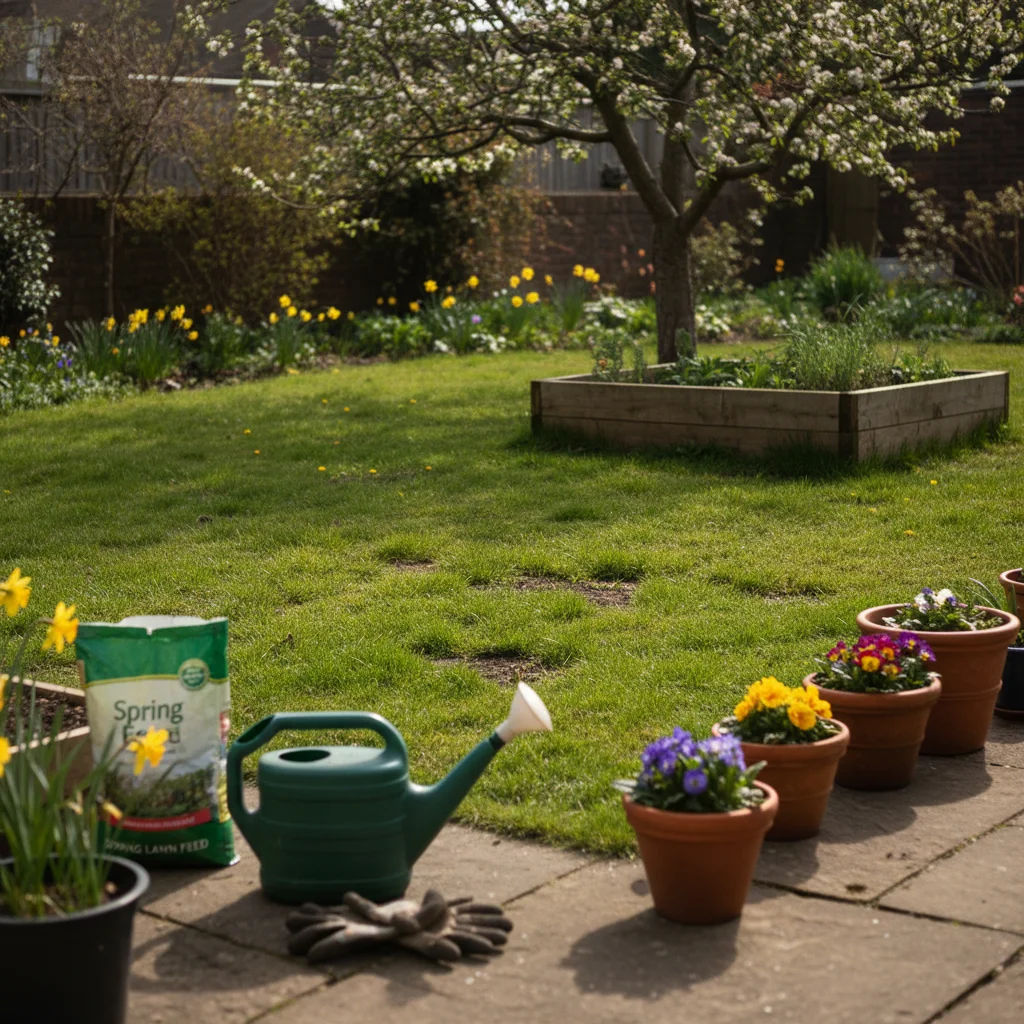
After the long, damp months of a British winter, our lawns often emerge looking a little tired. The soil is frequently compacted, moss may have taken hold in the shadows, and the grass blades themselves often look pale or yellowed. Spring is the most critical window in the gardening calendar to rectify these issues and set the foundation for a resilient lawn that can withstand the summer heat.
Feeding your lawn in spring isn't just about making it look green for a few weeks. It is about replenishing the essential nutrients that have washed out of the soil during winter rains. By providing the right balance of minerals now, you encourage deep root growth and thick top growth that naturally crowds out weeds and moss.
A well-fed lawn acts as a living carpet, cooling the ground and providing a vital habitat for soil microbes. When we approach lawn care with a focus on soil health rather than just quick aesthetics, we create a more sustainable garden ecosystem. This methodical approach ensures your grass stays healthy with less intervention as the year progresses.
Understanding the science of lawn nutrition
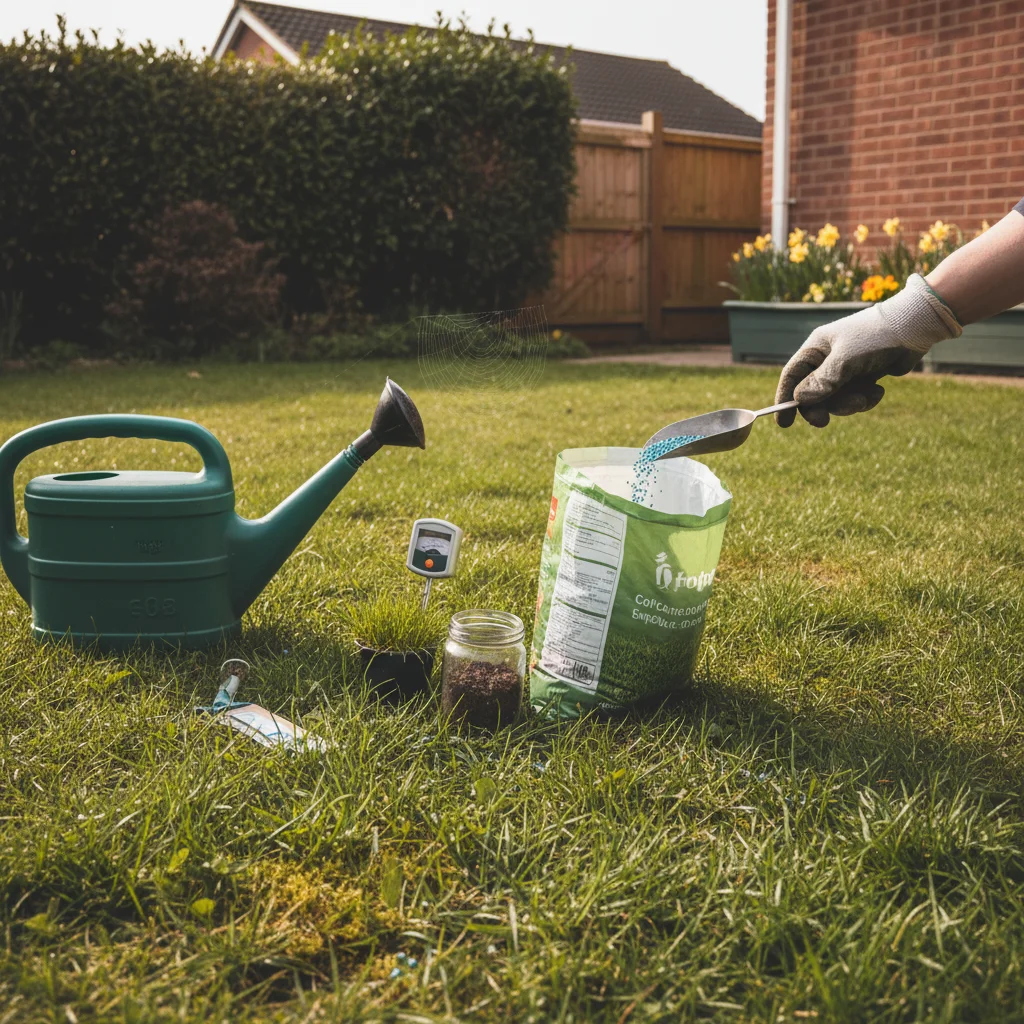
To choose the right feed, we need to understand what the grass actually requires during its first flush of growth. Most commercial fertilisers display three numbers on the packaging, known as the NPK ratio. These represent Nitrogen, Phosphorus, and Potassium, and each plays a specific role in the development of your turf.
Nitrogen is the primary ingredient in any spring feed because it drives the production of chlorophyll and leafy growth. This is what gives your lawn that deep, vibrant green colour and helps it recover from winter dormancy. However, applying too much nitrogen too early can lead to weak, succulent growth that is susceptible to disease and pests.
Phosphorus focuses on the hidden half of your lawn: the root system. A strong root network is essential for drought resistance later in the year, as it allows the grass to tap into water reserves deep in the soil. Potassium, the third element, acts as a general health tonic, strengthening the cellular structure of the plant and helping it resist extreme temperatures and wear.
In the UK, our spring weather can be unpredictable, often swinging from frost to mild sunshine in a single afternoon. A balanced spring feed typically has a higher nitrogen content than an autumn feed but still includes enough potassium to protect against those late-season cold snaps. Understanding these basics allows you to look past the marketing on the bag and see exactly what you are putting onto your soil.
Choosing between granular and liquid feeds
One of the first decisions you will face is whether to use a granular fertiliser or a liquid application. Granular feeds are the most popular choice for home gardeners because they are easy to see as you spread them, reducing the risk of missing patches. These small pellets break down slowly over several weeks, providing a steady "drip-feed" of nutrients to the grass.
Liquid feeds, on the other hand, offer an almost instant boost. Because the nutrients are already dissolved, they are absorbed through the leaf blade as well as the roots. While this results in a very fast green-up, the effects are often short-lived, sometimes lasting only two or three weeks. I generally recommend liquid feeds for a quick "pick-me-up" before a garden event, rather than as a primary seasonal fertiliser.
For a long-term sustainable lawn, I prefer slow-release granular fertilisers. These are often coated in a biodegradable polymer that breaks down based on soil temperature and moisture levels. This means the nutrients are released exactly when the grass is growing most actively, which prevents the fertiliser from leaching away into local watercourses during heavy rain.
Organic granular options, such as those based on seaweed or poultry manure, are excellent for the environmentally-conscious gardener. These don't just feed the grass; they feed the earthworms and beneficial fungi in the soil. While they might take a little longer to show results, the long-term improvement in soil structure is well worth the wait.
Matching the feed to your soil type
The geology of your garden dictates how effectively your lawn can use the feed you provide. If you live in an area with heavy clay soil, your lawn will likely retain nutrients well, but it may suffer from poor drainage and compaction. In this case, a feed with a slightly lower nitrogen content applied after aeration is often the best approach to avoid "sour" soil conditions.
Sandy soils, common in coastal or heathland areas, are the opposite. Water moves through them very quickly, taking dissolved nutrients with it. If you have sandy soil, you will find that a single heavy application of fertiliser is largely wasted. Instead, it is better to apply smaller amounts of slow-release feed more frequently to ensure the grass has a constant supply.
It is also worth considering the pH of your soil before you commit to a specific product. Most lawn grasses prefer a slightly acidic environment, around pH 6.0 to 7.0. If your soil is too alkaline, the grass may struggle to take up iron, leading to a condition called chlorosis where the blades turn yellow despite plenty of nitrogen.
If you are unsure about your soil type, a simple DIY testing kit from a garden centre can provide clarity. Knowing whether you are working with chalky, acidic, or neutral soil allows you to choose a fertiliser that includes supplementary micro-nutrients like iron or magnesium. These minerals are often the "secret ingredient" that transforms a pale lawn into a showcase feature.
When to start your spring feeding routine
Timing is everything when it comes to spring lawn care. If you apply fertiliser too early, while the ground is still frozen or waterlogged, the grass will be unable to absorb the nutrients. The fertiliser will simply sit on the surface or wash away into the borders, potentially harming your prize perennials or polluting the local environment.
The best indicator is the soil temperature. Grass begins to grow actively when the soil reaches about 10 degrees Celsius. In the UK, this usually happens between late March and mid-April, depending on whether you are in the south or the north. A good rule of thumb is to wait until you have had to mow the lawn at least twice; this proves the grass is awake and hungry.
Check the weather forecast before you head out with your spreader. Ideally, you want to apply fertiliser when rain is expected within the next 24 hours. This natural irrigation washes the granules off the grass blades and down into the soil where they can get to work. If no rain arrives, you must water the lawn yourself to prevent the concentrated salts in the fertiliser from "scorching" or burning the delicate grass.
Avoid feeding during a spring heatwave or a period of drying winds. When the grass is under stress from lack of water, adding fertiliser can actually do more harm than good. Patience is a virtue here; waiting for a mild, overcast day with a damp forecast will yield much better results than rushing out on the first sunny Saturday of the year.
Essential steps for lawn preparation
You should never apply feed to a lawn that hasn't been prepared first. If you throw fertiliser onto a thick layer of thatch or moss, the nutrients will never reach the soil. I always recommend a thorough session of scarifying in early spring to pull up the dead organic matter that builds up at the base of the grass stems.
Once the lawn is scarified, it will look a bit thin and "beaten up," but this is the perfect time to aerate. Using a garden fork or a hollow-tine aerator to punch holes in the surface allows air, water, and fertiliser to penetrate deep into the root zone. This simple act of relieving compaction is often as beneficial as the fertiliser itself.
Tools for a successful application
- A lawn spreader (either broadcast or drop style) for even coverage.
- A garden rake to remove debris and moss before feeding.
- A garden fork or aerator to improve soil drainage.
- A hose or sprinkler system if rain isn't forecast.
- Protective gloves to avoid skin irritation from concentrated minerals.
After scarifying and aerating, give the lawn a light mow to ensure the surface is even. This makes it much easier to walk at a steady pace when applying the feed. Ensure the grass is dry when you apply granular products, as this prevents the pellets from sticking to the blades and causing localized burns.
How to apply fertiliser like a professional
The key to a professional-looking lawn is even distribution. If you apply too much in one spot, you will get a dark green patch or a burnt brown square; too little, and you will see pale stripes. While you can spread fertiliser by hand, it is very difficult to achieve the consistency required for a perfect finish.
A calibrated lawn spreader is a worthwhile investment for any gardener. Drop spreaders are excellent for smaller, rectangular lawns as they provide a precise path of fertiliser. For larger, more informal lawns, a broadcast or rotary spreader is better, as it throws the granules in a wide arc, creating a more natural, overlapped finish that hides any slight steering errors.
To ensure total coverage, I use the "half-rate" method. Set your spreader to half the recommended application rate and walk the entire lawn in parallel rows. Then, turn 90 degrees and walk the lawn again in rows perpendicular to the first set. This "criss-cross" pattern ensures that every square inch of turf receives exactly the right amount of nutrition.
Be particularly careful around the edges of your lawn. Avoid getting lawn feed into your flower beds or onto hard landscaping. Many spring fertilisers contain added iron to kill moss, which is excellent for the grass but will leave permanent orange rust stains on stone patio slabs or block paving. If you do spill some on a path, sweep it up immediately rather than washing it away.
Managing weeds and moss alongside feeding
Many gardeners opt for "weed, feed, and moss killer" all-in-one products. These are convenient, but they require careful handling. The herbicides in these mixes are designed to kill broad-leaved plants like daisies and dandelions while leaving the grass unharmed. However, they can be stressful for the grass if applied during a drought or on a very young lawn.
If your lawn is relatively clean, I prefer using a "straight" fertiliser and spotting-treating weeds individually. This is a more environmentally friendly approach as it reduces the amount of chemical herbicide you introduce to your garden. It also allows the soil biology to thrive without the interference of broad-spectrum weed killers.
Moss is a symptom of a problem, usually shade, compaction, or poor drainage. While a spring feed with sulphate of iron will turn the moss black and kill it, the moss will return if you don't address the underlying cause. Use the boost of energy from the fertiliser to help the grass grow more strongly, then over-seed any bare patches to prevent moss from reclaiming the space.
Remember that a thick, healthy lawn is its own best defence against weeds. When the grass is dense and vigorous, weed seeds find it very difficult to reach the soil and germinate. By focusing on the health of the grass through proper feeding, you are effectively creating a natural weed-control system that requires fewer chemicals over time.
Sustainable feeding and biodiversity
As gardeners, we have a responsibility to look after the wider environment. Over-fertilising can lead to nutrient run-off, where excess nitrogen and phosphorus enter our local streams and ponds, causing algae blooms that harm fish and insects. Always follow the manufacturer’s instructions regarding application rates; more is definitely not better in this context.
Consider leaving a small area of your lawn "un-fed" or even un-mown. This allows native wildflowers like clover and trefoil to thrive, providing vital nectar for bees and butterflies. Clover is particularly interesting because it is a legume; it actually "fixes" nitrogen from the air and shares it with the surrounding grass, acting as a natural, free fertiliser.
Using organic-based feeds is another great way to support biodiversity. These products rely on soil microbes to break down the nutrients, which encourages a complex and healthy soil food web. A soil rich in microbial life is much better at processing organic matter and resisting diseases like red thread or fusarium patch.
If you have a compost heap, you can also use "compost tea" as a mild liquid spring feed. While it doesn't have the concentrated power of a commercial product, it is packed with beneficial bacteria and fungi that can significantly improve the resilience of your turf. It is a wonderful way to recycle garden waste and keep your lawn care routine as closed-loop as possible.
Maintaining the momentum after feeding
Once you have applied your spring feed and the grass begins its rapid growth phase, your mowing routine must adapt. It is tempting to cut the grass very short to keep it looking neat, but this can undo all your hard work. Removing more than one-third of the grass blade at once shocks the plant and forces it to use up its food reserves to regrow the leaves rather than the roots.
Keep your mower blades sharp. A clean cut heals quickly, while a blunt blade tears the grass, leaving it with white, frayed ends that are prone to disease. During the peak growth of late spring, you may need to mow twice a week, but keep the height of the cut slightly higher—around 2.5cm to 4cm—to maintain a healthy, dense sward.
Keep an eye on the colour of your lawn as the season progresses. If the vibrant green begins to fade by mid-June, you might consider a second, lighter application of a summer-specific feed. However, if you used a high-quality slow-release granular feed in the spring, your lawn should have enough energy to carry it through until the autumn.
By taking the time to understand your soil and choosing a high-quality, appropriate feed, you are giving your garden the best possible start. A healthy lawn is more than just a green backdrop; it is a place for children to play, a haven for garden wildlife, and a source of pride for any gardener. Start your spring routine with a plan, and you will enjoy the benefits of a lush, resilient carpet of green throughout the warmer months ahead.