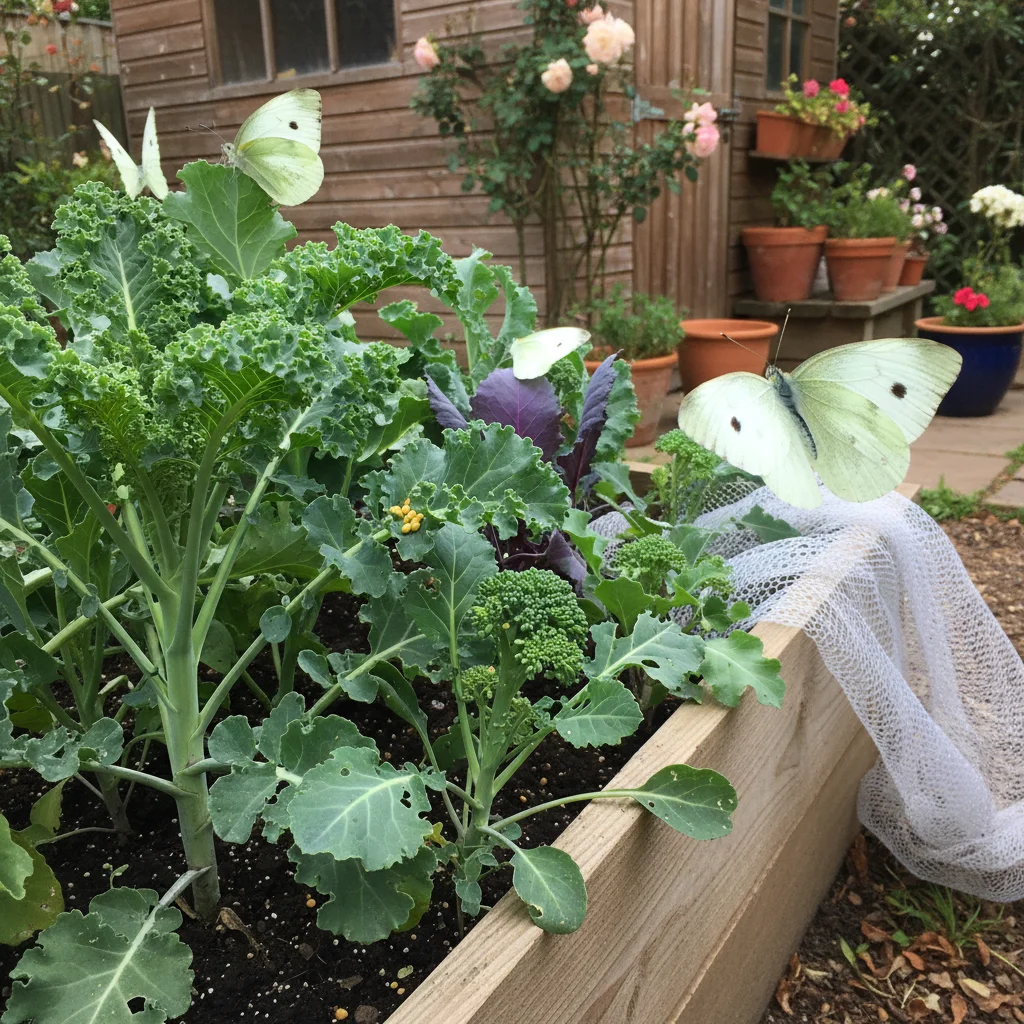
There is nothing quite as disheartening for a gardener as walking out to the vegetable patch to find your prize kale or cabbages reduced to a skeleton of veins. We spend weeks nurturing these plants from seed, ensuring the soil is firm and the nutrient levels are just right, only for a few hungry visitors to undo all that hard work in a matter of days. If you have noticed small white butterflies fluttering gracefully around your garden, you are likely looking at the parents of the most voracious pests in the UK vegetable garden.
The cabbage white butterfly is a common sight from spring through to autumn. While they look charming dancing over the flower beds, they are searching for one thing: a member of the brassica family to host their eggs. Understanding their lifecycle and habits is the first step in protecting your harvest without resorting to harsh chemical sprays that can harm our garden's delicate ecosystem.
Organic control is not just about being environmentally conscious; it is about building a resilient garden. By using physical barriers, biological controls, and a bit of manual intervention, we can keep our crops healthy and our soil clean. Let’s look at how you can identify these pests early and the practical steps you can take to keep them away from your dinner plate.
Identify the Enemy Early
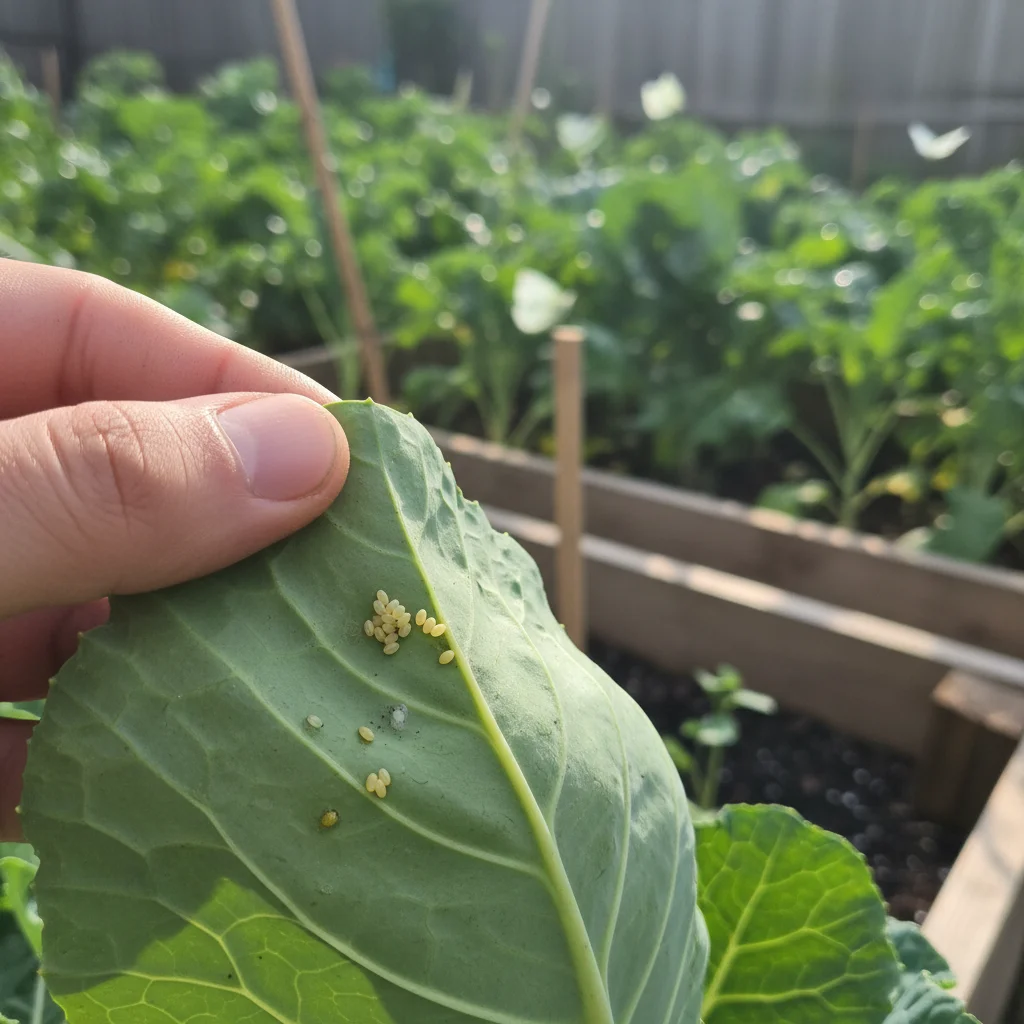
In the UK, we primarily deal with two types of cabbage white butterflies: the Large White and the Small White. The Large White (Pieris brassicae) is the more destructive of the two, as it lays its eggs in large clusters, leading to a sudden explosion of caterpillars that can strip a plant overnight. The Small White (Pieris rapae) tends to lay eggs singly, meaning the damage is often more sporadic but still significant if left unchecked.
The caterpillars themselves are relatively easy to distinguish if you know what to look for. Large White caterpillars are yellow and black with hairy bodies, and they tend to congregate in groups when young. Small White caterpillars are a pale, velvety green and blend in perfectly with the midrib of a cabbage leaf, making them much harder to spot at first glance.
Before you see the caterpillars, you will see the eggs. Large Whites lay clusters of bright yellow, conical eggs on the undersides of leaves, while Small Whites lay individual, cream-coloured eggs. Getting into the habit of checking your plants every few days is the most effective way to prevent an infestation before it begins.
Look for Signs of Infestation
Spotting the problem early saves you a significant amount of work later in the season. Caterpillars are masters of disguise, but they leave behind very obvious clues that they have moved into your brassica patch. You should check your plants at least twice a week during the peak months of May to September.
- Small, irregular holes in the centre or edges of leaves.
- Clusters of tiny yellow eggs on the underside of the foliage.
- Dark green or black droppings, known as frass, accumulating in the leaf joints.
- Silken threads or webbing on the underside of the leaves.
- Wilting or stunted growth in young plants that have lost too much leaf surface.
If you notice any of these signs, it is time to act immediately. The faster you remove the eggs or the young larvae, the less chance they have to migrate to the heart of the cabbage or cauliflower where they are much harder to reach.
The Power of Physical Barriers
The most effective way to stop cabbage white caterpillars is to prevent the butterflies from ever landing on your plants. Since these butterflies are highly visual hunters, a physical barrier is your best line of defence. Using a fine-mesh netting, often sold as "insect mesh" or "enviromesh," creates an impenetrable wall that allows light and water through but keeps the pests out.
When installing netting, ensure it is held clear of the plants using a frame or hoops. If the netting rests directly on the leaves, the butterflies can simply land on the mesh and lay their eggs through the holes. It is also vital to secure the edges of the netting to the ground using pegs or heavy stones, as the butterflies are surprisingly adept at finding small gaps at soil level.
Butterfly netting with larger holes (around 5mm to 7mm) is common, but I often find that Small Whites can still squeeze through these if they are determined. A finer mesh with a hole size of 1mm or less is a much safer bet. It also has the added benefit of protecting your crops from other common pests like cabbage root fly and birds.
Use Trap Crops to Divert Attention
Companion planting is a wonderful way to work with nature rather than against it. One of the most successful methods for managing cabbage whites is the use of "trap crops." These are plants that the butterflies find even more attractive than your vegetables, effectively luring them away from your main crop.
Nasturtiums are the gold standard for this technique. They are easy to grow, thrive in poor soil, and the cabbage white butterflies absolutely love them. By planting a thick border of nasturtiums near your brassicas, you provide an alternative site for the butterflies to lay their eggs.
Once the nasturtium leaves are covered in caterpillars, you can simply pull up the affected parts of the plant and move them to the compost heap or a wild corner of the garden. This keeps the butterflies in the garden ecosystem without sacrificing your winter greens. It is a simple, low-effort way to manage the population naturally.
Biological Controls and Nematodes
If the caterpillars have already taken hold and hand-picking feels like a losing battle, you can turn to biological controls. In the UK, one of the most effective organic treatments is the use of pathogenic nematodes, specifically Steinernema carpocapsae. These are microscopic organisms that occur naturally in the soil but can be bought in concentrated forms to be applied as a spray.
You mix the nematodes with water and apply them directly to the leaves where the caterpillars are feeding. The nematodes enter the caterpillar's body and release bacteria that kill the host within a few days. Because they are living organisms, you need to apply them in the evening or on a cloudy day to prevent them from drying out or being killed by UV light.
This method is entirely safe for humans, pets, and beneficial insects like bees and ladybirds. It is particularly useful for large-scale infestations or for protecting crops like Brussels sprouts, where the caterpillars often hide deep inside the developing buttons where they are hard to see.
Hand Picking and Manual Removal
For the home gardener with a manageable number of plants, nothing beats the old-fashioned method of hand-picking. It might not be the most glamorous task, but it is incredibly effective and gives you a chance to inspect the health of your plants closely. I find that a quick morning circuit of the veg patch with a bucket of soapy water is often all that is needed.
When you find a caterpillar, simply drop it into the soapy water. If you find a cluster of eggs, you can either squash them between your thumb and forefinger or wipe them off with a damp cloth. Be thorough; check the undersides of every leaf and look deep into the growing point of the plant.
If you have chickens, they will view these caterpillars as a high-protein treat. You can collect the caterpillars in a jar and offer them to your birds, turning a garden pest into a useful resource. This closed-loop system is exactly what we should aim for in a sustainable garden.
Encourage Natural Predators
Your garden is home to many tiny helpers that are more than happy to help you manage the caterpillar population. By creating a diverse habitat, you can encourage predators like parasitic wasps, ground beetles, and birds to do the work for you. Blue tits and sparrows, in particular, are excellent at scouring brassica leaves for a meal.
Parasitic wasps are perhaps the most fascinating of these allies. They lay their eggs inside the living caterpillar, and the developing wasp larvae eventually emerge, killing the pest. You can often see the evidence of this in the form of small, yellow, silken cocoons clustered around a shrivelled caterpillar body. If you see these, leave them alone, as they represent the next generation of your pest control team.
To encourage these beneficial insects, avoid using broad-spectrum pesticides and ensure you have plenty of flowering plants nearby. Umbellifers like fennel, dill, and cow parsley are particularly attractive to the adult parasitic wasps. A garden that is "too clean" often lacks the biodiversity needed to keep pest populations in check naturally.
Maintain Garden Hygiene
The lifecycle of the cabbage white doesn't end when the summer fades. They overwinter as pupae, often attached to garden fences, sheds, or the stems of old plants. By practicing good garden hygiene at the end of the season, you can significantly reduce the number of butterflies that emerge the following spring.
Once you have finished harvesting your brassicas, remove the old stalks and compost them. If the plants were heavily infested, it is sometimes better to chop them up and bury them deep in the compost heap where the heat will destroy any remaining pupae. Check nearby structures for the small, greyish-green chrysalises and remove them manually.
Crop rotation is another vital tool in your arsenal. By moving your brassica patch to a different area of the garden each year, you make it harder for pests that have overwintered in the soil or nearby structures to find their host plants. A four-year rotation plan is the standard recommendation for maintaining healthy soil and reducing pest build-up.
Use Organic Foliar Sprays
While I always prefer physical barriers and biological controls, there are times when an organic spray can help. A simple solution of horticultural soap can be effective against very young caterpillars. The soap works by breaking down the caterpillar's outer layer, leading to dehydration.
It is important to use a proper horticultural soap rather than household washing-up liquid, which can contain detergents that damage the waxy coating of the brassica leaves. Always test the spray on a small area of the plant first to ensure there is no adverse reaction. Apply the spray directly to the caterpillars, as it only works on contact.
Another traditional organic option is a spray made from seaweed extract. While this doesn't kill the caterpillars directly, it strengthens the plant's cell walls and improves overall vigour. A healthy, fast-growing plant is much better equipped to recover from minor leaf damage than one that is struggling with poor nutrition or drought.
Taking these steps now will ensure your brassica patch remains a productive and healthy part of your garden. By staying vigilant and using a combination of these organic methods, you can look forward to a harvest of pristine, hole-free greens. Get out into the garden this evening and take a close look under those leaves; your future harvests depend on it.