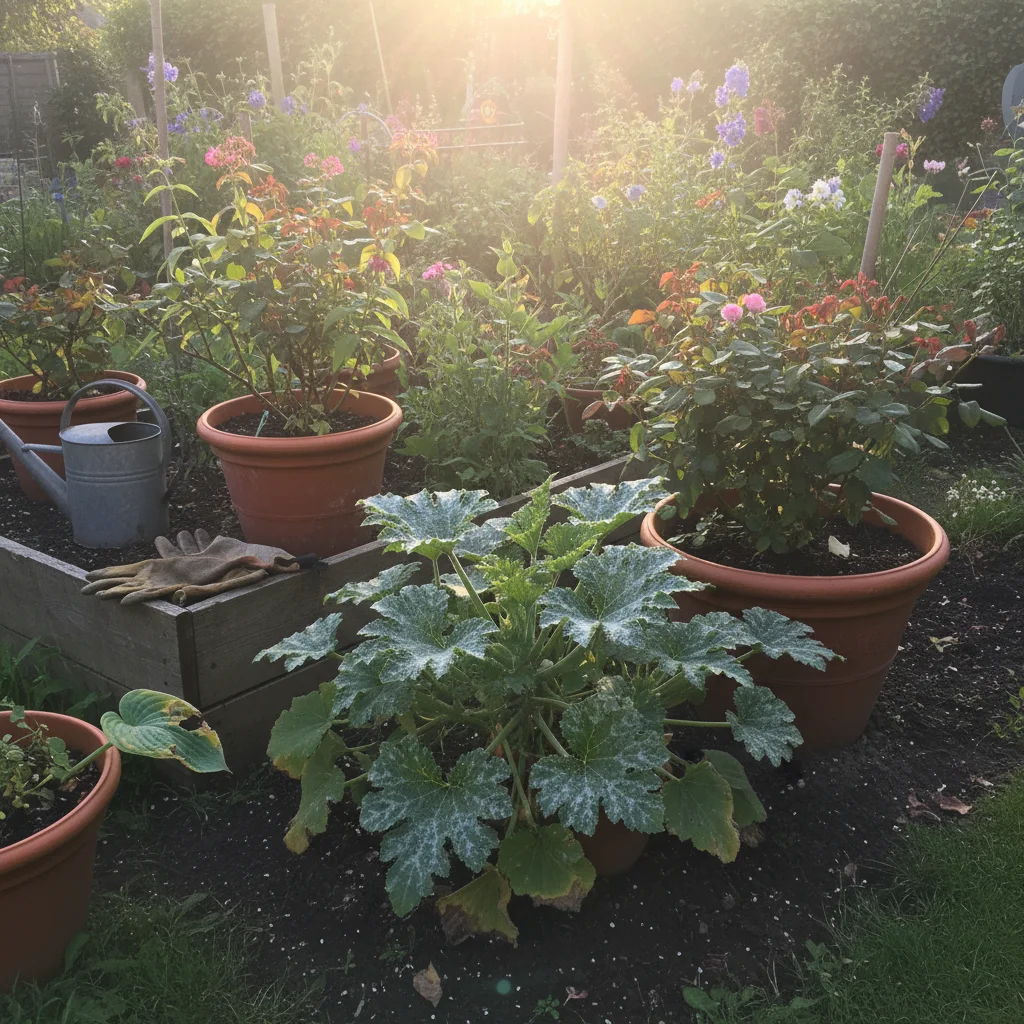
There is a particular moment in late summer when the garden should be at its peak, yet many of us notice a frustrating change. You might be checking your courgettes or admiring your Michaelmas daisies when you spot a fine, white dusting on the leaves. At first, it looks like a simple coating of flour or wood ash, but this is the unmistakable signature of powdery mildew. It is one of the most common fungal issues we face in the UK, and while it rarely kills a mature plant outright, it can significantly weaken your crops and spoil the beauty of your borders.
As a former head gardener, I have spent decades managing this persistent visitor. It thrives when the days are warm and the nights are cool, creating a cycle that can see a small patch of white spread across an entire bed in just a few days. The good news is that we do not need to reach for harsh synthetic chemicals to manage it. By understanding the biology of the fungus and making a few simple adjustments to how we care for our soil and plants, we can keep our gardens healthy and vibrant using entirely organic methods.
Identifying Powdery Mildew in Your Garden
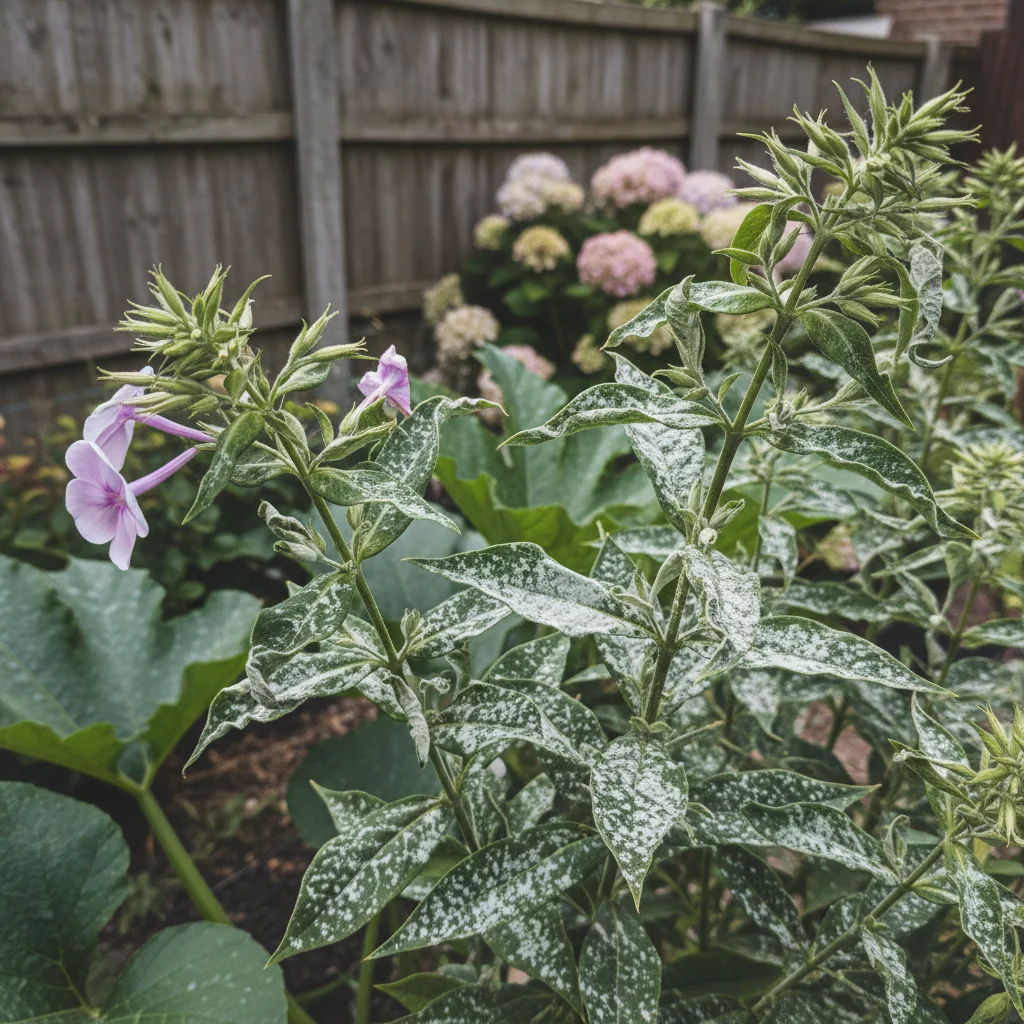
Before we look at treatments, we must be sure of what we are dealing with. Powdery mildew is not a single species of fungus but rather a large group of related fungi that all produce similar symptoms. Unlike many other fungal diseases that prefer damp, rainy weather, powdery mildew is somewhat unique because it can spread rapidly even during dry spells. It sits on the surface of the leaf, sending small structures called haustoria into the plant cells to steal nutrients.
You will typically see the symptoms on the upper surfaces of leaves, though it can appear on the undersides, stems, flowers, and even fruit. It usually starts as small, circular white spots that look like they could be rubbed off with a finger. As the infection progresses, these spots join together to form a carpet of white mycelium. If left unchecked, the leaves may turn yellow, curl, and eventually go brown and shrivel. This reduces the plant's ability to photosynthesise, which is why your vegetable yields might drop or your roses might look stunted.
It is helpful to know which plants are most likely to act as "sentinels" for the disease. While many plants are susceptible, certain groups are far more prone to infection during the UK summer and autumn. Knowing these targets allows you to monitor your garden more effectively and intervene at the first sign of trouble.
- Cucurbits: Courgettes, pumpkins, squashes, and cucumbers are notoriously susceptible.
- Flowers: Roses, phlox, delphiniums, and Michaelmas daisies (asters) are frequent hosts.
- Fruit: Gooseberries, apples, and grapes often suffer, especially in sheltered spots.
- Vegetables: Peas and beans often succumb as the pods begin to swell.
Why Powdery Mildew Appears
Understanding the environmental triggers for powdery mildew is the first step toward prevention. Most fungi require liquid water on the leaf surface to germinate, but powdery mildew spores are actually inhibited by heavy rain. Instead, they prefer high humidity around the foliage combined with dry conditions at the roots. This is why we see the disease peak in August and September in the UK, when the soil is often at its driest but the morning dews are becoming more frequent.
When a plant is stressed by drought, its natural defences are lowered. The fungus takes advantage of this weakened state. Furthermore, if your plants are crowded together, air cannot circulate through the foliage. This creates a stagnant microclimate where humidity remains high even on a sunny day. It is this combination of "wet heads and dry feet" that provides the perfect breeding ground for the spores to multiply.
We must also consider the role of nutrition. While we all want our plants to grow vigorously, over-feeding with high-nitrogen fertilisers can actually make the problem worse. Nitrogen encourages a flush of soft, sappy green growth which has thin cell walls. To a fungal spore, this soft growth is much easier to penetrate than the tougher, more established leaves. Balancing your feeding regime is a vital part of long-term garden health.
Cultural Methods to Prevent Infection
Prevention is always more effective than cure, and in the organic garden, our primary tool is good husbandry. The way we space our plants has a massive impact on the spread of disease. When you are planting out your borders or vegetable patches, it is tempting to pack things in for an instant effect. However, giving each plant enough room to reach its full size ensures that wind can move through the stems, drying the leaves and preventing humidity build-up.
If you have established shrubs or perennials that are prone to mildew, you can use "formative thinning" to help. This involves removing some of the congested growth from the centre of the plant using sharp, clean secateurs. By opening up the middle of a rose bush or a clump of phlox, you improve the light levels and the airflow. It is a simple task that makes the environment much less hospitable for fungal spores.
We should also be mindful of where we place susceptible plants. A rose planted against a south-facing wall may look beautiful, but the reflected heat can dry out the soil rapidly while the wall itself blocks any cooling breeze. If you know a particular spot in your garden is prone to stagnant air, choose plants that are naturally resistant to mildew or those that prefer drier conditions.
The Importance of Watering and Mulch
Since dry roots are a primary trigger for powdery mildew, our watering technique is paramount. We should always aim to water the soil, not the foliage. Using a watering can with the rose removed or a seep hose allows you to deliver moisture directly to the root zone where the plant needs it most. Watering early in the morning is ideal, as it allows any accidental splashes on the leaves to dry quickly in the sun.
Maintaining consistent moisture levels in the soil is much easier if you use mulch. A thick layer of organic matter, such as well-rotted garden compost, leaf mould, or bark chippings, acts as an insulating blanket. It prevents moisture from evaporating and keeps the root zone cool. In my own garden, I apply a 5cm layer of peat-free compost across the beds in early spring while the soil is still damp from the winter rains.
Mulching also improves the overall structure of your soil over time. Healthy soil is full of beneficial microbes and mycorrhizal fungi that help plants take up nutrients and water more efficiently. A plant with a robust root system and access to a steady supply of moisture is far better equipped to resist the onset of powdery mildew than one struggling in compacted, parched earth.
Using Milk as an Organic Treatment
One of the most effective organic treatments for powdery mildew is likely sitting in your fridge right now. Using a milk-based spray sounds like an old wives' tale, but it is backed by genuine horticultural science. Research suggests that a protein in milk called lactoferrin, when exposed to sunlight, produces free radicals that are toxic to the fungus. It also acts as a natural antiseptic and boosts the plant's immune response.
To make an effective milk spray, you do not need to use it at full strength. In fact, a diluted solution is often more effective and less likely to leave a sour smell in the garden. I find that a mix of 40% milk to 60% water works perfectly. You can use skimmed, semi-skimmed, or whole milk, though some gardeners prefer skimmed as it contains less fat, which can occasionally lead to a slight odour if used in very hot weather.
- Mix 400ml of milk with 600ml of water in a clean spray bottle.
- Add a tiny drop of eco-friendly washing-up liquid to help the spray stick to the waxy leaf surfaces.
- Choose a bright, sunny day for application, as the sunlight is a necessary catalyst for the reaction.
- Spray all surfaces of the affected plant, ensuring you cover the tops and bottoms of the leaves.
- Repeat the process every 7 to 10 days, or after heavy rain, until the symptoms subside.
The Bicarbonate of Soda Solution
Another reliable organic remedy involves bicarbonate of soda. This works by altering the pH level on the surface of the leaf, making it more alkaline. Powdery mildew thrives in a specific pH range, and by shifting that balance, we make it very difficult for the spores to survive or spread. It is a gentle but effective way to manage an outbreak on roses and herbaceous perennials.
To create this spray, dissolve one teaspoon of bicarbonate of soda into a litre of water. Much like the milk spray, adding a half-teaspoon of horticultural soap or a mild, plant-based detergent is essential to ensure the liquid spreads evenly across the leaf rather than just beadings off. You must be careful not to make the solution too strong, as an excess of soda can eventually build up in the soil or cause "leaf burn" on very sensitive plants.
Always test your spray on a single leaf first and wait 24 hours to ensure there is no adverse reaction. If the leaf looks healthy, you can proceed to treat the rest of the plant. This treatment is best used as a preventative or at the very first sign of white spots. Once a plant is heavily coated in mildew, the bicarbonate spray may struggle to penetrate the thick layer of fungus, so early intervention is key.
Pruning and Maintaining Garden Hygiene
When powdery mildew takes hold, sometimes the best course of action is to remove the most heavily infected material. If a few leaves on your courgettes are completely white and starting to shrivel, they are no longer providing much energy to the plant. By cutting them off, you reduce the "spore load" in the immediate area, which can slow down the spread to younger, healthier growth.
However, we must be careful with how we handle this waste. Fungal spores are incredibly resilient and can survive for a long time. I advise against putting mildew-infected material into a cold compost heap, as it may not reach the temperatures required to kill the spores. Instead, put it in your council green waste bin, where industrial composting processes will neutralise the fungus, or bury it deep in a part of the garden that won't be disturbed.
Hygiene extends to your tools as well. If you have been pruning a mildew-ridden rose, your secateurs will likely be covered in invisible spores. If you then move on to prune a healthy plant, you are effectively inoculating it with the disease. I always carry a small rag soaked in a little surgical spirit or a mild disinfectant to wipe my blades between plants. It is a simple habit that prevents many common garden ailments from moving around the plot.
Choosing Resistant Plant Varieties
If you find that you are battling powdery mildew year after year on the same types of plants, it may be time to look at the varieties you are growing. Plant breeders have made huge strides in developing cultivars that are naturally resistant to fungal diseases. When browsing seed catalogues or visiting the garden centre, look for the "RHS Award of Garden Merit" (AGM) or specific mentions of mildew resistance.
For example, if you love Michaelmas daisies but hate the white coating they often get in September, look for Symphyotrichum novae-angliae varieties, which are generally more resistant than the Symphyotrichum novi-belgii types. In the vegetable garden, many modern courgette varieties like 'Defender' have been bred specifically to stand up to mildew, allowing you to harvest right through to the first frosts without the foliage collapsing.
Choosing the right plant for the right place is the ultimate organic strategy. A plant that is naturally suited to your soil type and light levels will be inherently more vigorous. A vigorous plant has thicker cell walls and a more active immune system, making it a much harder target for powdery mildew spores. It is always worth doing a little research before buying to ensure your new additions have the best possible start.
Long Term Soil Health and Resilience
The ultimate goal for any organic gardener is to create an ecosystem that is balanced and resilient. While we can use milk sprays and bicarbonate solutions to manage outbreaks, the real work happens beneath the surface. Soil that is rich in organic matter and teeming with life provides the foundation for healthy plants. When we move away from synthetic fertilisers and focus on feeding the soil with compost and mulches, we create plants that are naturally more resistant to pests and diseases.
Healthy soil acts as a sponge, holding onto water during dry spells and ensuring that our plants don't suffer the drought stress that triggers mildew. By avoiding peat-based products and recycling our garden waste into high-quality compost, we are not just helping our own gardens; we are contributing to a more sustainable way of growing that respects the wider environment.
Dealing with powdery mildew is a reminder that the garden is a living, breathing system. We shouldn't aim for total eradication, which is rarely possible, but rather for a healthy balance. By monitoring your plants closely, improving airflow, and using simple organic remedies when needed, you can ensure that the white dust of mildew remains a minor nuisance rather than a garden disaster. This proactive approach will leave you with a more beautiful, productive, and sustainable outdoor space to enjoy throughout the seasons.