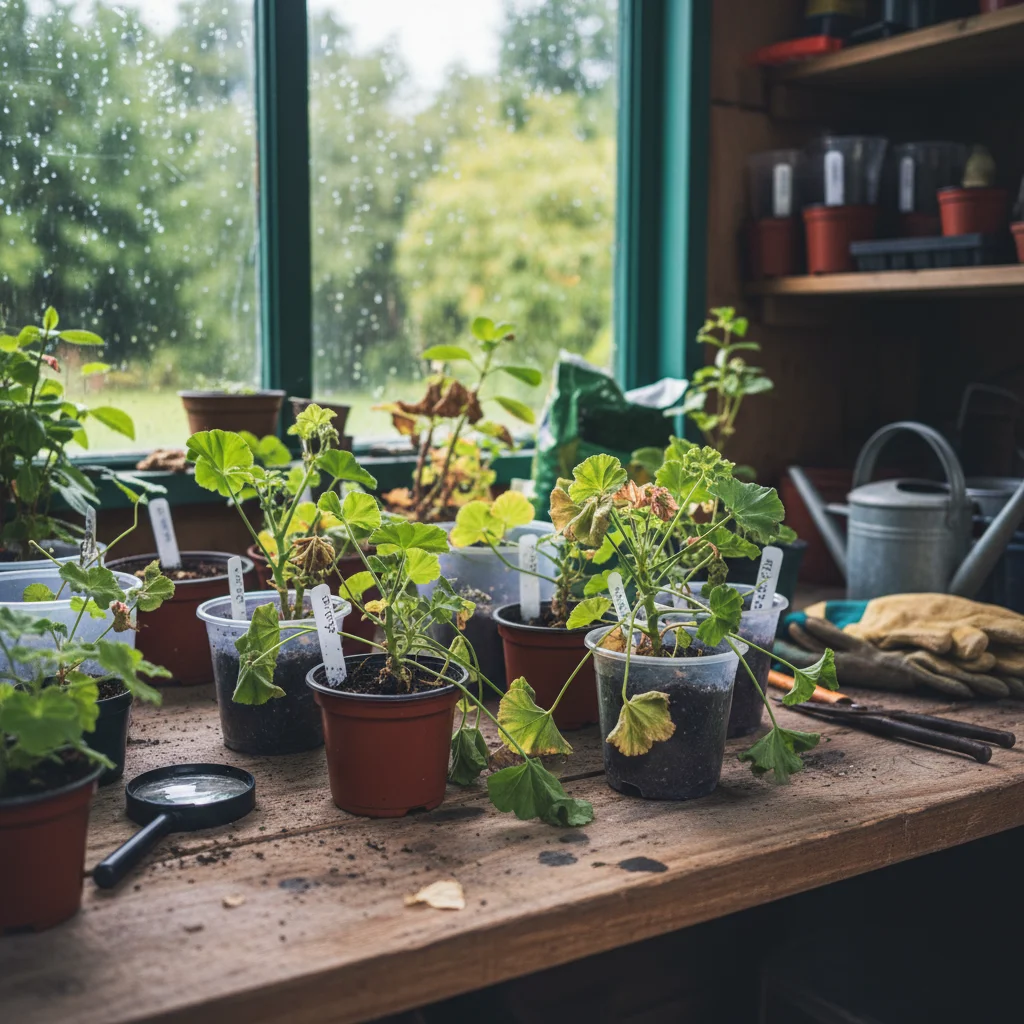
There is nothing quite as satisfying as turning a single snip from a friend's plant into a thriving new addition for your own balcony. Propagation is the ultimate urban gardening hack, allowing us to fill our window boxes and pots with herbs, perennials, and houseplants without spending a penny at the garden centre. However, we have all experienced that sinking feeling when a cutting that looked so promising a week ago begins to turn yellow, go mushy, or simply sit there doing absolutely nothing.
When your cuttings refuse to root, it feels like a personal failure, but it is usually just a small environmental tweak away from success. In a small city flat or on a windy balcony, the conditions aren't always "textbook," but plants are remarkably resilient if you give them the right nudge. Understanding why a cutting has stalled is the first step toward becoming a propagation pro, even if your only "greenhouse" is a sunny spot next to the toaster.
The Importance of Cleanliness
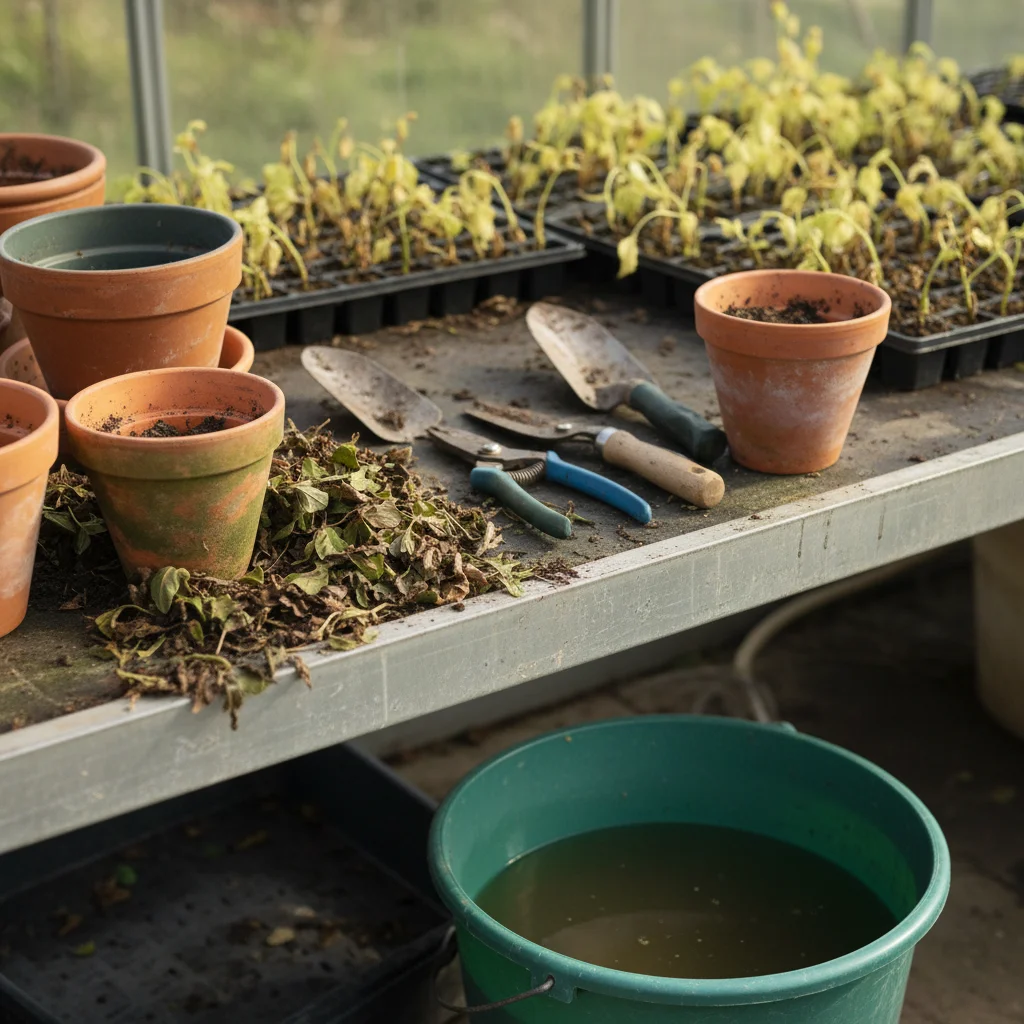
One of the most common reasons cuttings fail before they even start is invisible to the naked eye. Bacteria and fungi are the primary enemies of a fresh stem, and they often hitch a ride on our tools or the containers we use. If you are using a pair of kitchen scissors that recently cut through a packet of chicken or a trowel that has been sitting in old, damp soil, you are essentially introducing an infection directly into the plant's open wound.
In the city, we often deal with more dust and grime than rural gardeners, and this can settle on our plants and tools. It only takes a second to wipe your blades with a bit of surgical spirit or even hot soapy water before you make that crucial snip. Think of it like surgery; you wouldn't want a doctor using a rusty scalpel, and your Lavender or Mint feels exactly the same way about your household shears.
Beyond the tools, the "vessel" matters just as much. If you are rooting in water, that glass jar needs to be sparkling clean, as algae and bacteria thrive in stagnant water on a warm windowsill. If you are using compost, ensure it is a fresh, sterile seed-and-cutting mix rather than a half-used bag that has been sitting open on the balcony for six months. Fresh compost is less likely to harbour the fungus gnats and "damping off" diseases that claim so many young plants.
Finding the Right Node
If your cutting looks healthy but simply won't produce roots, the problem might be where you made the cut. Most plants have specific areas called nodes—the little bumps on the stem where leaves emerge—which contain a high concentration of the hormones needed to create new roots. If you cut right in the middle of a long stretch of stem, known as the internode, the plant often doesn't know what to do with itself.
The stem below the node will often just rot away because it has no purpose, eventually taking the rest of the cutting with it. When you take a cutting, you want to snip just a millimetre or two below a healthy node. This places the "root-making factory" in direct contact with your water or soil, giving the plant the best possible signal to start growing.
We also need to consider how many leaves are left on the cutting. While it is tempting to keep all the beautiful foliage, every leaf is a mouth that the stem can no longer feed. In a small pot or a glass of water, a cutting with too many leaves will lose moisture through transpiration faster than it can take it up. Removing the lower leaves and perhaps even trimming larger leaves in half can reduce this stress and allow the plant to focus its limited energy on survival.
Managing Light and Heat
In an urban environment, we are often at the mercy of our building's orientation. A south-facing windowsill in a London flat can become a literal oven in July, while a north-facing balcony might feel like a fridge. Temperature and light are the twin engines of root growth, but they need to be in balance; too much of one without the other leads to disaster.
Cuttings need bright, indirect light to photosynthesise and create the energy required for rooting. However, direct sunlight is often too harsh for a plant without roots, as it causes the cutting to overheat and wilt. If you are propogating on a sunny balcony, try tucking your pots behind larger, established plants to provide some "dappled shade" that mimics a forest floor.
Bottom heat is another secret weapon that many of us overlook. In the UK, our soil temperatures are often much lower than the air temperature, especially in spring or autumn. If the "feet" of your cutting are cold, the plant will remain dormant. You don't need an expensive heated propagator; placing your pots on top of a fridge or near (but not directly on) a radiator can provide just enough warmth to trigger root development.
The Humidity Factor
When a cutting is removed from its parent plant, it loses its main water supply. Until it grows its own roots, it has to survive on the moisture held within its tissues and whatever it can absorb through its leaves. In the dry air of a centrally heated flat or on a breezy balcony, the cutting can dehydrate in hours. This is why many cuttings look "sad" and limp almost immediately after being taken.
Creating a mini-greenhouse is the easiest way to fix this. You don't need a fancy setup; a clear plastic bag popped over a pot and secured with an elastic band works wonders. This traps the moisture evaporating from the soil and the plant, creating a humid microclimate that keeps the leaves turgid. Just make sure to poke a few small holes in the bag or open it every few days to let some fresh air in, or you might end up with a mouldy mess.
Choosing Your Medium
Whether you choose to root in water or soil often depends on what you are growing, but both have their pitfalls. Water propagation is incredibly popular for houseplants like Pothos or herbs like Basil because it is easy and you can see the progress. However, "water roots" are structurally different from "soil roots"—they are more fragile and often struggle to adapt when you finally move the plant into a pot.
If you find your water cuttings are consistently rotting, try adding a small piece of horticultural charcoal to the water to keep it sweet. Alternatively, switch to a solid medium like perlite or vermiculite. These materials hold plenty of air while staying moist, which is the "holy grail" for root development. Roots need oxygen just as much as they need water; if your compost is a sodden, heavy clump of peat, the roots will effectively drown before they can grow.
For those of us with limited space, using a mix of 50% peat-free multipurpose compost and 50% perlite or grit is a fantastic all-rounder. This ensures that even if you get a bit heavy-handed with the watering can on a busy Tuesday morning, the excess will drain away quickly. Good drainage is especially important on balconies where pots can sometimes be buffeted by rain or sit in trays of water.
Signs Your Cutting Is Struggling
It helps to know what to look for before a cutting is beyond saving. Sometimes, a quick intervention can turn things around.
- Blackening at the base: This is a clear sign of rot, usually caused by overwatering or dirty tools.
- Wilting despite wet soil: This suggests the plant cannot take up water, possibly because the humidity is too low.
- Yellowing lower leaves: The plant may be diverting nutrients to the tip; try removing the yellow leaves to save energy.
- No growth after weeks: The temperature might be too low, or the plant is a hardwood variety that takes months, not days.
- Fuzzy white mould: This indicates a lack of airflow; remove the cover and let the plant breathe.
If you see blackening at the base, all is not lost. You can often "re-cut" the stem an inch or two higher up, into healthy green tissue, and start again with fresh water or sterile compost. It is a bit like a second chance for the plant, provided you address whatever caused the rot in the first place.
Timing and Seasonality in the UK
We often forget that plants have internal clocks. Trying to take a cutting of a deciduous shrub in the middle of a freezing British January is a recipe for disappointment because the plant is dormant. While we can cheat the seasons a little bit indoors with grow lights and heating, the best results usually come when we work with nature.
Softwood cuttings, taken from the soft, new growth of the current season, are usually the fastest to root and are best taken in late spring or early summer. This is the perfect time for Fuchsias, Pelargoniums, and most herbs. As we move into late summer, the wood begins to "ripen" or harden, and we move into semi-ripe cuttings. These take a little longer but are more robust, making them ideal for evergreen shrubs or Mediterranean herbs like Rosemary and Lavender.
In the UK, the "Goldilocks" zone for propagation is usually between May and September. During these months, the days are long enough to provide ample light, and the temperatures are generally high enough to keep the soil warm. If you are taking cuttings later in the year, you will almost certainly need to provide extra warmth and be much more patient, as the plant's metabolism slows down significantly.
The Role of Rooting Hormones
You might see "rooting powder" or gel in the shops and wonder if it is really necessary. For many easy-to-root plants like Mint or Coleus, it isn't. However, for "stubborn" plants or for gardeners who want to stack the deck in their favour, these products can be a lifesaver. They contain synthetic versions of auxins, the natural hormones that tell a plant cell to stop being a "stem cell" and start being a "root cell."
In a small garden or balcony setup, a small tub of rooting powder will last you years. If you prefer a more natural approach, some gardeners swear by "willow water"—soaking chopped-up willow twigs in water to extract their natural rooting hormones. Honey is also sometimes used for its antibacterial properties, though it doesn't contain the same hormonal triggers as commercial products.
When using powder, the trick is not to overdo it. Dip the very tip of the cutting into the powder and then flick off the excess. If you apply it too thickly, it can actually have the opposite effect and inhibit growth or cause the stem to rot. Also, never dip your cutting directly into the main tub; take a small amount out into a saucer to avoid contaminating the whole container with pathogens from your plants.
Hardwood vs Softwood Challenges
One reason your cuttings might be "failing" is simply that you are expecting them to move too fast. A softwood cutting of a Hydrangea might show roots in two weeks, but a hardwood cutting of a Rose or a Ribes taken in autumn might not show any signs of life until the following spring. It is easy to assume a cutting has died and throw it away when, in reality, it was just biding its time.
Hardwood cuttings are the ultimate "set and forget" propagation method. You take long, pencil-thick stems in late autumn, tuck them into a pot of gritty compost, and leave them in a sheltered spot outside over winter. They don't need the humidity bags or the warmth of a windowsill; they just need time and a bit of protection from the worst of the frost.
If you are an urban gardener with limited space, hardwood cuttings are fantastic because they don't take up valuable indoor windowsill real estate. You can tuck a pot of them into a corner of the balcony and ignore them until March. Just make sure the pot doesn't dry out completely during a dry spell, and by the time the spring bulbs start to appear, you will likely find a healthy set of roots has formed beneath the soil.
Patience and Persistence
Propagation is as much an art as it is a science. Even the most experienced gardeners lose a few cuttings every season; it is simply part of the process. Sometimes a cutting fails for no apparent reason—perhaps the parent plant was under stress, or the atmospheric pressure changed. The beauty of gardening in small spaces is that we can observe our plants closely every day and learn from these small setbacks.
If a cutting fails, don't let it discourage you. Clean your tools, check your nodes, and try again. The more you experiment with different spots in your home or on your balcony, the better you will understand the unique microclimate of your space. Before long, you will have a "nursery" of young plants ready to be potted up, giving you a lush, green sanctuary that didn't cost a fortune.
The next time you see a plant you love, remember that a small, healthy snip is the start of a whole new journey. By paying attention to the details of hygiene, light, and moisture, you can turn your windowsill into a productive little factory of new life. Start with something easy like a Spider Plant or some Basil, and once you see those first white roots appearing, you will be hooked on the magic of making something from nothing.