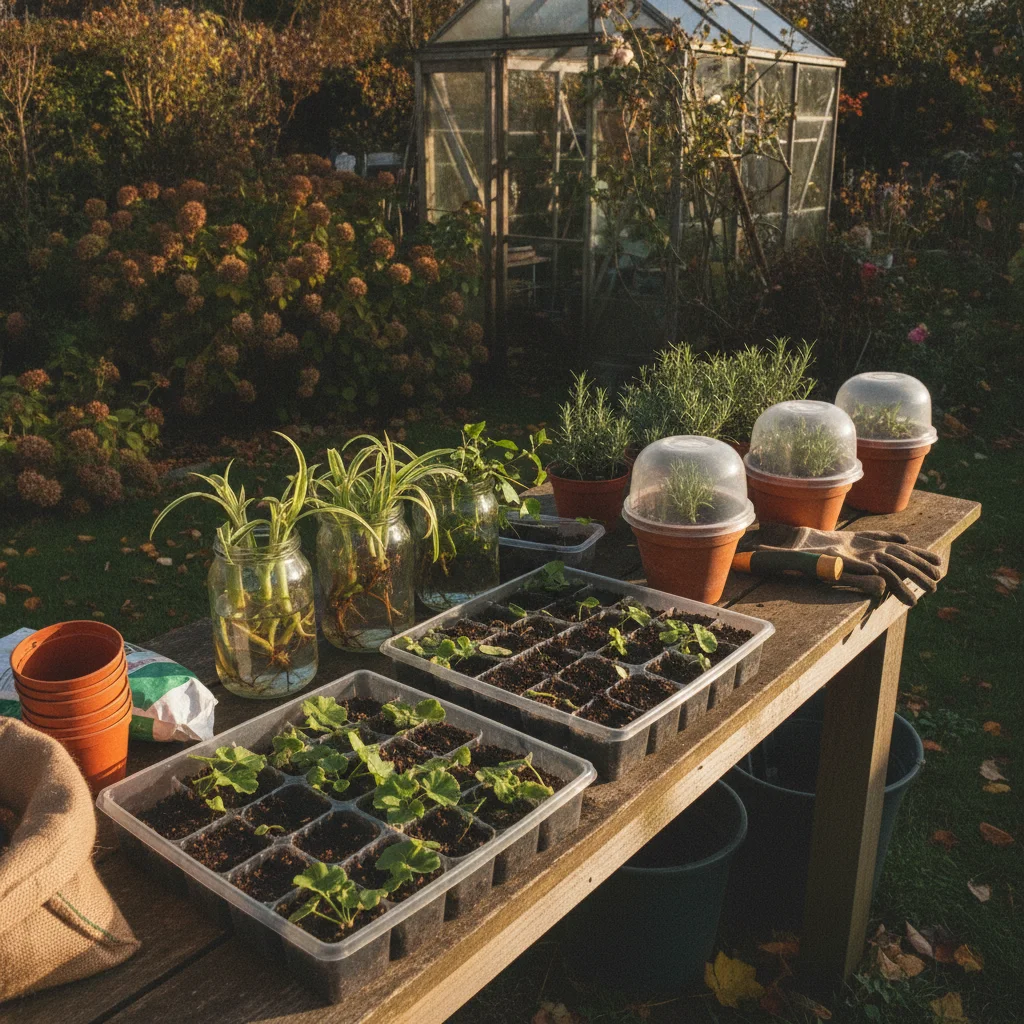
As the London skyline turns that misty shade of grey and the leaves begin to clutter our pavements, it is tempting to pack away the trowel and retreat indoors. Most of us think of spring as the time for new life, but autumn is actually the secret weapon of the savvy urban gardener. By taking a few moments now to propagate your favourite plants, you are essentially "future-proofing" your balcony or patio for next year without spending a penny at the garden centre.
Propagating in autumn feels like a quiet rebellion against the coming winter. While the top growth of our plants is heading into dormancy, the soil—even in our pots and window boxes—retains some of the summer’s warmth. This creates the perfect environment for roots to develop slowly and surely over the colder months. When the first warm breath of April arrives, these new plants will already have a robust root system, ready to race ahead of anything you might buy in a plastic pot later.
In a small city garden or on a balcony, space is our most precious commodity. We don’t have room for massive greenhouses or sprawling potting sheds. The beauty of autumn propagation is that many of these new starts can be tucked away in a sheltered corner or even on a cool windowsill. It is a practical, low-cost way to fill those inevitable gaps that appear after a harsh winter or to simply increase your collection of herbs and flowers.
The logic of the autumn head start
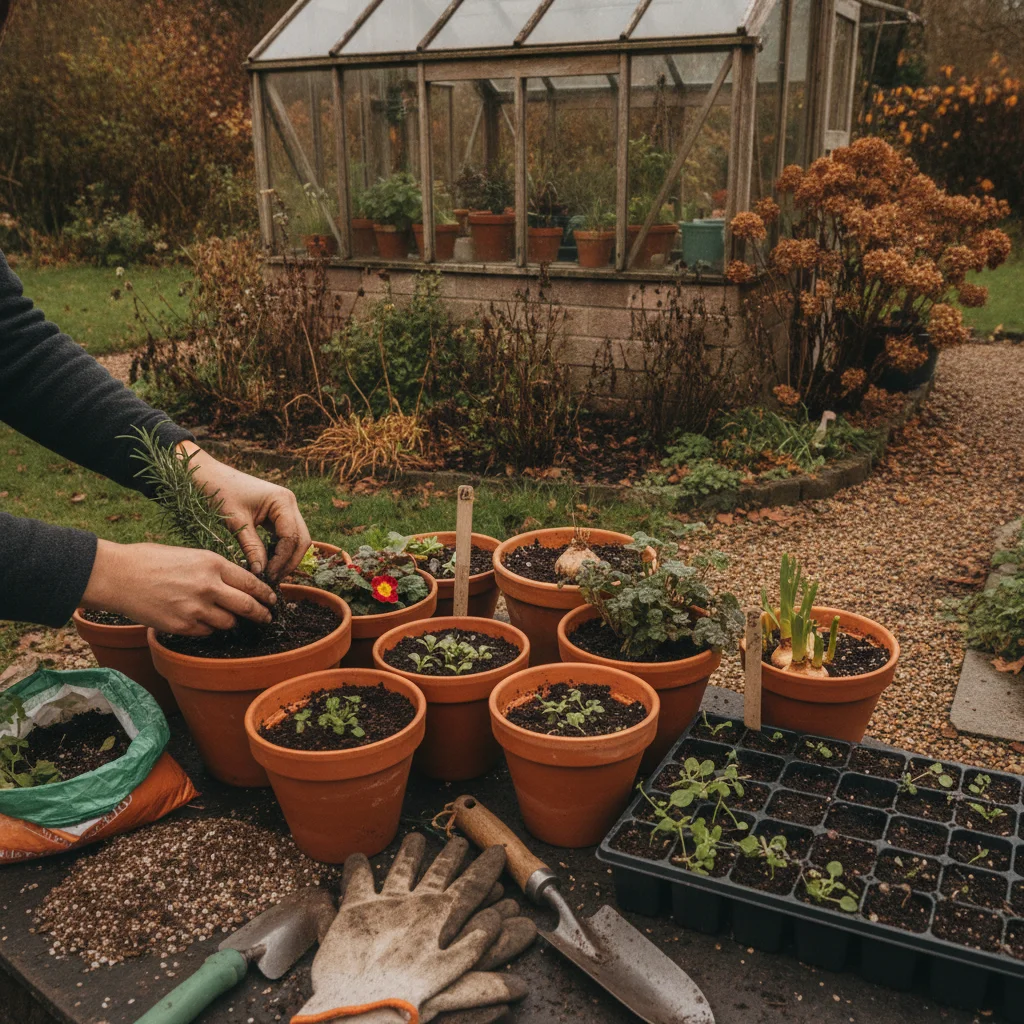
We often forget that plants are remarkably resilient. In the wild, autumn is the time when seeds drop and perennials naturally spread their roots. By mimicking these processes, we are working with nature rather than against it. For those of us with limited time, autumn propagation is surprisingly low maintenance because the cooler weather and increased rainfall do much of the watering work for us.
When you take cuttings or divide plants in October or November, you are catching them just as they are winding down. This means they aren't putting energy into making new flowers or lush leaves. Instead, they can focus entirely on establishing roots. This "underground" work is what gives them such a massive advantage come spring. While your neighbours are queuing at the nursery, you’ll be stepping out onto a balcony already brimming with established greenery.
Hardwood cuttings for city shrubs
Hardwood cuttings are perhaps the easiest way to grow new shrubs for free. These are taken from the current year’s growth once the wood has turned firm and the leaves have started to fall. In a small garden, this is perfect for things like roses, hydrangeas, or even blackcurrants if you’re trying your hand at an edible balcony. You don't need any fancy equipment; a sharp pair of secateurs and a pot of gritty compost will do the job.
To take a hardwood cutting, look for a healthy stem that is roughly the thickness of a pencil. Cut a length about 15cm to 20cm long, making a straight cut just below a bud at the base and a sloping cut at the top. The slope helps the rain run off, which is vital in our damp UK winters to prevent rot. You can then simply push these stems into a deep pot filled with a mix of multi-purpose compost and plenty of horticultural grit.
If you are tight on space, you can huddle several cuttings together in a single large pot. Keep them in a sheltered spot outdoors, perhaps tucked against a south-facing wall or under a balcony bench. They won't look like much over the winter—just a collection of sticks—but come spring, you’ll see tiny green buds bursting into life. By next autumn, they will be ready to move into their own permanent homes.
Dividing perennials for more flowers
If you have pots that have become "root-bound" or a small border where the plants are starting to look a bit crowded, division is your best friend. This is the process of literally pulling a plant apart to create two or three new ones. It’s a great way to rejuvenate tired plants that didn't flower as well this year. For urban gardeners, it’s also a clever way to fill up new containers without a trip to the shops.
Hardy geraniums, hostas, and ornamental grasses are all perfect candidates for autumn division. To do this, simply lift the plant from its pot or the ground and gently shake off the excess soil. You can often pull the root ball apart with your hands, but for tougher plants, you might need to use two hand forks back-to-back to prize them open. Ensure each new section has a good bit of root and at least one "growing point" or bud.
Once you have your new sections, replant them immediately. If you’re putting them back into pots, use fresh compost to give them a nutrient boost. This is also a great time to share plants with neighbours. If you have too much of one variety for your small space, a potted-up division makes a lovely, sustainable gift for a fellow city gardener.
Essential kit for small space propagation
You really don't need a shed full of tools to get started with autumn propagation. Most of us can get by with just a few basics that can be tucked away in a kitchen drawer or a small balcony storage box.
- A sharp pair of secateurs to ensure clean cuts that don't get infected.
- Deep pots or recycled containers with plenty of drainage holes.
- Horticultural grit or perlite to improve drainage in heavy winter rain.
- A bag of good quality peat-free multi-purpose compost.
- Plant labels and a permanent marker so you don't forget what's what.
Taking semi ripe cuttings of herbs
Many of our favourite Mediterranean herbs, like rosemary, sage, and lavender, can be propagated in early to mid-autumn using semi-ripe cuttings. These are stems that are still slightly soft at the tip but have started to go woody at the base. These herbs are staples for the urban cook, and having a few extra pots on the windowsill or balcony is always a good idea.
Choose a non-flowering shoot and snip off about 10cm. Strip the leaves from the bottom half of the stem, as any foliage left below the soil line will just rot in the damp. Dip the end in a little hormone rooting powder if you have it, though it’s not strictly necessary for herbs. Insert them into a pot of very gritty compost; these plants hate "wet feet," so drainage is absolutely critical in our British climate.
Because these herbs are a bit more tender than hardwood shrubs, they might appreciate a bit of extra protection. You can create a "mini greenhouse" by placing a clear plastic bag over the pot, held up with a few sticks. Keep them on a bright windowsill or in a very sheltered spot on your patio. By spring, you’ll have fragrant new plants ready to spice up your cooking.
The beauty of autumn sown sweet peas
While most seeds are sown in the spring, sweet peas are a notable exception that thrive with an autumn start. Sowing them in October or November allows them to develop a deep, strong root system over the winter. This results in much sturdier plants that flower earlier and for longer than those sown in March. For a balcony gardener, sweet peas are a dream because they grow upwards, providing a vertical wall of scent and colour without taking up floor space.
Sow your seeds into deep pots or "root trainers"—empty toilet roll tubes work brilliantly for this and can be planted straight into the ground or a larger pot later. Keep them in a cool, bright place like a cold frame or an unheated porch. They don't need heat; in fact, they prefer to stay cool so they don't grow too "leggy."
If the weather turns particularly frosty, you might want to throw a bit of fleece over them, but otherwise, they are remarkably tough. Come spring, you’ll have vigorous young plants ready to climb up your railings or a trellis. The scent of home-grown sweet peas on a London balcony in June is one of the greatest rewards for a little bit of autumn effort.
Propagating for city pollinators
Even in the heart of the city, our small spaces can be vital corridors for bees and butterflies. When we propagate plants like lavender, buddleia, or sedum in the autumn, we are directly contributing to the local ecosystem. These plants provide essential nectar sources for pollinators that emerge early in the spring.
By increasing the number of flowering plants in your space through propagation, you are creating a more resilient habitat. A single lavender plant might not seem like much, but five or six plants across a row of window boxes can be a lifeline for a hungry bumblebee. Autumn is the perfect time to think about the "bigger picture" of your garden and how you can make it more wildlife-friendly for the year ahead.
Managing wind and weight on balconies
For those of us gardening high above the street, autumn propagation comes with its own set of challenges. Wind is often a bigger enemy than frost. A tray of delicate cuttings can easily be tossed across a balcony during a November gale. Always ensure your propagation pots are weighted down or tucked into a heavy trough to keep them secure.
Weight is another consideration. If you are taking lots of cuttings and dividing plants, the weight of the extra soil and pots can add up. Using lightweight perlite instead of heavy grit and choosing plastic pots over heavy terracotta can help keep your balcony within its weight limits. It’s all about being practical while still enjoying the process of growing more plants.
Best plants for autumn division
If you’re looking for a quick win this weekend, these are some of the most reliable plants to divide. They are hardy, adapt well to pots, and are almost guaranteed to give you a great display next spring.
- Hostas: Perfect for those shady corners of a courtyard or balcony.
- Astrantia: A cottage garden favourite that thrives in the UK climate.
- Hardy Geraniums: The ultimate "fill-in" plant that survives almost anything.
- Heuchera: Adds fantastic foliage colour to winter pots.
- Chives: An easy herb to split that provides beautiful purple flowers.
Protecting your new starts from the elements
While autumn propagation is mostly a "set and forget" task, our erratic British weather can sometimes throw a curveball. We might have a mild October followed by a sudden, biting frost in November. Keeping an eye on the forecast is part of the job. If a hard frost is predicted, move your most precious cuttings into a more sheltered spot or wrap the pots in bubble wrap to protect the young roots.
Excessive rain is often more of a danger than the cold. In a small space, pots can easily become waterlogged if the drainage holes get blocked by fallen leaves. Elevating your pots on "pot feet" or even a few old bricks can make a huge difference. This allows the water to drain away freely, preventing the roots from rotting in the cold, damp soil.
Taking a few hours this weekend to propagate your plants is the ultimate gift to your future self. It turns the quiet, fading days of autumn into a period of quiet productivity and hope. By the time the first crocuses poke their heads through the soil in February, you’ll already have a collection of strong, healthy plants ready to transform your urban oasis into a lush, green sanctuary for the spring.