There is a particular kind of anxiety that strikes even seasoned gardeners when they stand before a hydrangea with a pair of secateurs. We have all heard the horror stories of someone "tidying up" their shrub in autumn, only to find they have no flowers at all the following summer. It is a common frustration, but once you understand the simple biology of these plants, that uncertainty disappears.
Hydrangeas are remarkably resilient, but they are not all built the same way. The secret to a successful prune lies in knowing whether your plant produces its flower buds on "old wood" or "new wood." If you can identify which group your shrub belongs to, you can prune with confidence, knowing exactly where the next season’s colour is coming from.
In our UK climate, timing is just as important as technique. We often deal with late spring frosts that can nip tender new growth, so our approach to pruning must account for protection as much as aesthetics. By following a methodical approach, you can maintain the health of the plant, encourage larger blooms, and keep the shrub at a manageable size for your garden borders.
Understanding the two main groups
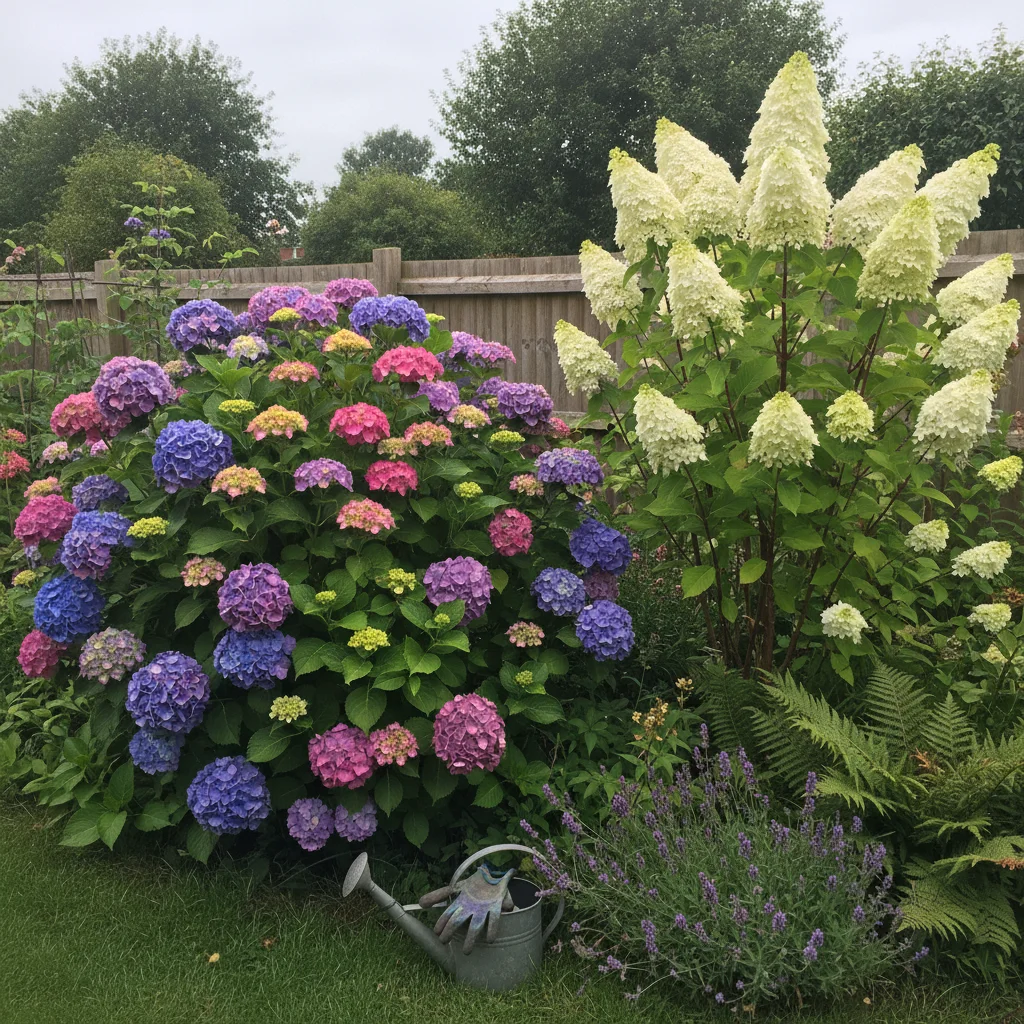
The most vital step is identifying your hydrangea variety. We generally split them into two camps based on their flowering habit. The first group includes the popular mopheads and lacecaps, which develop their flower buds during the previous growing season. We call this "old wood," and if you cut these back hard in the winter, you are essentially throwing away next year's flowers.
The second group includes varieties like the hardy panicle hydrangeas and the smooth-leaved "Annabelle" types. These are much more forgiving because they produce their flowers on the growth they put on in the current year, known as "new wood." You can be much bolder with these plants, as they will spend the spring racing to produce fresh stems that will carry heavy blooms by midsummer.
If you aren't sure which one you have, take a look at the flower shape and the leaves. Mopheads have those classic rounded pom-poms, while lacecaps have a flat disc of tiny flowers surrounded by a ring of larger petals. Panicle hydrangeas are easily spotted by their cone-shaped flower heads, which often start white and fade to a dusty pink as the season progresses.
Pruning mopheads and lacecaps
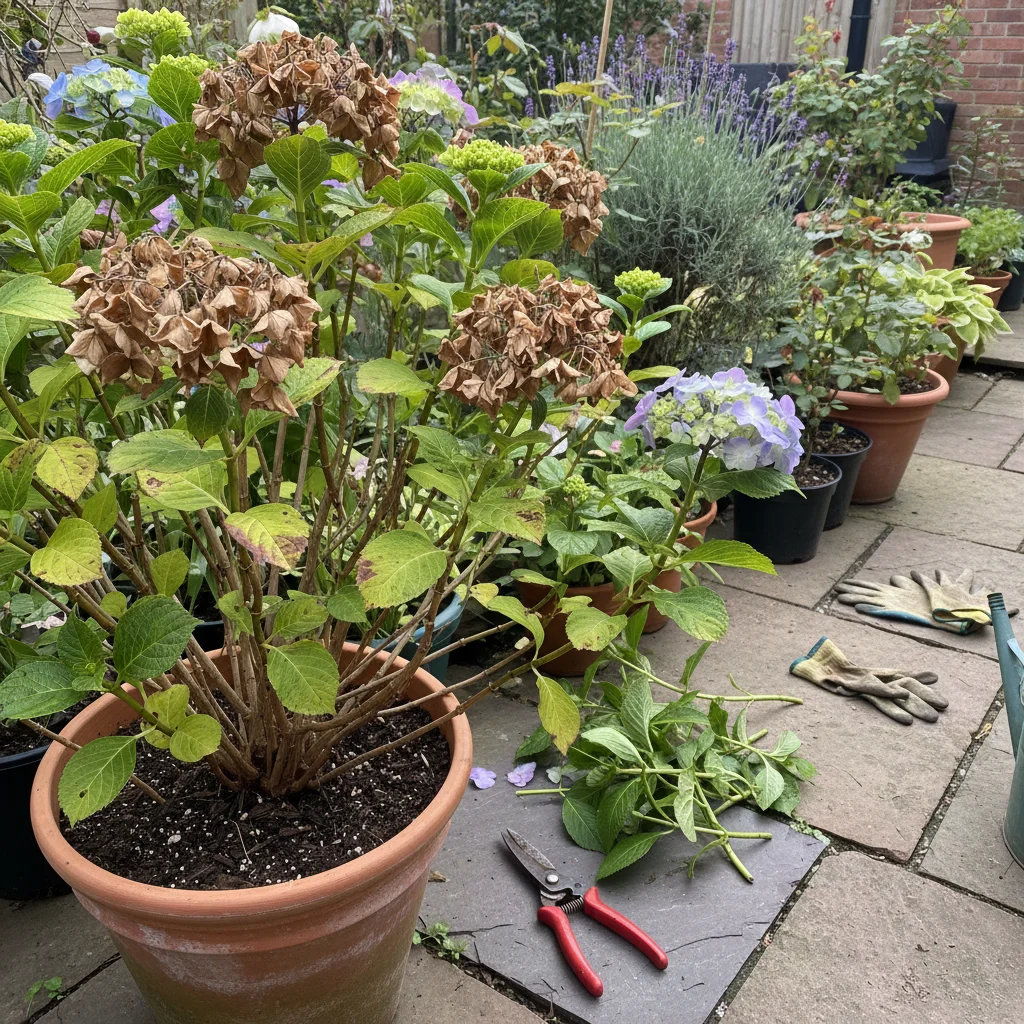
For Hydrangea macrophylla, which includes both mopheads and lacecaps, the goal is light maintenance rather than a heavy overhaul. In the UK, it is best to leave the faded flower heads on the plant throughout the winter. These old blooms act as a natural umbrella, protecting the delicate growth buds nestled just below them from the worst of the frost.
When the risk of hard frost has passed in early spring—usually around late March or early April—you can prune back to the first pair of strong, healthy buds below the old flower head. Use sharp, clean secateurs to make a clean cut just above the buds. This prevents dieback and ensures the plant directs its energy into those ready-to-burst flowers.
If your shrub has become a tangled mess of old stems, you can perform a bit of rejuvenation. Every year, look for the oldest, woodiest stems that are producing fewer flowers and cut one or two of them right down to the base of the plant. This encourages the hydrangea to send up fresh, vigorous shoots from the ground, keeping the entire plant youthful and productive.
Managing panicle and smooth hydrangeas
Hydrangea paniculata and Hydrangea arborescens are the workhorses of the late summer garden. Because they flower on new wood, you have a lot more flexibility with your pruning. You can leave them alone if you want a massive, wild-looking shrub, but most gardeners prefer to prune them back to create a sturdier framework and larger flower heads.
In late winter or very early spring, you can cut these varieties back to a low permanent framework about 30cm to 60cm off the ground. Aim to cut just above a pair of healthy buds. This hard pruning results in fewer but much larger flower cones, which look spectacular in a contemporary garden setting or a mixed herbaceous border.
If you prefer a taller plant with a cloud of smaller flowers, simply prune less aggressively. Just thinning out the top growth and removing any weak or crossing branches will suffice. These varieties are incredibly hardy and can cope with our damp winters far better than some of their more delicate cousins, making them a brilliant choice for more exposed UK gardens.
The essential pruning toolkit
Having the right tools makes the job safer for both you and the plant. A clean cut heals much faster than a ragged one, reducing the risk of fungal infections or pests moving in. I always recommend spending five minutes cleaning your blades with a bit of garden disinfectant or surgical spirit before you start.
- Bypass secateurs: These work like scissors and are perfect for the green, fleshy stems of most hydrangeas.
- Loppers: Essential for reaching into the centre of a large shrub to remove those thick, woody old stems at the base.
- Pruning saw: Only necessary if you are tackling a very old, neglected specimen with trunks thicker than a thumb.
- Gardening gloves: Hydrangeas aren't thorny, but some people find the sap can be a mild skin irritant.
- A clean bucket: Use this to collect your clippings for the compost heap or green waste bin.
Once you have your tools ready, always remember the golden rule of pruning any woody plant. Before you worry about the shape or the flowers, you must address the health of the framework. We look for the "three Ds" to ensure the plant remains vigorous and disease-free throughout the year.
- Dead wood: Anything that is brittle, brown, and snaps easily should be removed entirely.
- Damaged wood: Stems that have been broken by wind or frost provide an entry point for disease.
- Diseased wood: Look for any signs of canker or unusual spotting and cut back to healthy, green tissue.
- Crossing branches: Remove stems that are rubbing against each other, as the friction creates wounds in the bark.
Timing and the UK climate
The biggest mistake I see gardeners make is pruning too early in the autumn. While it is tempting to tidy up the garden before winter sets in, cutting back hydrangeas in November leaves the plant vulnerable. The soft, sappy growth inside the stems can hold water, which then freezes and expands, splitting the stems and killing the buds.
Patience is a virtue in the hydrangea garden. By waiting until the sap begins to rise in the spring, you can clearly see which buds are healthy and which have been "blinded" by the cold. This allows you to make precise cuts that the plant can heal quickly as it enters its active growing phase.
If we have a particularly mild February, you might see green shoots appearing early. Don't be fooled into reaching for the secateurs just yet. Late "black frosts" in April are a common occurrence in many parts of the UK, and that old flower head is still doing a vital job of sheltering the new growth until the weather truly settles.
Feeding and soil health
Pruning is only half the story when it comes to stunning blooms. Because we are asking the plant to produce a significant amount of new growth and heavy flowers, we need to ensure the soil is up to the task. Hydrangeas are "hungry" plants that require plenty of moisture and nutrients to look their best.
After you have finished your spring prune, clear away any weeds from the base of the shrub. Apply a generous layer of organic mulch, such as well-rotted garden compost or leaf mould. This helps to retain moisture in the soil during the summer months and slowly releases nutrients as it breaks down, improving the soil structure for years to come.
Avoid using high-nitrogen fertilisers late in the summer, as this encourages lush, soft growth that won't have time to harden off before winter. Instead, a balanced organic feed in the spring is usually all they need. If you are trying to maintain the blue colour of certain mopheads, ensure your mulch is peat-free and slightly acidic, as alkaline soils will turn those blue flowers to pink.
Climbing hydrangeas and special cases
The climbing hydrangea, Hydrangea anomala subsp. petiolaris, requires a slightly different approach. These are wonderful for north-facing walls where little else will grow, but they can become quite bulky if left to their own devices. Unlike the shrubby types, these should be pruned immediately after flowering in mid-summer.
Focus on shortening the overlong shoots that are growing out away from the wall. This keeps the plant tucked in and encourages it to develop a more vertical habit. Be careful not to remove too much of the growth at the very top of the plant, as this is often where the most prolific flowering occurs in subsequent years.
Oakleaf hydrangeas (Hydrangea quercifolia) are another beautiful variety, prized for their autumn foliage as much as their flowers. These flower on old wood, so they require very little pruning at all. Simply remove the spent flower heads in spring and leave the rest of the plant to develop its natural, architectural shape.
Sustainability in the hydrangea garden
As gardeners, we have a responsibility to manage our plots in a way that supports the wider environment. Hydrangeas are excellent for this because they produce a large amount of "green waste" that is perfect for the compost heap. The soft stems break down quickly, adding valuable moisture and nitrogen to your compost mix.
If you have pruned out thicker, woody stems, these don't have to go in the bin. I often tuck them into the back of a border to create a small "beetle hotel" or log pile. These provide vital overwintering sites for beneficial insects like ladybirds and lacewings, which will help keep your garden's ecosystem in balance when the aphids arrive in spring.
By choosing peat-free mulches and avoiding synthetic chemical feeds, you are protecting the fungal networks in your soil. These mycorrhizal fungi form a symbiotic relationship with hydrangea roots, helping them to find water during dry spells. A healthy soil leads to a resilient plant, which in turn requires less intervention from you.
Now that you know the difference between your mopheads and your panicles, you can step out into the garden with a clear plan. Pruning isn't about control; it's about partnership with the plant to help it reach its full potential. With a few careful snips at the right time of year, you'll be rewarded with a spectacular display of blooms that will be the envy of your neighbours all summer long.