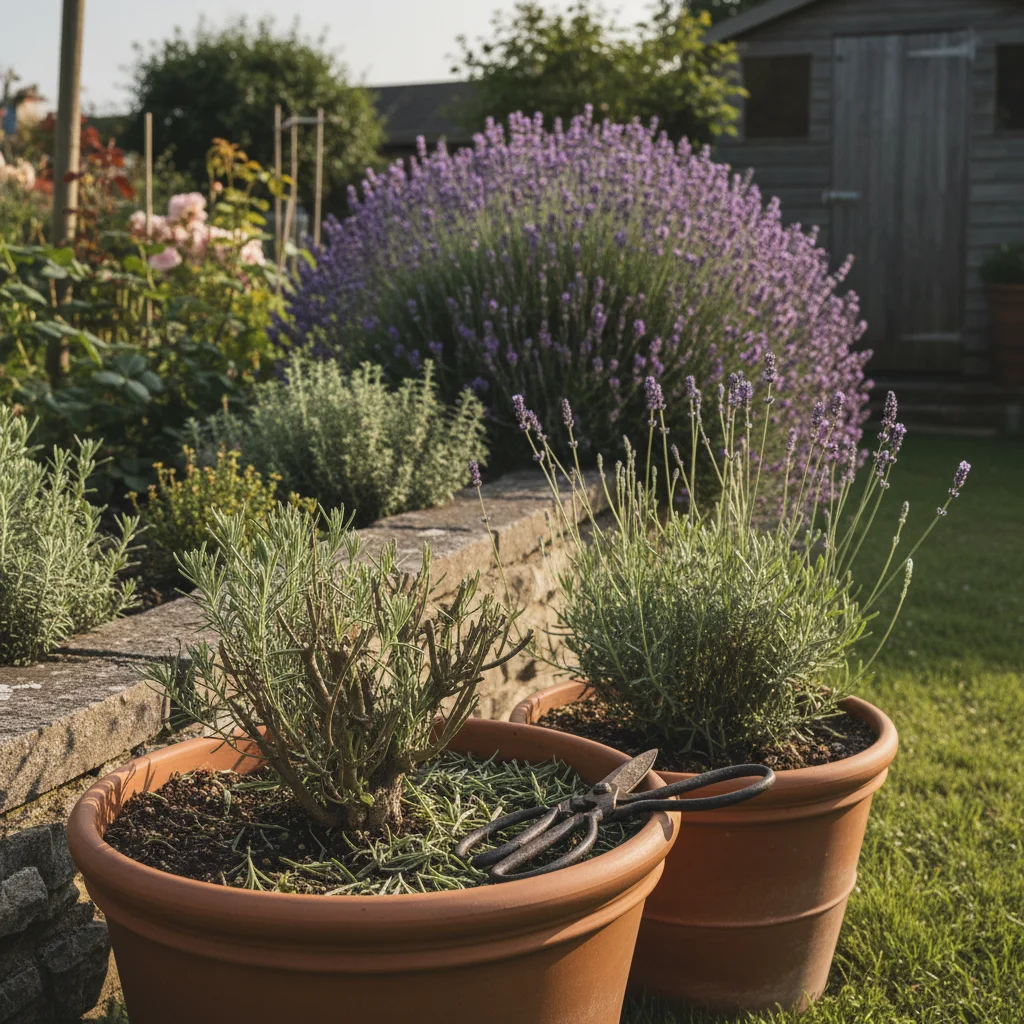
There is nothing quite like the scent of lavender on a warm July afternoon. Whether you are growing a formal hedge or a few pots by the kitchen door, this Mediterranean staple brings a sense of calm and structure to any UK garden. However, without the right intervention, that neat silver-green mound can quickly transform into a sprawling, woody mess that looks more like a collection of dead sticks than a vibrant shrub.
We have all seen those neglected lavender plants in front gardens—bare at the base with just a few tufts of purple at the very tips. This "legginess" is the primary reason gardeners give up on lavender, but it is entirely preventable with a pair of sharp secateurs and a bit of confidence. Understanding how the plant grows is the first step toward ensuring your lavender remains productive and beautiful for a decade or more.
Lavender is technically a sub-shrub, meaning it produces woody stems but doesn't have the same regenerative powers as a true shrub like a rose. If you let it grow unchecked, the stems naturally elongate and harden, losing the ability to produce new shoots from the old wood. By pruning correctly, we trick the plant into staying compact and focusing its energy on new, flowering growth.
Why lavender becomes woody
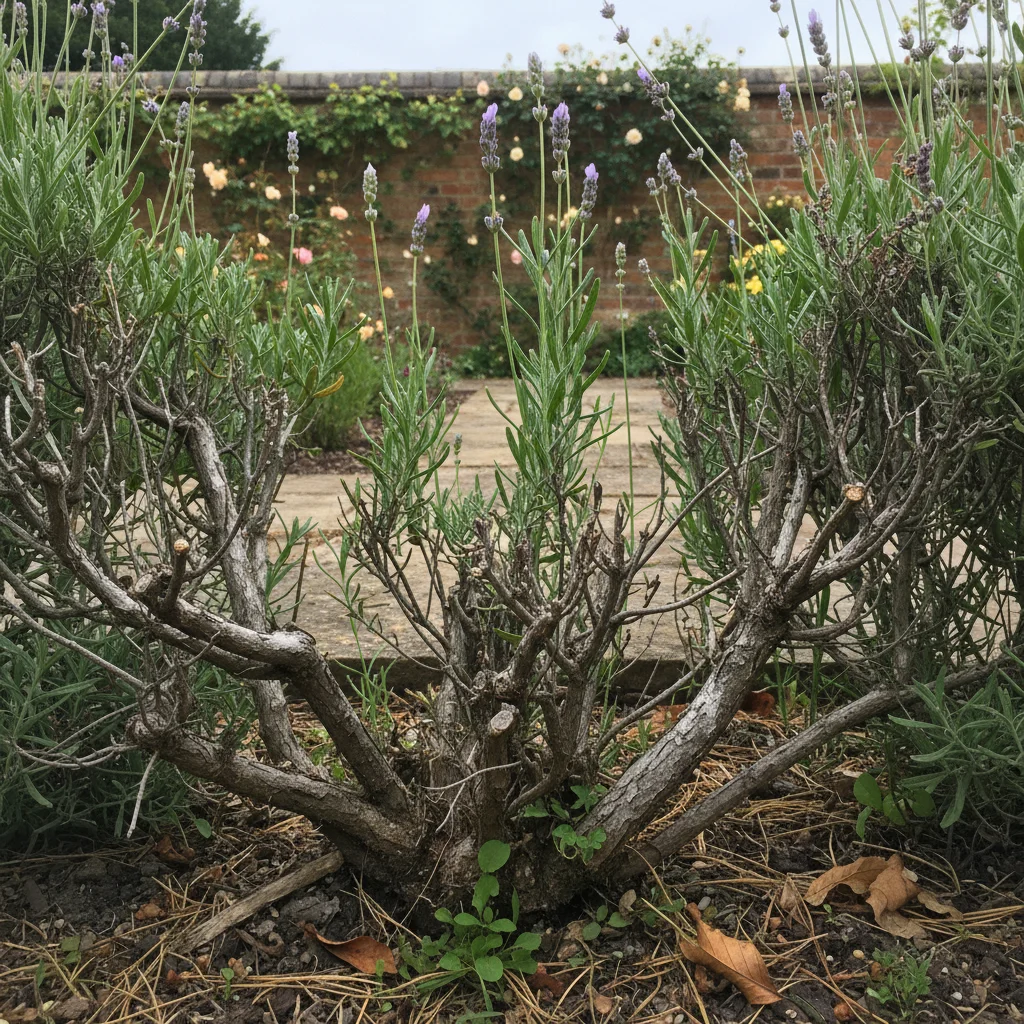
The tendency for lavender to go "leggy" is a survival mechanism from its native habitat in the dry, rocky hills of the Mediterranean. In the wild, the plant stretches out to find light and air, but in the nutrient-rich, often damper environment of a UK garden, this growth happens much faster. Once a stem has turned thick and grey, it rarely produces new green shoots from the base.
When we leave a lavender plant to its own devices, the weight of the new growth at the tips eventually pulls the branches apart. This opens up the centre of the plant, exposing the bare, woody interior to the elements. Once this happens, the plant often splits or becomes unsightly, and at that stage, it is very difficult to restore its original shape.
Regular pruning is the only way to maintain that iconic "mound" shape. By removing the spent flowers and a portion of the green foliage every year, you encourage the plant to produce new buds lower down the stem. This keeps the foliage dense, which in turn protects the crown of the plant from the worst of the British winter.
Identifying your lavender variety
Before you reach for your shears, you must know which type of lavender you are growing. The two most common groups in the UK are English lavender (Lavandula angustifolia) and French or Spanish lavender (Lavandula stoechas). Their pruning requirements and timings differ slightly because of their hardiness and flowering habits.
English lavender is the hardiest variety and is the backbone of most UK herb gardens. It typically flowers once in mid-summer, producing long, elegant spikes of blue, purple, or white. Varieties like ‘Hidcote’ and ‘Munstead’ are classic examples that can withstand a hard annual prune and still bounce back with vigour the following spring.
French and Spanish lavenders are easily identified by the "ears" or bracts that sit on top of the flower head. These are much more tender and often start flowering earlier in the spring, sometimes continuing in waves throughout the summer. Because they are less resilient to frost, we handle them with a lighter touch, focusing on deadheading rather than heavy structural cutting.
The golden rule of lavender pruning
If you take only one piece of advice from this article, let it be this: never cut back into the old, brown wood. Unlike many garden shrubs, lavender does not have "dormant buds" on its older stems. If you prune back to a point where there are no green leaves visible, that branch will almost certainly die, leaving a permanent hole in your plant.
You should always aim to leave at least two to three centimetres of green, leafy growth on the stem. This ensures the plant has the photosynthetic surface area it needs to recover and sprout new shoots. If you look closely at a branch, you will see tiny green nubs tucked into the leaf axils; these are your future flowers, and they must be preserved.
If you have inherited a plant that is already heavily woody, the best approach is often to replace it. However, if you are determined to save it, you can try pruning one-third of the woody stems back to a healthy side-shoot each year. This is a slow process and doesn't always work, which is why preventative pruning from year one is so vital.
When to prune English lavender
For most UK gardeners, the best time to prune English lavender is late August or early September. You want to wait until the main flush of flowers has faded and the bees have finished their work. Pruning at this time allows the plant enough time to produce a little bit of new growth and "callus over" the cuts before the first hard frosts of autumn arrive.
Some gardeners prefer to prune in the spring, but this can be risky in the UK. A late frost hitting freshly cut stems can cause significant dieback. By pruning in late summer, you are essentially "tucking the plant in" for winter. The compact shape you create will help the plant shed snow and resist being split apart by high winds.
If you miss the late summer window, it is better to wait until the following April once the new growth has started to appear. You will lose a bit of flowering time, but you won't risk losing the plant to a cold snap. Consistency is more important than the exact date; a lavender pruned every year will always outlive one that is pruned haphazardly.
Step by step guide to pruning
To get the best results, you should use sharp, clean secateurs or garden shears. If you are maintaining a long hedge, shears are much faster and help you achieve a uniform, rounded shape. For individual specimen plants, secateurs allow for more precision, ensuring you aren't cutting too deep into the foliage.
- Gather the flower stems in one hand and cut them back, along with about 2-3cm of the current year’s green leaf growth.
- Work your way around the plant, aiming for a soft, dome-like shape that allows water to run off easily.
- Check the centre of the plant for any dead, diseased, or damaged wood and snip these out at the base.
- Clear away the clippings from the centre of the mound to ensure good air circulation, which prevents fungal issues like grey mould.
- Check the base of the plant to ensure it isn't being smothered by weeds or fallen leaves, as lavender hates "wet feet" around its crown.
Once you have finished, the plant will look a bit "shorn" and perhaps a little grey. Don't worry; this is perfectly normal. Within a few weeks, you will see new green shoots appearing, which will provide the framework for next year's spectacular display.
Caring for French and Spanish varieties
Because French and Spanish lavenders are more delicate, they require a different approach. These plants often start flowering in May and can look quite tatty by July. Instead of one big chop, you should deadhead them regularly throughout the summer. Simply snip off the individual flower stalks as they fade to encourage a second or third flush of blooms.
In late summer, you can give them a very light "haircut" to maintain their shape, but avoid the heavy pruning you would give to an English variety. If you live in a particularly cold or wet part of the UK, it is often safer to leave the foliage intact over winter to provide a bit of natural frost protection. You can then tidy them up in mid-spring once the risk of frost has passed.
These varieties are often shorter-lived than English lavender, typically lasting five to seven years. If they become very leggy, they rarely respond well to hard pruning. In this case, it is often more rewarding to take cuttings—which lavender does very easily—and start fresh with young, vigorous plants.
Tools and hygiene in the garden
The quality of your tools makes a significant difference to the health of your lavender. A blunt blade will crush the stems rather than cutting them, creating a ragged edge that is an open invitation for disease. I always recommend investing in a high-quality pair of bypass secateurs that can be easily dismantled for sharpening and cleaning.
Hygiene is equally important, especially if you are pruning multiple plants. Lavender can be susceptible to certain soil-borne pathogens and viruses. I make it a habit to wipe my blades with a bit of surgical spirit or a mild disinfectant between plants. It only takes a second, but it prevents the accidental spread of problems across your entire garden.
After you have finished pruning, don't forget to maintain your tools. Wipe the blades clean of sap, dry them thoroughly to prevent rust, and apply a drop of light oil to the spring and pivot point. Taking care of your tools is a core part of being a sustainable gardener; a good pair of secateurs should last you a lifetime, reducing the need for plastic-heavy replacements.
Feeding and soil health
Lavender thrives in poor, well-drained soil, so it doesn't need much in the way of feeding. In fact, over-feeding with high-nitrogen fertilisers will only encourage the very "leggy" growth we are trying to avoid. Soft, sappy growth produced by too much fertiliser is also much more susceptible to frost damage and pests like the rosemary beetle.
Instead of a heavy chemical feed, I prefer to give my lavender a light mulch of grit or small pea shingle after pruning. This helps to suppress weeds and reflects light and heat back up into the plant, mimicking its natural environment. If your soil is particularly acidic, a light dusting of garden lime can be beneficial, as lavender prefers a neutral to alkaline pH.
If you feel your plants need a boost, a small handful of organic, slow-release fertiliser with a balanced NPK (nitrogen, phosphorus, and potassium) ratio can be applied in the spring. Look for something that prioritises potassium, as this strengthens the cell walls and improves flowering. Avoid using bark mulch or heavy compost around lavender, as these retain too much moisture and can cause the stems to rot.
Using your lavender clippings
One of the joys of pruning lavender is the abundance of fragrant material you are left with. Don't let those clippings go to waste. The flower spikes can be dried and used for sachets, potpourri, or even culinary purposes if you are growing a variety like ‘Munstead’. I find that hanging small bunches upside down in a cool, dark, and airy place is the best way to preserve the colour and scent.
The green stem clippings that don't have flowers can be added to your compost heap. Because lavender is quite resinous, it takes a little longer to break down than soft green waste, so it's a good idea to chop it up finely first. If you have a lot of woody material from an old plant, this is better suited to a separate "browns" pile or a dead-hedge to provide habitat for beneficial insects.
In a sustainable garden, we try to keep as much organic matter on-site as possible. Lavender stems make excellent kindling once dried, or they can be used as a fragrant addition to a fire pit on a summer evening. Even the smallest bits of debris can be left in a quiet corner of the garden to provide nesting material for solitary bees and other pollinators.
Troubleshooting common pruning mistakes
Even experienced gardeners make mistakes, and with lavender, the most common error is waiting too long. If you miss a year of pruning, the wood hardens and the plant begins its journey toward legginess. If you find yourself in this position, don't panic. Resume the regular pruning cycle immediately; while you can't reverse the woodiness, you can stop it from getting worse.
Another mistake is pruning too late in the autumn. If the plant doesn't have time to heal before the damp, cold UK winter sets in, the cut ends can "die back," which often kills off the whole branch. If you find yourself in October and you haven't pruned yet, it is genuinely better to leave the plant until the following spring.
Finally, avoid "shaving" the plant too perfectly. While a neat dome looks great, leave a bit of texture to the surface. This allows more light to penetrate into the centre of the mound, encouraging those all-important new shoots to form deep within the foliage. A slightly natural look is often healthier for the plant in the long run than a rigid, topiary-style finish.
By following these simple steps and keeping a watchful eye on your plants, you can ensure your lavender remains a highlight of your garden for years to come. There is a great deal of satisfaction in taking a sprawling, messy plant and shaping it back into a productive, tidy mound. It is one of those gardening tasks that offers an immediate visual reward and sets the stage for a spectacular, fragrant summer ahead. Once you have mastered the timing and the "green wood" rule, you will find that lavender is one of the most rewarding and easy-to-manage plants in your collection.