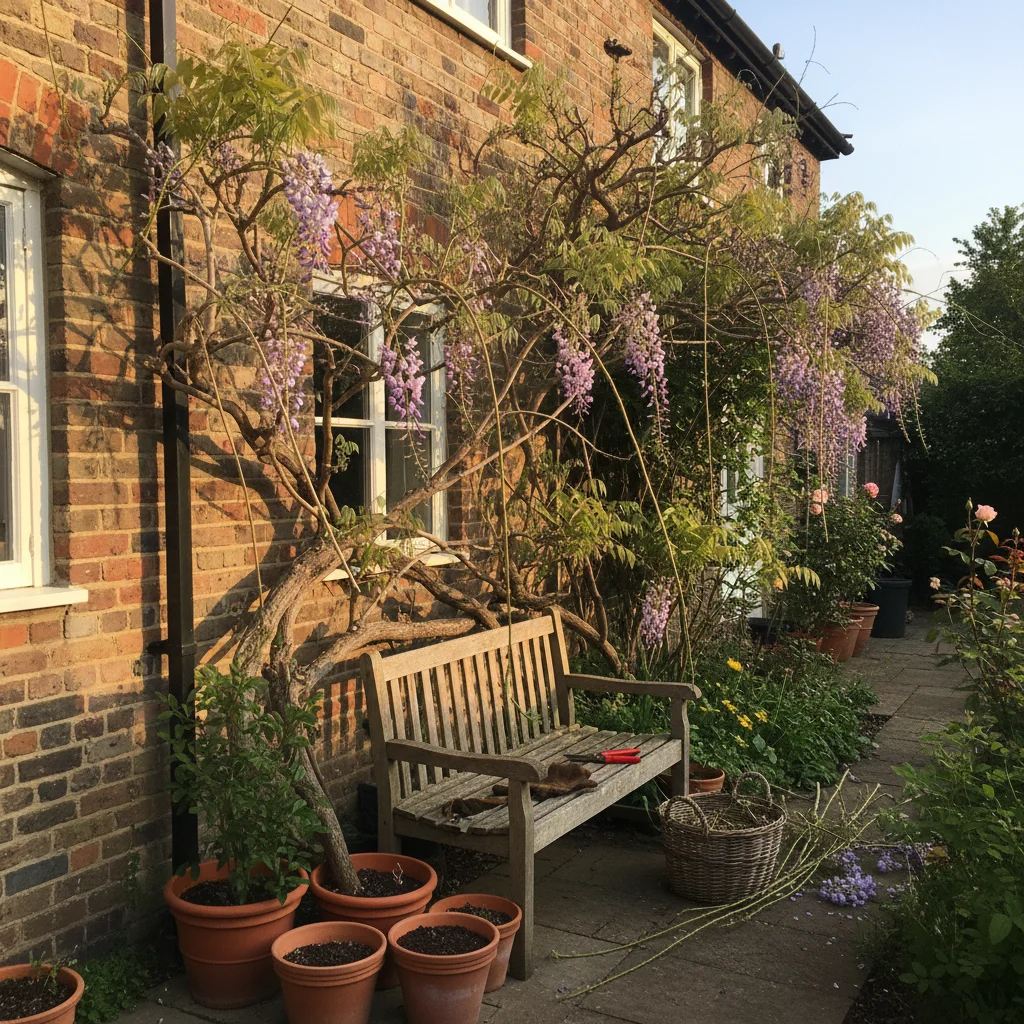
Wisteria is perhaps the most iconic of all British climbers, turning a plain brick wall into a cascading waterfall of violet or white blooms every May. I have spent many years managing these vigorous plants in large estate gardens, and I know how intimidating they can feel when those long, whippy shoots start reaching for the gutters. Without a firm hand, a wisteria will quickly move from being a garden highlight to a structural hazard, often finding its way under roof tiles or strangling nearby shrubs.
The secret to a successful wisteria isn't just luck or a particularly sunny wall; it is all in the timing and the technique of the prune. We often hear from gardeners who are terrified of "doing it wrong" and losing a year of flowers. However, wisteria is remarkably resilient and actually thrives on a disciplined schedule. By following a simple twice-yearly routine, you can keep the plant in its place while ensuring every ounce of its energy goes into producing those spectacular racemes of flowers.
Why Pruning Twice a Year Matters
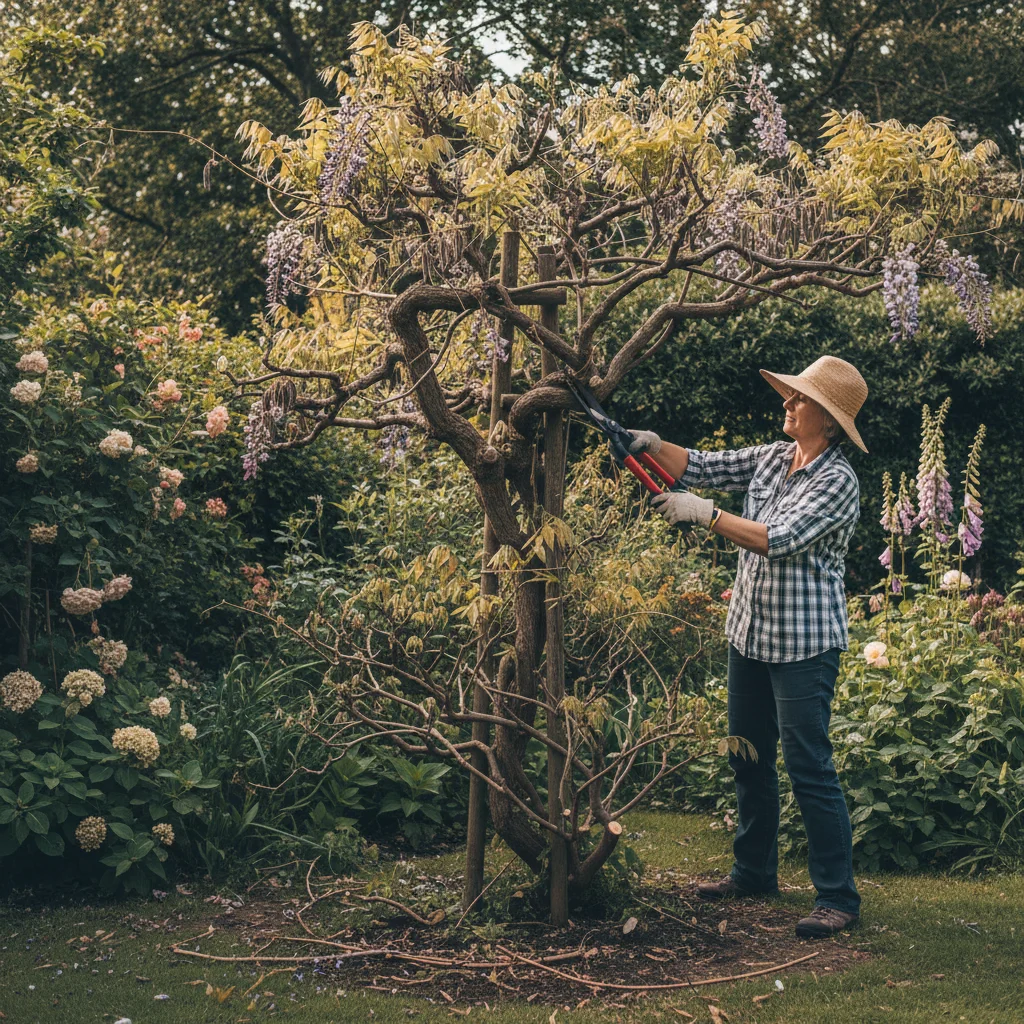
Most garden plants are happy with a single annual tidy-up, but wisteria is a different beast entirely. It has an incredible rate of growth, often putting on several metres of new wood in a single season. If we only pruned once, we would either be faced with an impenetrable thicket of green leaves or we would accidentally remove the very wood that carries the flower buds.
The two-stage approach serves two distinct purposes. The first prune, usually carried out in the height of summer, is about controlling the plant’s size and allowing sunlight to reach the base of the new growth. The second prune, done in the depths of winter, is the "detail work" where we tidy up the framework and encourage the development of flower spurs. This rhythm mimics the natural lifecycle of the plant while keeping it subservient to your garden's architecture.
When we prune in the summer, we are essentially telling the plant to stop putting energy into long, trailing stems and start thinking about next year. By shortening those long green shoots, we increase the light and air circulation around the inner branches. This process is vital for the ripening of the wood, which is a technical way of saying the stems become firm and mature enough to support heavy flower clusters.
The Essential Tools for the Job
Before you step outside, it is vital to ensure your kit is up to the task. Wisteria wood is surprisingly tough, especially on older specimens, so your tools must be sharp and clean. Using blunt blades can crush the stems rather than cutting them, which leaves the plant vulnerable to fungal infections or dieback. I always recommend bypass secateurs rather than anvil types for this job, as they provide a much cleaner, scissor-like action.
Sustainability is at the heart of good gardening, so taking care of your tools is a green habit worth forming. A well-maintained pair of secateurs can last a lifetime, reducing the need for plastic-heavy replacements. I always keep a sharpening stone and a bit of light oil in my shed to keep my blades in top condition. If you are dealing with a particularly old wisteria, you might also need a pair of loppers or a small pruning saw for the thicker, woody branches.
- A sharp pair of bypass secateurs for green shoots.
- Heavy-duty loppers for older, thicker wood.
- A sturdy ladder if your wisteria is climbing high.
- Clean garden twine for tying in new growth.
- A small pruning saw for renovation work.
- Gardening gloves to protect against the rough bark.
How to Handle the Summer Prune
The summer prune usually takes place in July or August, once the main flowering period has finished and the plant has sent out its long, whippy lateral shoots. These shoots are easy to spot as they tend to grow horizontally or hang down from the main framework, often looking a bit like green noodles. At this stage, the plant is in full leaf, so it can be helpful to stand back and look at the overall shape before you start cutting.
Your goal here is to count out about five or six leaves from the main woody framework and make a clean cut just above a leaf node. You are essentially shortening these long runners to about 30cm in length. Don't worry if it looks a bit "short back and sides" when you are finished; the plant will look much tidier, and you will be able to see the structure of the vine again.
This summer tidy-up also gives you a chance to check your supports. Wisteria is a heavy plant, and as it grows, it can easily pull wires away from the wall. If you see any loose ties, replace them with natural garden twine, which is biodegradable and softer on the stems than plastic-coated wire. Ensure you leave a little bit of "wiggle room" in your knots to allow the stems to thicken over the coming months without being strangled.
The Importance of the Winter Prune
Once the leaves have fallen in January or February, the true skeleton of the wisteria is revealed. This is the best time for the second stage of pruning because you can clearly see the buds. Flower buds are usually fatter and more rounded than the slim, pointed leaf buds. Winter pruning is the most satisfying part of the process for me, as it feels like you are truly preparing the plant for its spring performance.
During this session, you will go back to those same shoots you shortened in the summer. This time, you want to cut them back even further, leaving only two or three buds on each shoot. This results in short, stubby branches known as "spurs." These spurs are where the magic happens, as they will produce the concentrated bursts of flowers that wisteria is famous for.
By cutting back to two or three buds, you are ensuring that the plant's energy isn't wasted on producing more leaves at the ends of long branches. Instead, that energy is forced into the few remaining buds, resulting in larger, more vibrant flower racemes. It also keeps the flowers close to the main framework of the plant, which prevents them from being damaged by wind or obscured by a mass of foliage.
Understanding the Spur System
To prune like a professional, it helps to understand the "spur system." In the world of horticulture, a spur is a short, slow-growing branch that produces flowers or fruit. On a wisteria, these spurs develop over several years on the older, permanent framework of the plant. If you look closely at an established vine, you will see these gnarled, knobbly areas where previous years' pruning has taken place.
Every time you perform your winter prune, you are contributing to the development of these spurs. Over time, they become very productive, and a single spur can produce multiple flower clusters. This is why older wisterias often look so much more impressive than younger ones; they have had years to build up a complex network of flowering wood.
If you notice a section of your wisteria isn't flowering well, it might be because it hasn't developed enough spurs. This often happens when a plant is left unpruned for several years, causing it to put all its energy into "vegetative growth" (leaves and stems) rather than "reproductive growth" (flowers). Regular pruning resets this balance, signalling to the plant that it is time to stop expanding and start blooming.
Dealing with an Overgrown Wisteria
If you have moved into a new home and inherited a wisteria that resembles a jungle, do not despair. While it might look like a lost cause, these plants respond very well to renovation pruning. You can be quite bold with an overgrown specimen, but it is often best to spread the work over two or three years to avoid shocking the plant too much.
Start by identifying the main stems that form the "skeleton" of the plant. Anything that is dead, damaged, or growing in the wrong direction (like into the eaves of your house) should be removed first. You can cut these larger branches back to a main trunk or a healthy side branch. Once the excess bulk is removed, you can then apply the standard summer and winter pruning rules to the remaining shoots.
Renovation pruning is also a good time to check the health of the soil around the base. Years of neglect often mean the soil is compacted or nutrient-poor. After a heavy prune, I like to clear away any weeds and apply a thick layer of peat-free garden compost or well-rotted manure around the base. This gives the plant the boost it needs to recover and put out healthy new growth.
Training a Young Wisteria
If you are starting with a young plant from a garden centre, the pruning process is slightly different for the first few years. Your primary goal is to build a strong, permanent framework. Most wisterias are sold as "grafted" plants, which means a flowering variety has been joined onto a vigorous rootstock. You will see a bulge near the base of the stem; make sure you never let any shoots grow from below this point, as they will be the "wild" rootstock and won't produce the flowers you want.
In the first year, select a strong central leader and tie it vertically to your support. Choose a few healthy side shoots to train horizontally along your wires. These will become your main "scaffold" branches. Any other shoots that appear should be cut back to about 15cm to encourage the main stems to thicken up.
By the third or fourth year, your framework should be well-established. At this point, you can transition into the regular twice-yearly pruning routine. It takes a bit of patience, as wisteria can sometimes take a few years to start flowering reliably, but the work you do now in training the plant correctly will pay dividends for decades to come.
Common Mistakes to Avoid
One of the most frequent errors I see is gardeners pruning at the wrong time of year. If you prune too late in the spring, you will almost certainly cut off the developing flower buds. Similarly, if you prune too early in the autumn, the plant might respond by putting out a flush of soft new growth that will be killed off by the first frost. Stick to the July/August and January/February windows for the best results.
Another common issue is "hard pruning" every single year without leaving any new wood. While we want to keep the plant contained, we also need to allow it to expand slightly if there is space on the wall. If you cut everything back to the trunk every year, you will never build up the spur system needed for a truly spectacular display. It is a balancing act between containment and growth.
- Never prune below the graft union near the soil level.
- Avoid using anvil secateurs which can crush the stems.
- Don't ignore the summer prune; it is just as important as the winter one.
- Stop feeding with high-nitrogen fertilisers, which encourage leaves over flowers.
- Do not let the plant grow into gutters, vents, or under roof tiles.
- Don't be afraid to cut; wisteria is much tougher than it looks.
Feeding and Long Term Care
While pruning is the most important factor in getting flowers, a little bit of extra care goes a long way. In early spring, just as the buds are starting to swell, I like to apply a handful of sulphate of potash around the base of the plant. This provides the potassium needed for flower development. Avoid high-nitrogen feeds like chicken manure pellets for established wisterias, as this will just result in a massive amount of green leaves and very few blooms.
Watering is also crucial, especially for plants grown against a house wall. These areas are often in a "rain shadow," meaning the wall blocks the rain from reaching the roots. During dry spells in the summer, give your wisteria a deep soaking once a week. This helps the plant stay healthy while it is busy forming next year's flower buds inside the stems.
Mulching is the final piece of the puzzle. A 5cm layer of organic matter spread around the base (but not touching the stem itself) helps to lock in moisture and improve soil structure. It also encourages worms and beneficial soil microbes, which in turn keeps the root system of your wisteria strong. Using your own home-made compost is a fantastic way to recycle garden waste and keep your garden's ecosystem thriving.
Once you have mastered the rhythm of the twice-yearly prune, you will find that wisteria is one of the most rewarding plants in the garden. There is a deep sense of satisfaction in standing back after a winter pruning session, seeing the tidy spurs ready and waiting for the spring. When those first buds begin to lengthen and the scent fills the air in May, you will know that every snip of the secateurs was worth the effort. Now is the perfect time to check your calendar and ensure you are ready for the next pruning window to keep your climber in peak condition.