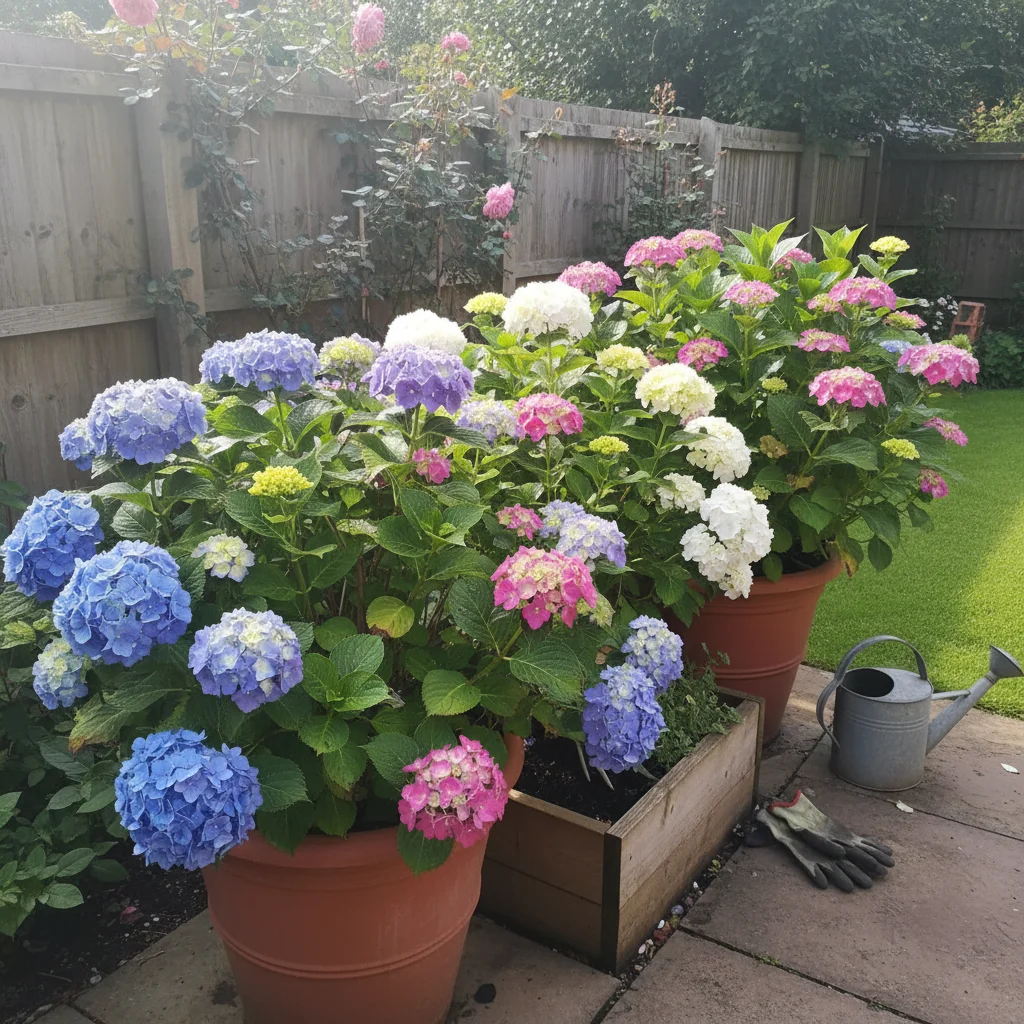
We have all been there. You come home after a long day in the city, step out onto your balcony or patio, and see your prized hydrangea looking like a wilted lettuce. August in the UK can be a strange month for our gardens, swinging between humid thunderstorms and searing heat that radiates off brickwork and paving. For those of us gardening in small urban spaces, these temperature spikes are amplified, making our potted plants particularly vulnerable.
Hydrangeas are the undisputed queens of the late summer garden, but they are also incredibly dramatic when they don’t get what they want. Their name comes from the Greek "hydro" meaning water and "angion" meaning vessel, which tells you almost everything you need to know about their personality. If you want to keep those stunning blue, pink, or white mopheads looking fresh until autumn, you need a strategy that works for your busy life and your limited space.
The good news is that these plants are far tougher than their floppy leaves suggest. Once you understand how they interact with the August sun and the confines of a container, you can stop worrying about coming home to a dead plant. We can turn that seasonal stress into a simple routine that ensures your outdoor space remains a lush, green sanctuary even during a heatwave.
Understanding the August thirst
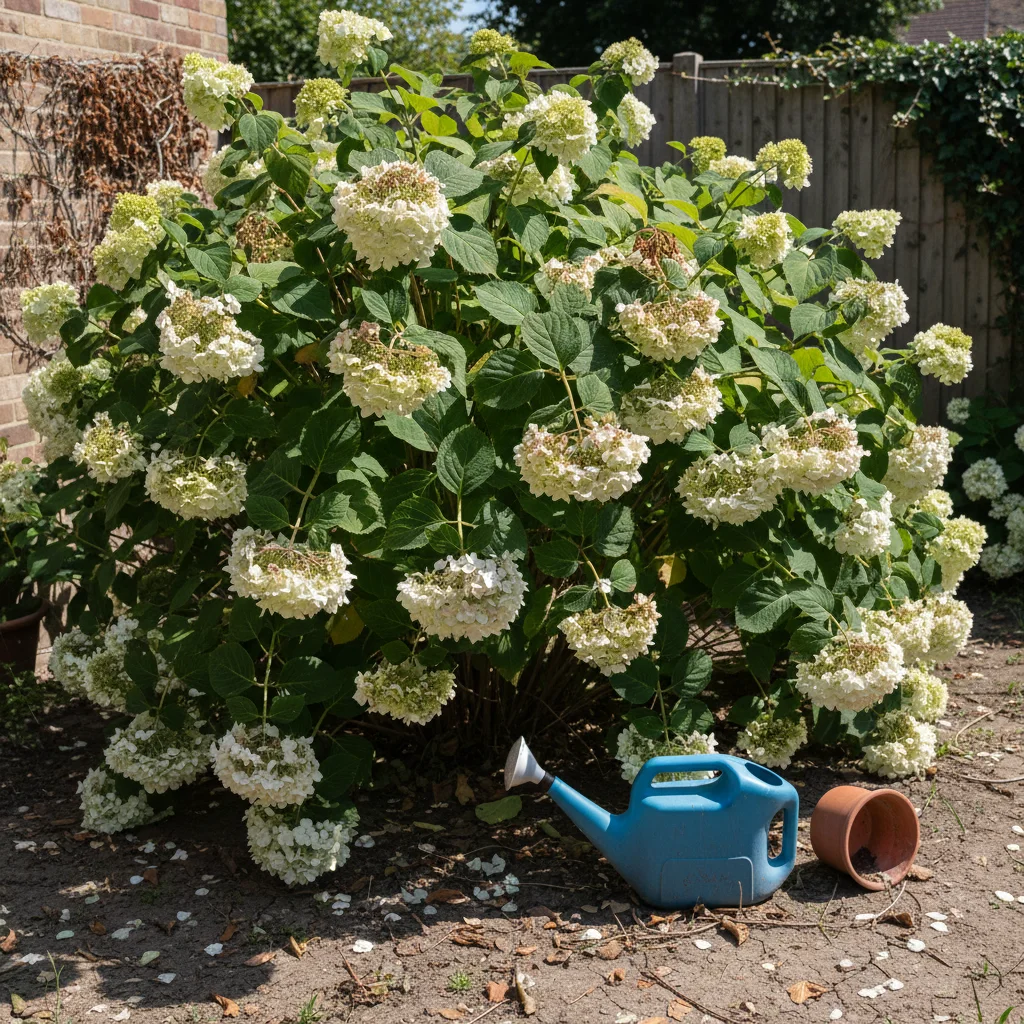
August is the month when the soil in our pots and small borders finally loses its deep-seated moisture. Even if we get a typical British summer downpour, the water often bounces off the dry surface of the compost or is shielded by the plant's own canopy of large leaves. In an urban environment, the "heat island" effect means our plants stay warmer for longer during the night, increasing their metabolic rate and their need for hydration.
When a hydrangea wilts, it is actually a clever survival mechanism. By drooping its leaves, the plant reduces the surface area exposed to the sun, which slows down the rate of transpiration. However, if the plant stays in this state for too long, the cells begin to take permanent damage, leading to crispy brown edges and dropped flowers. Your goal this month is to intervene before the plant feels the need to shut down.
If you are gardening on a balcony or a roof terrace, the wind is your second biggest enemy after the sun. A breezy August afternoon can strip moisture from those large, thin leaves faster than the roots can suck it up from the pot. This is why many urban hydrangeas look "scorched" even if they are in partial shade. It isn’t always the sun burning them; often, it is simply dehydration caused by the moving air.
The golden rules of urban watering
Watering a hydrangea in a pot is different from watering one in a large garden bed. In a container, the roots are restricted and the compost can become hydrophobic if it dries out completely. When you pour water onto bone-dry compost, it often just runs down the inside of the pot and out the drainage holes, leaving the root ball dry while you think you’ve done a great job.
To avoid this, try the "slow and low" approach. Instead of a quick splash with a watering can, give your pots a long, slow soak. If your balcony allows for it, sitting your pots in deep saucers during August can be a lifesaver. This allows the plant to draw up water through capillary action throughout the day, which is much more efficient than a single morning deluge.
Timing is everything when the temperature rises. We should always aim to water in the early morning before the sun hits the patio. This gives the plant a chance to hydrate its cells fully before the heat of the day begins. If you miss the morning window, wait until the evening when the air has cooled down, as watering in the midday sun can lead to rapid evaporation and potential leaf scorch from water droplets acting like tiny magnifying glasses.
Signs your hydrangea needs urgent attention
We’ve all forgotten to check our pots during a busy week, and hydrangeas are very vocal about their neglect. Learning to read the subtle signs before the plant completely collapses will save you a lot of heartache and keep your display looking professional.
- The leaves lose their glossy sheen and start to look matte or slightly greyish.
- The very tips of the new growth begin to bow slightly towards the ground.
- Flower heads feel soft and papery rather than firm and turgid to the touch.
- The compost has pulled away from the edge of the pot, creating a visible gap.
- The plant feels unusually light when you try to tilt or lift the container.
If you spot these signs, don't just give it a quick drink. For a potted hydrangea, the best cure is to submerge the entire pot in a bucket of water for ten minutes until the bubbles stop rising. This ensures every inch of the growing medium is rehydrated, giving the plant the best possible chance of a full recovery within an hour or two.
To prune or not to prune
There is a lot of conflicting advice about pruning hydrangeas, but for August, the rule is generally "less is more." Most of the hydrangeas we grow in the UK, such as the classic Mopheads and Lacecaps (Hydrangea macrophylla), flower on wood that grew the previous year. If you go in with the shears now and cut the stems back hard, you are effectively cutting off next summer's flowers.
What you can do in August is deadheading. Removing the faded flower heads can help the plant redirect its energy from seed production back into root health and leaf maintenance. However, many urban gardeners prefer to leave the dried flower heads on the plant. They provide a lovely architectural interest through the autumn and actually help protect the emerging buds from frost during the winter.
If you are growing Hydrangea paniculata—the ones with the cone-shaped white flowers like 'Limelight'—the rules are slightly different. These bloom on new wood, so they are much more forgiving. You can trim these back if they are becoming too unruly for your small space, but even then, I’d suggest waiting until late winter to do any significant structural pruning. In August, just focus on keeping the plant happy and hydrated.
Feeding for strength not growth
By the time August rolls around, most of the nutrients in a standard pot or window box will have been washed away by regular watering. Your hydrangea might be looking a bit pale, or the leaves might be turning a yellowish tint between the veins. This is a clear signal that the plant needs a boost, but you have to be careful about what you feed it this late in the season.
Avoid high-nitrogen fertilisers now. Nitrogen encourages a flush of soft, sappy green growth which is lovely in May, but in August, it’s a liability. This new growth won't have time to "harden off" before the first frosts of autumn, making the plant vulnerable to damage. It also attracts aphids, which love nothing more than a fresh, soft stem to feast on.
Instead, look for a fertiliser high in potassium (often sold as tomato feed). Potassium is the plant equivalent of a multivitamin for the immune system. It helps toughen the cell walls, making the plant more resistant to drought and disease, and it encourages the development of strong buds for next year. A half-strength dose once every two weeks until the end of August is plenty for a container-grown hydrangea.
Managing the urban microclimate
One of the biggest challenges of growing hydrangeas in the city is the lack of airflow combined with high humidity. This is the perfect breeding ground for powdery mildew, a fungal disease that looks like a dusting of white flour over the leaves. It rarely kills the plant, but it looks unsightly and can weaken it over time if left unchecked.
To prevent this, try to give your pots a bit of "breathing room." In small gardens, we often cram pots together to create a lush look, but in the heat of August, this can trap stagnant air. Moving your hydrangea just a few inches away from a hot wall or creating a small gap between it and other plants can make a huge difference in preventing fungal issues.
If you do see mildew, don't panic. You can make a simple, eco-friendly spray using one part milk to nine parts water. Spray this onto the leaves in the morning; the protein in the milk reacts with the sun to create a natural antifungal environment. It’s a cheap, balcony-safe solution that doesn't involve harsh chemicals in a confined living space.
Choosing the right varieties for small spaces
If you find that your hydrangea is constantly struggling despite your best efforts, it might simply be that the variety is too big for the pot or the location. Many traditional hydrangeas want to be six feet tall and wide, which is a recipe for disaster in a small urban courtyard. When the roots hit the sides of the pot and have nowhere to go, the plant becomes permanently stressed.
Thankfully, plant breeders have realised that more of us are gardening on balconies and patios. There are now several "dwarf" or "patio" varieties that are genetically programmed to stay compact. These plants have smaller root systems and are much more tolerant of the drying cycles that happen in containers.
- 'Runaway Bride': A beautiful white lacecap that flowers all along the stems, not just at the tips, making it perfect for hanging baskets or high shelves.
- 'Little Lime': A compact version of the famous 'Limelight', giving you those stunning green-to-white cones in a much smaller footprint.
- 'Pia': One of the smallest mopheads available, rarely growing more than 60cm tall, with vivid pink blooms.
- 'Tuff Stuff': A mountain hydrangea (H. serrata) that is incredibly hardy and much better at handling the wind than its larger cousins.
- 'French Bolero': Similar to 'Runaway Bride', this offers pink or blue flowers and a trailing habit that looks great in a large trough.
Preparing for the end of summer
As we move through the final weeks of August, you will notice the light changing and the nights getting slightly longer. This is the signal for your hydrangea to start preparing for dormancy. You might see some spots appearing on the leaves or the colours of the flowers beginning to take on a vintage, "antique" hue of burnished red or metallic green.
This is a natural part of the plant's life cycle and nothing to worry about. You can start to reduce the frequency of your watering as the temperatures drop, but never let the pot dry out completely while the leaves are still on the plant. The buds for next year are already tucked away in the leaf axils, and they need moisture to stay viable through the coming months.
If you are planning to move house or rearrange your balcony, August is a great time to start thinking about where your hydrangea will spend the winter. While they are hardy, the roots in a pot are more exposed to the cold than those in the ground. Wrapping your pots in a bit of bubble wrap or moving them to a more sheltered corner of the patio in late autumn will ensure they come back stronger than ever next spring.
Gardening in the city is all about working with what you have. You don't need a massive lawn or a shed full of expensive tools to grow world-class hydrangeas. With a bit of attention to the watering can and an eye on the weather forecast, you can keep these beautiful plants thriving in the heart of the concrete jungle. If you've found these tips helpful, why not take a look at your pots today and see if they could use a little August TLC?