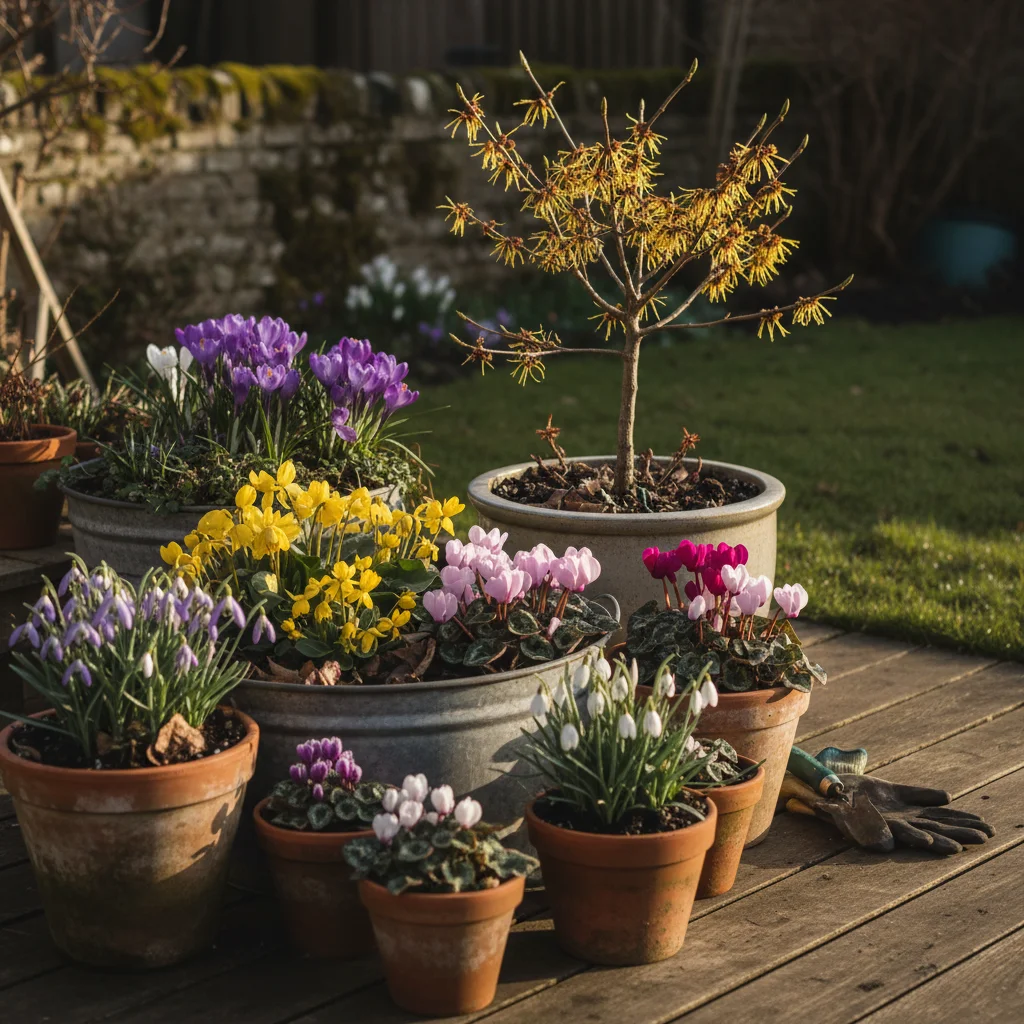
February in the UK often feels like the longest month. The sky is usually a stubborn shade of grey, the air is damp, and the excitement of Christmas has long since faded. For those of us gardening on balconies, small patios, or even just a few window sills, it can be tempting to stay indoors and wait for April.
However, some of the most resilient and beautiful flowers in the British calendar choose this exact moment to shine. You don't need a massive herbaceous border or a sprawling lawn to enjoy them. In fact, many early-season stars actually look better in a pot where you can see their delicate details up close.
We have all looked out at a bare patio and felt a bit uninspired. But by choosing the right varieties, you can turn a few containers into a vibrant display that defies the winter gloom. These plants are tough enough to handle a London frost and compact enough to fit into the smallest urban corner.
Why February is the perfect time to plant
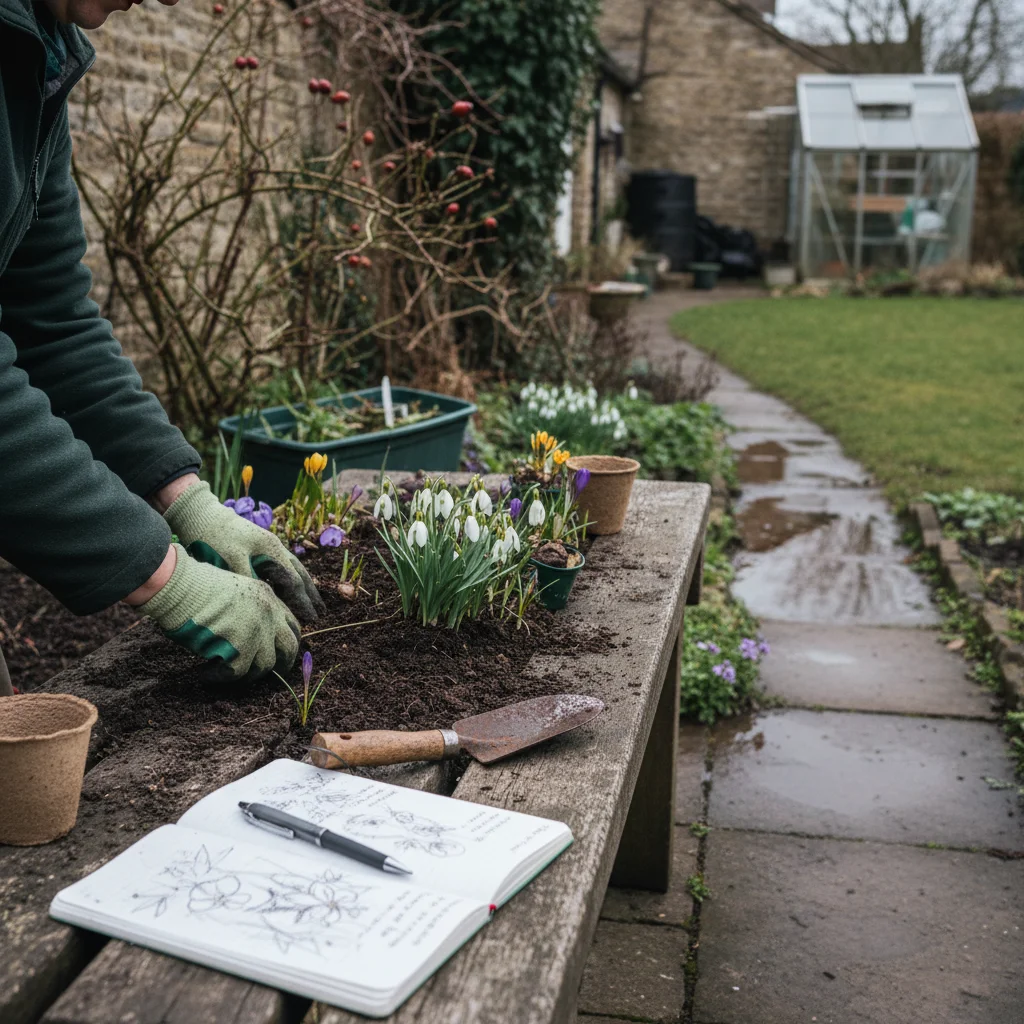
While many people think gardening starts in the spring, February is actually a brilliant time to get stuck in. Most of the flowers that bloom now are incredibly hardy, having evolved to survive snap frosts and heavy rain. They provide a much-needed sense of momentum when the rest of the world still looks dormant.
For urban gardeners, planting now is a practical move. Our balconies and courtyards are often slightly warmer than the open countryside thanks to the "urban heat island" effect. This means we can often get a head start on the season, seeing blooms a week or two earlier than those in more rural areas.
If you are short on time, winter gardening is actually quite low-maintenance. The weeds aren't growing yet, and the soil in your pots stays moist for much longer than it does in July. A quick hour spent potting up a few "ready-to-go" plants from the garden centre can provide weeks of colour with very little effort.
Winter Aconites for a splash of gold
If you want to banish the winter blues, start with Winter Aconites (Eranthis hyemalis). These tiny, buttercup-like flowers are surrounded by a green ruff of leaves that looks like a Victorian collar. They are one of the most cheerful sights of early February and thrive in the smallest of spaces.
In a small garden or on a balcony, Aconites are best planted at the base of a larger potted shrub or tree. They love the dappled shade and don't mind if the space is a bit cramped. Because they are so low-growing, they won't compete with your main plants but will provide a carpet of gold while the branches above are still bare.
When buying these, look for "in the green" plants if you can find them, or buy them already flowering in small 9cm pots. Dry bulbs can be a bit hit-and-miss if planted too late in the autumn. Once they are in your pots, they will often self-seed, giving you more flowers every year without any extra work.
Snowdrops for elegant window boxes
No February garden is complete without the classic snowdrop. While people travel miles to see "snowdrop walks" in country estates, they are perfectly suited to life in a window box. Their nodding white heads look particularly elegant when viewed from inside your warm living room.
There are hundreds of varieties, but for a small space, you can’t go wrong with the common Galanthus nivalis. If you want something a bit more special, look for 'S. Arnott', which is slightly larger and has a wonderful honey-like scent. Placing these in a pot on an outdoor table allows you to appreciate that fragrance without having to get down on your hands and knees.
Snowdrops prefer a bit of moisture, so make sure your pots don't dry out if we have a rare dry spell in February. If you’re planting them in a container, mix a bit of leaf mould or compost into the soil to keep them happy. They are the ultimate "set and forget" plant that brings a touch of class to any urban exterior.
Jewel like Irises for your patio table
For sheer "wow" factor, Iris reticulata is hard to beat. These are dwarf irises that rarely grow taller than 15cm, making them the perfect candidate for a small decorative pot on a patio table. They come in intense shades of violet, deep blue, and even pale "ice" blue with yellow markings.
Because they are so small, they can get lost in a big garden, but on a balcony, they are stars. Varieties like 'Pixie' or 'Katherine Hodgkin' have intricate patterns on their petals that deserve a close-up look. They usually start flowering in mid-February and will stand up surprisingly well to a bit of wind.
When planting these, use a gritty compost mix. They hate sitting in water, which can be a challenge in a rainy UK winter. Adding a layer of decorative grit or small pebbles to the top of the pot not only looks professional but also prevents the rain from splashing soil onto the delicate petals.
Tough Crocuses for urban window sills
Crocuses are the quintessential sign that spring is on the way. For urban gardeners, they are a godsend because they take up almost no room. You can tuck dozens of bulbs into a single window box or a small trough, creating a dense explosion of colour.
The "Tommies" (Crocus tommasinianus) are particularly good for the UK climate. They are tougher than the large-flowered Dutch hybrids and are less likely to be flattened by a heavy rainstorm. They come in beautiful shades of lilac and silver-purple, and they open wide whenever the sun manages to peek through the clouds.
One thing we urban gardeners have to watch out for is squirrels. In the city, squirrels can be quite bold and love to dig up crocus bulbs for a snack. A simple trick is to lay a bit of chicken wire just under the surface of the soil when you plant them; the flowers will grow through the gaps, but the squirrels won't be able to get to the bulbs.
Hellebores for the shady corners
If your balcony or patio doesn't get much sun, Hellebores (often called Christmas or Lenten Roses) are your best friend. These are substantial plants with leathery evergreen leaves that provide greenery all year round. In February, they produce large, nodding flowers in shades ranging from pure white to deep, moody burgundy.
Hellebores are incredibly long-lived and happy in pots, provided the pots are deep enough for their roots. They are the perfect solution for that dark corner of a courtyard where nothing else seems to grow. Because the flowers face downwards, it’s a great idea to place the pot on a stand or a wall so you can see into the "faces" of the blooms.
To keep them looking their best, we usually snip off the old, leathery leaves from last year as the new flowers emerge. This makes the plant look much tidier and helps prevent a common fungal problem called "black spot." It’s a five-minute job that makes a huge difference to the look of your display.
Caring for your winter containers
Growing in containers during a UK winter presents a few specific challenges, mostly revolving around water. While we worry about drying out in the summer, the main enemy in February is waterlogging. If a pot sits in a puddle of cold water, the roots will rot, and the plant won't survive until spring.
We always recommend using "pot feet" or even just a few old bricks to lift your containers off the ground. This allows water to drain freely away from the hole at the bottom. It also helps prevent the pots from freezing solid to the ground during a cold snap, which can sometimes crack cheaper ceramic planters.
Essential supplies for winter potting
You don't need a shed full of equipment to get started with February flowers. A few basics will see you through the season and ensure your plants have the best chance of thriving in a small space.
- Peat-free multipurpose compost: A good quality base for almost all winter flowers.
- Horticultural grit: Essential for mixing into soil to improve drainage for Irises and Crocuses.
- Pot feet or risers: To keep containers off the cold, damp ground.
- A small hand trowel: Perfect for the tight spaces of a window box.
- Slow-release fertiliser granules: To give your plants a boost as they start to grow.
- Decorative gravel or slate chippings: To finish the look and prevent soil splashback.
Helping the first bees of spring
Even in the middle of a city, nature is starting to wake up in February. On a sunny day, you might see a queen bumblebee emerging from hibernation, looking for an early snack. By planting these flowers, you are providing a vital lifeline for pollinators when food is incredibly scarce.
Crocuses and Aconites are particularly good for this, as their open shapes make it easy for bees to access the pollen. It’s a lovely feeling to look out at your balcony and see a bit of wildlife enjoying the flowers you’ve planted. It reminds us that even a small urban space is part of a much larger ecosystem.
We often think of wildlife gardening as something that requires a big wildflower meadow, but that isn't true. A single window box of crocuses can be the difference between a bee finding food or going hungry on a cold February afternoon. It’s gardening with a purpose, no matter how small the plot.
Choosing the best scented varieties
One of the joys of gardening in a small space is that scents are often more concentrated. In a large garden, a faint perfume can get lost in the wind, but on a sheltered balcony or near a doorway, it lingers. February flowers are surprisingly fragrant if you choose the right ones.
| Plant Name | Variety Recommendation | Scent Profile |
|---|---|---|
| Snowdrop | 'S. Arnott' | Strong, honey-like scent |
| Iris | 'George' | Delicate, violet-like perfume |
| Hellebore | Helleborus foetidus | Subtle, earthy fragrance |
| Daphne | 'Eternal Fragrance' | Intense, sweet, and spicy |
| Winter Heath | Erica carnea | Light, honeyed scent |
If you have a balcony, try to place your scented pots near the door. Every time you step outside or even just crack the door open for some fresh air, you’ll get a hit of spring. It’s a small luxury that makes the cold weather much more bearable.
Preparing your pots for the months ahead
As your February flowers eventually start to fade towards the end of the month, don't be in a hurry to throw them away. Most of these are perennials or bulbs that will come back next year. Once the flowers have finished, you can move the pots to a less prominent spot while the leaves die back naturally.
This dying-back process is important because the leaves send energy back down into the bulb for next year’s display. If you need the space for your summer petunias, you can often "sink" the bulbs into a larger permanent planter or even a hidden corner of a communal garden.
By thinking ahead now, you are setting yourself up for an even better display next year. Gardening in a small space is all about layers and timing. While you’re enjoying your February blooms, you can start dreaming about the tulips and daffodils that will follow in their footsteps.
Getting out into the fresh air for even twenty minutes to tend to your pots can do wonders for your mood during the winter months. There is something deeply satisfying about seeing a splash of bright purple or gold against a grey brick wall. Start with just one or two pots this week, and you’ll soon find that your small space feels a lot more like a sanctuary.