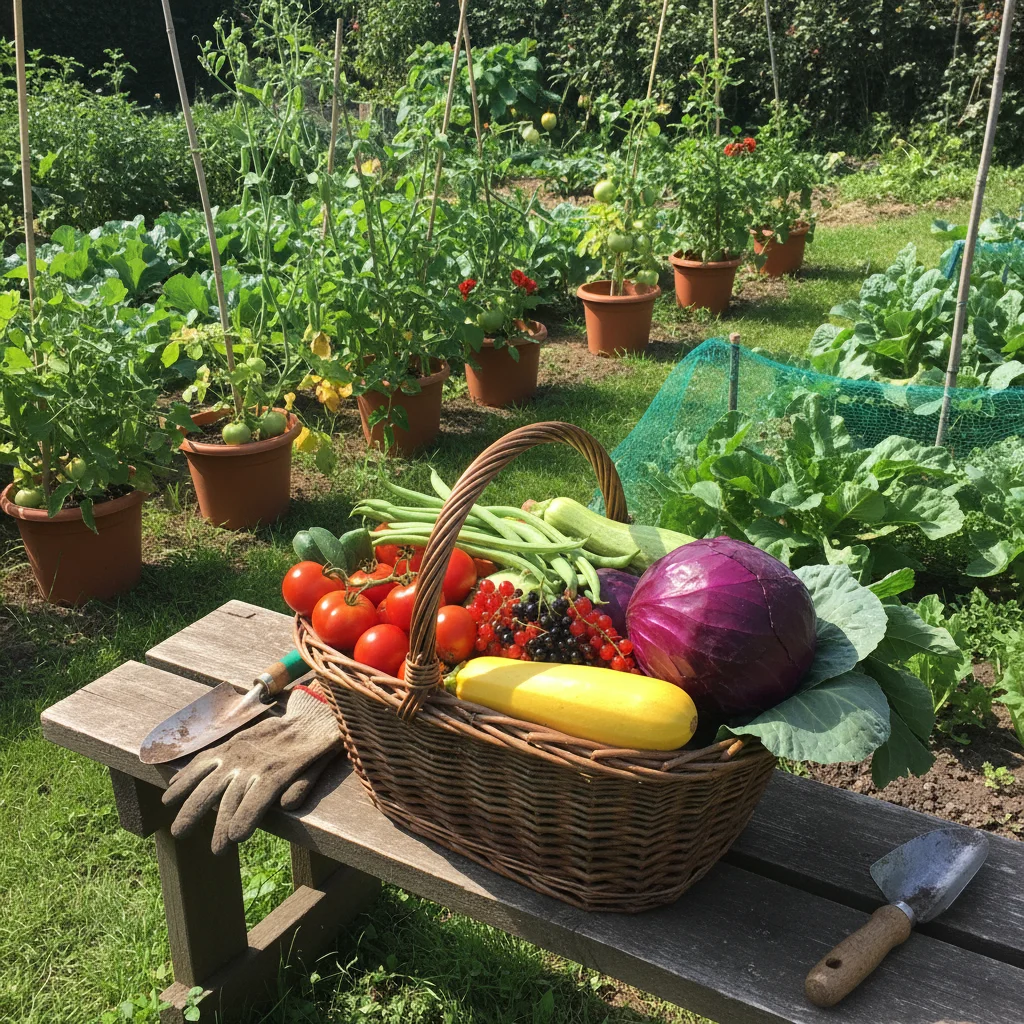
July is when a UK veg patch finally pays you back. After a damp spring and a burst of June growth, courgettes swell overnight, beans need picking every other day, and tomatoes start to colour on a warm wall. Knowing when and how to harvest is what keeps flavour high and plants producing, whether you have an allotment row or a few pots on a patio.
This July harvest guide covers the signs of ripeness for common homegrown vegetables, how to pick without wrecking the plant, and what to do with a glut in a typical British summer.
When to harvest common vegetables
Timing is everything. Pick too early and you miss flavour and size. Wait too long and produce turns tough, bitter, or becomes slug bait. Use these cues for a small UK garden in July.
- Tomatoes: Wait for even colour and a slight give when you press. They should come away with a gentle twist. Do not leave them until they are mushy on the vine.
- Courgettes: Cut when they are young and tender, about 15–20cm long. A marrow-sized courgette is seedy and slows the plant down.
- Cucumbers: Harvest while the skin is still smooth and the fruit is firm. Yellowing means they are over-mature.
- Lettuce: Pick outer leaves as you need them, or take the whole head when it feels dense and the leaves are still crisp. In a heatwave, harvest in the morning before they bolt.
- Radishes: Pull at about 2.5cm across. Left in the ground they go woody fast in July warmth.
- Peas: Pods should be plump but not hard. Taste one; if it is starchy, you have waited too long.
- French and runner beans: Pick when pods snap cleanly. Leaving fat beans on the plant tells it to stop flowering.
- New potatoes: When plants flower, you can scrape back a little soil and check for egg-sized tubers. Harvest what you need and leave the rest to swell.
- Beetroot and early carrots: Take a few at ping-pong size for salads, and leave others to bulk up if the soil is still moist.
Harvesting so the plant keeps giving
How you pick matters as much as when. A torn stem is an open door for disease, and a missed overripe fruit can shut the plant down.
Use clean, sharp secateurs or a knife for courgettes, cucumbers, and tomatoes so you do not wrench the vine. Harvest little and often. Courgettes and beans in particular reward a daily look in a warm spell. Handle fruit gently; bruises rot in a humid July kitchen.
If you grow in containers, support the pot with one hand while you pick so you do not snap stems or tip the compost. Regular picking is even more important in pots, because a single oversized courgette can exhaust a plant that only has a bucket of compost to live on.
Herbs at their best
Herbs packed into a window box or the edge of a veg bed are easy to ignore until they flower and turn bitter. For the strongest flavour, snip in the morning after the dew has dried, when essential oils are concentrated. Cut just above a leaf node so the plant bushes out instead of going tall and sparse.
Basil, mint, parsley, chives, and oregano all benefit from a hard trim in July. Use the glut in pesto, or freeze chopped herbs in ice-cube trays with a little olive oil. Do not strip a plant to a few leaves in one go in full sun; leave enough foliage so it can recover.
What July weather does to a harvest
A UK July can swing from a hosepipe-ban week to a week of thundery rain. Inconsistent watering is why tomato skins split and why blossom end rot shows up on fruit that looked fine two days ago. Keep compost evenly moist, especially in pots, and pick splitting tomatoes promptly so they do not attract wasps.
After heavy rain, check for slugs on low leaves and around pot rims. A glut of damaged lettuce is often a watering and slug problem together, not a variety failure. If mildew appears on courgette leaves, keep harvesting the fruit; the plant can still crop even when older leaves look tired.
Storing a small-space glut
Do not leave a trug of veg on the counter in a warm kitchen. Most crops last longer in a cool, dark, ventilated spot such as a garage or north-facing pantry. Salad leaves and herbs need the fridge, loosely wrapped so they do not sweat. Peas and beans freeze well if you blanch them first; courgettes are better eaten fresh or turned into soups and fritters the same day.
If you only have a balcony, harvest in the evening and cook or chill the same night. A small garden still produces a surprising amount in July if you keep picking.
Keep the patch going after the first flush
July is not the end of sowing. Fast crops such as salad leaves, radishes, and rocket can go in as soon as you clear a gap. That successional habit is what turns one harvest week into food through August and September.
The best July harvest is the one you check daily. Walk the pots or the bed with a knife in your pocket, take what is ready, and leave the plant wanting to make more. Your taste buds, and next week’s crop, will thank you.