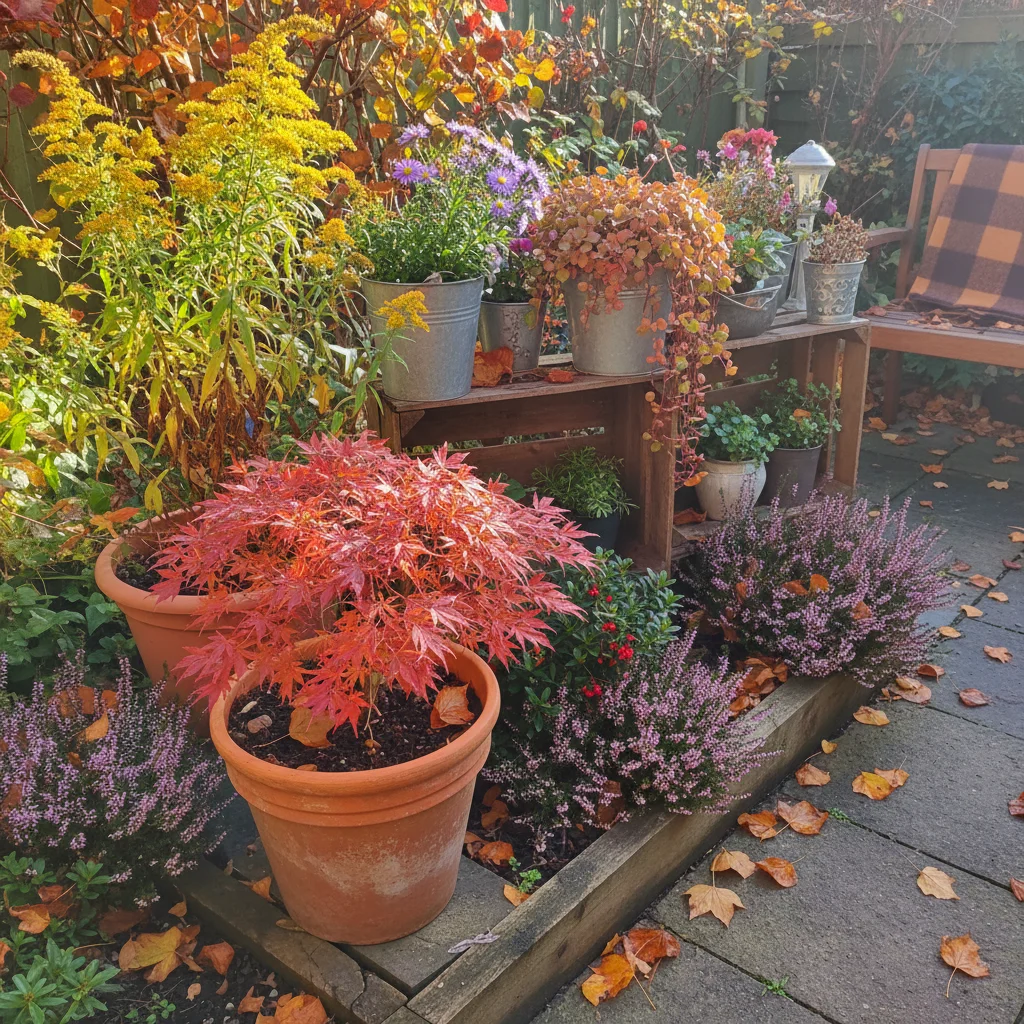
As the long, balmy days of summer begin to fade, it’s easy to think that the best of the gardening year is behind us. We often see September as a time for tidying up and putting the garden to bed, but I’ve always felt that autumn is when a small garden can truly find its voice. When the low sun hits a patch of golden foliage or a late-blooming flower, the effect is nothing short of magical.
In a smaller space, whether that’s a tiny terrace, a balcony, or a compact backyard, every plant has to work a bit harder. We don't have the luxury of vast borders where a plant can look "fine" for two weeks and then disappear. We need plants that offer a spectacular finale to the season, providing us with a warm glow even as the temperatures start to dip.
You might worry that your space is too cramped for the classic autumn stars like giant maple trees or sprawling shrubs. However, it’s much easier than you think to bring that fiery palette into a small plot. By choosing the right varieties and focusing on texture and light, you can extend your gardening season well into November.
Why autumn colour matters in small spaces
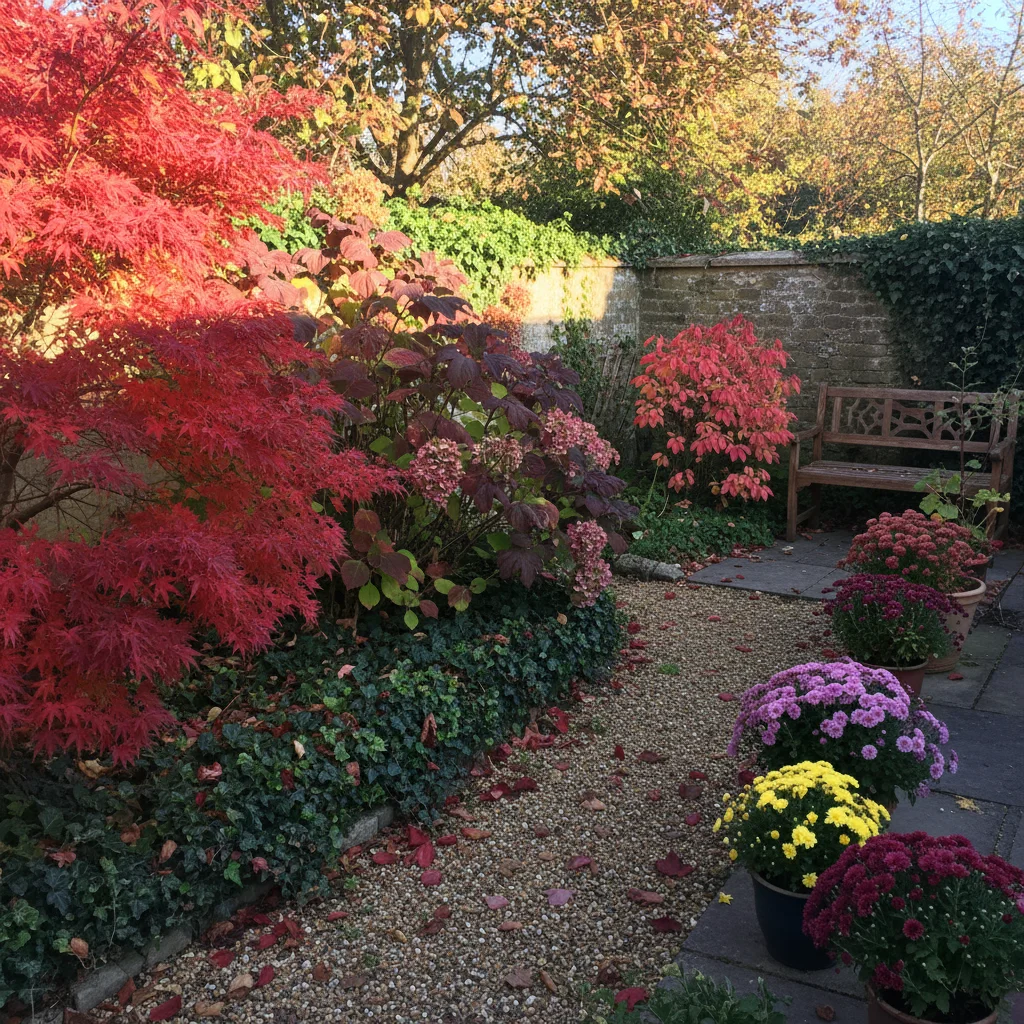
When we live in urban areas or have limited outdoor space, our connection to the changing seasons is incredibly important. Seeing the shift from the lush greens of summer to the burnt oranges and deep purples of autumn helps us stay grounded. It reminds us that the garden is a living, breathing cycle rather than just something we use when it’s warm enough for a barbecue.
In a small garden, autumn colour also helps to brighten up those increasingly grey days. A well-placed pot of bright flowers or a shrub with glowing leaves can act like an outdoor lamp, catching the light and drawing your eye out of the window. It makes the transition into winter feel like a celebration rather than a chore.
I’ve found that focusing on autumn interest also helps with the "gap" that often appears in many UK gardens. We tend to plant heavily for spring and summer, leaving the garden looking a bit tired by mid-September. Adding a few late-season stars ensures your view remains beautiful for several more months.
Choosing multi-tasking plants for compact plots
The secret to a successful small garden is choosing plants that offer more than one season of interest. We call these "multi-taskers." In my own small plot, I look for plants that might have lovely blossoms in spring, green leaves in summer, and then a spectacular colour change in autumn.
For example, certain small trees like Amelanchier lamarckii are perfect for this. They stay relatively small, offer delicate white flowers in spring, and then turn a stunning shade of copper and red in October. They fit perfectly into a large pot or a small corner, giving you value for money and space all year round.
You should also consider the "habit" or shape of the plant. In tight spaces, upright or columnar plants are your best friends. They provide height and colour without sprawling over your paths or smothering their neighbours. Look for "fastigiate" varieties, which is just a fancy way of saying they grow tall and thin.
The best late season flowers for containers
If you only have a balcony or a small patio, containers are your secret weapon for autumn colour. You can move them around to catch the last of the sun or place them right by your door where you’ll see them every day. Dahlias are a personal favourite of mine for this time of year because they just keep going until the first frosts arrive.
Varieties like 'Bishop of Llandaff' are particularly good because they have dark, moody foliage that looks great even before the bright red flowers appear. If you prefer something softer, the 'Happy Single' series of dahlias are compact and very easy to grow in pots. They provide a nectar-rich feast for bees who are looking for a final snack before winter.
Asters, often called Michaelmas daisies, are another essential for the autumn palette. They come in beautiful shades of lavender, pink, and deep purple. Some varieties can get quite mildewy in the UK climate, so look for Aster amellus varieties like 'King George' which are much more robust and stay at a manageable height for smaller gardens.
Foliage that glows as the light fades
While flowers are lovely, foliage is the real backbone of autumn colour. In a small garden, one or two well-chosen shrubs can do the heavy lifting. Japanese Maples (Acers) are the undisputed kings of autumn foliage. Many varieties, such as 'Osakazuki', are slow-growing and perfectly happy in a large container.
If you have a shaded corner, consider Ceratostigma plumbaginoides, also known as Hardy Plumbago. It’s a low-growing plant that produces intense cobalt-blue flowers in late summer. As the flowers fade, the leaves turn a brilliant, fiery red. The contrast between the blue and red is stunning and it takes up very little room.
Ornamental grasses are also fantastic for adding movement and light. Varieties of Miscanthus or Pennisetum catch the low autumn sun in their seed heads, creating a shimmering effect. Even when the colour fades to a biscuit brown, the texture and the sound of the wind moving through them add a whole new dimension to a small space.
Top plants for instant autumn impact
If you want to quickly transform your space this weekend, there are several reliable options that you can find at most garden centres. These plants are generally easy to care for and will provide immediate visual interest.
- Skimmia japonica: These compact evergreens produce bright red berries and flower buds that look great all through autumn and winter.
- Heuchera: Often called Coral Bells, these come in every colour from lime green to deep plum and burnt orange. They are perfect for small pots.
- Cyclamen coum: These tiny, hardy flowers pop up just as everything else is fading, offering delicate pinks and whites.
- Sedum (Hylotelephium): Varieties like 'Autumn Joy' have large, flat flower heads that turn from pink to a deep rusty red, attracting butterflies.
- Chrysanthemums: The classic "garden mum" provides a huge burst of solid colour in yellows, bronzes, and purples.
Creating a focal point with berries
Berries are an often-overlooked way to add colour to a small garden. They provide a different texture to flowers and leaves and have the added benefit of feeding the local birds. In a small space, you want berries that stay on the branch for a long time rather than being eaten in the first week of October.
Callicarpa bodinieri 'Profusion' is a show-stopper for small gardens. It produces clusters of metallic purple berries that look almost unreal. It’s a relatively compact shrub that can be tucked into a border or kept in a large pot. When the leaves fall away, you’re left with these incredible purple jewels on bare stems.
Pyracantha is another great option, especially if you have a bare wall or fence. You can train it to grow flat against the surface, so it takes up almost no ground space. It produces masses of red, orange, or yellow berries. Just be careful of the thorns when you’re pruning—I’ve had a few scrapes in my time while trying to keep mine in check!
Caring for your autumn display
To keep your autumn plants looking their best, a little bit of maintenance goes a long way. The UK weather can be unpredictable in October, often swinging from warm sunshine to heavy rain and wind. Keeping an eye on your pots is essential, as they can dry out surprisingly quickly in the wind, even if it’s raining.
Deadheading is still important for plants like dahlias and asters. By removing the faded flowers, you encourage the plant to put its energy into the remaining buds. It also keeps the garden looking tidy. Once the first hard frost hits, your dahlias will turn black overnight—don't panic, it’s just nature's way of saying they are ready for their winter rest.
If you’re growing Acers or other foliage plants, try to place them in a spot that is sheltered from harsh winds. Strong gusts can shred the delicate leaves before they’ve had a chance to show off their autumn colours. A little bit of protection from a wall or a fence can make all the difference to how long your display lasts.
Simple steps for a tidy autumn garden
While we want to enjoy the colour, autumn is also a time for a bit of "housekeeping." Doing a few small jobs now will make your life much easier when spring arrives. You don't need to spend hours on it; just twenty minutes here and there can keep things under control.
- Clear fallen leaves: Keep them off your lawn or small alpines to prevent rotting, but tuck them under shrubs to act as a natural mulch.
- Raise pots: Use "pot feet" or even just a few bricks to lift your containers off the ground. This helps with drainage during the wet UK winter.
- Plant spring bulbs: While you’re adding autumn colour, tuck some tulip or daffodil bulbs into your pots for a surprise later.
- Check your supports: Make sure any taller autumn flowers like Michaelmas daisies are tied in so the wind doesn't snap them.
- Mulch the soil: Adding a layer of compost or bark around your plants helps protect the roots from the coming cold.
Making the most of the golden hour
One of the best things about autumn gardening in a small space is the way the light changes. The sun sits lower in the sky, creating long shadows and a warm, golden glow in the late afternoon. This is often called the "golden hour" by photographers, and it’s the best time to appreciate your garden.
Try to position your most colourful plants where they will be back-lit by the setting sun. Translucent leaves like those of Japanese Maples or the airy seed heads of grasses look incredible when the light shines through them. It can turn a simple balcony into a glowing sanctuary.
Even if you only have five minutes at the end of a busy day, stepping outside to see how the light interacts with your autumn plants is a great way to de-stress. It’s about more than just how the garden looks; it’s about how it makes you feel. A splash of orange or a flicker of purple can be a real mood-booster as the evenings draw in.
Adding autumn colour to your small garden is one of the most rewarding things you can do as a gardener. It breaks the cycle of the garden "ending" in August and gives you something to look forward to as the year winds down. Start small with a single beautiful pot or a well-chosen shrub, and you’ll soon find that autumn becomes your favourite season in the garden. For more ideas on making the most of your outdoor area, why not take a look at our guide to choosing the best containers for small spaces?