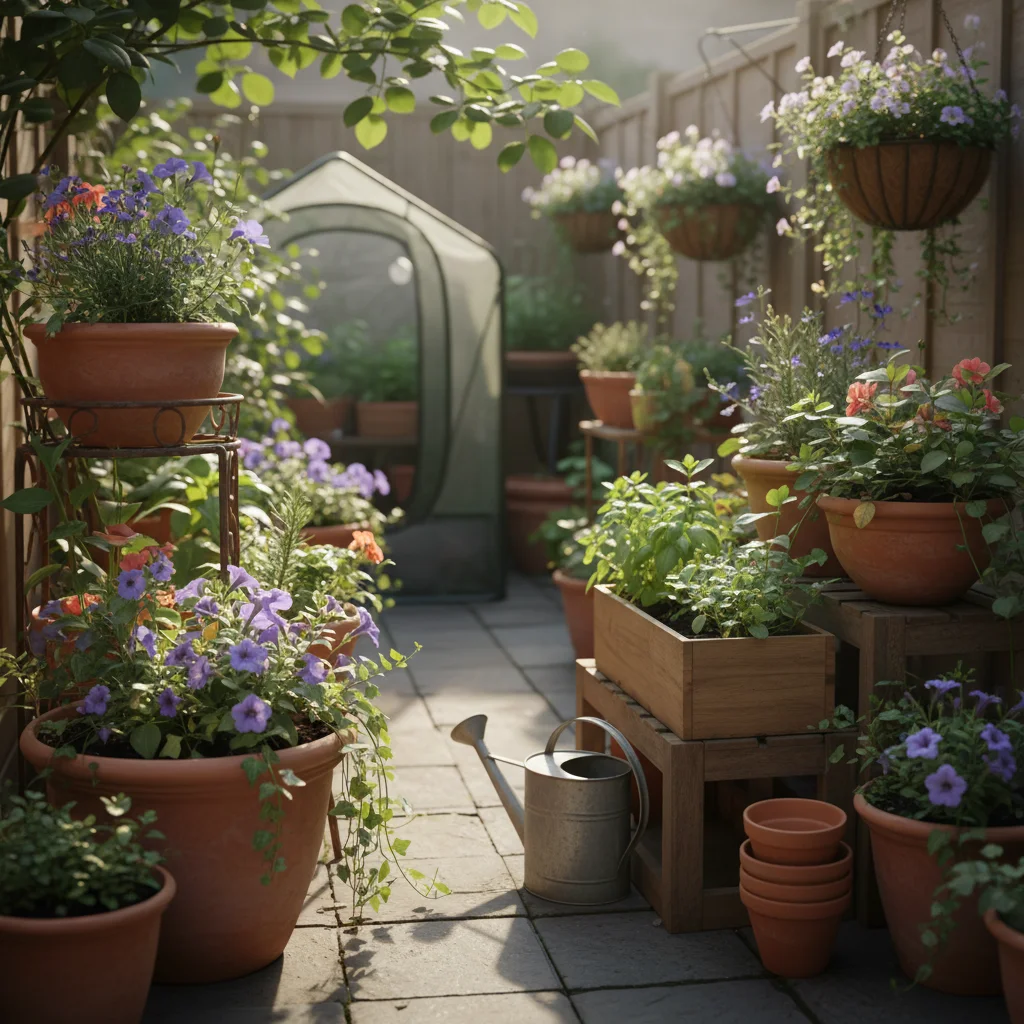
We have all been there. You head to the local garden centre on a sunny Saturday, fill your trolley with vibrant petunias or lush herbs, and spend a happy afternoon potting them up. They look glorious for a week or two, but then something goes wrong. The leaves start to yellow, the flowers droop, and before you know it, you’re left with a pot of crispy brown stems.
It is a common frustration, especially if you are working with a small patio or a balcony. But I want you to know that you can grow stunning, healthy plants in containers without being a master gardener. Most of the time, when a plant fails, it isn't because you lack a "green thumb." Usually, it is just a simple mismatch between the plant’s needs and the environment we’ve provided in that small space.
Container gardening is a bit different from growing in the ground. In a garden bed, roots can wander deep to find water or nutrients. In a pot, your plant is entirely dependent on you for its "room and board." If you get the basics right, you can turn even the smallest concrete courtyard into a lush, productive sanctuary.
Whether you are growing 'Tumbler' tomatoes on a sunny windowsill or trying to keep a hydrangea happy in a shady corner, the principles remain the same. It is easier than you think to turn things around. Let’s look at how we can stop the cycle of wilting and start growing plants that actually thrive in our unpredictable UK weather.
Pick the right home for your roots
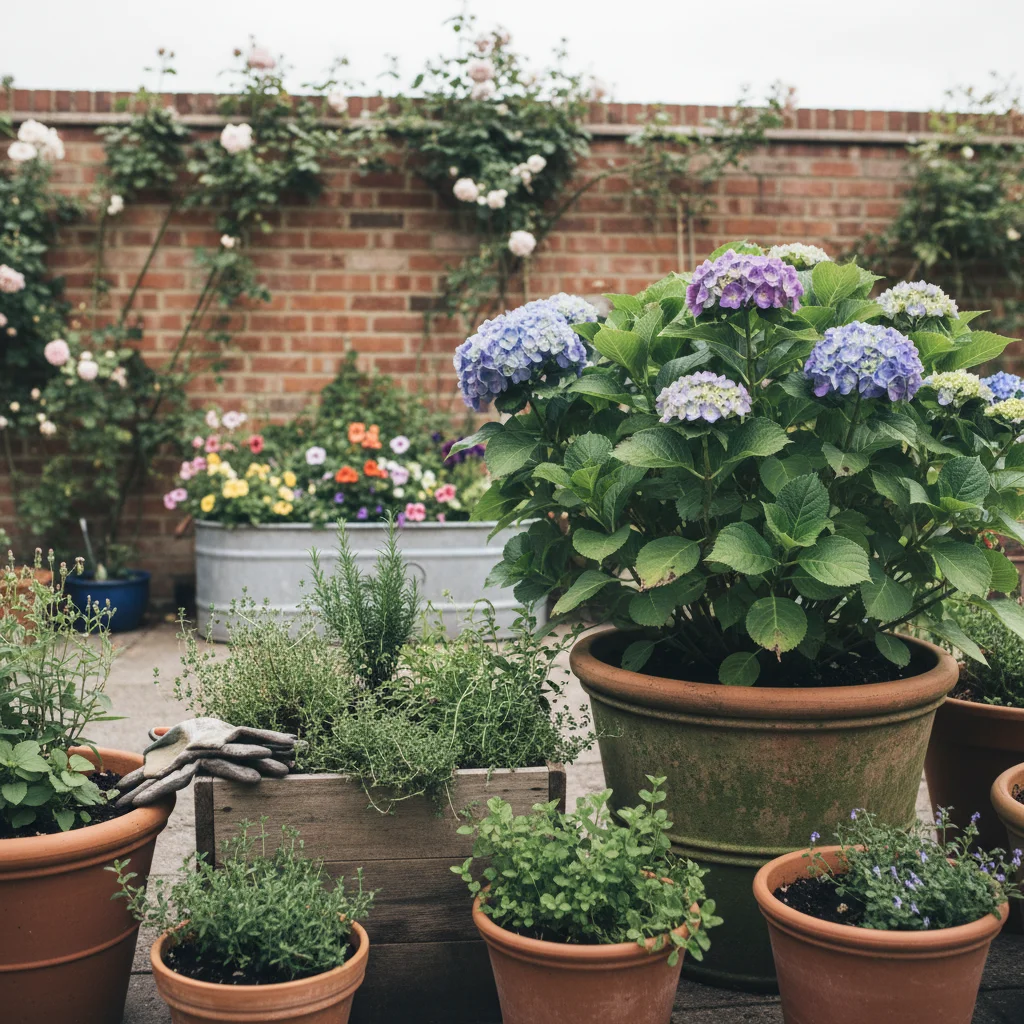
One of the biggest mistakes I see beginners make is choosing a pot that is simply too small. It is tempting to buy those cute, tiny terracotta pots, but they hold very little soil. In a typical UK summer, a small pot can dry out in just a few hours, leaving your plants stressed and thirsty.
When you are starting out, try to go a size larger than you think you need. A larger volume of soil acts as a buffer, holding onto moisture and nutrients for much longer. This gives you a bit of "wiggle room" if you forget to water for a day or if we hit an unexpected heatwave.
The material of your pot also makes a huge difference to how your plants behave. Terracotta is beautiful and traditional, but it is porous. This means water evaporates through the sides of the pot as well as the top. It is great for Mediterranean herbs like rosemary or thyme that enjoy "dry feet," but it can be a struggle for thirsty bedding plants.
If you have a very windy balcony or a south-facing patio that gets a lot of sun, you might prefer plastic, resin, or glazed ceramic pots. These materials hold onto moisture much better. If you love the look of terracotta but want the moisture retention of plastic, you can always use a plastic "liner" pot inside a decorative outer container.
Solve the mystery of drainage
If there is one thing that kills more container plants than anything else, it is poor drainage. We often worry about underwatering, but "drowning" a plant is just as easy. Most plants hate sitting in waterlogged soil because it starves their roots of oxygen, leading to root rot.
Always check that your pot has at least one good-sized hole in the bottom. Many decorative pots sold in shops don't actually have holes, which is a recipe for disaster if they are left out in the rain. You can usually drill holes into plastic or resin pots yourself, but for ceramic, you might need a special diamond-tipped drill bit.
There is an old gardening myth that you should put a layer of "crocks" (broken bits of old pots) or gravel at the bottom of your containers to help with drainage. However, modern science shows this can actually create a "perched water table," making the soil above the gravel even wetter.
Instead of filling the bottom with stones, focus on using a high-quality potting mix and ensuring the water can actually escape the pot. If your pot sits flat on a patio, the water can get trapped underneath. Using "pot feet" or even just a few flat stones to lift the container off the ground allows water to flow away freely and prevents the base from becoming a soggy mess.
Give your plants the best start with quality compost
It is very tempting to use soil from your garden to fill your pots, but I’d strongly advise against it. Garden soil is often too heavy and dense for containers. It can compact down quickly, squashing the roots and preventing water from draining. It may also contain weed seeds or soil-borne pests that you don’t want in your pots.
Instead, look for a good quality multi-purpose compost. Most garden centres now offer excellent peat-free options, which are much better for the environment. Peat-free composts sometimes require a slightly different watering approach, as they can look dry on the surface while still being damp underneath, so it is worth getting to know your chosen brand.
If you are planting something that will stay in the pot for several years, like a rose or a small shrub, I recommend using a soil-based mix like John Innes No. 3. This contains loam (sterilised soil), which gives the pot more weight and provides a more stable environment for long-term growth. It doesn't dry out as fast as standard multi-purpose compost either.
Remember that compost is more than just "dirt"; it is the pantry for your plant. Most multi-purpose mixes only have enough fertiliser to last for about 4 to 6 weeks. After that, the plant will have used up all the available nutrients, and you will need to start a feeding routine to keep them looking their best.
Master the art of watering
Watering is the most frequent task in container gardening, but it is also the one that causes the most confusion. There is no set rule like "water every Tuesday," because the weather in the UK is so changeable. A pot might need watering twice a day in a July heatwave, but not at all for two weeks in a damp October.
The best tool you have is your own finger. Push it about an inch or two into the soil. If it feels damp, leave it alone. If it feels dry, it is time for a drink. You want the soil to feel like a wrung-out sponge—moist but not dripping wet.
When you do water, do it thoroughly. Don't just give the surface a quick sprinkle. You want to see water starting to trickle out of the drainage holes at the bottom. This ensures the water has reached the deepest roots at the base of the pot.
Try to water in the early morning or late evening when the sun isn't at its strongest. This prevents the water from evaporating before the plant can use it and avoids getting water droplets on the leaves, which can sometimes lead to scorching or fungal issues. If you notice your plants are struggling, look out for these common indicators.
- Wilting leaves that don't perk up after watering (often a sign of overwatering).
- Yellowing leaves starting from the bottom of the plant.
- Soil that has pulled away from the edges of the pot.
- A green, mossy film or mould growing on the surface of the compost.
- The pot feels unusually heavy even though the plant looks unhappy.
Feed your plants for long term success
Because containers have a limited amount of soil, the nutrients get washed out every time you water. Think of your pot like a battery that slowly loses its charge. To keep the flowers coming and the leaves green, you need to "recharge" that battery regularly.
For most flowering plants and vegetables, a liquid seaweed feed or a high-potash tomato fertiliser works wonders. Potash is the nutrient responsible for producing flowers and fruit. I usually start feeding my pots once a week from late spring through to the end of summer.
If you are a busy person and think you might forget the weekly feed, you can use slow-release fertiliser granules. You simply mix these into the compost when you are potting up your plants. They act like a slow-drip tap, releasing small amounts of nutrients every time it rains or you water the pot.
Be careful not to over-fertilise, though. More is not always better. Too much fertiliser can lead to a build-up of salts in the soil, which can actually burn the roots. Always follow the instructions on the bottle, and if a plant looks stressed from heat or drought, give it plain water first rather than a dose of feed.
Protect your pots from the British weather
Our UK climate presents some unique challenges for container gardening. We have to deal with everything from late spring frosts to gale-force winds. Because the roots in a pot are above ground, they are much more vulnerable to temperature swings than plants in a garden bed.
Wind is a major factor, especially for those with balconies or roof terraces. Wind physically batters plants, but it also dries them out incredibly quickly through a process called transpiration. If you have a windy spot, choose sturdy, low-growing plants and use heavy pots made of stone or heavy ceramic to prevent them from blowing over.
Frost is the other big concern. In winter, the water in a pot can freeze solid, which can crack the container or kill the roots. If you have "tender" plants like fuchsias or pelargoniums, you’ll need to move them into a greenhouse or a cool porch before the first frost hits. For "hardy" plants that stay outside, wrapping the pots in bubble wrap or hessian can provide a bit of extra insulation.
Rain can also be a problem in a typical UK winter. If we have weeks of grey, drizzly weather, pots can become waterlogged. This is where those pot feet we mentioned earlier become essential. Lifting the pots allows the winter rain to drain away, preventing the roots from sitting in icy, stagnant water for months on end.
Choose the right plants for your space
Success often comes down to putting the right plant in the right place. We sometimes fall in love with a plant at the garden centre without checking if it actually likes our garden. A sun-loving lavender will never be happy in a dark, north-facing alleyway, and a shade-loving fern will scorch on a south-facing patio.
Take a day to watch how the sun moves across your space. Does it get morning sun, afternoon sun, or is it in deep shade all day? Once you know this, you can choose plants that are naturally suited to those conditions. This makes your life much easier because you aren't fighting against the plant’s natural instincts.
If you are just starting out and want some "bulletproof" options that tend to do well in the UK, here are a few reliable choices for different situations.
- For sunny spots: Lavender (especially 'Hidcote'), Petunias, Geraniums (Pelargoniums), and Mediterranean herbs like Rosemary.
- For shady corners: Hostas, Ferns, Fuchsias, and Begonias.
- For year-round interest: Skimmia japonica, Hebe, or small evergreen grasses like Carex.
- For quick results: 'Tumbler' tomatoes or salad leaves, which can be grown from seed in just a few weeks.
- For pollinators: Erigeron karvinskianus (the Mexican fleabane) is incredibly tough and bees love it.
Don't be afraid to experiment. Sometimes a plant won't like a particular corner for reasons only it knows. If something isn't thriving, try moving the pot to a different spot before you give up on it entirely. Sometimes just a few extra hours of light or a bit more shelter from the wind is all it takes to see a dramatic improvement.
Start small and enjoy the process
You don't need a massive collection of pots to have a beautiful garden. In fact, starting with just two or three large, well-planted containers is much better than having twenty tiny ones that you can't keep up with. As you get more confident, you can add more to your collection and try more challenging varieties.
The most important thing to remember is that gardening is a learning process. We have all lost plants along the way—it is how we learn what works in our specific little corner of the world. Every dead plant is just a bit of "research" for your next success.
Take a moment this weekend to look at your outdoor space. Whether it is a single windowsill or a sprawling patio, there is room for something green. Pick out one sturdy pot, a bag of good peat-free compost, and a plant that makes you smile. With these simple steps, you’ll be amazed at how quickly you can create a thriving, living space that brings you joy every time you look out the window.