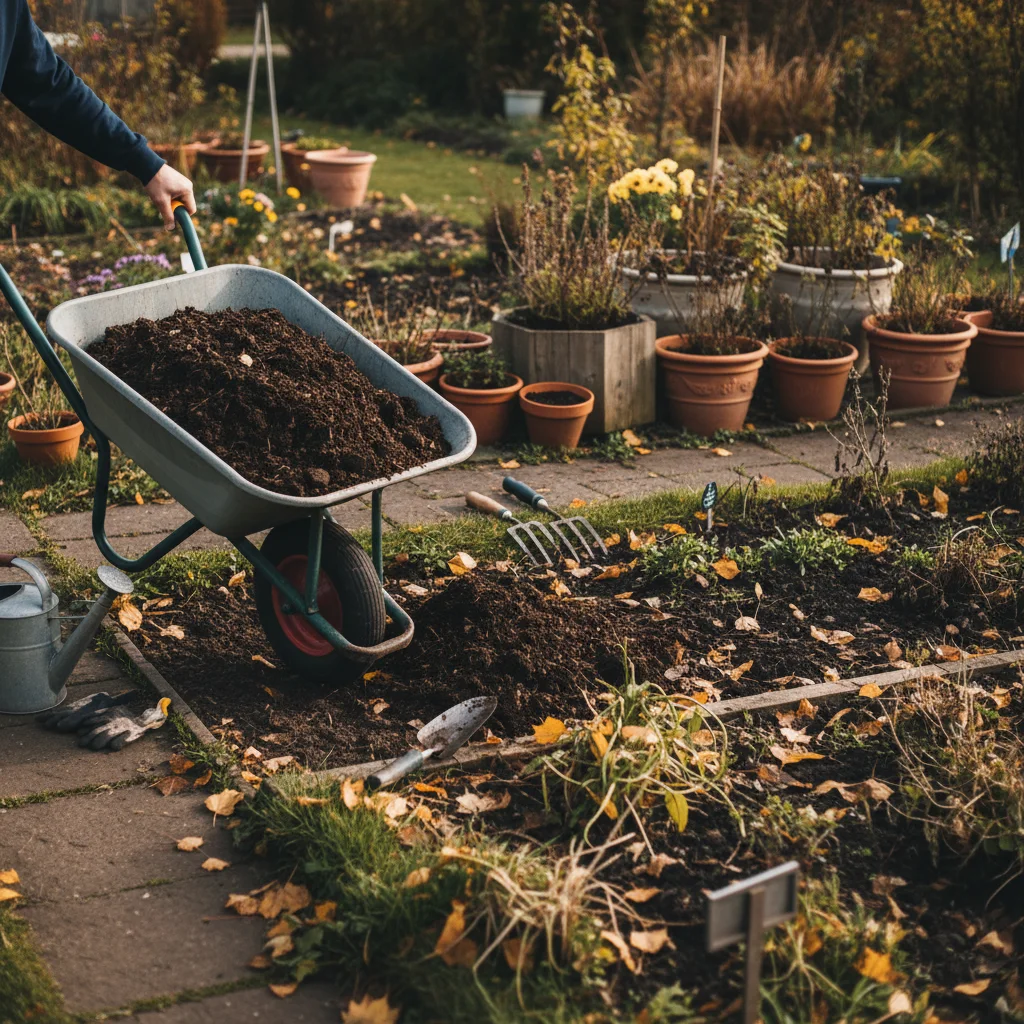
When the air turns crisp and the last of the summer beans have been cleared away, it is tempting to shut the garden shed door and stay inside with a cup of tea. We often think of gardening as a spring and summer activity, but the real magic happens underground during the colder months. If you want your plants to truly thrive next year, the work starts right now.
Think of your soil as a battery that has been drained by a busy growing season. Your tomatoes, dahlias, and courgettes have spent months pumping nutrients out of the earth to produce those lovely harvests. By the time October rolls around, the ground can feel a bit exhausted. Preparing your soil in autumn is simply your way of recharging that battery so your plants have a head start when the sun returns.
It is much easier than you might think, and you don't need a massive allotment or expensive equipment to make a difference. Whether you have a few raised beds in a small Yorkshire plot or just a couple of pots on a balcony, a little bit of care now will save you hours of work in the spring. You are essentially letting nature do the heavy lifting while you stay warm indoors.
Why autumn is the best time for soil work
In a typical UK autumn, the ground is still relatively warm from the summer sun, but the seasonal rains have started to arrive. This combination of warmth and moisture creates the perfect environment for soil organisms to get to work. Worms and microscopic fungi are incredibly active during this period, and they are your best friends when it comes to garden health.
When we add organic matter to the surface of the soil now, we are giving these underground workers plenty of food to process over the winter. By the time you are ready to plant your first seeds in March or April, the worms will have pulled that goodness down into the root zone for you. It is a slow, natural process that builds a much better soil structure than any quick-fix chemical fertiliser ever could.
Working with the soil in autumn also helps to improve drainage before the heavy winter downpours arrive. If you have heavy clay soil, you’ll know how easily it can turn into a sticky, waterlogged mess. By adding bulky organic material now, you create tiny air pockets in the earth. This prevents your plants' roots from "drowning" in cold, stagnant water during a wet January.
Understanding your garden soil
Before you start adding things to your ground, it helps to know what you are working with. You don't need a laboratory kit to understand your soil; you can learn a lot just by feel. Take a handful of damp soil and squeeze it in your palm. If it stays in a solid, sticky lump, you likely have clay. If it falls apart instantly, it is sandy. If it holds its shape but crumbles easily when poked, you have that elusive, perfect "loam."
Don't worry if your soil isn't perfect right now. Most of us start with ground that is either too heavy or too thin. In my first little garden, the soil was so packed with clay that I could have made pottery with it. Through consistent autumn care, that same patch eventually became dark, crumbly, and full of life. It is a journey, and every bit of organic matter you add helps move the needle in the right direction.
If you are growing in containers or small raised beds, the rules are slightly different but the principle remains the same. The "soil" in pots is usually compost-based and can become "spent" very quickly. Autumn is the time to decide whether you want to refresh the top few inches or completely replace the contents to ensure your spring bulbs have the nutrients they need to put on a show.
The simple power of mulching
Mulching is perhaps the most effective tool in a gardener's kit, yet it sounds much more technical than it actually is. To mulch simply means to spread a thick layer of organic material over the surface of your soil. You aren't digging it in; you are just laying it on top like a warm duvet. This protects the soil surface from being compacted by heavy rain and keeps the temperature a few degrees warmer.
You can use a variety of materials for your autumn mulch, depending on what you have to hand. The goal is to cover the bare earth so that weeds don't have a chance to take hold and the soil stays protected. Over the winter, this layer will slowly break down, feeding the soil and improving its texture. It is the ultimate "low-effort, high-reward" gardening task.
Here are a few common materials you can use to supercharge your soil this season:
- Well-rotted garden compost: This is the gold standard for adding nutrients and improving structure.
- Mushroom compost: Excellent for breaking up heavy clay, though it can be slightly alkaline.
- Leaf mould: Made from rotted autumn leaves, this is a fantastic soil conditioner that costs nothing.
- Well-rotted manure: Ideally from horses or cows, this provides a massive boost of nitrogen for leafy growth.
- Bark chips: Great for permanent beds and paths to keep moisture in and weeds down.
Making the most of autumn leaves
We often see fallen leaves as a nuisance to be raked up and thrown away, but they are actually one of the best resources a gardener has. When leaves break down, they turn into leaf mould. This isn't particularly high in nutrients, but it is incredible at holding onto moisture and improving the "tilth" or texture of your soil. It makes the ground feel like a forest floor—dark, soft, and fragrant.
If you have a lawn or a patio covered in leaves, don't bin them. You can make leaf mould very easily by stuffing the damp leaves into black bin liners. Poke a few holes in the sides with a garden fork, tie the tops, and tuck them away in a corner for a year. If you are in a hurry, you can run over the leaves with a lawnmower first to shred them, which speeds up the process significantly.
Even if you don't want to wait a year for leaf mould, you can use leaves as a temporary mulch over winter. Spread a thick layer over your vegetable beds and weigh them down with a bit of netting or a few branches so they don't blow away. By spring, they will have started to rot down, and you can simply rake away any large leftover bits to reveal beautifully friable soil underneath.
The no-dig approach for busy gardeners
In the past, gardening books often told us to spend the autumn "double-digging" our beds, turning over the soil to a depth of two spades. Not only is this back-breaking work, but we now know it can actually damage the soil's delicate ecosystem. Digging disturbs the networks of fungi and kills the worms that are doing the work for us.
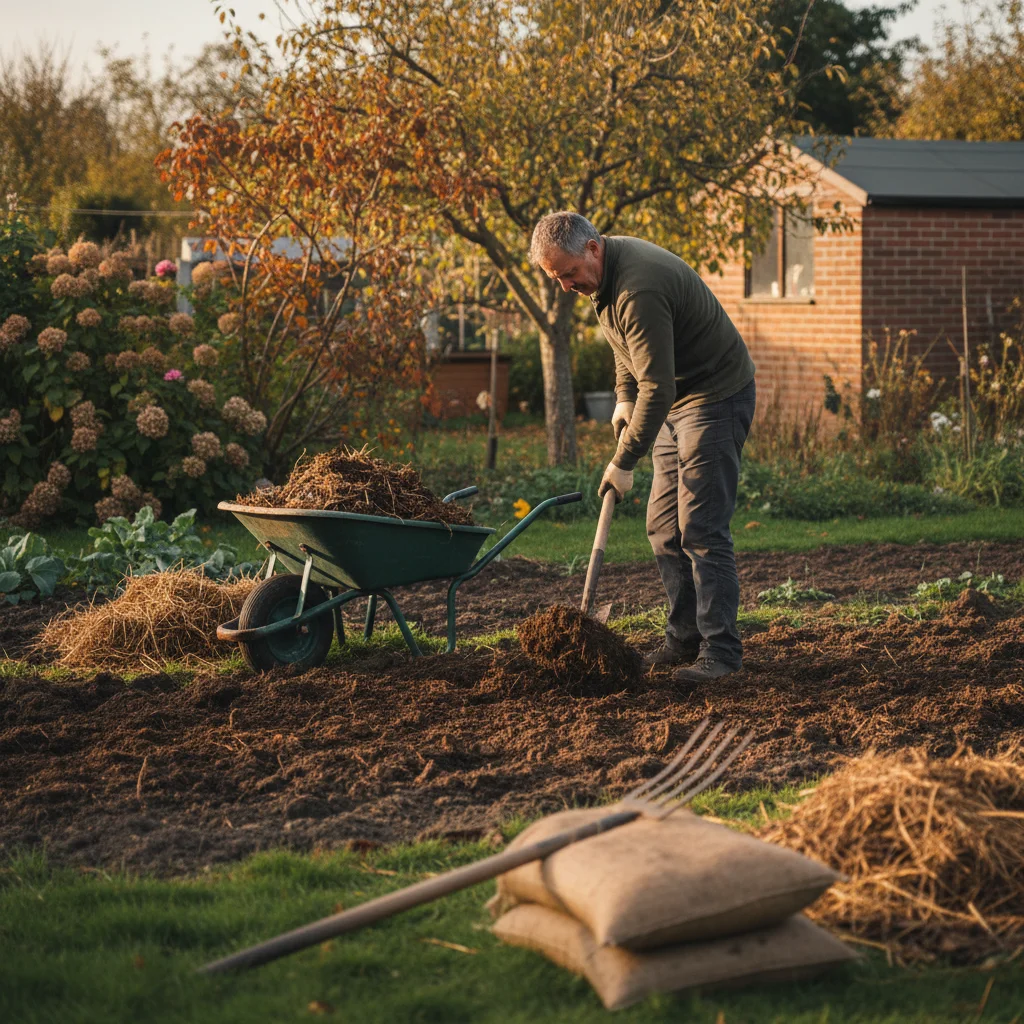
I am a huge fan of the no-dig method, especially for those of us with limited time or physical strength. Instead of turning the soil over, you simply clear any large weeds and lay your compost or manure directly on top. The worms will do the digging for you. They come up to the surface to feed on the organic matter and carry it back down into their tunnels, aerating the soil as they go.
This method is particularly brilliant for small spaces and raised beds. It keeps the soil structure intact and, surprisingly, leads to fewer weeds. When you dig the soil, you often bring dormant weed seeds to the surface where they can finally germinate. By leaving the soil undisturbed and covering it with mulch, you smother the weeds and keep the ground clean for your spring planting.
Using green manures as a winter cover
If you have a patch of ground that you don't plan to plant until late spring, you might want to consider "green manures." These are fast-growing plants like winter rye, vetch, or forage pea that you sow in early autumn. Instead of leaving the soil bare and vulnerable to the weather, these plants grow a green carpet that protects the surface and holds nutrients in their roots.
Green manures are a fantastic way to prevent nutrients from being washed out of the soil by winter rain. In the spring, about three or four weeks before you want to plant your vegetables, you simply chop the green manure down and let it sit on the surface or lightly incorporate it into the top inch of soil. As the plants rot down, they release all those stored nutrients back into the earth.
This technique is very popular on allotments, but you can use it in a small garden too. It is much more attractive than looking at a patch of brown mud all winter, and it provides a bit of habitat for beneficial insects. Just make sure you choose a variety that is suited to the UK climate and won't become a weed itself; winter beans or Phacelia are often good choices for beginners.
Feeding your pots and containers
It is easy to forget about our pots once the summer bedding has faded, but container soil needs just as much love as a garden bed. Because there is a limited amount of soil in a pot, the nutrients are used up very quickly. If you leave a pot of old compost sitting out all winter, it can become compacted and sour, making it a poor home for your spring bulbs.
For large pots that are too heavy to empty, you can "top-dress" them. This means scraping away the top two or three inches of old compost and replacing it with fresh compost mixed with a little bit of slow-release fertiliser. This gives the soil a boost without disturbing the roots of any permanent plants like shrubs or roses. It is a quick job that makes a world of difference to the plant's vigour in the spring.
If you have smaller pots that grew annual flowers or veg, it is often better to empty the old compost onto your garden beds or compost heap. You can then wash the pots to prevent any lingering pests or diseases from overwintering. Starting with fresh compost in the spring ensures your new seedlings have the best possible environment to grow, free from competition and full of the right balance of air and moisture.
Managing heavy clay and sandy soils
If you live in an area with heavy clay, autumn is your most important season. Clay soil is made of tiny, flat particles that stick together, which is why it feels so heavy and stays so wet. Adding grit or sharp sand can help, but the real solution is organic matter. The organic fibres act like tiny wedges, pushing the clay particles apart and allowing water to drain through more easily.
Sandy soil has the opposite problem. It is made of large particles that let water and nutrients wash straight through. In a typical UK summer, sandy soil can dry out in a matter of hours. Again, organic matter is the answer. It acts like a sponge, soaking up water and holding onto the nutrients that your plants need. Whether your soil is too heavy or too light, the remedy remains the same: feed the ground with compost and manure.
Don't feel like you have to fix everything in one go. Improving soil is a marathon, not a sprint. Every year that you add a layer of mulch, the soil becomes a little bit easier to work with. In my own garden, I noticed that after three years of autumn mulching, I no longer needed a fork to plant my spring seedlings; I could often just use my hands. That is the point where gardening becomes truly joyful.
Preparing for the first frosts
As we move deeper into autumn, the first frosts will eventually arrive. This is a natural signal for many plants to go dormant, but it can be a bit of a shock to the soil if it is left completely exposed. If you have any tender perennials that you are leaving in the ground, such as certain types of Salvia or young herbs, a thick collar of mulch around the base can act as insulation for the roots.
The frost itself can actually be quite helpful for soil preparation. If you have very heavy clay and you do decide to dig a patch, leaving the soil in large, rough clods over winter allows the frost to do the work for you. When water inside the clay clods freezes, it expands, shattering the heavy lumps into smaller, more manageable pieces. This is one of the few times when traditional digging can be a real benefit.
However, for most of us, the goal is to keep the soil as warm and active as possible for as long as possible. A well-mulched bed will stay unfrozen for longer than bare earth, allowing the worms to keep working even when there is a light crust of frost on the grass. It is all about creating a stable environment where the natural cycle of decay and renewal can continue uninterrupted.
Looking forward to the spring reward
It can be hard to visualise the results of your hard work when the garden looks grey and dormant, but the effort you put in now will be visible the moment the first green shoots appear. Plants grown in well-prepared soil are naturally more resistant to pests and diseases because they aren't stressed by a lack of nutrients or poor drainage. They grow faster, flower more profusely, and produce better harvests.
I always find that the simple act of tending to the soil in autumn helps me feel more connected to the garden during the "off-season." It turns a time of endings into a time of beginnings. When you see your 'Tumbler' tomatoes or sweet peas racing away in May, you will know it is because you took those few hours in October to give them the foundation they needed.
Start small this weekend. You don't have to mulch the entire garden at once. Pick one bed or a few large pots and give them a good layer of compost or leaf mould. Once you see how much easier it is to plant into that rich, crumbly soil in the spring, you’ll never want to skip your autumn soil prep again. Your future self—and your plants—will definitely thank you for it.