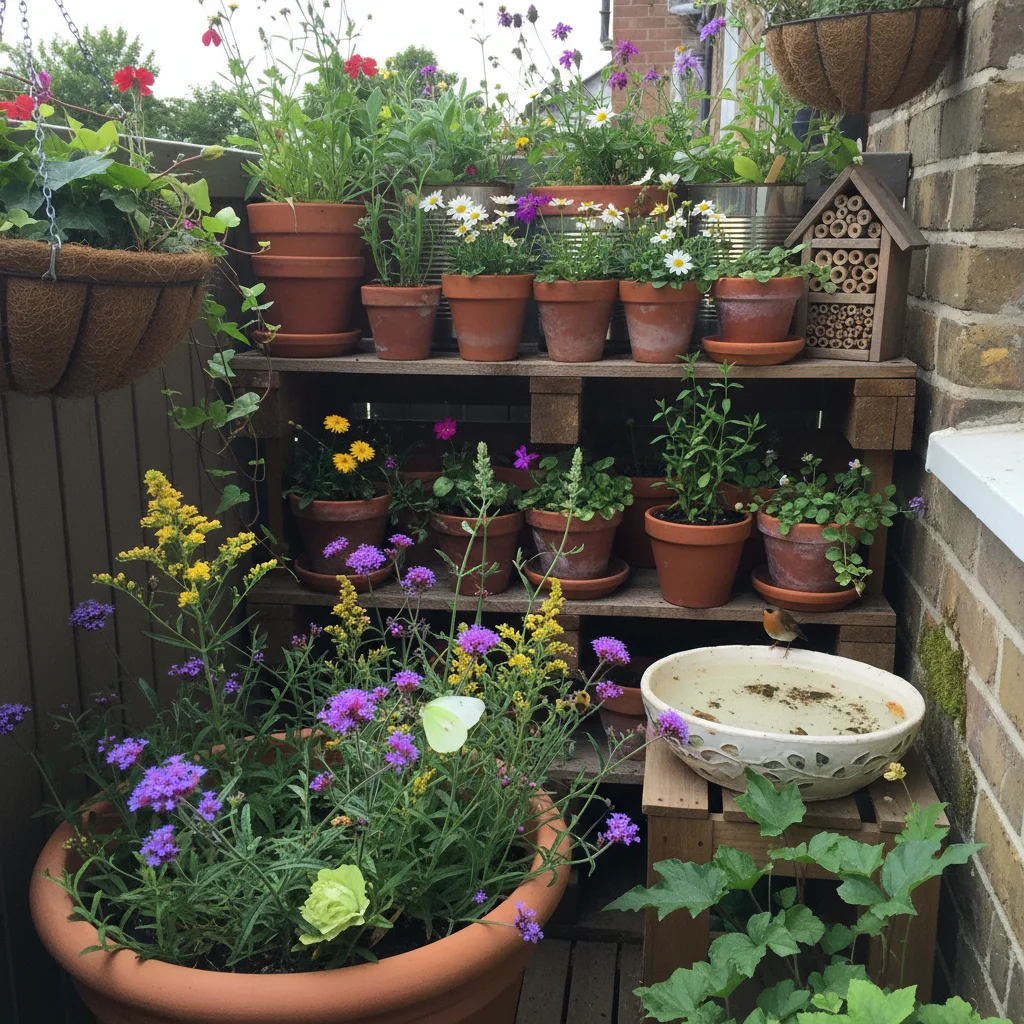
We often think of wildlife gardening as something reserved for people with sprawling country estates or at least a decent-sized lawn. In reality, our urban spaces are vital corridors for nature. Even if you are ten floors up in a London flat, your balcony can provide a crucial pitstop for a tired bumblebee or a hungry blue tit.
Creating a balcony wildlife garden is about more than just looking at pretty flowers. It is about building a tiny ecosystem that works within the constraints of city living. We have to deal with wind tunnels, weight limits, and the fact that we might only have space for a few pots and a window box.
You don't need a shed full of tools or a degree in ecology to get started. With a bit of clever planting and some simple additions, you can turn that concrete ledge into a buzzing, fluttering sanctuary. It is incredibly rewarding to sit with a morning coffee and watch a hoverfly investigate a bloom you planted just a few weeks ago.
Why your balcony matters for nature
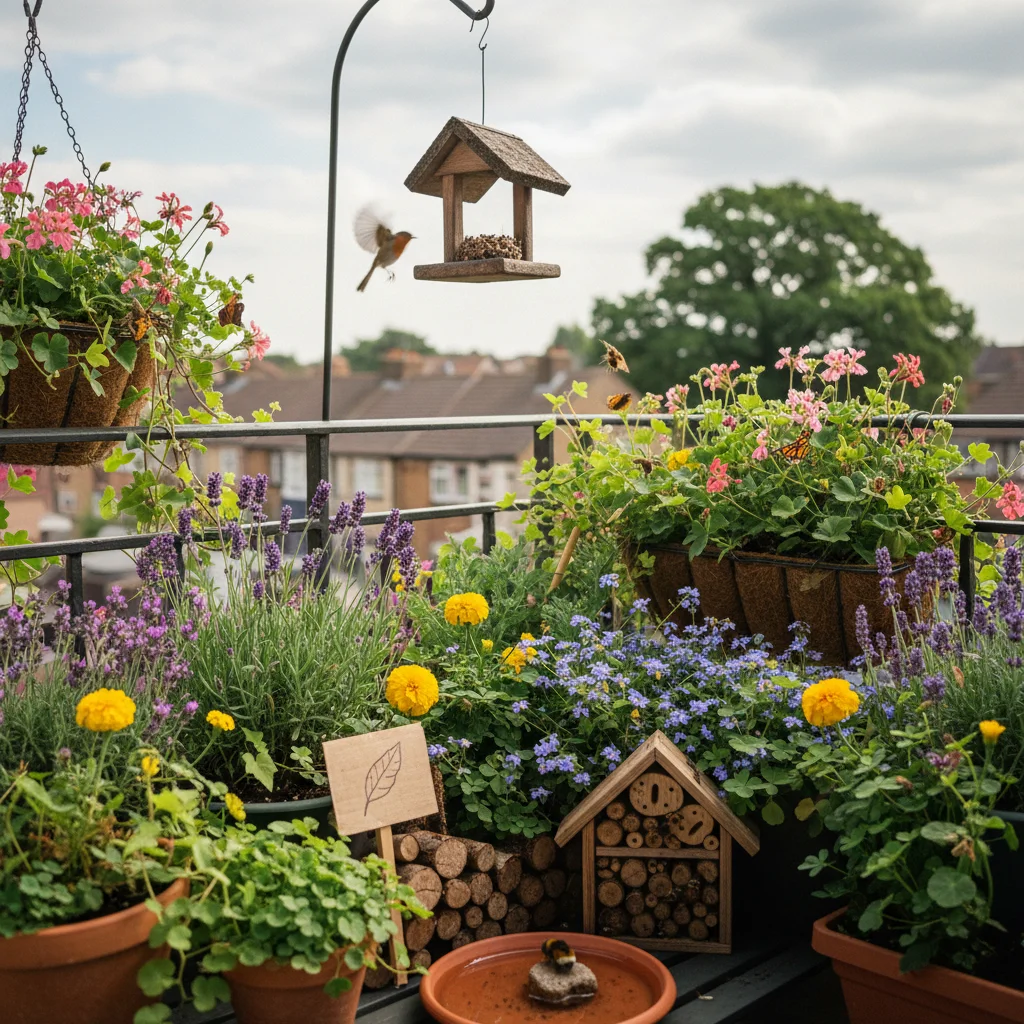
In our paved-over cities, every single green space counts. When we plant nectar-rich flowers on a balcony, we are creating "stepping stones" for pollinators. These insects often have to travel long distances between parks to find food, and your containers can provide the energy they need to keep going.
Many people worry that wildlife won't find them if they live high up. You might be surprised to learn that many bees and butterflies are perfectly happy flying several storeys high in search of food. I have seen Red Admiral butterflies on roof terraces and solitary bees nesting in mortar high above street level.
By gardening for wildlife in a small space, you are also improving your own environment. Plants help to cool the air on those stifling British summer days and can even dampen the sound of city traffic. It is a win-win situation where you get a beautiful view and the local nature gets a helping hand.
Managing the unique balcony environment
Before we start buying bags of compost, we have to be realistic about the conditions. Balconies are often much windier than ground-level gardens. This means plants dry out faster and tall, top-heavy pots can easily blow over during an autumn gale.
Weight is another critical factor that we urban gardeners have to respect. Large pots filled with wet soil are surprisingly heavy. I always recommend using lightweight containers made of resin or recycled plastic rather than heavy stone or terracotta if you are planning a large display.
Light levels can also be tricky in the city. Your balcony might be in the permanent shadow of a neighbouring office block, or it might be a south-facing sun trap that feels like an oven in July. Observe where the sun hits at different times of the day before you choose your plants.
The best plants for urban pollinators
The secret to a successful balcony wildlife garden is choosing plants that pack a punch. Since space is limited, every pot has to earn its keep. We want plants that offer plenty of nectar but stay compact enough not to take over the entire seating area.
Native plants are wonderful, but many Mediterranean herbs are also fantastic for UK pollinators and thrive in the well-drained conditions of a pot. Oregano, thyme, and rosemary are all magnets for bees and look beautiful spilling over the edge of a window box. They are also hardy enough to survive a typical British winter if they don't get waterlogged.
If you have a sunny spot, consider these reliable performers that won't outgrow their welcome:
- Lavender 'Hidcote' — A compact variety that bees absolutely adore and smells incredible.
- Erigeron karvinskianus — Also known as Mexican fleabane, this tiny daisy-like flower will scramble through cracks and over pot edges.
- Buddleja 'Buzz' — A dwarf version of the butterfly bush that stays small enough for a large container.
- Scabiosa 'Butterfly Blue' — These pincushion flowers provide nectar for months on end.
- Sedum 'Autumn Joy' — Fantastic for late-season butterflies when other flowers are fading.
- Verbena bonariensis 'Lollipop' — A shorter version of the tall classic that adds height without the bulk.
Providing water and shelter in the sky
Food is only one part of the puzzle. All wildlife needs water, but a traditional garden pond isn't exactly practical on a balcony. You can easily provide a drinking station by using a shallow saucer filled with pebbles and water.
The pebbles are important because they give insects a safe place to land without the risk of drowning. I like to tuck these saucers in among the pots where it is a bit cooler and the water won't evaporate quite so quickly. Remember to top them up regularly, especially during a heatwave.
Shelter is the final piece of the habitat. You can buy or make small bug hotels to hang on a wall or fence. These provide nesting sites for solitary bees, like the Mason bee, which are fantastic pollinators and don't swarm or sting. A small bundle of hollow bamboo canes tucked into a quiet corner can be just as effective as a fancy shop-bought hotel.
Simple ways to provide shelter and nesting
While we might not have space for a hedge or a log pile, we can still offer "homes" for the smaller creatures. Think vertically and use the walls of your balcony to your advantage. A small bird box can work if you have a quiet corner, though birds can be a bit shy on very busy balconies.
- Bug hotels — Mount these on a sunny, sheltered wall about chest height.
- Dried stems — Don't be too tidy; leave some dried flower stems in your pots over winter for insects to hibernate in.
- Bird feeders — Use "no-mess" mixes to avoid upsetting the neighbours downstairs with falling husks.
- Wall-mounted planters — These create a "green wall" effect that offers more hiding spots for spiders and beetles.
- Trailing ivy — A pot of ivy is evergreen, tough as nails, and provides vital late-season nectar and shelter.
Watering and feeding your balcony garden
We have all forgotten to water our pots at some point, but in a wildlife garden, consistency is key. If your plants wilt and stop producing nectar, the bees will stop coming. Because balconies are windy, containers dry out much faster than the ground.
During the height of summer, you might need to water every evening. I find that grouping pots together helps to create a slightly more humid microclimate which reduces evaporation. If you have a busy schedule, consider self-watering pots or a simple drip irrigation system that connects to an outdoor tap if you have one.
When it comes to feeding, always use an organic fertiliser. We are trying to encourage life, so we want to avoid harsh chemicals that might harm the very insects we are trying to attract. A liquid seaweed feed every couple of weeks during the growing season will keep your flowers blooming and the nectar flowing.
Dealing with pests naturally
One of the best things about a wildlife garden is that nature often does the hard work for you. If you get aphids on your roses, don't reach for the spray. If you wait a week or two, you will often find that ladybirds or hoverflies arrive to feast on the pests.
Using chemical pesticides on a balcony is particularly problematic because the space is so confined. You don't want to be breathing those fumes in, and they are lethal to the pollinators you have worked so hard to attract. If a pest problem gets really bad, a simple spray of soapy water or a blast from a pressure sprayer is usually enough to knock them back.
Encouraging a diverse range of plants is the best way to prevent any one pest from taking over. Diversity leads to balance. I always try to include some French marigolds or calendula in my pots, as these are great for attracting the "good bugs" that eat the "bad bugs."
Choosing the right compost
For a long time, gardeners didn't think much about what was in their bags of soil. However, if we want to be truly wildlife-friendly, we must use peat-free compost. Peat bogs are incredible carbon sinks and unique habitats; destroying them to fill our balcony pots is counter-productive for the environment.
Modern peat-free blends are excellent, but they do require slightly different management. They can sometimes be harder to re-wet if they dry out completely, so try to keep the moisture levels even. Adding a layer of mulch, like bark chippings or even gravel, to the top of your pots helps retain moisture and looks much neater.
If you have space for a very small wormery, you can even create your own high-quality fertiliser from kitchen scraps. This is the ultimate urban recycling trick. It reduces your waste and provides your balcony plants with "liquid gold" that will make your flowers thrive.
Gardening through the UK seasons
The needs of wildlife change as the year progresses. In early spring, queen bumblebees emerge from hibernation and desperately need food. Planting crocuses or grape hyacinths in your pots the previous autumn ensures there is something waiting for them in March.
By the time we hit the "June gap," when many spring flowers have faded but summer ones haven't quite started, your herbs will often step up to the plate. Let your chives and coriander go to flower; the bees will thank you for it. This is also the time to keep an eye on water levels as the weather warms up.
In autumn, don't be in a rush to "put the garden to bed." Those dead flower heads and brown leaves are full of life. Many insects use them to hide from the frost. I usually wait until the first signs of spring before I do a proper clear-out, giving the local mini-beasts the best chance of surviving a cold British winter.
Making space for nature in the city
You don't need a sprawling lawn to make a difference to the UK's declining insect and bird populations. By turning your balcony into a wildlife haven, you are proving that even the smallest urban footprint can be part of the solution. It is about working with what you have, whether that is a single window box or a wrap-around terrace.
The joy of balcony gardening is in the details. It is the flash of a butterfly's wing against the grey of the city or the sound of a bee visiting your lavender while the traffic hums in the distance. These small moments connect us to the natural world, even in the heart of the most built-up areas.
Start small with a few nectar-rich herbs and a shallow dish of water this weekend. You will be amazed at how quickly the local wildlife discovers your new sanctuary. Once you see that first visitor, you will likely find yourself looking for more space to squeeze in just one more pot.