We often think of wildlife gardening as something reserved for those with rolling lawns and established orchards. If you are working with a small patio in London or a tiny courtyard behind a terrace, the idea of "creating a habitat" can feel a bit out of reach. However, our local frogs and toads are surprisingly resilient and are often looking for a place to rest in the middle of our busy cities.
Welcoming these amphibians into your space is one of the most practical things you can do as an urban gardener. They are the ultimate natural pest controllers, spending their nights hunting for the slugs and snails that usually make a meal of our potted hostas. You don’t need a sprawling estate to make them feel at home; a few clever additions to a balcony or a small yard can turn a concrete space into a vital stepping stone for nature.
By focusing on moisture, shelter, and safe passage, we can support the UK’s declining amphibian populations while making our own gardening lives much easier. Let’s look at how we can make even the most compact urban plot a sanctuary for our four-legged friends.
Why Frogs Belong in Small Gardens
In a small urban garden, every plant usually has to work twice as hard to earn its keep. We choose varieties that look good, smell great, and perhaps provide a bit of privacy from the neighbours. Frogs and toads offer a different kind of value by providing an organic solution to some of our most frustrating gardening problems.
Slugs are the bane of the city gardener, especially during a damp British spring when they seem to appear from between the paving slabs overnight. A single common frog can eat hundreds of insects, slugs, and snails in a single season. By inviting them in, you are essentially hiring a full-time, eco-friendly security team for your salad leaves and young bedding plants.
Beyond the practical benefits, there is a genuine joy in spotting a toad tucked away under a terracotta pot or seeing a frog leap through the ferns. It connects our small urban patches to the wider natural world, reminding us that even a tiny balcony is part of a larger ecosystem. It makes the garden feel alive in a way that plants alone cannot achieve.
Creating Water Sources in Tiny Spaces
The biggest misconception about frogs is that you need a large, deep pond to attract them. While they do need water to breed, frogs spend much of their adult lives on land. In a small garden or on a patio, you can provide the essential moisture they need using nothing more than a recycled container or a shallow dish.
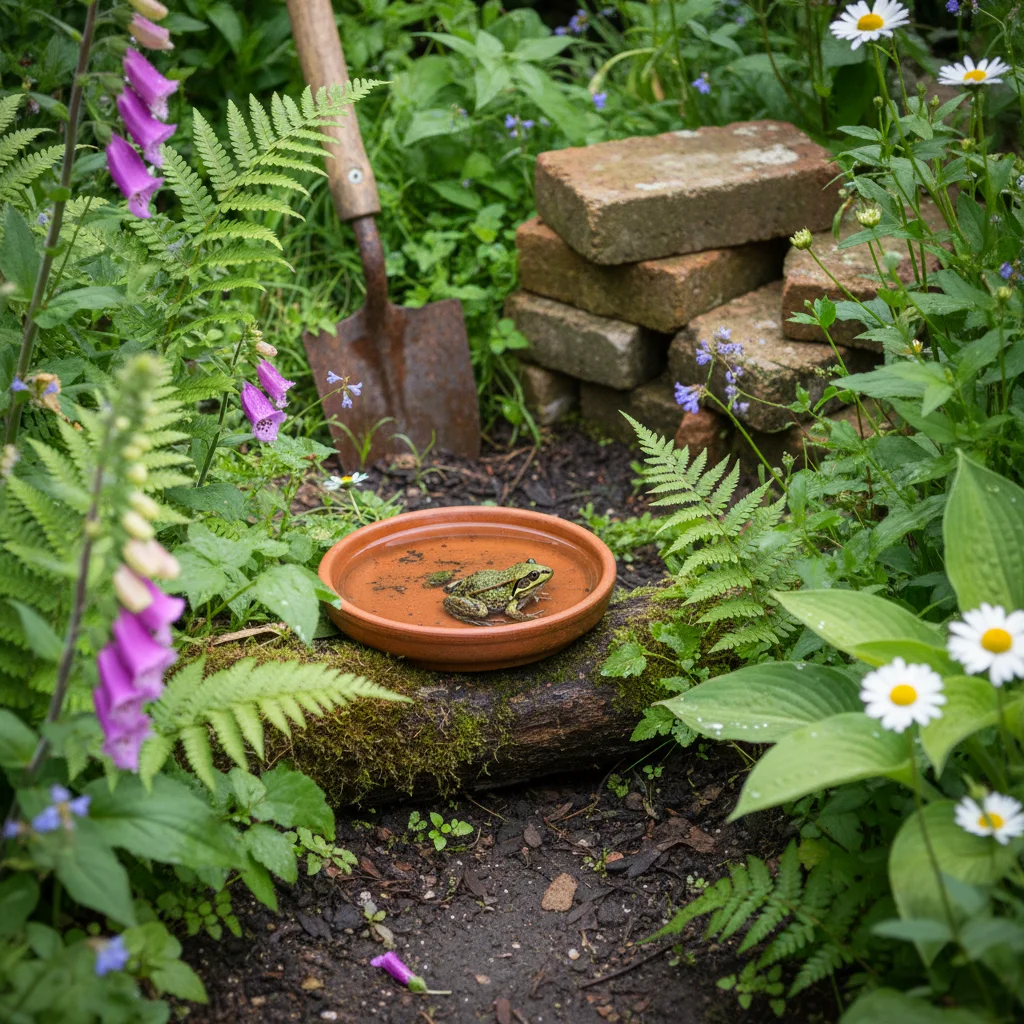
A "pond in a pot" is a fantastic solution for urban spaces where digging a hole isn't an option. You can use an old washing-up bowl, a large ceramic planter without drainage holes, or even a sturdy plastic crate. By sinking this into a corner or surrounding it with smaller pots, you create a micro-climate that stays cool and damp even during a dry London summer.
If you are using a container, the most important thing is to ensure any visitor can get out as easily as they got in. Frogs are excellent jumpers, but they can easily drown in steep-sided containers if they become exhausted. Always provide a "ladder" made of stones, bricks, or a piece of rough wood that slopes from the bottom of the water up to the edge and down to the ground.
Choosing Plants for Damp Corners
To make a frog feel safe, you need to provide cover. Amphibians have porous skin that needs to stay moist, so they avoid bright, sunny spots where they might dry out. In a small garden, we can use pots and containers to create "green corridors" where frogs can move around without being exposed to the sun or predators.
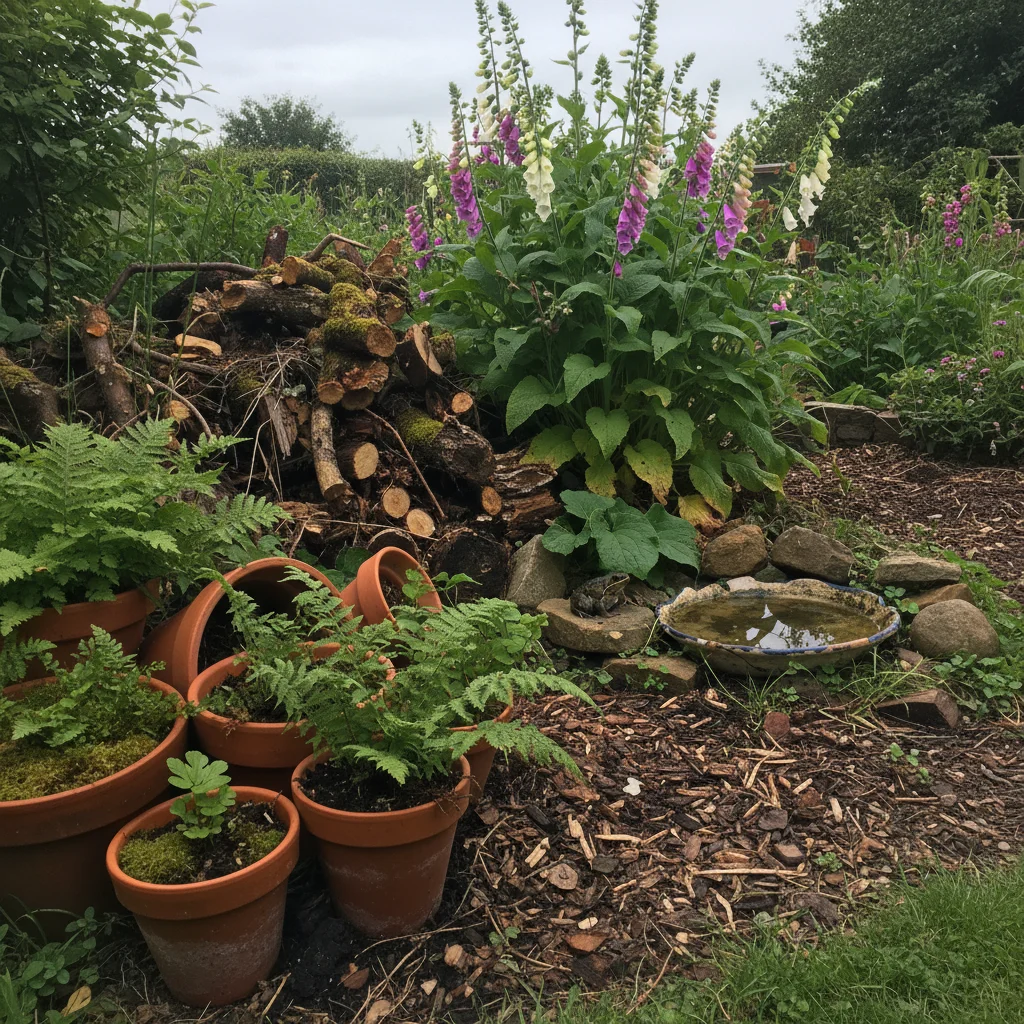
Focus on plants that create a thick, low canopy. Ferns are an excellent choice for those shady urban corners that don't get much light anyway. They provide a cool, damp environment underneath their fronds which is perfect for a toad to spend the daylight hours. Grasses and sedges also work well, offering fine texture and plenty of hiding spots.
If you have a container pond, you can add a few aquatic plants to help oxygenate the water and provide more cover. You don't need many; one or two small baskets are usually enough for a mini-pond. Here are a few reliable options that thrive in the UK climate and fit perfectly into smaller setups:
- Lesser Spearwort: A lovely native plant with yellow buttercup-like flowers that doesn't grow too large.
- Water Forget-me-not: This provides beautiful blue flowers and grows in low, creeping mats that frogs love to hide under.
- Marsh Marigold: One of the first to bloom in spring, providing a splash of gold and thick green leaves.
- Starwort: A great oxygenator that stays submerged, keeping the water clear and healthy.
- Hardy Ferns: Such as the Maidenhair fern, which loves the humid air near a small water feature.
Building the Perfect Shelter
When frogs aren't near the water, they need somewhere dark and damp to hide from the heat of the day and from predators like cats or large birds. In a large garden, this might be a massive log pile, but in a small space, we have to be a bit more creative with our architecture.
A simple "toad home" can be made by turning a ceramic flower pot upside down and propping up one side with a stone to create an entrance. Place this in the shadiest part of your garden, perhaps tucked behind some larger pots or under a bench. If you can partially bury the pot in the soil or surround it with leaf litter, it will stay even cooler.
Small log piles are also very effective and can look quite architectural if done neatly. Find a few pieces of fallen wood or thick branches and stack them in a quiet corner. As the wood decays, it attracts the insects that frogs love to eat, creating a self-contained buffet and bedroom all in one. Even a pile of old roof tiles or bricks can provide the crannies and crevices that amphibians find irresistible.
Maintaining a Safe Environment
Urban gardening often involves a lot of maintenance in a small area, but when gardening for frogs, sometimes "less is more." One of the most important steps is to stop using chemical slug pellets. These are often toxic to the very creatures you are trying to attract, and a frog that eats a poisoned slug can become ill or die.
Instead of reaching for the chemicals, try to tolerate a little bit of leaf damage while your frog population establishes itself. Once they realize your garden is a safe place with plenty of food, they will do the heavy lifting for you. You can also use copper tape around specific high-value pots to protect your most prized plants while leaving the rest of the garden as a foraging ground.
Be careful when moving pots or tidying up piles of leaves, especially in the autumn and winter. We’ve all moved a heavy planter only to find a surprised toad blinking back at us. During the colder months, frogs and toads enter a state of torpor, and disturbing them can use up the vital energy they need to survive until spring.
Creating a Frog Highway
Connectivity is a huge issue for urban wildlife. A frog can’t benefit from your beautiful patio sanctuary if it’s trapped behind a solid brick wall or a fence with no gaps. In the city, we often obsess over privacy, but a tiny hole at the base of a fence can make a world of difference for local biodiversity.
Talk to your neighbours about creating a "wildlife highway." A small 13cm gap at the base of a fence panel is enough to allow frogs, toads, and even hedgehogs to move between gardens. If you have a solid wall, you might find that frogs enter through the gate or under the shed. Keeping these pathways clear of clutter is essential for their nightly patrols.
If you live in a flat with a balcony, you might think frogs are out of the question. However, it is not uncommon for frogs to find their way into surprisingly high places if there is enough greenery and moisture to lead them there. Even if you don't get many amphibian visitors, the same principles of providing water and shade will attract dragonflies, hoverflies, and birds.
Year-Round Care for Your Visitors
As the seasons change, the needs of your garden frogs will shift. In the height of a British summer, your main job is to keep the water levels topped up. Small container ponds can evaporate quickly during a heatwave. Always try to use rainwater from a butt if possible, as tap water contains chlorine and minerals that can upset the balance of a tiny pond.
In the autumn, resist the urge to be too tidy. Leaving a bit of leaf litter in the corners provides the perfect insulation for overwintering amphibians. If you have a small pond, make sure it doesn't get completely clogged with falling leaves, as rotting vegetation can strip the oxygen from the water. A simple bit of netting over the top for a few weeks can save a lot of cleaning later.
Winter is the time to leave things well alone. Frogs may hibernate at the bottom of a pond or buried deep in a log pile. As long as your water source doesn't freeze solid to the bottom, they should be fine. If we get a very hard frost, you can float a small ball on the surface of your container pond to keep a hole open, which allows gases to escape.
Simple Steps for Success
Getting started doesn't require a trip to a specialist garden centre or a massive investment. Most of the things a frog needs can be found around the house or scavenged from a bit of garden pruning. To ensure your space is as welcoming as possible, keep these simple tips in mind:
- Keep it shallow: Any water source should have a very shallow edge or a reliable ramp.
- Stay shady: Place your water and shelters in the coolest part of the garden.
- Ditch the pump: Frogs prefer still water for resting and breeding, so you don't need fancy fountains.
- Avoid fish: In a small pond, fish will eat frogspawn and tadpoles, so it’s best to keep them separate.
- Use native plants: Local species are better adapted to our weather and provide the right kind of habitat.
- Be patient: It might take a season for frogs to find your new sanctuary, but they will come.
By making these small adjustments, you are doing more than just gardening; you are providing a lifeline for UK wildlife. It is incredibly rewarding to know that your small urban plot is helping to sustain a population of common frogs or toads. Plus, you’ll likely find that your plants look healthier than ever with your new assistants on the job.
The next time you are planning a patio refresh or tidying up your balcony, think about where a frog might find a home. A single upturned pot or a shallow dish of water is all it takes to start your journey into wildlife gardening. Once you see your first visitor, you’ll realize that you don’t need a huge garden to make a massive difference.