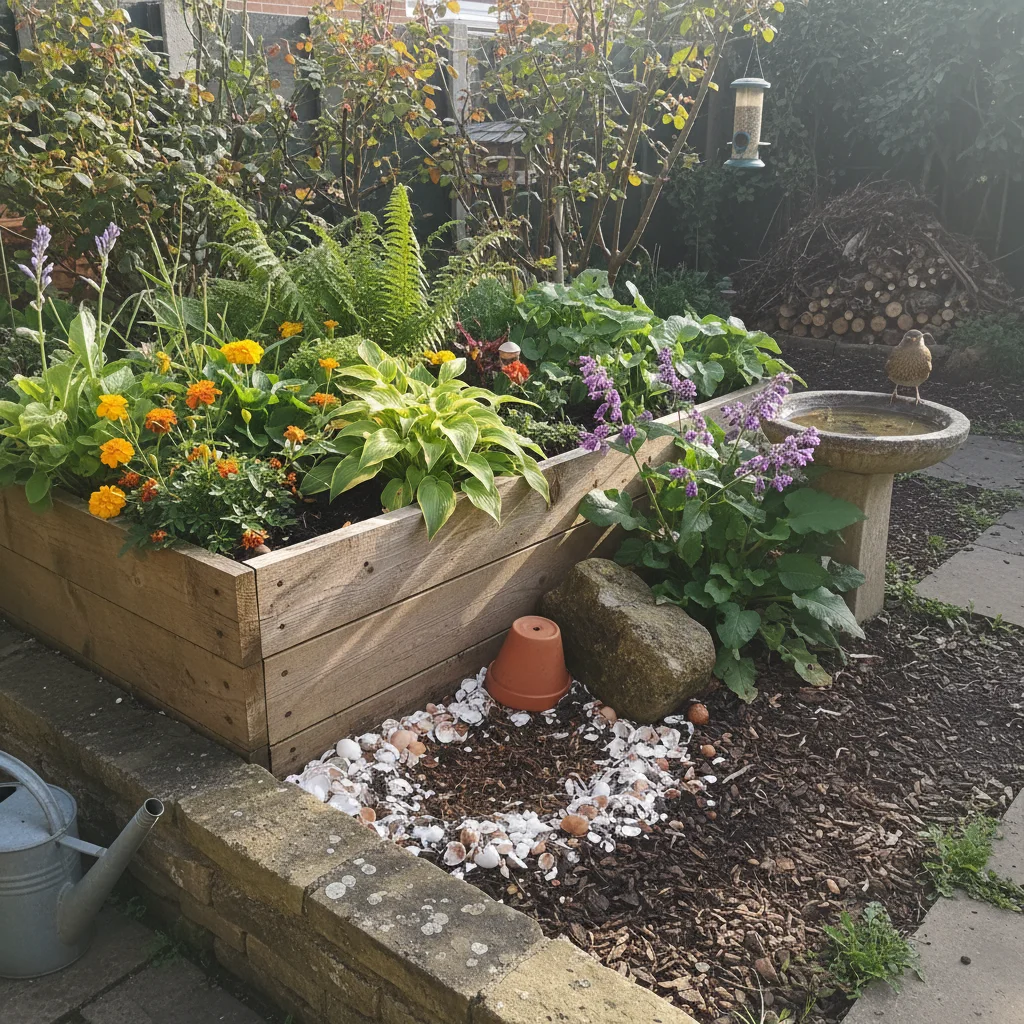
There is nothing quite like the heart-sink feeling of stepping out onto your balcony or patio in the morning to find your prized 'Patio' tomatoes or delicate lettuce seedlings reduced to ragged stumps. We have all been there. You spend weeks nurturing a plant in a small pot, only for a single night of British rain to bring out a feast of slugs and snails that treat your hard work like an all-you-can-eat buffet.
In a small urban garden or a collection of pots, the damage feels much more personal. When you only have space for ten plants, losing one is a significant percentage of your harvest. It is tempting to reach for a tub of blue slug pellets, but those of us gardening in tight spaces often have pets, children, or local wildlife like robins and blue tits visiting our window boxes. We need solutions that work without turning our little patches of green into toxic zones.
The good news is that you can have a thriving, hole-free garden without ever buying another tub of chemicals. Natural slug control is not just better for the environment; it is often more effective in the long run because it encourages a balanced ecosystem right on your doorstep. By understanding how these gastropods move and what they hate, we can protect our plants using simple items you probably already have in your kitchen or shed.
Why we are moving away from pellets
For decades, metaldehyde pellets were the go-to solution for UK gardeners. However, these were banned for outdoor use in the UK recently because of the devastating impact they had on the wider environment. Even the "safer" ferric phosphate pellets, which are still available, can be problematic if used in excess around small pets or if they leach into limited soil volumes in containers.
When we use pellets in a small space, we are often treating the symptom rather than the cause. In a balcony setting, slugs usually hitch a ride in the bottom of new pots or hide in the cool, damp crevices under the rims of your containers. Pellets might kill the slug, but they don't stop the next one from climbing up the leg of your bistro table to reach your herbs.
Relying on chemicals also means we miss out on the natural helpers. Even in the middle of London or Manchester, you would be surprised at how much wildlife will help you if you let it. By keeping your pots chemical-free, you create a safe space for ground beetles and birds that find slugs a very tasty snack.
Create a barrier they cannot cross
The most effective way to protect container plants is to make the journey to the foliage as unpleasant as possible. Slugs and snails move on a bed of mucus, which means they are highly sensitive to certain textures and electrical charges. If you are growing in pots, you have a massive advantage because you can create a "moat" or a physical perimeter that is much easier to maintain than a whole garden border.
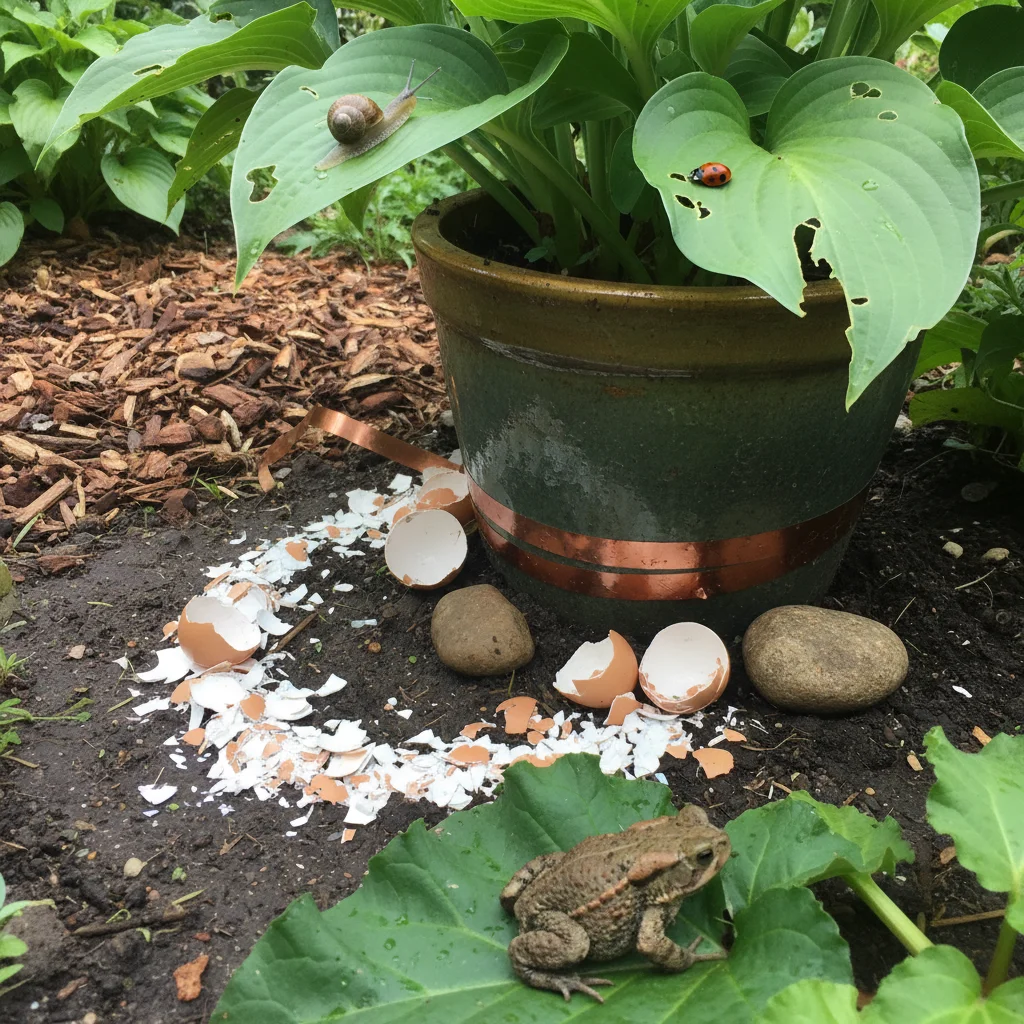
Copper tape is a classic for a reason. When a slug touches copper, it receives a tiny static-like shock that is enough to make it turn around. I find this works best when applied in a continuous ring around the rim of a pot or the legs of a plant stand. Just make sure you wipe the tape clean occasionally, as a coating of London grime or dust can bridge the gap and let the slugs slide right over.
Wool pellets are another fantastic, sustainable option for the urban gardener. These are made from waste sheep’s wool and act as a mulch. When they get wet, they swell up and create a dry, fibrous texture that slugs find incredibly difficult to crawl across. They also help retain moisture in your pots during those surprisingly hot British summer days, giving you two benefits for the price of one.
Use these eco-friendly barrier materials
If you are looking for a quick fix using things you might already have around the house, there are several textures that act as a natural deterrent. These are particularly useful for protecting young seedlings in window boxes where space is at a premium.
- Crushed eggshells: Dry them out and crush them into sharp shards to create a jagged perimeter around stems.
- Coffee grounds: Many local cafes are happy to give away used grounds, which slugs dislike and which add a little nitrogen to your soil.
- Sharp grit or gravel: A thick layer on top of your potting compost makes for a very uncomfortable journey.
- Copper mesh: This can be tucked around the base of particularly vulnerable plants like hostas or delphiniums.
- Wool twine: Wrapping textured wool around the base of a pot can provide a similar effect to wool pellets.
The power of the beer trap
If you already have a slug problem, barriers might not be enough because the culprits are likely already hiding in the soil of your pots. This is where the classic beer trap comes into its own. You don't need a deep hole in the ground for this; a shallow yoghurt pot or a ramekin tucked between your containers works perfectly well.
Fill the container about halfway with any cheap bitter or lager. Slugs are attracted to the yeast and will crawl in, get disoriented, and drown. It is a grim but effective way to clear a localized infestation. Just remember to empty it regularly and keep it slightly raised above the soil level so you don't accidentally catch helpful ground beetles who might be out on patrol.
For those who prefer not to use alcohol, a similar trap can be made using a hollowed-out grapefruit or orange halves. Place the empty citrus skins upside down on the soil overnight. The slugs are attracted to the scent and the damp, dark shelter. In the morning, you can simply pick up the skins and relocate the residents to a local park or a compost heap far away from your balcony.
Choosing plants that slugs ignore
One of the easiest ways to reduce your gardening stress is to stop trying to grow things that slugs find irresistible. If you have a particularly damp or shaded corner of a patio where slugs seem to congregate, stop fighting them. Instead, fill that space with plants that have tough, hairy, or bitter-tasting leaves that gastropods simply won't touch.
We often think of slug-resistant plants as being boring, but that isn't the case. Many of our most fragrant and beautiful garden staples are naturally protected. Herbs like rosemary, thyme, and lavender are rarely touched because of their strong essential oils. These are perfect for sunny balconies and provide a wonderful scent every time you brush past them.
Ferns and ornamental grasses are also excellent choices for the urban gardener. They add movement and texture to a small space and are almost entirely ignored by slugs. By mixing these "tough" plants in with your more vulnerable crops, you can create a more resilient display that doesn't require constant guarding.
Plants that slugs usually avoid
If you want to spend more time enjoying your garden and less time hunting for pests, try incorporating more of these varieties into your containers and window boxes.
- Astrantia: These have beautiful, pin-cushion flowers and foliage that slugs find unpalatable.
- Aquilegia: Also known as Granny’s Bonnet, these are hardy, self-seeding, and generally pest-free.
- Heuchera: Available in incredible colours from lime green to deep purple, their leathery leaves are quite resistant.
- Sedum: These succulents store water in their leaves, making them too tough for most slugs to bother with.
- Euphorbia: The milky sap in these plants is a natural deterrent that keeps them safe from nibblers.
Change your watering habits
In a small garden or on a balcony, we often fall into the habit of watering our pots in the evening after we get home from work. While this is convenient, it is also like laying out a red carpet for slugs. Slugs are nocturnal and thrive in damp conditions. By watering at night, you are creating the perfect, slippery environment for them to move around and feed.
Try switching your routine to watering in the early morning instead. This allows the surface of the soil and the foliage to dry out during the day while the sun is up. By the time the slugs emerge at night, the environment will be much drier and more difficult for them to navigate. It is a simple change that costs nothing but can significantly reduce the amount of damage you see.
If you have saucers under your pots to prevent water from dripping onto the neighbours' balcony below, be careful. These saucers can become stagnant pools that attract slugs. Try using "pot feet" to raise your containers slightly. This improves drainage and removes the damp hiding spots that slugs love to squeeze into during the heat of the day.
Biological warfare with nematodes
If you have a larger patio or a small courtyard garden with a lot of pots, you might want to consider a more "high-tech" natural solution. Pathogenic nematodes are microscopic worms that occur naturally in the soil. You can buy them in a concentrated powder, mix them with water, and apply them using a watering can.
These tiny worms seek out slugs and infect them with a bacteria that stops them from eating. It is incredibly effective and completely safe for birds, pets, and humans. Because nematodes are living organisms, you need to apply them when the soil is warm and moist, usually between March and October in the UK.
This is a great option for the start of the growing season. One application can protect your plants for up to six weeks, giving your young seedlings the chance to grow large and tough enough to withstand a bit of nibbling later in the year. It is the ultimate "set and forget" method for the busy urban gardener.
The nightly patrol
Sometimes, the most effective tool is a simple torch and a pair of gloves. If you have a particularly precious plant that is being targeted, head out about an hour after dark. You will likely find the culprits right in the middle of their meal. This is especially useful for balcony gardeners because you can quickly check every pot in just a few minutes.
I keep a small tub of salty water handy for these patrols. It isn't the most pleasant task, but it is incredibly targeted. Unlike pellets, which might be eaten by the "wrong" creature, hand-picking ensures you are only removing the pests that are actually causing damage. If you do this for three or four nights in a row, you can often clear a small space entirely.
Remember that not every slug is a villain. The large, leopard-spotted slugs actually eat other slugs and decaying matter rather than your living plants. If you see one of those, leave it be—it is a natural ally in your quest for a pest-free balcony.
Encourage the locals to help
Even if you only have a tiny backyard or a patio, you can encourage natural predators to do the work for you. A small, shallow dish of water with some stones in it can attract frogs or even a thirsty hedgehog if you are on the ground floor. These animals can eat hundreds of slugs in a single season.
Birds are also fantastic slug hunters. By hanging a bird feeder nearby or planting some berry-bearing shrubs in large pots, you can encourage thrushes and blackbirds to visit. They will often poke around the base of your pots looking for a snack, doing your pest control for the price of a few sunflower seeds.
Creating a "wild corner" in a single large pot can also help. Fill it with some native wildflowers and a few pieces of rotting wood or bark. This provides a home for ground beetles, which are one of the most underrated slug predators in the UK. The more diversity you bring to your small space, the less work you have to do to keep it in balance.
By combining these methods—barriers, traps, and smart plant choices—you can create a beautiful urban oasis that doesn't rely on harmful chemicals. You will find that your garden feels more alive and vibrant when you work with nature rather than against it. Start by checking your pots for hiders tonight and see just how easy it is to reclaim your space.