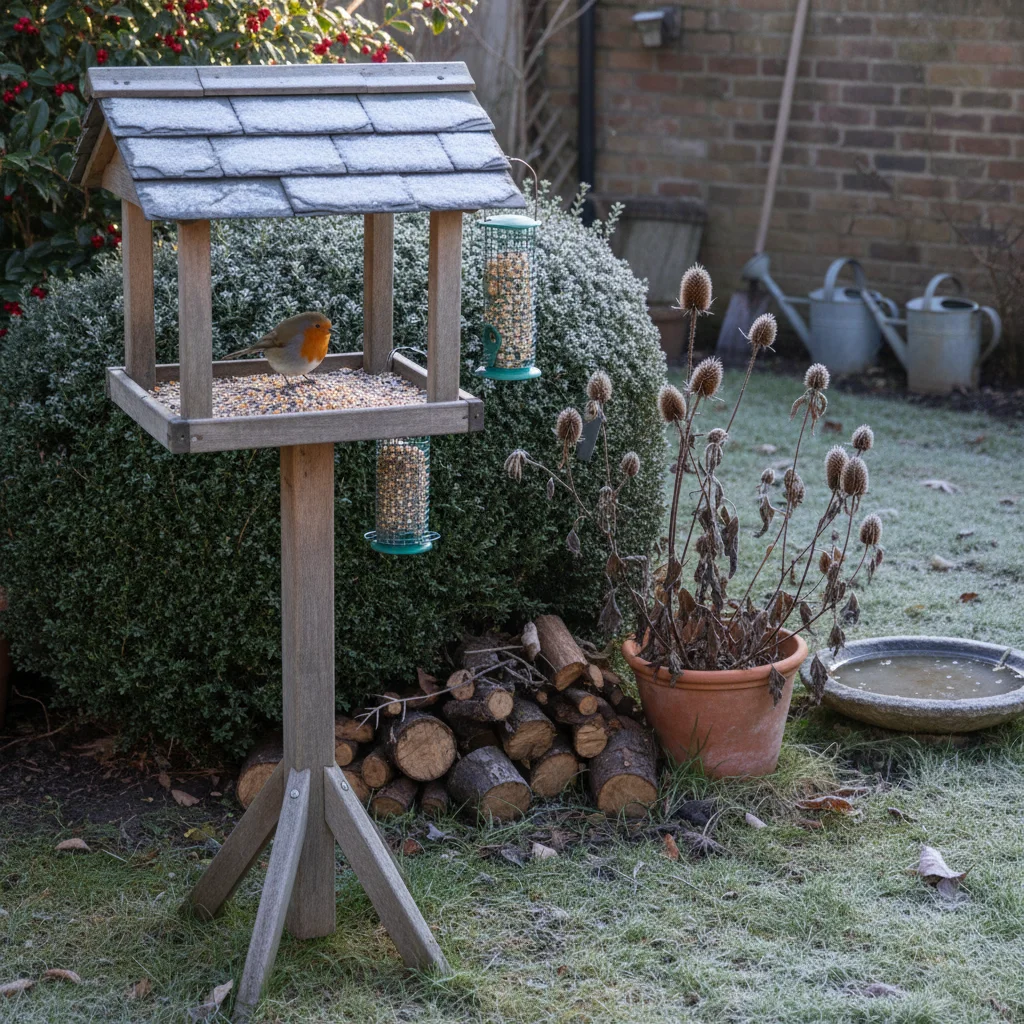
We often think of our gardens as places that "switch off" once the first frost hits. For those of us with urban balconies, tiny patios, or small courtyard plots, the temptation is to head inside and wait for spring to return. However, for the birds, insects, and small mammals that share our city spaces, winter is the most demanding time of the year.
The drop in temperature combined with shorter daylight hours means wildlife has much less time to find the calories they need to survive the night. In a concrete-heavy environment, natural food sources like berries and dormant insects can be scarce. We might not have acres of woodland, but even a few well-placed containers and a bit of care can make a life-saving difference to a local robin or a hibernating ladybird.
Helping wildlife doesn’t require a massive budget or a shed full of equipment. Most of what I do on my own balcony involves simple changes to my routine and repurposing things I already have. By making our small spaces a little more welcoming, we get the joy of watching nature up close during the quietest months of the year.
The challenges of a city winter
Urban areas often experience the "heat island" effect, where buildings and roads retain heat, making cities slightly warmer than the surrounding countryside. While this might sound like a benefit for wildlife, it can actually be a bit of a trap. It can encourage birds to stay active longer or trick insects into emerging from dormancy too early, only for them to find there is no food available.
In a small garden or on a balcony, the wind is often our biggest enemy. High-rise balconies can be incredibly exposed, and the biting wind-chill can strip the heat from a small bird in minutes. Providing shelter in these vertical spaces is just as important as providing food. We need to think about how to break the wind and create "dead air" spaces where creatures can huddle.
Food scarcity is the other major hurdle. By mid-winter, most of the natural autumn harvest of seeds and berries has been depleted. In a tidy urban environment, we often over-prune our plants, removing the very seed heads and hollow stems that wildlife relies on. Learning to embrace a bit of "winter scruffiness" is the best gift you can give to your local ecosystem.
High energy food for hungry birds
When the ground is frozen solid, birds that usually forage for worms or ground-dwelling insects find themselves locked out of their primary food source. This is when our feeders become essential. In a small space, you don't need a massive feeding station; a simple window feeder or a bracket on a fence post works perfectly.
The key for winter feeding is calorie density. Birds need to build up fat reserves to shivering through the long, cold nights. I always prioritise foods that are high in oil and protein, as these provide the most "bang for their buck" for small visitors like blue tits and goldfinches.
If you are just starting out, here are some of the best high-energy options for a small winter setup:
- Sunflower hearts which are high in oil and leave no messy husks on your balcony floor.
- Suet fat balls or blocks that provide immediate energy for birds to stay warm.
- Peanuts but only if they are in a mesh feeder to prevent choking hazards.
- Nyjer seeds which are a favourite for siskins and goldfinches if you have a specialised feeder.
- Mealworms which can be rehydrated in warm water to provide moisture and protein.
It is vital to keep your feeders clean, especially in winter when birds are more stressed and susceptible to disease. I make it a habit to give my balcony feeders a quick scrub with mild disinfectant every couple of weeks. If you see birds looking lethargic or fluffed up for long periods, it might be a sign of illness in the local population, so take the feeders down for a week to encourage them to disperse.
Keeping water accessible in a frost
We often remember to put out food, but water is frequently overlooked during the winter months. When the temperature stays below freezing for several days, all natural water sources turn to ice. Birds need water not just for drinking, but for bathing to keep their feathers in top condition for insulation.
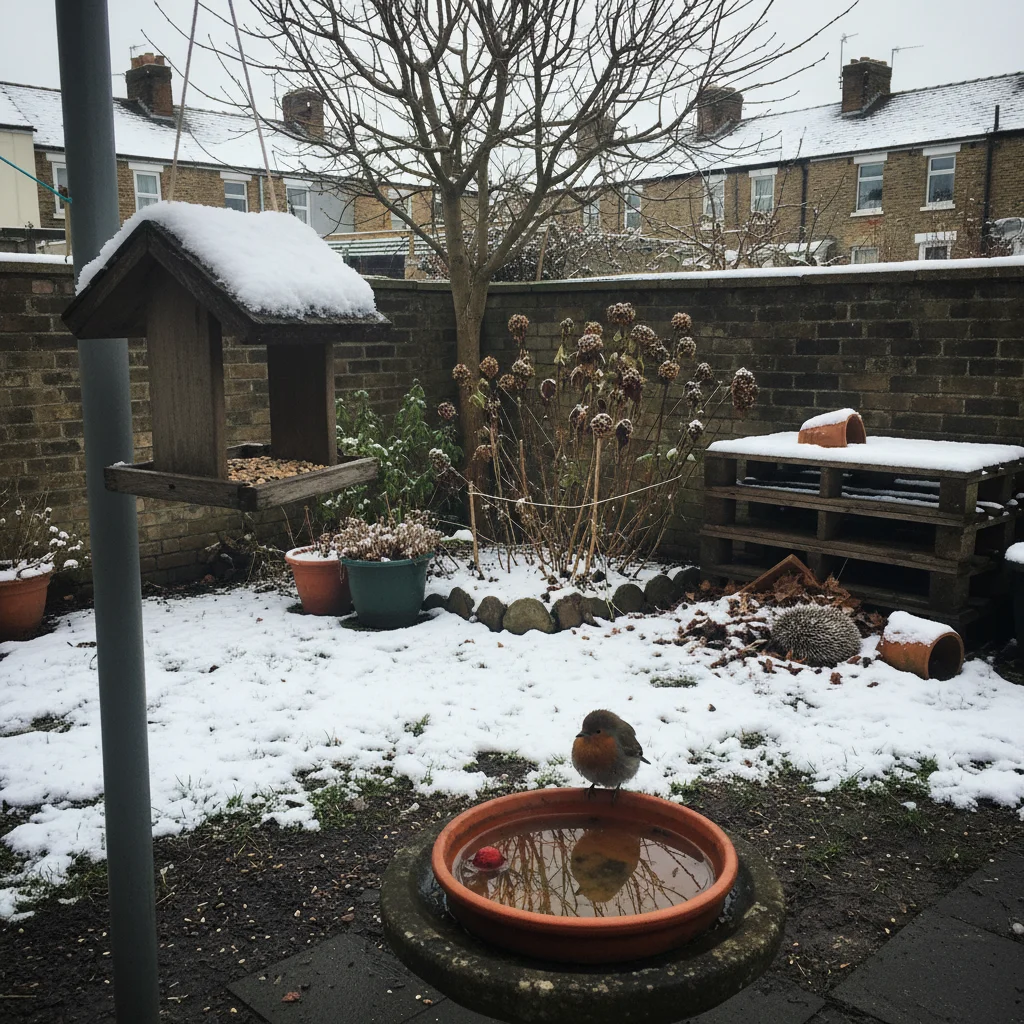
On a balcony or small patio, you don't need a stone birdbath. A heavy-bottomed ceramic plant saucer or even a shallow plastic container weighted with a stone will do the trick. The key is to keep the water shallow—no more than a couple of inches deep—so that birds feel safe using it.
If the water freezes over, avoid using salt or antifreeze to melt it, as these are toxic to wildlife. Instead, I simply pour a little bit of lukewarm water over the ice to melt a hole, or bring the dish inside for ten minutes to defrost. Placing a small floating ball, like a ping-pong ball, on the surface of the water can also help prevent it from freezing completely as it moves in the wind.
Position your water source somewhere with a bit of cover nearby. Birds are very vulnerable when they are wet, so they like to have a bush or a cluster of pots they can hop into quickly if a predator appears. If you’re gardening on a balcony, placing the water dish near your largest evergreen pot is usually a winning strategy.
Why a messy garden is a healthy garden
One of the best things you can do for wildlife in winter is actually to do nothing at all. We are often told to "put the garden to bed" by cutting back perennials and clearing away dead leaves. However, those dead stems and piles of leaf litter are exactly where many of our beneficial insects spend the winter.
Hollow stems, like those of sunflowers or fennel, are the perfect hibernating spots for solitary bees and ladybirds. If you cut them down and put them in the green waste bin, you are essentially throwing away next year's pest controllers. I leave all my seed heads standing until at least March; they look beautiful when covered in frost and provide a natural larder for birds.
If you have a small patio, try to leave a corner where leaves can pile up naturally. This damp, decaying matter is home to spiders, beetles, and woodlice, which in turn provide food for birds like wrens and robins. If the sight of dead leaves bothers you, you can always tuck them behind a few large pots where they won't be seen but will still do their job.
Even on a balcony, you can practice this "managed mess." I keep a few pots filled with dry leaves and twigs tucked under my potting bench. It doesn't take up much space, but it creates a micro-climate that is much warmer than the surrounding air. It’s a small effort that yields big results when you see the first ladybirds emerging in the spring sun.
Simple shelter for small spaces
In a large garden, animals might find shelter in a thick hedge or a hollow tree. In an urban setting, we have to get a bit more creative. Shelter is about protection from the elements and from predators. For birds, this means dense evergreen foliage where they can hide.
If you have space for a few more pots, consider adding some evergreen shrubs like Sarcococca (Sweet Box) or a compact Hebe. These provide year-round cover and, in the case of Sarcococca, a wonderful scent in the depths of winter. Even a simple trellis with some ivy growing on it can provide a vital windbreak for a small balcony.
Creating "bug hotels" is another fantastic way to provide shelter without needing a lot of room. You don't need to buy those expensive pre-made ones from the garden centre; you can make a perfectly functional one from items you likely already have around the home or garden.
- Hollow bamboo canes bundled together and placed in a dry spot.
- Old terracotta pots turned on their side and filled with dry straw or wood wool.
- Bundles of dry twigs tied with twine and tucked into a corner.
- A small stack of old bricks with gaps left between them for crawling insects.
- Pinecones stuffed into the gaps between larger pots to create hiding holes.
The best place for these shelters is somewhere out of the direct wind and rain. If you have a balcony, tucking them against the wall of the house is often the warmest spot. Just make sure they are secure so they don't blow away during a winter storm.
Supporting our local pollinators
It is a common misconception that all bees die off in the winter. While most of the colony might perish, queen bumblebees are currently hibernating, often just a few inches underground or under a pile of leaves. If you have any large pots of soil that are currently "empty," try not to disturb them too much during the winter, as there could be a queen sleeping inside.
On very mild winter days, you might even see a buff-tailed bumblebee emerging to look for food. These "winter-active" bees are becoming more common in UK cities due to our milder winters. Because there are so few flowers around, these bees are often in desperate need of a high-energy snack to get them back to their nest.
If you want to help these winter survivors, the best thing you can do is have a few winter-flowering plants in your containers. Hellebores, winter heathers, and even some varieties of Clematis like Clematis cirrhosa can provide vital nectar when everything else is dormant. These plants are tough, take up very little space, and look stunning against a backdrop of grey winter skies.
I also keep a small "emergency kit" for tired bees. If I find one struggling on the balcony floor, a tiny drop of sugar water (two parts white sugar to one part water) on a spoon can give them the energy boost they need to fly home. Just remember never to use honey, as it can carry diseases that are harmful to our native bees.
Choosing the right plants for winter food
If you are planning your garden or balcony for next year, think about how your plant choices can provide a natural buffet for wildlife during the colder months. While feeders are great, natural food sources are often more nutritious and help animals maintain their natural foraging behaviours.
Berries are the ultimate winter superfood. For a small space, you can get compact varieties of Pyracantha or Cotoneaster that grow perfectly well in a large pot. These produce masses of red or orange berries that are a magnet for blackbirds and thrushes. Just be aware that these plants can be prickly, so wear gloves when you’re moving them around your patio.
Don't forget about the power of ivy. While many people see it as a weed, it is one of the most important plants for UK wildlife. Its flowers appear late in the autumn, providing nectar for the last of the season's insects, and its berries ripen in mid-winter when almost everything else is gone. A small ivy plant in a hanging basket or climbing up a balcony railing is a powerhouse of biodiversity.
Finally, consider leaving some of your herbs to flower and go to seed. We often pinch out the flowers of basil or mint to keep the leaves coming, but in late summer, letting your oregano or marjoram flower will attract pollinators. If you leave those seed heads over winter, you might find small birds like goldfinches hovering around your pots to pick out the tiny seeds.
Seeing a robin perched on the edge of a pot or watching a blue tit navigate a feeder is one of the most rewarding parts of urban gardening. It reminds us that even in the middle of a busy city, we are part of a much larger living world. By taking these small, practical steps, we ensure that our gardens remain a sanctuary for everyone, no matter how small the plot or how cold the weather. If you want to keep your garden productive as well as wildlife-friendly, why not look into which herbs you can start growing on your windowsill right now?---