There is a specific kind of quiet that settles over a UK garden when the first real frost arrives. You wake up, look out the window, and see that silver dusting over the lawn and the edges of your terracotta pots. While it looks beautiful, that first dip in temperature can be a bit of a worry if you have a collection of container plants.
I’ve spent years gardening in various spots, from a tiny balcony in London to a chilly, wind-swept plot in Yorkshire. If there is one thing I’ve learned, it’s that container plants are much more vulnerable than those in the ground. Their roots are exposed to the elements, with only a thin layer of ceramic or plastic between them and the freezing air.
The good news is that you don't need a massive, heated greenhouse or professional equipment to keep your plants happy. With a few simple bits of kit and a little bit of planning, you can make sure your favourite herbs, shrubs, and flowers make it through to spring. It’s easier than you think, and your plants will definitely thank you for the extra bit of care.
Why container plants need extra help
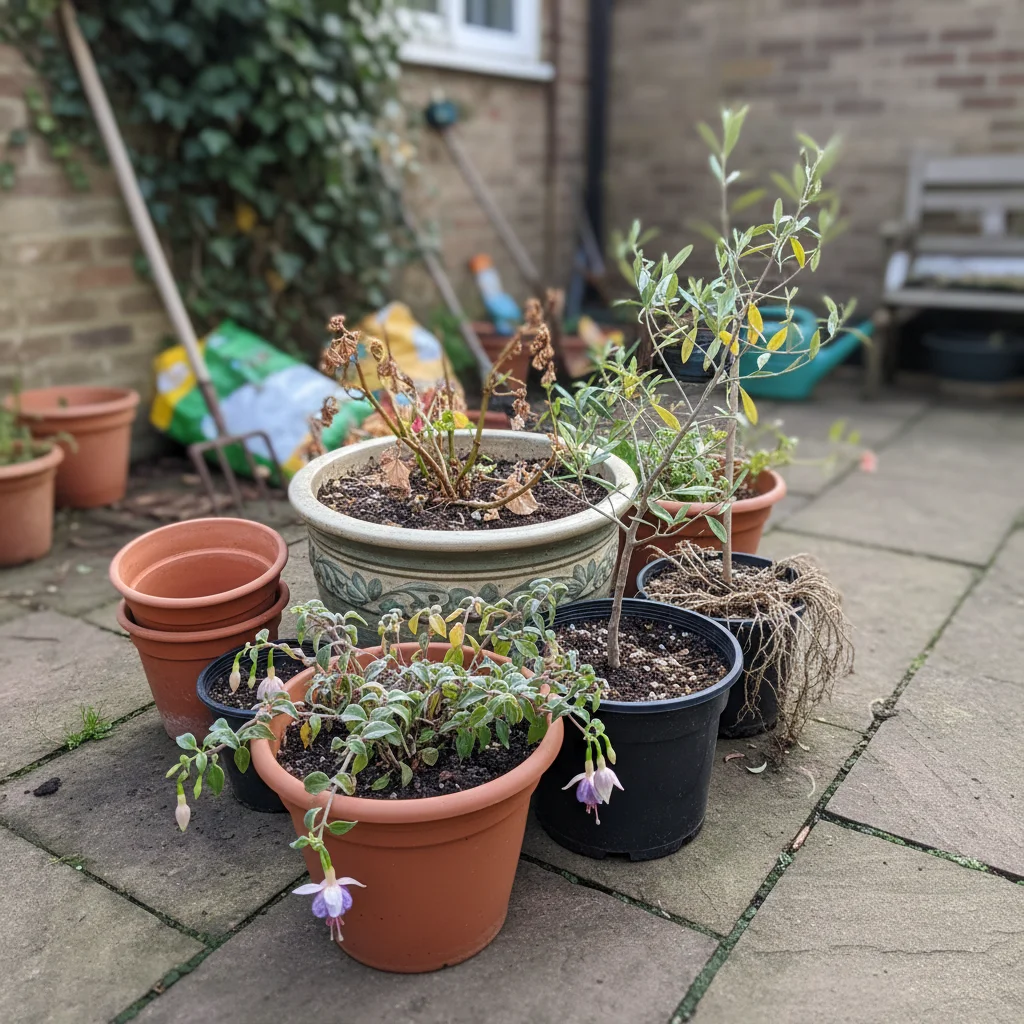
When a plant is in the ground, the soil acts like a giant duvet. Even when the surface freezes, the deep earth stays relatively insulated. In a pot, however, the frost can attack from all sides. The entire root ball can freeze solid, which often leads to the plant being unable to take up water, or worse, the roots physically breaking as the water inside them expands.
We also have to deal with the unique British winter "wet." In many parts of the UK, our winters are more soggy than they are snowy. For many plants, especially Mediterranean ones like rosemary or lavender, "cold feet" (sitting in waterlogged soil) is a much bigger killer than the actual temperature. If the water in a pot can’t drain away, it freezes into a block of ice that suffocates the roots.
You’ll also want to consider the material of your pots. Traditional terracotta is beautiful, but it is porous. It absorbs water, and when that water freezes, it expands and can cause the pot to flake or even shatter. This is why we often talk about "frost-proof" pots, though even those benefit from a little bit of protection when the "Beast from the East" style weather hits.
Knowing what can stay outside
Before you start lugging heavy pots around, it helps to know which plants are tough enough to take the cold. In the gardening world, we use the term "hardy" to describe plants that can survive a UK winter without help. Most of our native shrubs and many perennials fall into this category, but even they can struggle if they are in a small pot rather than the ground.
"Half-hardy" plants are the ones that need a bit of a watchful eye. These might survive a mild winter in Cornwall or on a sheltered city balcony, but they’ll struggle in a cold snap further north. Then we have "tender" plants, like citrus trees or certain types of fuchsias, which simply won't survive a frost and must be moved indoors or into a frost-free space.
You can usually find a plant’s hardiness rating on the label when you buy it, often referred to as RHS hardiness ratings (H1 to H7). If you’ve lost the label, don’t worry. A quick search online for the plant name plus "hardiness" will usually tell you what you need to know. Generally, if it’s a woody shrub like a box hedge or a holly, it’s going to be much tougher than something soft and leafy.
The simple way to protect your pots
The most effective thing you can do for your container garden is to get your pots off the ground. When a pot sits directly on a cold, wet patio, the drainage hole often gets blocked. By using "pot feet" or even just a few old bricks to lift the pot up by an inch or two, you allow gravity to pull the excess water away. This prevents the "ice block" effect I mentioned earlier.
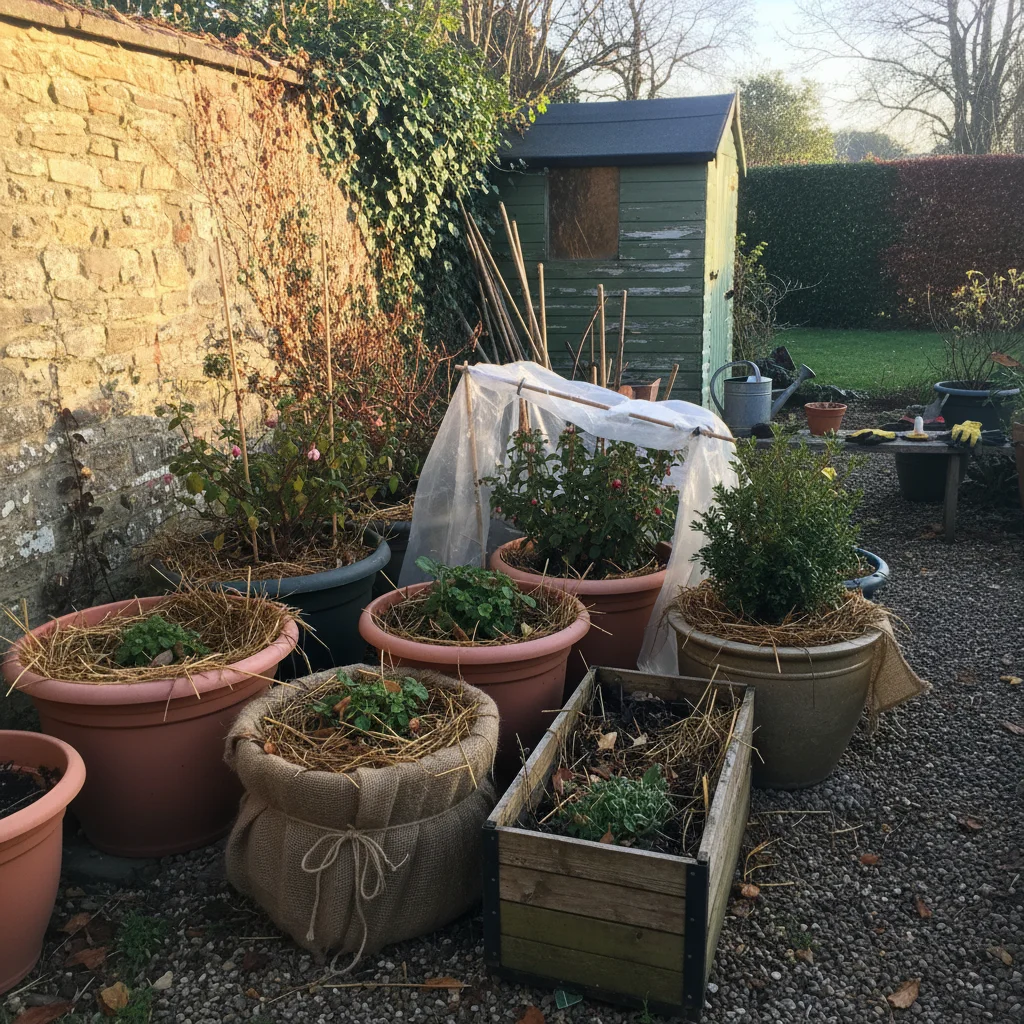
Once your pots are lifted, think about where they are sitting. If you have pots scattered all over the patio, try huddling them together. Move them against a south-facing wall if you can. The house radiates a small amount of heat, and by grouping the pots, they create a little microclimate where they protect each other from the wind.
If you have particularly delicate pots or plants, you can wrap them in a layer of bubble wrap or hessian. Just remember that bubble wrap is for the pot, not the plant itself. If you wrap the foliage in plastic, the plant won't be able to breathe and will likely rot. For the leafy parts, use horticultural fleece, which is a light, fabric-like material that lets light and air through but keeps the frost off.
Essential kit for the winter months
You don't need to spend a fortune, but having a few supplies on hand before the first big freeze makes life much easier. I usually keep a small "winter kit" in my shed so I’m not scrambling when the weather forecast turns sour. Here are the items that make the biggest difference for a UK container gardener:
- Pot feet or bricks to keep everything well-drained and off the freezing ground.
- Horticultural fleece for wrapping the tops of tender shrubs and palms.
- Hessian or bubble wrap for insulating the outside of ceramic and terracotta pots.
- Twine or clothes pegs to secure the fleece so it doesn't blow away in a gale.
- Mulch or bark chippings to add a protective "blanket" over the top of the soil.
- A watering can with a fine rose because plants still need a drink on dry, sunny winter days.
Having these bits ready means you can react quickly. I’ve often found myself out in the garden at 9 PM with a torch, trying to wrap a favourite olive tree because I forgot the frost was coming. It’s much more relaxing to have it done by tea time.
Moving plants to a safer spot
If you have a porch, a conservatory, or even just a very bright windowsill, this is the time to use it. Tender plants like geraniums (pelargoniums), citrus, and succulents should really come inside before the temperatures hit zero. You don't want them in a room with the heating cranked up to 21 degrees, though. A cool, bright room is much better as it keeps them in a dormant state.
For those of us with limited space, a small cold frame or even a cheap plastic tiered greenhouse can be a lifesaver. You can tuck these into a corner of a balcony or patio. They aren't totally frost-proof, but they keep the wind and the worst of the rain off. Just remember to open the door or lid on sunny days, as these little plastic houses can heat up surprisingly fast, which might confuse your plants into thinking it's spring.
If you’re moving heavy pots, please be careful with your back. I’ve learned the hard way that a pot full of wet compost is much heavier than it looks. Use a sack truck if you have one, or simply "walk" the pot on its bottom edge. If a pot is just too heavy to move, that’s when the wrapping and huddling techniques become your best friend.
Watering and feeding during the cold
One of the biggest mistakes we make is thinking that because it’s winter, we can forget about watering. While plants aren't growing much, they still need moisture to stay alive. This is especially true for evergreens like bay trees or camellias, which are still losing water through their leaves all winter long.
Check your pots every week or two. Stick your finger an inch into the soil; if it feels dry, give it a light drink. Try to do this in the morning so the water has time to soak in before the temperatures drop at night. You definitely don't want to water if the soil is already frozen, as the water will just sit on top and turn to ice.
As for feeding, you can put the fertiliser away until March. Most plants go into a period of dormancy in the winter, meaning they stop growing to save energy. If you feed them now, you might encourage a burst of soft, new growth that will be instantly killed by the next frost. Let them sleep for now; they’ll be ready for a boost when the daffodils start poking through.
Dealing with specific plant types
Different plants have different "breaking points" when it comes to the cold. Herbs like rosemary and thyme are quite hardy, but they hate being wet. If you can move them under the eaves of your house where they’ll stay a bit drier, they’ll usually be fine. Mint will die back to the ground entirely, but don't panic—the roots are tough, and it will pop back up in the spring.
Roses in pots are generally very hardy, but their roots can be sensitive. A thick layer of mulch (like compost or bark) on top of the soil can help protect them. For things like Japanese Maples (Acer), the main danger is the wind drying out the delicate branches. Tucking them into a sheltered corner is usually enough to keep them happy.
If you grow spring bulbs in pots, like tulips or crocuses, they actually need a period of cold to trigger their flowering. You don't need to bring these inside, but do make sure the pots aren't sitting in a puddle. There is nothing sadder than a pot of rotten tulip bulbs in March because they spent the winter submerged in water.
Keeping an eye out for pests
You might think that the cold would kill off the garden pests, but some are surprisingly resilient. Slugs and snails love the damp, dark spaces under pot feet or between grouped containers. I’ve often moved a pot in January only to find a whole family of snails tucked away for the winter, just waiting for my spring seedlings to appear.
Vine weevil larvae are another one to watch out for in container gardening. They live in the compost and munch on the roots of your plants all winter long. If you notice a plant looking strangely wilted despite the soil being wet, or if it feels loose in the pot, you might have a vine weevil problem. Checking your plants occasionally during the winter helps you catch these issues before they become a disaster.
It’s also worth checking for any signs of mould or "grey mould" (botrytis). This usually happens if there isn't enough airflow, especially if you’ve wrapped your plants too tightly in fleece. If you see fuzzy grey patches on leaves or stems, snip them off immediately and try to give the plant a bit more "breathing room" by thinning out the surrounding pots.
Preparing for the spring thaw
When the days start getting longer and the first signs of spring appear, it’s tempting to uncover everything immediately. However, the UK is famous for its late frosts in April and even May. I’ve seen many gardeners (myself included!) lose a plant they’ve carefully nurtured all winter because they got over-excited during a warm week in March.
Start by "hardening off" your plants. This means gradually reintroducing them to the elements. If you’ve had a plant in the porch, move it outside during the day and bring it back in at night for a week or two. If you’ve had things wrapped in fleece, start by opening the fleece during the day and only covering them if a frost is forecast at night.
Once the risk of frost has truly passed, you can give your pots a bit of a spring clean. Scrub the outside of the pots to remove any green algae, top up the compost with a fresh layer, and start your feeding routine again. It’s a wonderful feeling to see those plants you’ve protected start to put out their first bright green shoots.
Taking these small steps now will save you a lot of money and heartbreak come springtime. Gardening is all about working with the seasons, and while winter can be a challenge, it’s also a time of rest for both you and your plants. By giving them a little bit of a "winter coat" and making sure they stay dry, you're setting yourself up for a beautiful, thriving container garden next year. Why not head out this weekend and start lifting those pots onto feet before the real cold sets in?