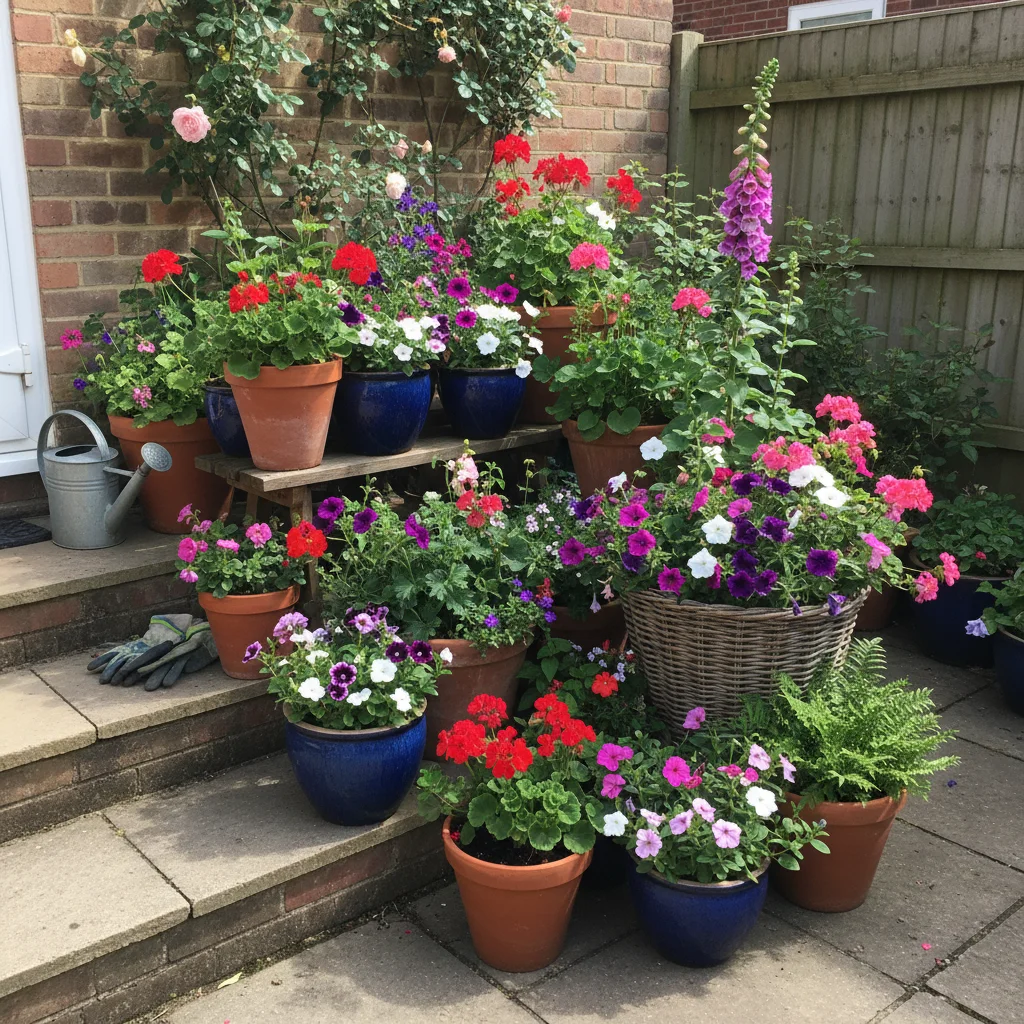
We’ve all walked past a house and felt a little pinch of envy at a perfectly blooming doorstep or a patio bursting with colour. It’s easy to assume those gardeners have hours of free time or a professional eye for design, but I promise you that isn't the case. Creating a show stopping display is something anyone can do, whether you have a sprawling stone terrace or a tiny balcony in the middle of a city.
In my years of growing in a small Yorkshire plot, I’ve learned that the secret to a great patio isn't about how much you spend or how many plants you can cram into a space. It’s about a few simple principles that make your pots look intentional and healthy. If you’ve ever felt overwhelmed by the rows of plants at the garden centre, don't worry. It’s much easier than you think to pick the right ones and put them together in a way that looks like a professional did it.
Container gardening is one of the most inclusive ways to grow. You don’t need to dig over heavy soil or worry about the quality of the earth in your garden because you are creating the perfect environment from scratch inside a pot. This means you have total control over the drainage, the nutrients, and where the plant sits in the sun. Let’s look at how you can turn a few empty pots into the highlight of your home.
Finding the Right Pots for Your Patio
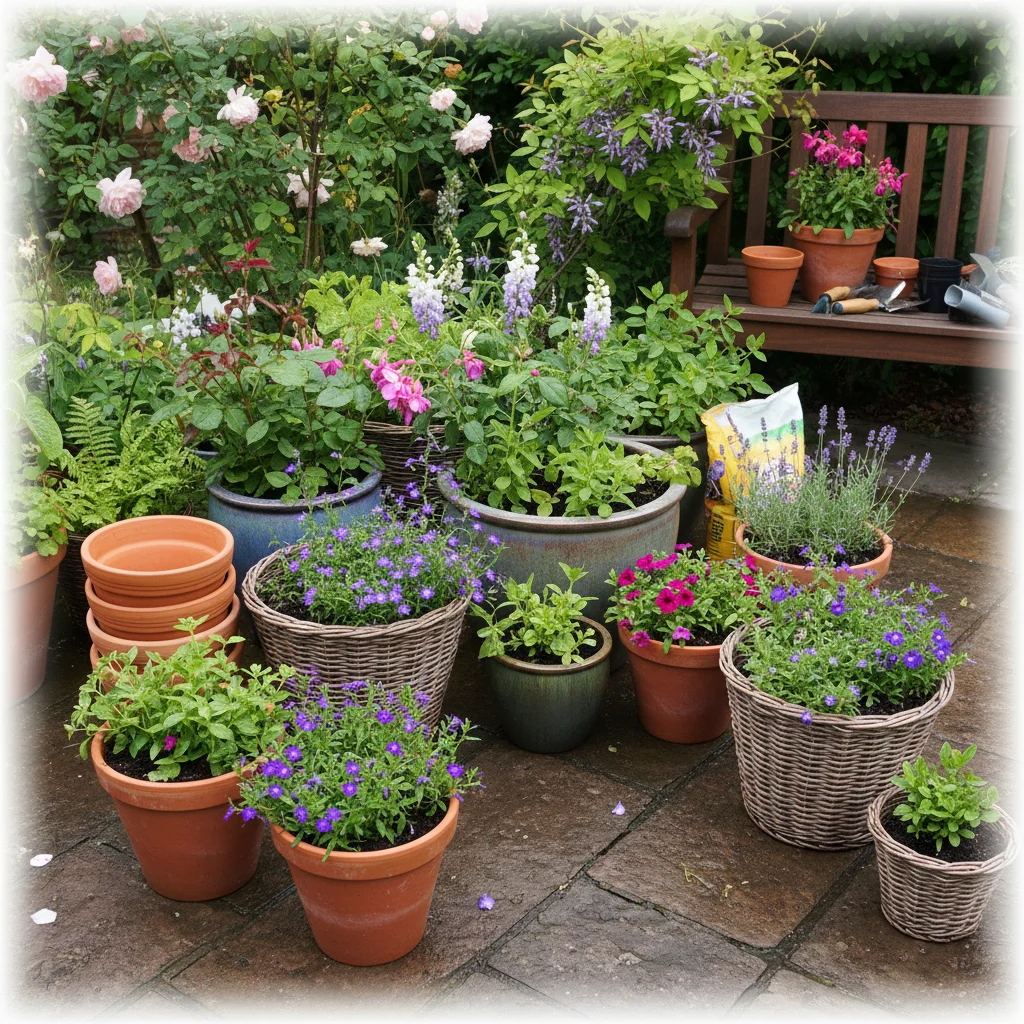
Before we even think about the plants, we need to talk about the containers themselves. It is very tempting to pick the prettiest pot first, but I always suggest thinking about the size and the material before the pattern. In a typical UK summer, our weather can be quite unpredictable. We might have a week of pouring rain followed by a sudden heatwave, and your pots need to be able to handle both.
I always encourage beginners to start with larger pots than they think they need. Small pots look lovely, but they dry out incredibly quickly. If you have a busy schedule, a tiny pot will be wilting by the time you get home from work on a sunny July afternoon. Larger containers hold more compost, which means they hold more water and nutrients, giving you a bit of a safety net if you forget to water for a day.
Material matters too. Terracotta is a classic choice and looks beautiful as it ages, but it is porous, meaning water evaporates through the sides. If you’re using terracotta, you might need to water more often. Plastic or resin pots are much better at retaining moisture and are lighter to move around. If you’re gardening on a balcony or a rented patio, being able to shift your pots easily is a huge bonus.
Whatever you choose, the most important thing is drainage. Most plants hate having "wet feet," which happens when water sits at the bottom of the pot with nowhere to go. Make sure your container has plenty of holes in the bottom. If it doesn't, you’ll need to drill some. I like to sit my pots on "pot feet" or even just a few flat stones to keep them off the ground, which helps the water run away freely and prevents the base from becoming a home for slugs.
The Secret to Professional Looking Designs
The biggest hurdle for most people is knowing which plants look good together. You might see a beautiful flower at the nursery, bring it home, and then realise it looks a bit lonely in a big pot. To avoid this, I use a very simple design formula that I’ve relied on for years. It’s a classic method used by designers all over the world, and it never fails to create a balanced, lush look.
When you are choosing your plants, try to pick one from each of these three categories:
- The Thriller: This is your centrepiece. It should be taller than the rest and have a bit of "wow" factor, like a structural Salvia, a bold Canna lily, or even a small ornamental grass.
- The Filler: These are mounding plants that fill the space around the base of your Thriller. They add bulk and colour. Think of things like Geraniums (Pelargoniums), Begonias, or even some leafy herbs like curly parsley.
- The Spiller: These are the finishing touch. They are trailing plants that grow over the edge of the pot and soften the hard lines of the container. Bacopa, Lobelia, or trailing Petunias are perfect for this.
By using this "Thriller, Filler, Spiller" approach, you ensure that your arrangement has height, depth, and movement. It fills the entire space of the pot so you don't see any bare compost. You can stick to a single colour palette, like all whites and silvers for a sophisticated look, or go for a riot of hot pinks and oranges to brighten up a grey British afternoon.
Choosing Plants That Thrive in Our Climate
When you’re standing in the garden centre, it’s easy to get distracted by the most exotic-looking blooms. However, if you want a display that lasts from May until the first frosts come in October or November, you need plants that can handle the UK climate. We want "hardy" or "half-hardy" plants that won't give up at the first sign of a chilly breeze.
For a sunny patio, you can't go wrong with Geraniums. They are incredibly tough and don't mind if the soil gets a bit dry. I also love using 'Surfinia' Petunias because they have been bred to be weather-resistant, meaning they won't turn into a mushy mess the moment it rains. If your patio is a bit more shaded, don't worry. Fuchsias and Begonias actually prefer a bit of protection from the midday sun and will flower their hearts out in a cooler spot.
Don't forget to include some foliage. Flowers are lovely, but leaves provide the backdrop that makes the colours pop. I often use 'Silver Falls' Dichondra as a spiller because its tiny heart-shaped silver leaves look like a waterfall coming off the side of a pot. It’s also worth considering some herbs. Purple basil or variegated sage look stunning and you can snip a bit off for your dinner while you’re out enjoying the sun.
If you’re looking for specific varieties that I’ve found work well in almost any UK garden, here are a few of my favourites:
- Salvia 'Hot Lips': A brilliant Thriller with red and white flowers that bees absolutely love.
- Osteospermum: Also known as the Cape Daisy, these are very sturdy and come in amazing sunset colours.
- Calibrachoa: These look like mini petunias but stay much neater and don't require as much deadheading (removing old flowers).
- Heuchera: Fantastic Fillers that come in every leaf colour from lime green to deep plum, and they stay looking good all winter.
- Heliotrope: Often called the "Cherry Pie" plant because it smells just like vanilla and cherries.
Getting the Foundations Right with Compost
One of the most common mistakes I see is people using soil from their garden to fill their pots. While your garden soil might be great for your borders, it’s usually too heavy for containers. It can become compacted, which stops air from getting to the roots, or it can drain too slowly. For a show stopping display, you really need to use a good quality potting compost.
I always recommend using a peat-free multi-purpose compost. In the past, peat-free options weren't always the best, but the quality has improved massively in recent years. Look for one that has added John Innes (which is a traditional mix of loam, peat, and grit). The loam in John Innes adds a bit of weight to the pot, which stops it from blowing over in a high wind, and it helps hold onto nutrients much better than pure compost.
When you’re filling your pot, you don't need to add a layer of stones or "crocks" at the bottom unless the drainage holes are very large. Recent research has shown that this can actually create a "perched water table" where water sits just above the stones and rots the roots. Instead, just place a small piece of fine mesh or a single broken bit of pottery over the hole to stop the compost from washing out, then fill the whole thing with your potting mix.
It is also a great idea to mix in some slow-release fertiliser granules as you fill the pot. Containers have a limited amount of food, and most plants will use up what’s in the compost within about six weeks. By adding these granules, you’re providing a steady "drip-feed" of nutrients for the whole season, which means bigger flowers and healthier leaves without you having to remember to feed them every week.
A Step by Step Guide to Planting
Once you have your pot, your compost, and your plants, it’s time for the fun part. I like to do my planting on a day that isn't too hot, as the sun can stress out young plants while they are being moved. Start by giving all your plants a good drink in their plastic nursery pots. This makes them easier to remove and ensures the root ball is hydrated before it goes into the new compost.
Fill your large container about two-thirds full with compost. Before you take anything out of its pot, arrange them on top of the compost to see how they look. This is your chance to play around with the design. Put your Thriller in the middle (or at the back if the pot will be against a wall), tuck your Fillers around it, and place your Spillers near the edges.
Once you’re happy with the layout, take the plants out of their nursery pots one by one. If the roots are circling tightly around the bottom, gently tease them out with your fingers to encourage them to grow into the new soil. Place them in the container and fill in the gaps with more compost. You want to leave about an inch of space between the top of the compost and the rim of the pot. This is "watering space"—if you fill it to the very top, the water will just run off the edges instead of soaking in.
Firm the compost down gently with your hands to remove any large air pockets, but don't press so hard that you squash the roots. Give the whole thing a very generous watering. You want to see water coming out of the drainage holes at the bottom. This settles the compost around the roots and gives the plants the best possible start in their new home.
How to Keep Your Display Blooming for Months
The difference between a pot that looks good for a fortnight and one that looks amazing all summer is a little bit of regular maintenance. It doesn't take much time—maybe ten minutes a week—but it makes a world of difference. The most important task is deadheading. This is just the process of snipping off flowers as they start to fade.
When a plant finishes flowering, its goal is to produce seeds. If you let it do that, the plant thinks its job is done and it will stop producing new blooms. By "deadheading" (nipping off the old flower heads), you trick the plant into thinking it needs to try again, so it sends up more buds. I usually do this while I’m having my morning cuppa; it’s a very relaxing way to start the day.
Watering is the other big factor. In a typical UK summer, you should check your pots every day. Stick your finger an inch into the compost; if it feels dry, it needs a drink. On very hot days, you might even need to water in the morning and the evening. Try to water the compost directly rather than pouring water over the leaves and flowers, as this can encourage mould or scorch the petals in the sun.
Even if you added slow-release fertiliser at the start, your plants will appreciate a liquid feed every two weeks from mid-summer onwards. A high-potash feed, like a standard tomato fertiliser, is perfect for this. It encourages the plant to focus on flower production rather than just growing more green leaves. You’ll really see the difference in the vibrancy of the colours and the sheer number of blooms.
Adding Edibles to Your Patio Containers
One thing I love to do is mix a bit of "grow your own" into my decorative displays. You don't need a vegetable patch to enjoy fresh produce. Many vegetables and fruits are actually very beautiful and fit perfectly into the Thriller, Filler, Spiller system. It’s a great way to make your patio work harder for you, especially if space is tight.
A 'Tumbler' tomato is a fantastic Spiller. It produces cascades of sweet cherry tomatoes that look like little red jewels hanging over the side of a pot. For a Thriller, you could use a chilli plant with its bright upright fruits, or even a 'Rainbow Chard' which has stunning neon-coloured stems. These plants look just as good as any ornamental flower but have the added bonus of being delicious.
Strawberries are another brilliant choice for containers. They have pretty white flowers followed by red fruit, and they love the drainage that a pot provides. If you have children or grandchildren, they will love being able to pick a snack straight from the patio. Just remember that edible plants are often hungrier than flowers, so make sure you stay on top of the feeding and watering.
Mixing herbs into your pots is also a very practical move. Not only do they smell wonderful when you brush past them, but they can also help deter some pests. Chives have lovely purple pom-pom flowers that look great with silver-leaved plants, and rosemary can provide a bit of evergreen structure that lasts all year. It’s all about making your garden space feel personal and useful to you.
Thinking Ahead for the Winter Months
While we usually think of patio displays as a summer treat, there’s no reason your pots should sit empty and sad during the winter. In the UK, our winters can be a bit grey, and having a splash of colour right outside your window can be a real mood-booster. When the first frosts come and your summer bedding starts to fade, it’s time for a quick seasonal refresh.
You can use the same principles we’ve discussed but with hardier plants. For a winter Thriller, a small evergreen shrub like a Sarcococca (Sweet Box) is lovely because it has tiny flowers that smell incredible in January. For Fillers, winter-flowering pansies and cyclamen are tough as nails and will keep going through the snow. For Spillers, variegated ivy is a classic choice that looks bright even on the darkest days.
Another trick I love is "bulb lasagne." This involves planting layers of spring bulbs at different depths in your pots during the autumn. You put the latest-flowering bulbs, like tulips, at the bottom, then a layer of compost, then mid-season bulbs like daffodils, more compost, and finally early bloomers like crocuses or snowdrops at the top. You can then plant your winter pansies over the top of the whole thing.
As the weather warms up in the spring, the bulbs will push through the pansies and give you a succession of colour from February all the way through to May. It’s a bit of work in October, but it feels like a magic trick when the flowers start appearing exactly when you need them most. Gardening is often about that little bit of forward planning that pays off months down the line.
The most important thing to remember is that your patio is your space. Don't feel pressured to follow every "rule" perfectly. If you love a particular plant, find a way to include it. If a colour combination makes you happy, go for it. Gardening should be a joy, not a chore, and containers are the perfect place to experiment and find your own style.
Start with one or two pots this season and see how you get on. You’ll likely find that once you see those first few blooms opening up on your own patio, you’ll be hooked. It’s a wonderful way to connect with nature, even if you’re right in the heart of a town or city. Grab a bag of compost, pick out a few plants that catch your eye, and give it a go—your show stopping display is just a afternoon's work away.