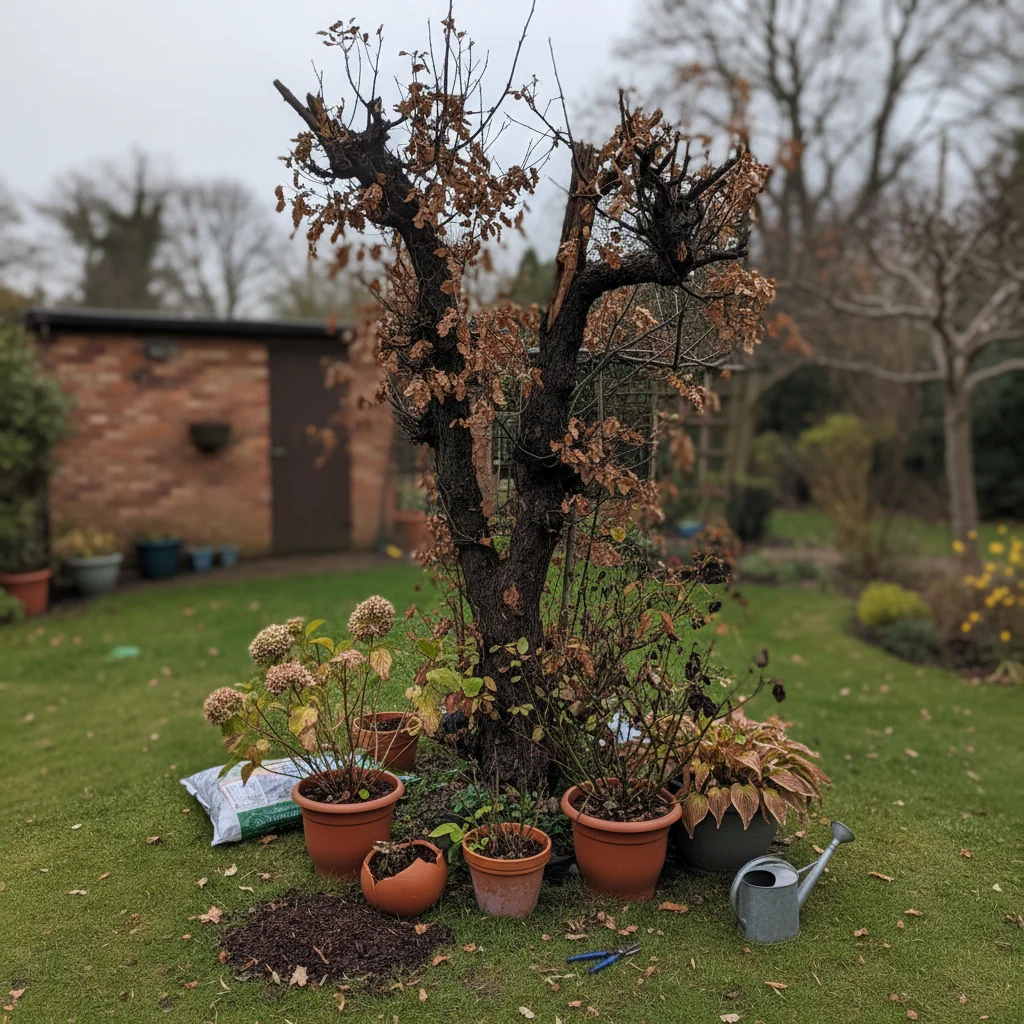
Tree dieback is dead tips and thinning crowns. It can be drought, root damage, or a disease that needs a tree surgeon — not always something a bottle of feed will reverse.
Watching a tree you have nurtured for years begin to lose its leaves or show dead branches can be distressing. It often starts subtly, perhaps with a single limb losing its foliage or the very tips of the canopy turning brittle and brown. In the gardening world, we call this dieback, and it is less a disease in itself and more a distress signal from the tree.
Dieback tells us that something is preventing the tree from transporting water and nutrients to its furthest reaches. As a gardener, your role is to act as a detective, looking below the surface and into the environment to find the root cause. If we catch the problem early enough, many trees can be successfully nursed back to health and live for many more decades.
Understanding the Signs of Dieback
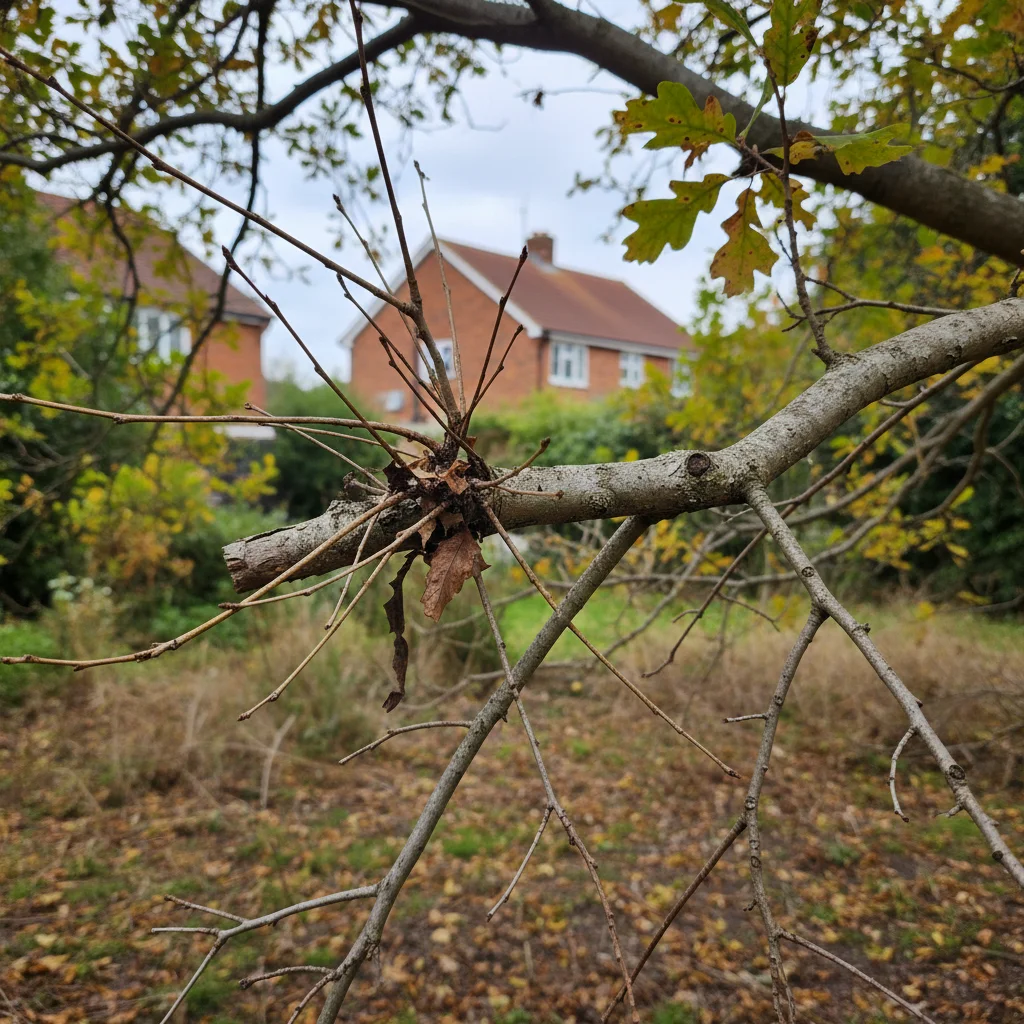
The most obvious sign of dieback is the death of twigs and branches, usually starting at the tips and moving inwards toward the trunk. You might notice that the leaves are smaller than usual, yellowing prematurely, or simply failing to appear in the spring. This progressive thinning of the canopy is a clear indication that the tree is struggling to maintain its vascular system.
When you look closer, you may see that the bark on these dead sections is peeling or has changed colour. Healthy bark should feel firm, but dieback often leaves wood feeling brittle and hollow. It is important to distinguish between natural "self-pruning," where a tree sheds a small, shaded lower branch, and true dieback which affects the leading shoots at the top.
We should also look for signs of "epicormic growth," which are small, leafy shoots sprouting directly from the main trunk or thick base branches. This is often the tree’s emergency response to stress, as it tries to produce more foliage closer to the roots when it can no longer support its higher branches. While it looks like new life, it is actually a sign that the tree is in survival mode.
The Impact of Environmental Stress
In our changing UK climate, environmental factors are the most common culprits behind dieback. We have moved into an era of weather extremes, where a waterlogged winter is often followed by a scorching, dry spring. These rapid shifts put immense pressure on a tree's root system, which is the engine room for its entire structure.
Drought is a primary driver, particularly for younger trees or those with shallow root systems like Birch or Beech. When the soil dries out beyond the top few centimetres, the fine "feeder roots" responsible for water uptake begin to die. Without these roots, the tree cannot pump moisture to the top of the canopy, leading to the characteristic browning of the tips.
Conversely, waterlogging can be just as deadly. If your garden soil is heavy clay and sits in standing water during the winter, the roots can literally drown due to a lack of oxygen. This leads to root rot, where the foundations of the tree decay, eventually causing the upper branches to die back because they are no longer being fed.
Wind desiccation is another factor we often overlook, especially in exposed gardens or coastal areas. Constant, cold winds pull moisture out of the leaves faster than the roots can replace it. This is frequently seen in evergreen trees like Leylandii or Yew, where one side of the tree may turn brown and die back while the sheltered side remains green.
Common Biological Threats in UK Gardens
While the environment sets the stage, pests and diseases often provide the final blow. One of the most significant threats we face in the UK is Honey Fungus, or Armillaria. This fungal pathogen spreads through the soil via black, bootlace-like strands and attacks the root system of a wide variety of trees and shrubs.
You can often identify Honey Fungus by a creamy white layer of fungal growth beneath the bark at the base of the trunk. It has a distinct mushroomy smell and, unfortunately, once it takes hold, it can be very difficult to treat. In these cases, the dieback is a symptom of the tree's internal plumbing being physically blocked by the fungus.
We must also be aware of specific diseases like Ash Dieback, which has significantly impacted our landscape. This is caused by a fungus that blocks the water-conducting vessels of Ash trees. Similarly, Verticillium wilt is a soil-borne fungus that affects many garden favourites, including Maples and Smokebush, causing sudden wilting and dieback on one side of the plant.
Pests such as the Horse Chestnut Leaf Miner or various species of aphids can also weaken a tree over time. While a single infestation rarely kills a mature tree, repeated years of defoliation drain the tree’s energy reserves. This makes it much more susceptible to secondary infections and environmental stress, eventually leading to a slow decline.
Assessing Soil Health and Root Issues
The health of a tree is almost always a reflection of the health of the soil it stands in. Soil compaction is a silent killer in many gardens, often caused by heavy foot traffic or construction work near the tree. When soil is compacted, the tiny air pockets that roots need to breathe are crushed, leading to a slow suffocation of the root zone.
Nutrient deficiencies can also play a role, though they are rarely the sole cause of dieback. A lack of potassium, for example, can make a tree less resilient to drought and frost. However, we should be careful not to simply throw chemical fertilisers at a struggling tree, as this can sometimes cause a flush of soft growth that the compromised roots cannot support.
Instead, we should focus on the soil structure and the presence of beneficial organisms. Mycorrhizal fungi form a symbiotic relationship with tree roots, effectively extending the root system's reach and helping it find water in lean times. If the soil is "dead" due to over-use of chemicals or lack of organic matter, the tree loses this vital support network.
How to Check if Your Tree is Still Alive
Before you decide on a course of treatment, you need to know exactly how much of the tree is still viable. The simplest way to do this is with the "scratch test," which allows you to see the health of the cambium layer. This is the thin, living tissue located just beneath the outer bark that transports nutrients.
Using a sharp thumbnail or a small penknife, gently scrape away a tiny sliver of the outer bark on a branch that looks dead. If the tissue underneath is bright green and moist, the branch is still alive and has the potential to recover. If it is brown, dry, or brittle, that specific section of the wood is dead.
You should perform this test at various points along the affected limb. Start at the tip and work your way back toward the main trunk. Often, you will find a point where the wood transitions from brown to green. This "tide mark" is a crucial indicator of where the damage stops and where your pruning efforts should begin.
Pruning and Physical Intervention
Once you have identified the dead wood, the next step is to remove it safely. Pruning away dieback isn't just about aesthetics; it prevents decay-causing fungi from travelling further into the healthy parts of the tree. It also allows the tree to seal off the wound and redirect its limited energy into healthy growth.
When pruning, always use clean, sharp secateurs or a pruning saw to ensure a clean cut. Ragged edges take longer to heal and provide an entry point for disease. You should cut back to a healthy lateral branch or a dormant bud, making the cut just outside the "branch collar"—the slight swelling where the branch meets the trunk.
To help you get started with the physical recovery of your tree, consider these essential steps:
- Remove all dead or diseased wood back to a healthy, green-wood point.
- Clear a circle of grass and weeds at least one metre wide around the base.
- Apply a thick layer of peat-free compost or well-rotted manure as mulch.
- Water deeply twice a week during dry spells, focusing on the drip line.
- Avoid digging or disturbing the soil within the tree's canopy spread.
Creating a Resilient Environment for the Future
After the immediate physical care, we need to think about the long-term environment. Mulching is perhaps the single most effective thing you can do for a tree suffering from dieback. A 5-10cm layer of organic matter helps retain moisture, regulates soil temperature, and slowly releases nutrients as it breaks down.
Be careful not to pile the mulch directly against the trunk of the tree, as this can cause the bark to rot. Instead, leave a small gap around the base, creating a "doughnut" shape. This mimics the natural forest floor, where fallen leaves provide a constant cycle of nutrients and protection for the roots.
We should also consider the role of water management in the garden. If your garden suffers from waterlogging, you might need to look at improving drainage or planting on a slight mound. If drought is the issue, installing a simple leaky hose system around the base of your most prized trees can provide a lifeline during a summer heatwave.
In some cases, the best course of action is to simply give the tree time. Trees operate on a much slower timescale than we do, and it can take several growing seasons to see the full results of your interventions. Avoid the temptation to over-prune or over-feed; a calm, methodical approach to care is always the most effective way to support a living organism.
By taking these steps to improve the soil and remove the immediate stresses, you are giving your tree the best possible chance to recover its former glory. Remember that a healthy tree is a cornerstone of a garden's ecosystem, providing shade, shelter for wildlife, and a sense of permanence. Keeping your trees healthy is one of the most rewarding long-term investments you can make in your outdoor space.
Frequently asked questions
Is dieback always fatal?
No. Drought or root disturbance can cause temporary dieback. Spreading staining, fungi at the base, or sudden whole-crown collapse is more serious.
Should I prune the dead bits off?
Dead wood can come off if it is safe. Heavy pruning of a stressed tree can make things worse. When in doubt, get a tree surgeon to look before you start.
Gardener or tree surgeon?
Small ornamentals: gardener. Large trees, safety, or suspected disease: tree surgeon. They can also tell you if a TPO applies before anyone cuts.