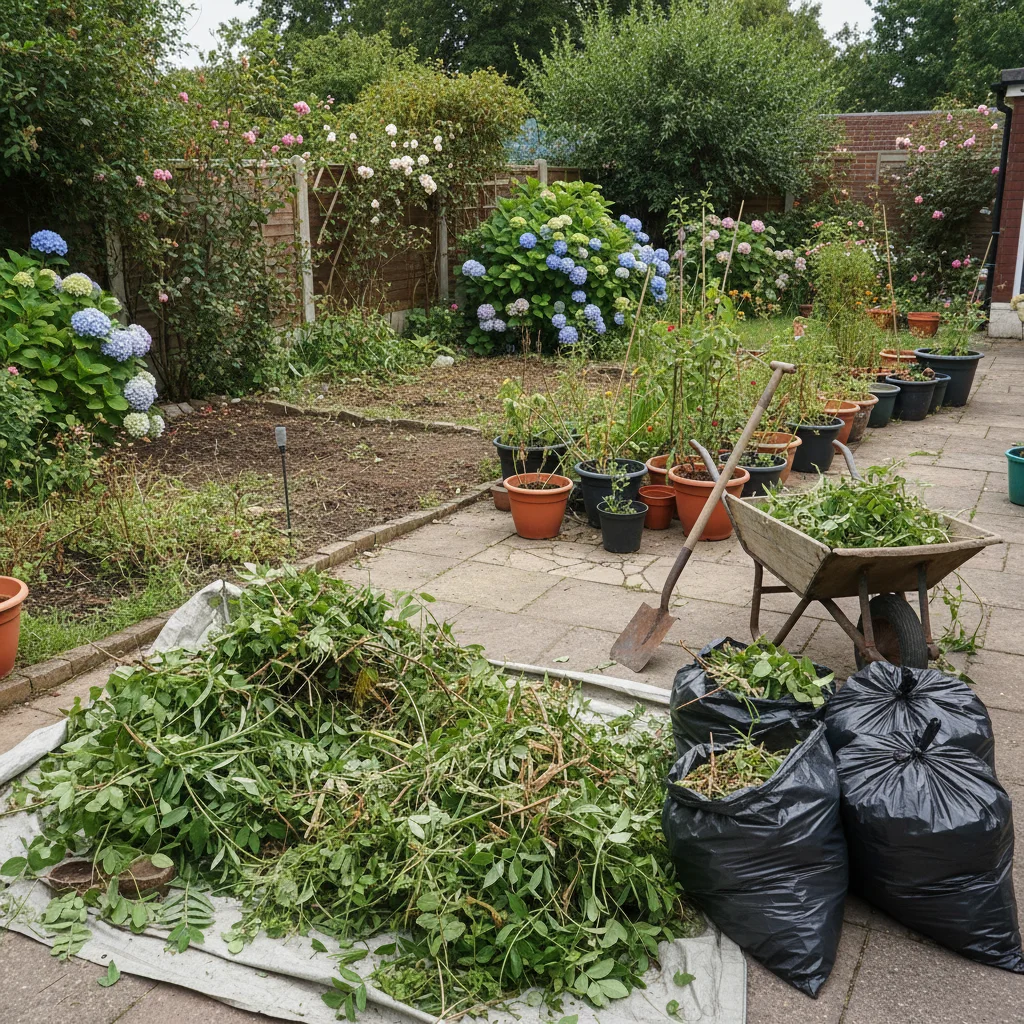
Garden clearance is a one-off strip: overgrown shrubs, waste, and enough access to see the soil again. It is not the same as ongoing maintenance, and green waste has to go somewhere legal.
When a garden is left to its own devices for a season or two, it doesn’t just grow; it asserts itself. Brambles reach out to claim the lawn, ivy begins its slow ascent up the brickwork, and the once-clear borders become a sea of opportunistic weeds. Reclaiming such a space is one of the most satisfying projects you can undertake, providing a literal and metaphorical clean slate for your horticultural ambitions.
A thorough garden clearance is about more than just aesthetics. By removing the dense canopy of overgrowth, you allow light to reach the soil surface again and improve the airflow around your remaining plants. This reduces the risk of fungal diseases and gives you the opportunity to assess the true health of your garden's foundation: the soil.
Reclaiming your outdoor space
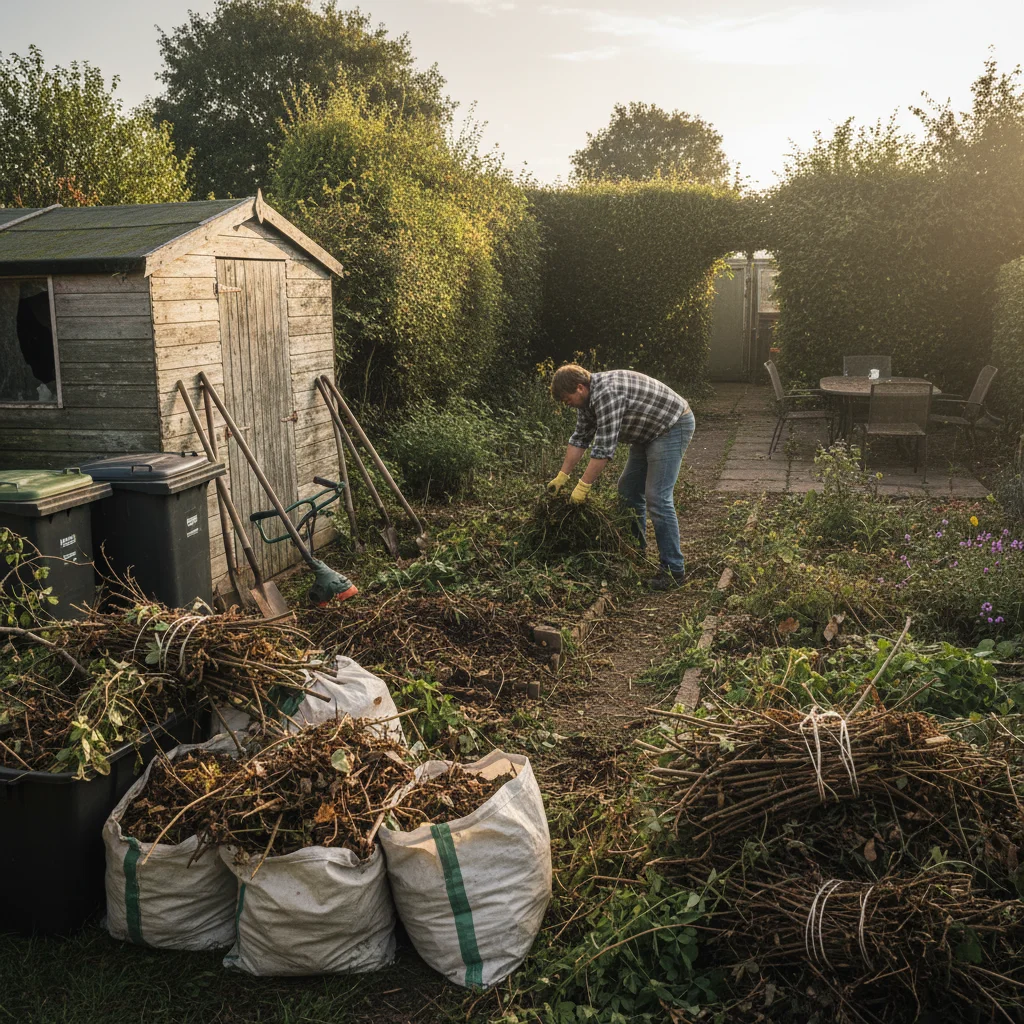
The first step in any clearance is to look past the tangled mess and identify what is worth saving. Even in the most neglected plots, there are often hidden gems like mature shrubs, dormant perennials, or well-established fruit trees. I always advise taking a week to observe the garden before the first cut, as you might find a late-emerging bulb or a structural plant that simply needs a sympathetic pruning.
Once you have identified the keepers, the real work begins. Reclaiming an overgrown plot is a layered process, usually starting with the removal of soft, green growth before tackling the woody material. It is important to set realistic expectations; a garden that has been neglected for years will not look like a manicured park overnight. The goal of the initial clearance is to reveal the "bones" of the garden so you can plan your next move.
Assessing the scale of the task
Before you pick up a pair of loppers, you need to understand the volume of material you are dealing with. It is a common mistake to underestimate how much space green waste takes up once it has been cut and piled. A single overgrown buddleia can easily fill several garden sacks once its branches are spread out.
If the overgrowth is chest-high, you are likely looking at a site clearance rather than a simple tidy-up. This involves stripping the area back to the soil level, which might require more robust machinery than a standard lawnmower. For these larger tasks, we consider the impact on the soil structure, as heavy foot traffic on wet ground during a clearance can lead to compaction, which hinders future plant growth.
The difference between garden waste and rubbish
In the world of garden maintenance, we distinguish between green waste and general waste. Green waste refers to organic matter that was once living—grass clippings, hedge trimmings, fallen leaves, and old herbaceous plants. This material is valuable because it can be returned to the earth as compost, enriching the soil with organic matter.
General waste often found during a clearance might include old plastic pots, broken garden furniture, or even fly-tipped debris. It is vital to separate these streams immediately. Mixing plastic or treated timber with your green waste prevents it from being processed into high-quality compost, which is a missed opportunity for a more sustainable garden cycle.
Methods for managing organic debris
When we talk about green waste, we are really talking about potential energy for your garden. If you have the space, the most environmentally friendly way to handle clearance waste is to compost it on-site. By creating a dedicated compost heap, you turn your "rubbish" into a nitrogen-rich soil conditioner that will save you money on bagged compost in the future.
However, large-scale clearances often produce more volume than a domestic compost bin can handle. In these cases, you might look at various disposal options:
- Home composting of soft green materials like grass and annual weeds.
- Using a garden shredder to turn woody branches into mulch for your paths and borders.
- Utilising local authority green waste bins for regular, smaller amounts of debris.
- Hiring a professional service to remove bulk loads of organic matter for industrial composting.
- Creating "dead hedges" or log piles in quiet corners to provide vital habitats for beneficial insects.
Why leaf clearance matters for lawn health
Leaf clearance is a specific type of garden maintenance that is often overlooked but remains essential for a healthy autumn transition. While a few leaves on a border can act as a natural mulch, a thick carpet of leaves on a lawn is a recipe for disaster. It blocks out the sunlight and traps moisture against the grass blades, creating the perfect environment for moss and fungal diseases like Fusarium patch.
Methodical leaf clearance involves more than just raking. I recommend collecting leaves when they are slightly damp but not soaking wet. These leaves can then be placed into perforated black sacks or a dedicated wire cage to create leaf mould. Unlike standard compost, leaf mould is the result of a slow, fungal breakdown process, resulting in a superb soil conditioner that improves soil structure and water retention.
Preparing for a total site clearance
A site clearance is usually the precursor to a larger landscaping project or a complete redesign. Unlike a seasonal tidy-up, this is a "ground-up" operation where every unwanted plant, stump, and piece of debris is removed. This process often reveals the true topography of the land, showing you where drainage might be an issue or where the sun hits the ground most effectively.
During a site clearance, we are particularly careful with invasive species. Plants like Japanese Knotweed or even common but aggressive spreaders like ground elder require specific handling. If you are clearing a site to make way for a new lawn or vegetable patch, ensuring that perennial weed roots are thoroughly removed is the difference between a successful start and a constant battle in the years to come.
Navigating waste disposal regulations
In the UK, there are clear rules regarding who can transport and dispose of waste. If you are paying someone to remove garden waste from your property, they must hold a valid Waste Carrier Licence issued by the Environment Agency (or the equivalent body in Scotland or Wales). This is part of the "Duty of Care" legislation designed to prevent illegal fly-tipping.
As a homeowner, you are responsible for ensuring that your waste is handled by a legitimate carrier. Always ask to see their licence and keep a record of where the waste is going. Most professional garden clearance services will take the green waste to a commercial composting facility, where it is processed at high temperatures to kill off weed seeds and pathogens before being sold back to the public as soil improvers.
Tools to make the job easier
Having the right equipment is the difference between an exhausting weekend and an efficient clearance. You don't need an arsenal of power tools, but a few well-chosen items will significantly speed up the process. I always suggest starting with the best quality manual tools you can afford, as they offer more control and are often more durable than cheap alternatives.
- A sharp pair of bypass loppers for cutting through woody stems up to 3cm thick.
- A heavy-duty garden rake for gathering debris and leveling the soil surface.
- A folding pruning saw for larger branches that are too thick for loppers.
- Sturdy, thorn-proof gloves to protect your hands from brambles and nettles.
- Large, reusable garden bags or a wheelbarrow for transporting material to the waste pile.
Protecting soil health during the process
One of the biggest risks during a garden clearance is the unintended damage to the soil. When we clear large areas, the soil is suddenly exposed to the elements. Without the cover of plants, heavy rain can wash away the topsoil or cause the surface to "cap," making it difficult for water to penetrate.
If you aren't planning to plant immediately after a clearance, I highly recommend covering the bare earth. You can use a layer of organic mulch, such as the woodchips generated during the clearance, or even a temporary green manure crop. This keeps the soil biology alive and prevents a new generation of weed seeds from germinating in the newly cleared space.
Realistic outcomes and the next steps
Once the clearance is complete, the transformation can be startling. You will likely find that your garden feels much larger and brighter than it did before. However, it is important to remember that clearing the garden is only the first phase. The soil will still contain a "seed bank" of weeds waiting for their chance to grow, so a cleared plot requires regular maintenance to stay that way.
The best approach after a clearance is to start a regular maintenance schedule immediately. Hoeing the bare soil once a week will kill off any new weed seedlings before they can establish deep roots. This is also the perfect time to test your soil pH and texture, as you now have easy access to the ground. Knowing whether you have acidic clay or alkaline sand will dictate what you can successfully plant in your newly reclaimed space.
Reclaiming an overgrown garden is a journey from chaos to order. It requires patience and a bit of hard graft, but the reward is a functional, healthy outdoor space that you can truly call your own. By handling your green waste responsibly and respecting the health of your soil, you are setting the foundation for a garden that will flourish for years to come. Once the debris is gone and the boundaries are clear, you can finally stop looking at what the garden was and start imagining what it could become.
Frequently asked questions
What is included in garden clearance?
Cutting back, removing rubbish, and leaving the site tidy. Stump grinding, soil improvement, and replanting are usually extras — get them in writing.
How is green waste handled?
Licensed carriers should take it to a proper facility or compost it on site if you agree. Fly-tipped garden waste is your problem if you hire someone unlicensed.
Clearance or maintenance?
Clearance is the reset. Maintenance is the fortnightly work that stops it returning. Most overgrown gardens need both, in that order.