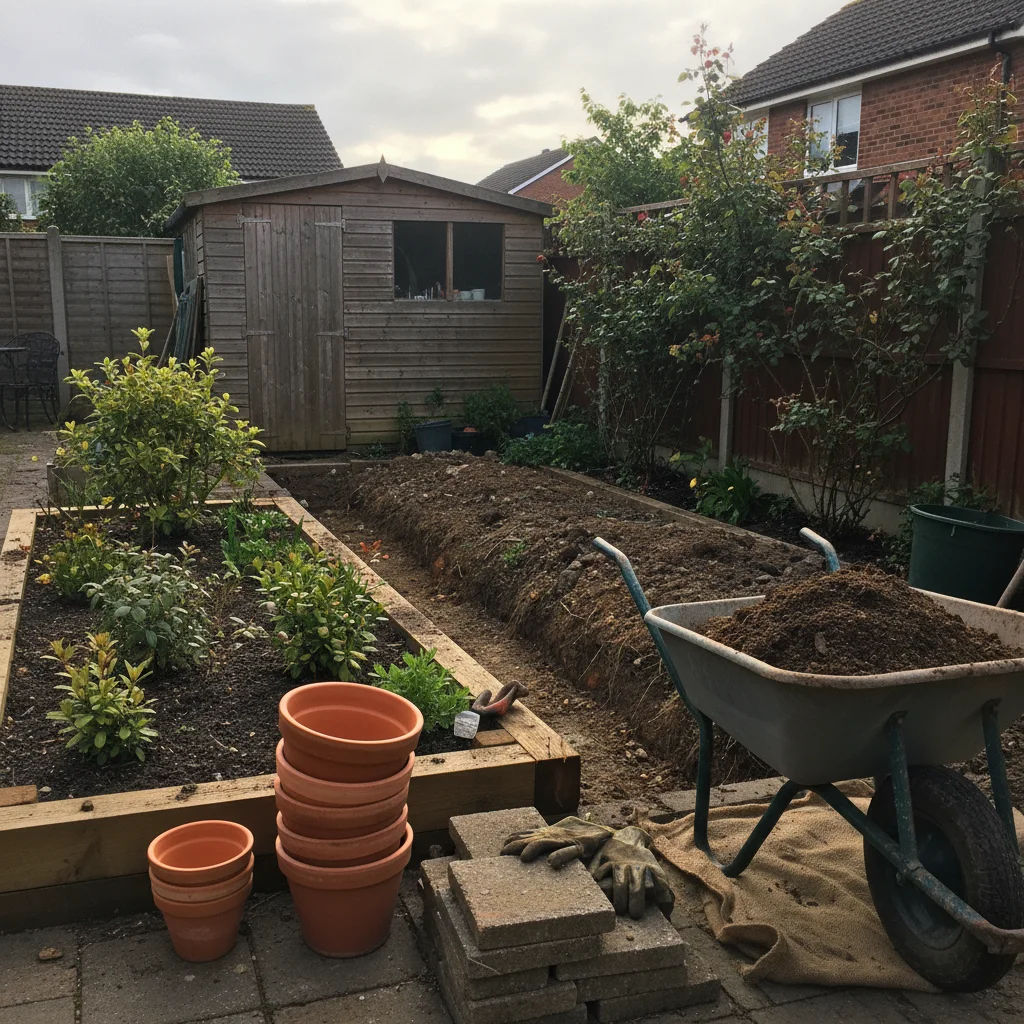
Groundworks for landscaping are the unseen bit: excavation, levels, drainage, and a compacted base. If this is thin, patios, turf, and walls fail even when the finish looks fine on day one.
Most of us start dreaming of a new garden by looking at the finishing touches. We imagine the smooth porcelain tiles of a new patio, the crisp edges of a lawn, or the vibrant colours of a perennial border. However, as a former head gardener, I have seen many beautiful designs fail within two years because the owner neglected what lies beneath the surface.
Groundworks are the unsung heroes of any successful landscaping project. They represent the heavy lifting phase where we prepare the site to support the weight of stone, timber, and water. While this stage is often the messiest and loudest part of the process, it is also the most critical for ensuring your investment stands the test of time.
If you skip the proper preparation, you risk more than just a few wobbly paving slabs. Poor groundworks lead to pooling water, shifting foundations, and expensive remedial work. Understanding what happens during this phase will help you manage the process and ensure your garden remains beautiful for decades.
Why foundations are the most important investment
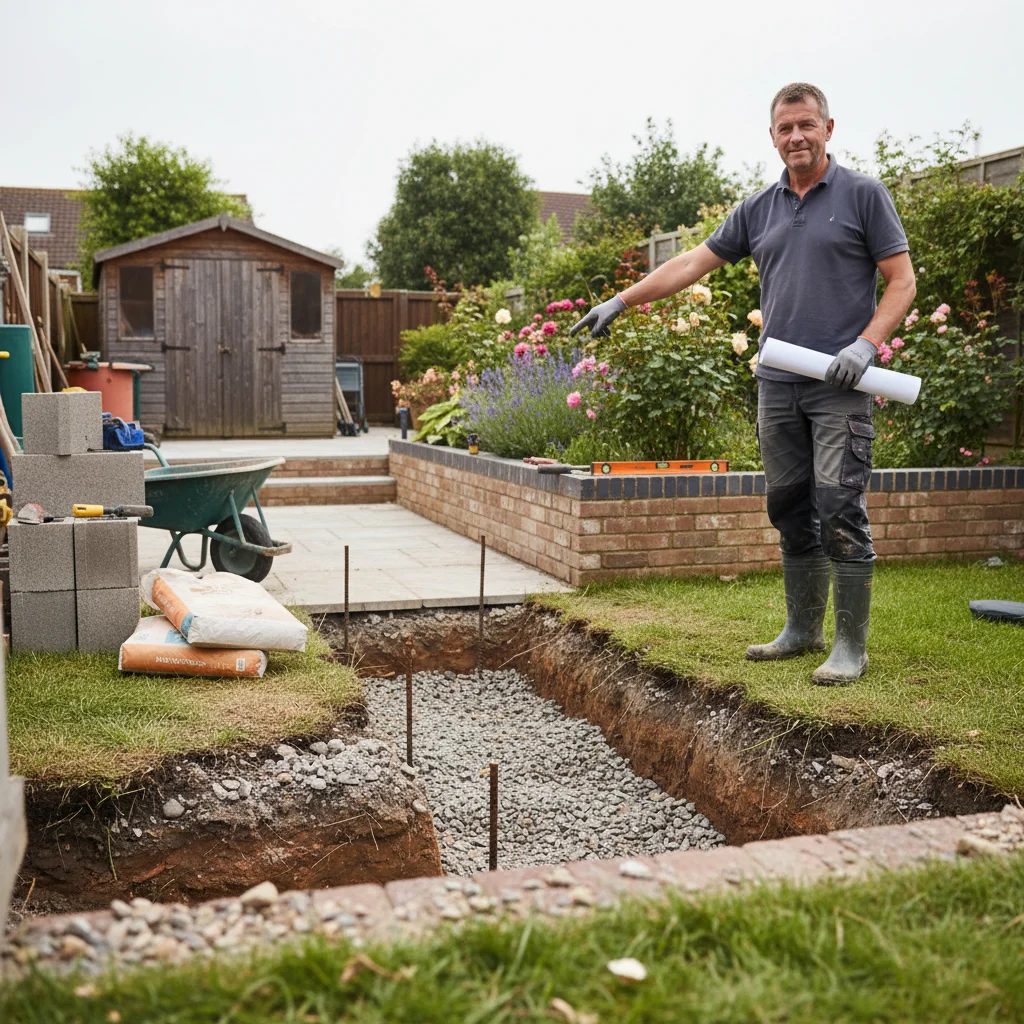
A patio or a driveway is only as stable as the ground it sits on. In the UK, our soil varies wildly from heavy, expanding clays in the south to thin, rocky soils in the north. Each of these requires a specific approach to excavation and sub-base preparation to prevent the finished surface from sinking or cracking.
When we talk about groundworks, we are essentially creating a structural "raft" for your garden. This involve removing the organic topsoil, which is full of air and moisture, and replacing it with compacted aggregates. This process ensures that when the winter frosts arrive or the heavy autumn rains fall, your garden structures remain perfectly level.
Sustainability also plays a role here. By getting the groundworks right the first time, we reduce the need for future repairs and the consumption of new materials. I always encourage gardeners to think of their soil as a living system that needs to be managed carefully during this disruptive phase.
Understanding site levels and drainage
One of the most common mistakes in DIY landscaping is failing to account for the "fall" of the land. Water must always have somewhere to go, ideally away from your house and into a dedicated drainage system or a permeable area of the garden. Even a patio that looks flat to the naked eye should have a subtle gradient to prevent standing water.
During the groundworks phase, contractors use laser levels to map out the heights across your site. This allows them to calculate how much soil needs to be removed and where the new sub-base needs to be built up. If your garden has a significant slope, this stage might involve "cut and fill" techniques to create level terraces.
Drainage is particularly important given the increasingly heavy rainfall we see across the UK. We often install French drains or soakaways during the excavation phase to manage runoff. This prevents your new lawn from becoming a bog and ensures your patio doesn't turn into a shallow pond every time it pours.
Navigating the practicalities of access
Before a single shovel hits the ground, we have to consider how machinery and materials will enter and leave your garden. Groundworks are a logistics exercise as much as a construction one. Most modern landscaping projects rely on mini-diggers and powered barrows to move tonnes of earth efficiently.
If you have a standard side gate, a "micro-digger" can usually pass through, as these are designed to fit through a gap of about 750mm. However, if your only access is through the house, the project becomes significantly more complex. We have to plan for floor protection and potentially manual excavation, which takes considerably longer.
You should also consider where the "spoil" will go. Soil expands when it is dug up, a phenomenon we call "bulking." A small area of lawn can quickly turn into a mountain of earth that requires several skips to remove. Clear access for skip lorries or grab trucks is essential to keep the project moving and the site tidy.
Preparing for the machinery and the mess
There is no way to sugarcoat it: groundworks turn your garden into a construction site. You will see heavy machinery, piles of aggregate, and a fair amount of mud. However, a professional team will work methodically to contain the mess and protect the areas of the garden that are staying as they are.
The noise of a three-tonne excavator or a vibrating plate compactor is significant, but these tools are necessary for a high-quality finish. The compactor, in particular, is vital for "knitting" the sub-base together. Without proper compaction, the air pockets in the stone will eventually collapse, leading to those dreaded dips in your driveway.
Before the work begins, it is a good idea to check the following points to ensure a smooth start to the project:
- Identify the location of underground services like water, gas, and electricity.
- Clear away any moveable pots, furniture, or precious plants from the access route.
- Inform your neighbours about the upcoming noise and potential for dust.
- Ensure there is a clear space on the road or driveway for material deliveries.
- Check if any trees on your property are protected by Tree Preservation Orders.
The sequencing of a professional build
A logical sequence is the hallmark of a well-managed project. We start with the "bulk dig," removing the unwanted turf and soil to the required depth. For a standard domestic patio, this is usually around 150mm to 200mm, while a driveway requires a much deeper excavation to handle the weight of vehicles.
Once the site is cleared, we lay a geotextile membrane. This clever bit of kit prevents the expensive sub-base stone from mixing with the soft soil underneath, while still allowing water to drain through. It acts like a stabilising skin for the entire project, providing extra strength without the need for thick layers of concrete.
Next comes the sub-base, usually a material called MOT Type 1. This is a mixture of crushed stone and "fines" that locks together when compacted. We apply this in layers, or "runs," compacting each one thoroughly before adding the next. This creates a solid, unyielding foundation that is ready for the final bedding layer and your chosen paving.
Working with the seasons and the soil
In the UK, the timing of your groundworks can make a huge difference to the ease of the build. Working on heavy clay soil in the depths of a wet winter is challenging, as the ground becomes "saturated" and loses its structural integrity. If possible, we aim to complete the heaviest excavation during the drier months.
If we must work in wet conditions, we take extra care to protect the soil structure. Compacting wet topsoil can ruin its "tilth," making it very difficult for plants to grow in those areas later. We use bog mats or plywood sheets to spread the weight of machinery and prevent the garden from becoming a churned-up mess.
Sustainability is at the heart of modern groundworks. Whenever possible, we try to keep high-quality topsoil on-site to be reused in new planters or raised beds. We also look for recycled aggregates, such as crushed concrete, which perform just as well as quarried stone but have a much lower environmental footprint.
Ensuring long-term success for your garden
The final stage of groundworks is the transition into the "finishing" phase. This involves the precise screeding of the bedding layer—usually a sharp sand and cement mix—to the exact levels required for your paving. By the time the first slab is laid, the hardest and most technical part of the job is already finished.
It is worth remembering that while groundworks represent a large portion of your budget, they are the only part of the garden you cannot easily fix later. You can always change your plants or paint your fence, but you cannot easily level a sinking patio. Investing in the best possible foundations is the smartest move any homeowner can make.
Once the sub-base is compacted and the drainage is tested, you can move forward with total confidence. You aren't just building a patio; you are building a structure that will remain flat, stable, and dry for many years to come. With the heavy work done, you can finally start to see your vision for a beautiful, functional outdoor space come to life.
Frequently asked questions
What are groundworks in a garden?
Digging out, setting levels, drainage runs, and laying sub-bases for patios, drives, and lawns. It is the structure under the pretty layer.
Why do quotes vary so much?
Waste disposal, access, and how deep the existing soil is rubbish. A cheap quote often skips a proper base or dumps spoil on your lawn.
Can a gardener do groundworks?
Light levelling, yes. Structural excavation, retaining, and drainage that affects the house should be a landscaper or groundworker with the right kit and insurance.