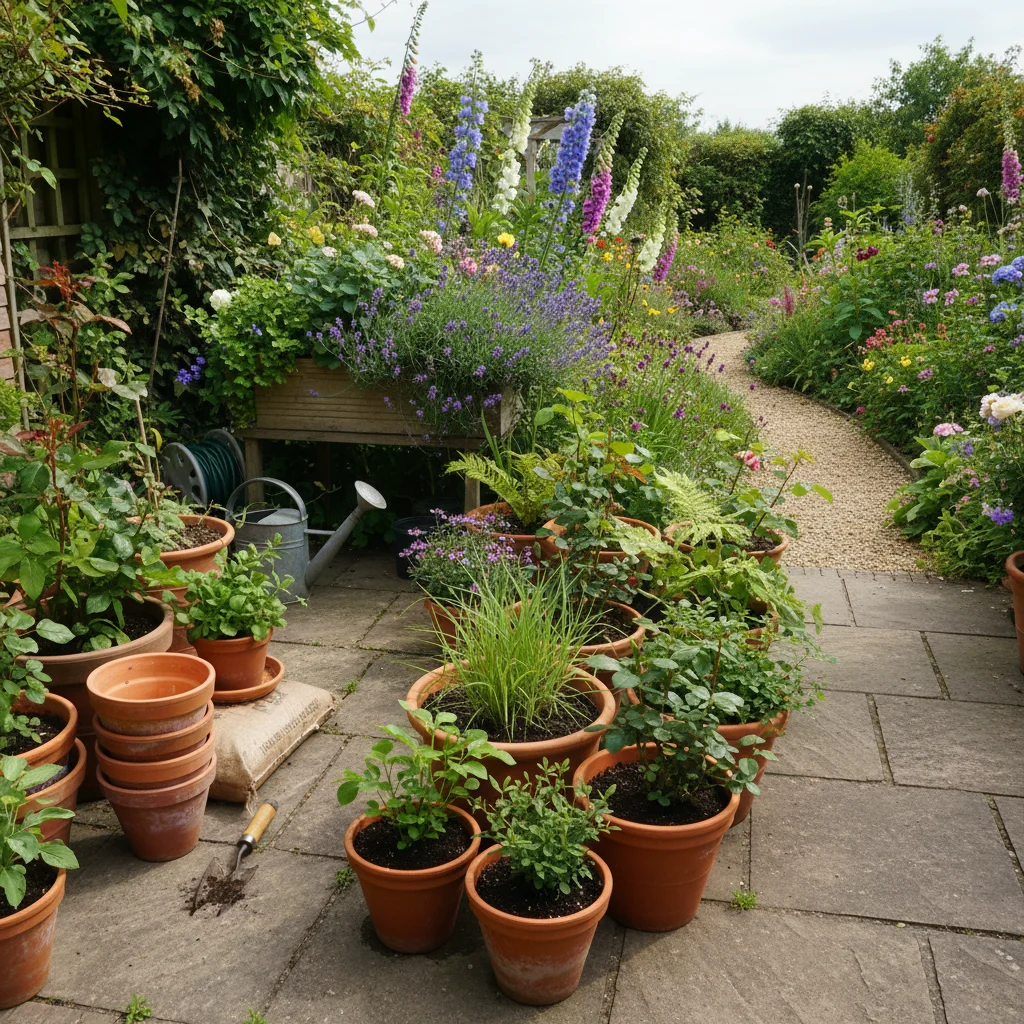
Planting design is matching plants to light, soil, and how much work you will actually do — then getting them in at the right spacing. It is not the same as a trolley dash at the garden centre.
Walking into a garden centre can be an overwhelming experience. It is easy to be seduced by the vibrant colours of a plant in full bloom, only to find that it struggles to survive once you get it home. This "impulse buy" approach often leads to a disjointed garden that looks wonderful for a fortnight in June but feels empty and tired for the rest of the year.
Professional planting design moves away from this haphazard method. It is about understanding the unique DNA of your outdoor space—the light, the wind, and the soil—and selecting a community of plants that will thrive together. When we create a planting scheme, we are not just placing pretty flowers; we are building a living ecosystem that provides structure, movement, and interest through every season.
A well-executed planting plan ensures that every square inch of your border is working hard for you. By choosing the right combination of trees, shrubs, and perennials, we can create a garden that feels established and intentional. Whether you are looking for a low-maintenance sanctuary or a traditional herbaceous border, the secret lies in the preparation and the selection process.
The importance of a planting plan
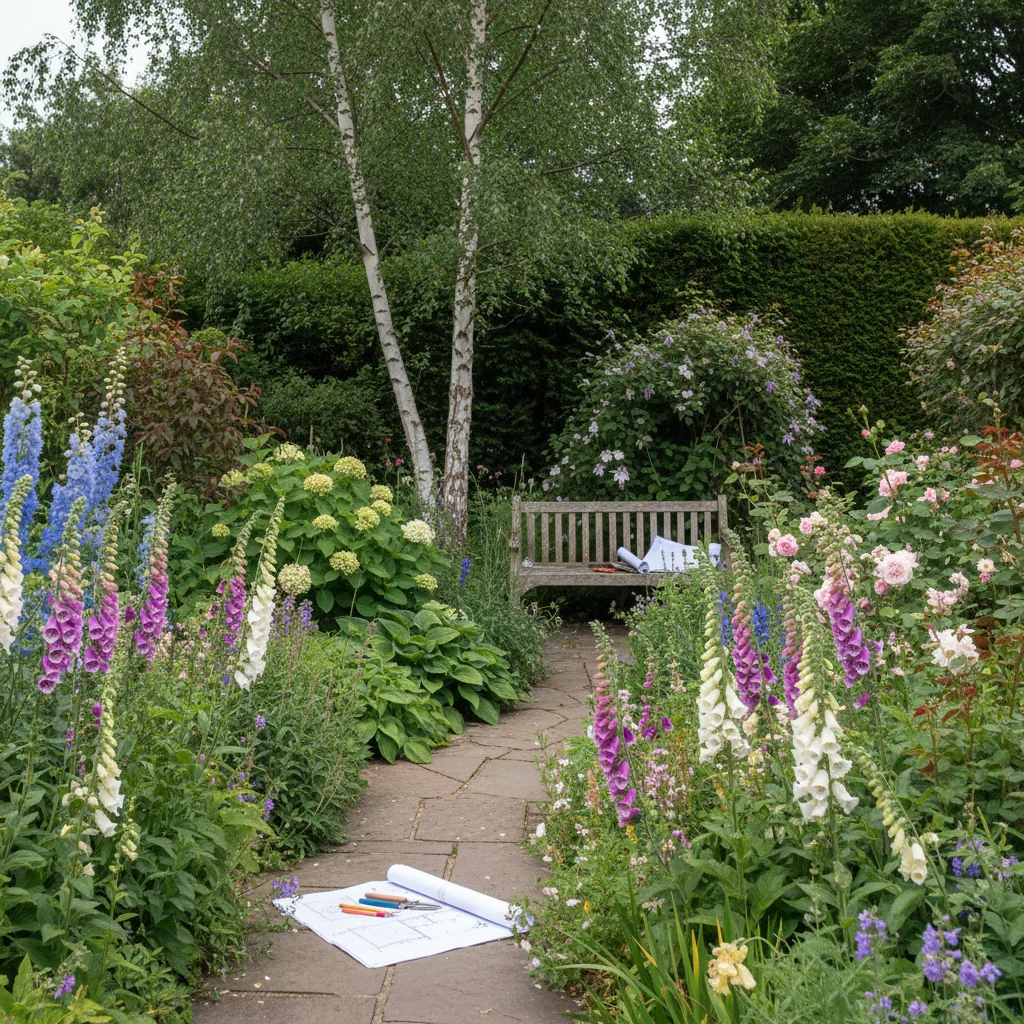
A planting plan is a detailed blueprint for your garden borders. It goes far beyond a simple list of names; it specifies the exact location, quantity, and spacing for every specimen. This precision is vital because it prevents the common mistake of overcrowding, which leads to poor air circulation and the spread of fungal diseases.
When I sit down to draw a plan, I consider the eventual height and spread of each plant over five to ten years. We want the garden to look full and lush quickly, but we must also give each shrub the room it needs to reach its natural shape. A professional plan also includes a "plant schedule," which acts as a shopping list and an installation guide to ensure nothing is left to chance.
Using a plan allows us to layer the planting effectively. We place the taller, structural elements at the back or centre, followed by mid-height perennials, and finally, the ground-hugging species that knit the whole look together. This creates a sense of depth and ensures that smaller, delicate plants aren't smothered by their more vigorous neighbours.
Designing for seasonal interest
One of the most common requests I hear is for a garden that "looks good all year round." In the UK, our seasons are distinct, and a clever planting scheme should celebrate this transition rather than fight against it. We achieve this by selecting plants that offer multiple points of interest, such as spring blossom followed by autumn fruit or interesting bark.
Spring is often about the "early risers"—the bulbs and woodland plants that take advantage of the light before the tree canopy closes. Summer is the headline act, where we use perennials and grasses to provide a riot of colour and texture. However, a truly great design doesn't fall apart when the first frost hits; it relies on seed heads and evergreen foliage to maintain its form.
Autumn offers a second peak of interest if we choose our plants wisely. We look for species that provide "fireworks" of leaf colour, such as certain Acers or the deep reds of Cornus stems. By planning for these transitions, we ensure your garden remains a place of beauty even in the depths of January, when the frost catches the skeletons of ornamental grasses.
Choosing trees and shrubs for structure
Trees and shrubs are the "bones" of your garden. Without them, even the most beautiful flower border can feel flimsy and two-dimensional. Trees provide the essential vertical element, drawing the eye upwards and creating a sense of enclosure and privacy. In smaller UK gardens, we often select "standard" trees with clear stems to provide height without taking up too much ground space.
Shrubs offer the mid-level bulk that defines the shape of your borders. We use a mix of evergreen and deciduous varieties to ensure the garden doesn't disappear in winter. Evergreens like Taxus baccata (Yew) or Lonicera nitida can be clipped into formal shapes to provide a sharp contrast against the softer, more naturalistic planting of perennials.
When selecting these structural plants, I always look for those that offer a "long season of interest." A shrub that only flowers for one week and then looks dull for the other fifty-one is a luxury most gardens can't afford. Instead, we prioritise plants like Amelanchier lamarckii, which offers white spring flowers, edible summer berries, and spectacular autumn colour.
The role of perennials and grasses
Perennials are the plants that bring life and movement to a scheme. Unlike shrubs, they generally die back to the ground in winter and return with renewed vigour each spring. This cycle allows for a dynamic garden that changes almost weekly. We use them to fill the gaps between our structural plants, creating a tapestry of colour and texture.
In recent years, the "New Perennial" movement has become very popular in British gardening. This style uses large drifts of hardy perennials and ornamental grasses to create a look that feels both modern and wild. Grasses like Miscanthus or Pennisetum add a tactile quality to the garden, catching the light and rustling in the breeze, which adds a sensory layer to the design.
The beauty of perennials lies in their diversity. We can choose "pollinator-friendly" varieties like Salvia and Echinacea to bring bees and butterflies into the garden, or shade-loving Hostas and Ferns for those tricky North-facing corners. By grouping plants with similar needs together, we ensure they thrive with minimal intervention from you.
Getting the soil right
I often tell my clients that if you have ten pounds to spend, you should spend eight of it on the hole and two on the plant. The soil is the foundation of everything we do. If the soil is compacted, waterlogged, or depleted of nutrients, even the most expensive plant will struggle to survive. Before we begin any planting service, we must assess and improve the ground.
We start by looking at the soil texture. Is it heavy clay that holds onto water, or is it sandy and prone to drying out? We also consider the pH—the acidity or alkalinity of the soil. This is crucial because certain plants, like Camellias, simply will not grow in alkaline (limey) soil. A simple test allows us to tailor our plant selection to the conditions you already have.
Improving the soil involves incorporating plenty of organic matter, such as well-rotted garden compost or manure. This improves the "tilth" (the physical condition of the soil), making it easier for young roots to spread. We are strictly peat-free in our approach, as protecting our peat bogs is essential for the environment and for maintaining healthy, carbon-rich garden soil.
Professional planting and aftercare
Once the design is finalised and the soil is prepared, the actual planting must be done with care. We ensure each plant is set at the correct depth—planting too deep can rot the stem, while planting too shallow can dry out the root ball. We also use "mycorrhizal fungi" during planting, which are beneficial fungi that attach to the roots and help the plant absorb water and nutrients more efficiently.
The first year is the most critical time for any new planting scheme. Even "drought-tolerant" plants need regular watering while they are establishing their root systems. We recommend deep watering rather than frequent light sprinkles; this encourages the roots to grow deep into the soil in search of moisture, making them more resilient in the long run.
Mulching is another essential part of our aftercare process. By applying a 5cm to 7cm layer of organic matter over the surface of the soil, we lock in moisture and suppress weeds. This gradually breaks down over time, feeding the soil and improving its structure. It also gives the borders a neat, professional finish that makes the colours of your plants truly pop.
There are several key benefits to investing in a professional planting service rather than attempting a DIY approach.
- Precise plant spacing to prevent overcrowding and reduce future maintenance.
- Year-round interest through a clever succession of flowers and foliage.
- Significant cost savings by avoiding plants that are unsuited to your specific soil or aspect.
- Clear maintenance instructions tailored to the specific species in your garden.
- A cohesive aesthetic that complements your home’s architecture and your personal style.
Long term garden health
A garden is a living, breathing entity that evolves over time. A professional planting scheme is not a static picture but a starting point for a journey. As the plants grow and knit together, the maintenance requirements actually tend to decrease, as the dense foliage shades out weeds and creates its own microclimate.
Regular aftercare, such as "deadheading" (removing spent flowers) and formative pruning, will keep your plants in peak condition. For perennials, we might recommend "lifting and dividing" every few years. This involves digging up a large clump and splitting it into smaller pieces, which rejuvenates the plant and gives you free specimens to use elsewhere in the garden.
Success in the garden is rarely about luck; it is about the marriage of good design and sound horticultural practice. By focusing on the health of your soil and choosing plants that are naturally suited to your environment, you create a space that is both beautiful and sustainable.
If you are ready to move away from guesswork and want a garden that truly thrives, a professional planting plan is the best investment you can make. We can help you navigate the complexities of soil types and seasonal shifts to create a bespoke outdoor space you’ll enjoy for years to come. Simply get in touch to discuss how we can bring your garden to life with a scheme designed specifically for you.
Frequently asked questions
What does professional planting include?
A plant list, soil preparation, planting, and usually mulch. Aftercare visits and replacements may be extra. Ask whether the quote is supply-and-plant or plant-only.
When is the best time to plant in the UK?
Autumn and spring for most shrubs and perennials. Evergreens often prefer spring. Summer planting needs a watering plan or you are buying replacements.
Can I hire just for the plan?
Yes. Some designers sell a planting plan you install yourself. Others only work supply-and-plant. Be clear which you want.