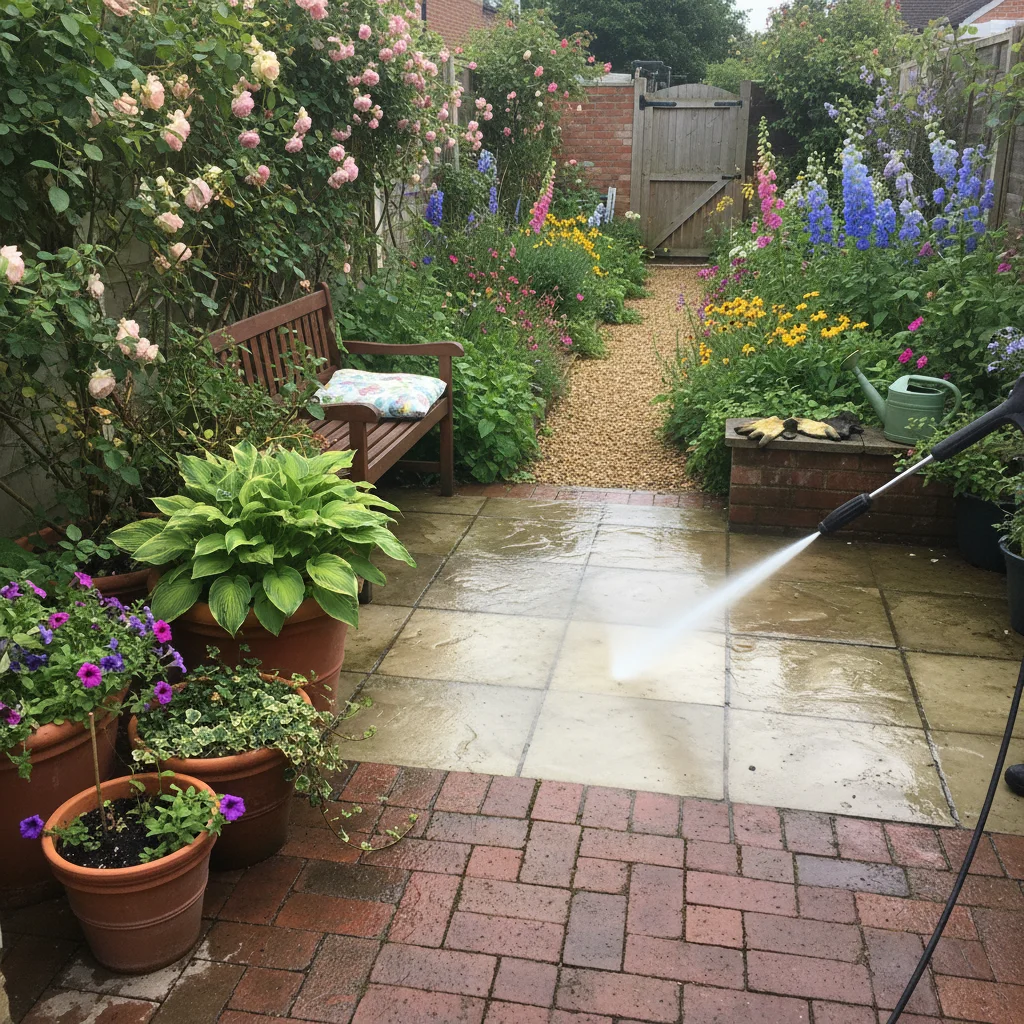
Pressure washing patios gets algae off fast, and it can also blast out jointing sand and scar soft stone. Hire someone who will adjust the pressure to the material, not someone with one lance setting.
After a long, damp British winter, the sight of a green-filmed patio or a moss-covered driveway is a familiar one for many of us. The temptation to reach for the pressure washer and blast away the grime is strong, as there are few things more satisfying than seeing the original colour of the stone emerge from beneath layers of silt. However, as a horticulturist who has spent years maintaining high-end estates, I have seen many beautiful surfaces ruined by over-enthusiastic cleaning.
Pressure washing is a powerful tool, but it is essentially a form of controlled erosion. While it is incredibly effective at removing algae, lichen, and dirt, it can also be incredibly destructive if used without a proper understanding of the materials involved. Whether you are dealing with traditional Yorkstone, modern Indian sandstone, or simple concrete block paving, the approach must be methodical to avoid permanent structural damage.
In this guide, we will look at how to achieve that "just-laid" look without compromising the integrity of your paths and driveways. We will cover the specific risks to your pointing, the importance of safety, and when it is wiser to step back and let a professional handle the heavy lifting. By taking a more considered approach, you ensure that your garden remains a place of beauty rather than a site of costly repairs.
Understanding the risk to pointing and joints
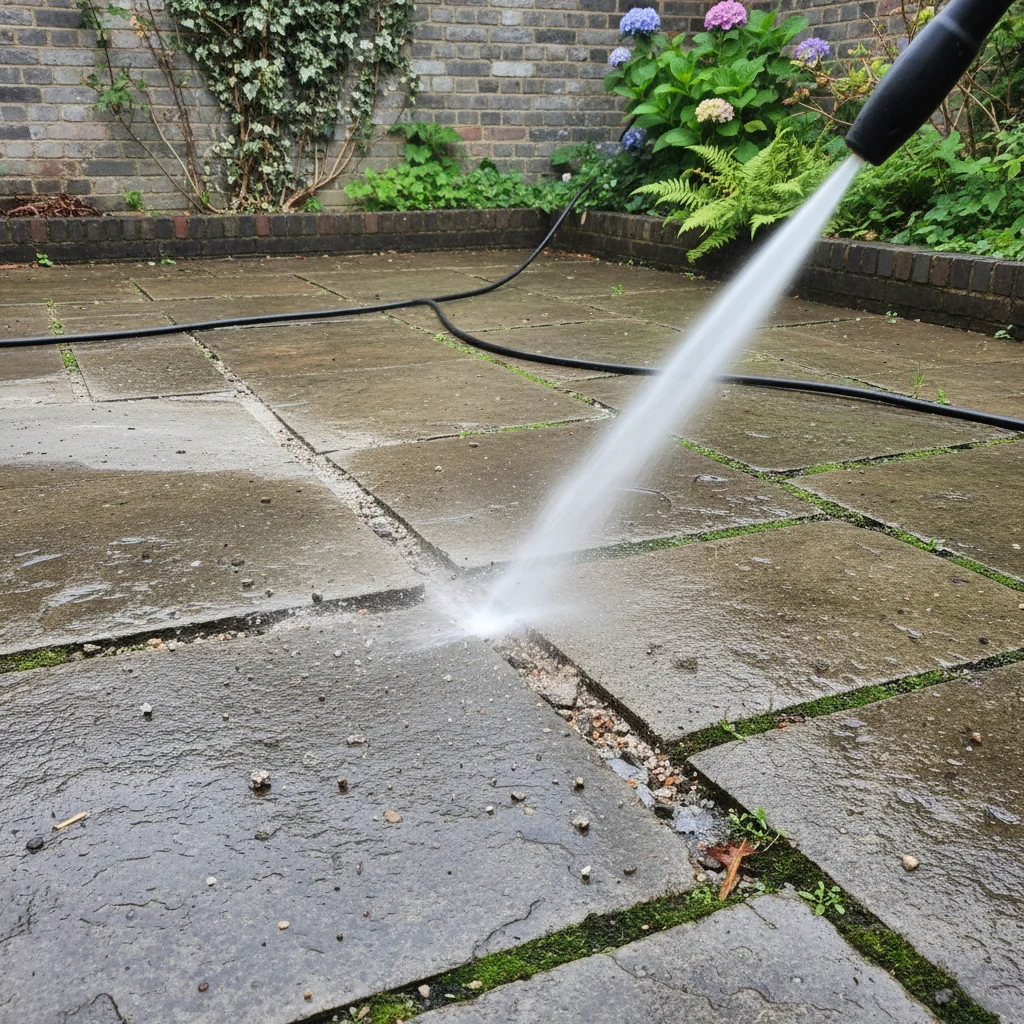
The most common casualty of an aggressive pressure washing session is the pointing, which is the mortar or sand between your paving slabs. In many older UK gardens, this pointing is made of a simple sand and cement mix that can become brittle over time. When you hit this with a concentrated jet of high-pressure water, you aren't just cleaning it; you are often excavating it.
Once the pointing is damaged or removed, water can easily seep beneath the slabs. During the winter months, this water freezes and expands, a process known as freeze-thaw action, which can lift the stones and leave you with an uneven, wobbly surface. Even with modern polymeric sands or resin-based mortars, the sheer force of a domestic pressure washer can cause the edges to fray and crumble if the nozzle is held too close.
If you have block paving on your driveway, the risks are slightly different but no less significant. These systems rely on kiln-dried sand to create friction between the blocks, providing the structural strength needed to support the weight of a vehicle. Pressure washing will inevitably blast this sand out of the joints. If you do not replace this sand once the surface is dry, the blocks can shift and sag, leading to expensive remedial work.
Protecting the surface of the stone
Not all paving is created equal, and the type of stone you have dictates how much pressure it can safely handle. Natural stones like sandstone and limestone are relatively soft and porous. If you use a high-pressure setting with a narrow "pencil" jet, you can actually etch lines into the stone itself, leaving permanent scars that will trap even more dirt in the future.
Concrete and reconstituted stone are generally hardier, but they are still susceptible to "surface spalling." This is where the top finished layer of the concrete is stripped away, exposing the aggregate underneath. This not only ruins the aesthetic of the path but also makes the surface much more porous, leading to faster regrowth of moss and algae.
We must also consider the protective seals that are often applied to modern driveways and patios. These chemical barriers are designed to repel oil, water, and dirt, but they are not invincible. High-pressure water can strip these seals unevenly, leaving your driveway looking patchy and unprotected. If your surface was sealed within the last few years, you should be extremely cautious about using anything more than a gentle wash.
Safety protocols for outdoor cleaning
Before you even plug in your machine, safety must be your primary concern. We are dealing with a combination of high-pressure water and electricity, which always requires respect. Ensure that your pressure washer is plugged into a socket protected by an RCD (Residual Current Device). This will instantly cut the power if there is a fault, potentially saving you from a dangerous electric shock.
You should also consider the physical force of the water jet. It is powerful enough to cut through skin and boots, so flip-flops are strictly forbidden when cleaning the patio. Sturdy, waterproof footwear is essential, along with eye protection to shield you from flying grit and debris. It is also important to clear the area of pets and children, as the noise and the spray can be unpredictable.
Essential safety and preparation steps
- Check all hoses and cables for kinks or fraying before starting the motor.
- Wear non-slip, waterproof boots and safety goggles to protect against flying debris.
- Clear the area of all pots, garden furniture, and loose stones that could become projectiles.
- Test the pressure on an inconspicuous corner of the paving before tackling the main area.
- Ensure all windows and doors are closed to prevent "blowback" of dirty water into your home.
The environmental impact of runoff
As gardeners, we have a responsibility to consider where our waste water goes. When you pressure wash a patio, the runoff is a slurry of silt, algae, and potentially old oil or detergents. If this flows directly into your flower beds, it can coat the leaves of your plants and clog the soil pores, affecting drainage and root respiration.
If you are using chemical cleaners or "patio revivers" in conjunction with your pressure washer, you must be even more careful. Many of these products contain bleach or strong surfactants that can be toxic to soil microbes and beneficial insects. I always recommend using biodegradable, environmentally-friendly cleaners where possible, and thoroughly soaking your lawn and borders with fresh water before and after the cleaning process to dilute any stray chemicals.
Water usage is another factor we cannot ignore. A standard pressure washer can use hundreds of litres of water in a single afternoon. To be more sustainable, try to choose a day when the ground is already damp from rain, as this softens the dirt and makes it easier to remove with less water and lower pressure. It is a more patient way of working, but it is far kinder to your garden and the environment.
When to call in the professionals
While many of us enjoy the "DIY" aspect of garden maintenance, there are times when a domestic machine simply isn't the right tool for the job. Professional contractors use industrial-grade equipment that often includes "flat surface cleaners"—these look like circular lawnmowers and use rotating jets to provide a much more even clean than a handheld wand.
Professionals also have the expertise to deal with stubborn stains like black spot lichen, which is notoriously difficult to remove with water alone. These organisms anchor themselves deep into the pores of the stone and often require specific biocidal treatments that are best handled by someone with the correct training. If your patio is made of very delicate or expensive stone, the peace of mind offered by a professional service is often worth the investment.
You might also consider a professional if your driveway requires "re-sanding" or "re-sealing" after the clean. A professional will have the equipment to ensure the kiln-dried sand is vibrated into the joints correctly and that the sealant is applied in a uniform layer. This comprehensive approach ensures that the surface doesn't just look good for a week, but stays protected and stable for years to come.
Techniques for a safer clean
If you decide to tackle the job yourself, the technique you use is just as important as the machine. Always start with the lowest pressure setting and the widest fan spray pattern. Hold the nozzle at a 45-degree angle to the surface rather than pointing it straight down. This "sweeping" motion is much more effective at lifting dirt and far less likely to gouge the stone or blast out the pointing.
Work in small sections and try to follow the natural grain or lines of the paving. If you encounter a particularly stubborn patch of moss, resist the urge to move the nozzle closer. Instead, use a stiff-bristled brush and some soapy water to loosen the debris manually before rinsing it away. This combination of "elbow grease" and low pressure is the safest way to achieve a deep clean.
Best practices for a professional finish
- Sweep the entire area with a stiff broom first to remove loose leaves and grit.
- Apply a gentle detergent or stone cleaner and let it sit for twenty minutes to break down oils.
- Use a wide fan nozzle and keep the wand moving constantly to avoid "striping" the stone.
- Rinse the area thoroughly with a garden hose afterward to ensure no dirty residue settles back into the pores.
Long term maintenance and aftercare
Once your patio or driveway is clean and dry, the work isn't quite finished. This is the ideal time to inspect the pointing for any damage and fill in any gaps with a suitable mortar or jointing compound. For block paving, you must wait for a dry day to brush fresh kiln-dried sand into the joints. This is a vital step that many homeowners skip, leading to unstable blocks later in the season.
To keep the algae and moss at bay, try to improve the airflow and light levels around your patio. Trimming back overhanging shrubs and clearing away fallen leaves promptly will prevent the damp, shaded conditions that these organisms thrive in. A regular sweep with a stiff brush is often enough to disrupt the early growth of moss, reducing the need for heavy-duty pressure washing in the future.
You might also consider applying a high-quality breathable sealer. These products help to "close" the surface of the stone, making it much harder for dirt and lichen to take hold. Look for products that are specific to your stone type and ensure the surface is bone-dry before application. A well-maintained surface not only looks better but also lasts significantly longer, saving you time and money on future renovations.
By approaching your outdoor cleaning with the same care you give your plants, you can maintain a beautiful and safe environment. Taking the time to understand your materials and working with the grain of your garden ensures that your paths and driveways remain a durable and attractive feature for many seasons to come. Stay patient, work methodically, and your stonework will thank you for it.
Frequently asked questions
Will pressure washing damage my patio?
It can, especially sandstone, block paving, and old mortar. A competent operator uses the right nozzle, distance, and often a surface cleaner rather than a pencil jet.
Should joints be re-sanded afterwards?
On block paving, yes — or weeds return even faster. On mortared slabs, damaged pointing should be repaired, not ignored.
Is it a gardener job or a specialist?
Many gardeners offer it as an add-on. For large drives or delicate stone, a cleaning specialist with the right kit is safer.