
Retaining walls and garden walls are not the same job. A decorative wall can be a landscaper; a wall holding back a bank needs drainage, foundations, and someone who treats it as structure.
When we look at a beautifully tiered garden or a neat brick boundary, it is easy to see only the aesthetic finish. However, as a horticulturist who has spent years working with the levels and slopes of the British landscape, I know that what lies behind the face of a wall is far more important than the bricks themselves. Whether you are looking to create a raised bed for your prize dahlias or you need to level a sloping lawn to create a usable seating area, understanding the physics of garden masonry is essential.
There is a fundamental distinction between a decorative garden wall and a retaining wall. While they might look similar from the front, their internal logic and the forces they must withstand are worlds apart. A failure to appreciate these differences can lead to leaning structures, cracked mortar, or even a total collapse that could endanger your property and your family. By taking a methodical approach to planning and construction, we can ensure our gardens remain both beautiful and safe for decades to come.
The difference between decorative and retaining walls
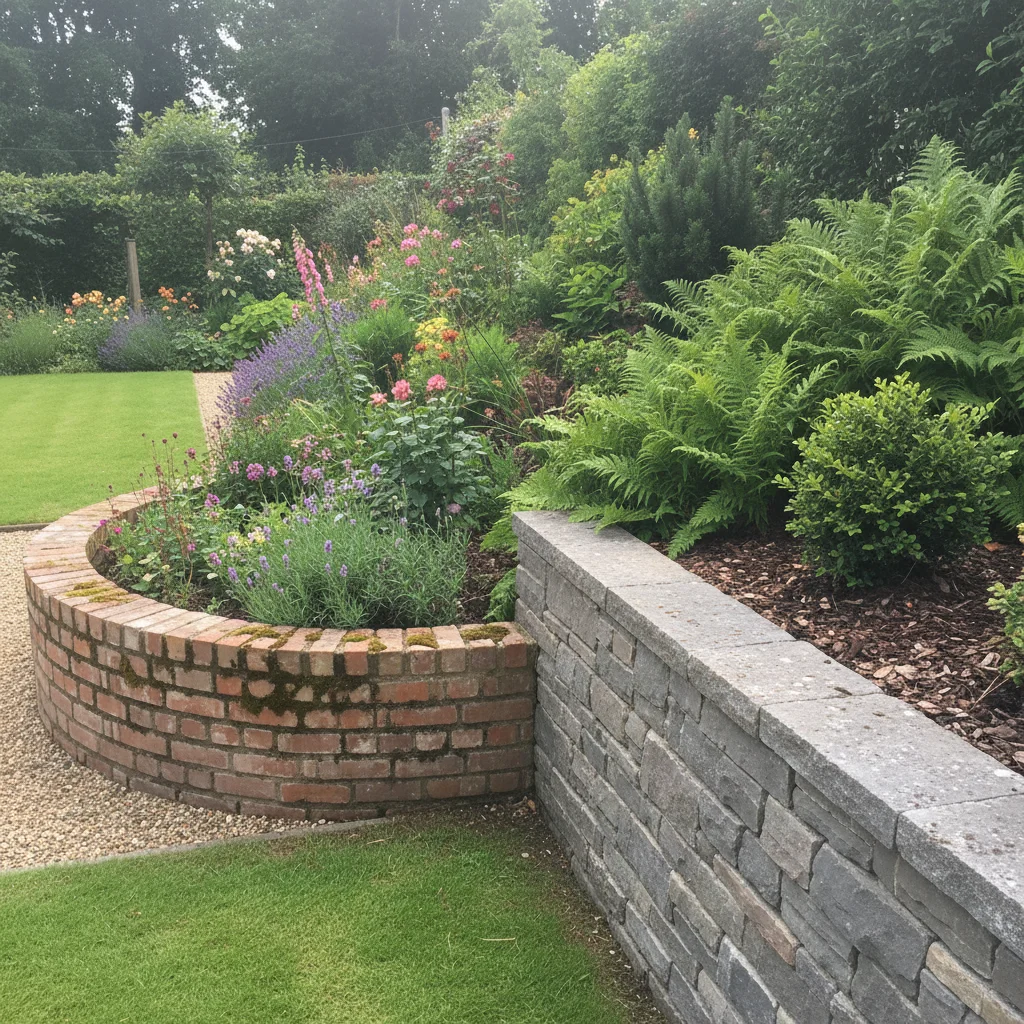
A decorative garden wall is primarily designed to look good and perhaps provide a boundary or a sense of enclosure. These structures generally only need to support their own weight, known in engineering terms as the "dead load." Because they aren't holding back a significant volume of earth, they can often be thinner and may not require the same depth of foundation as their more functional cousins.
Retaining walls are hard-working structural elements designed to hold back soil where there is a change in ground level. Unlike a decorative wall, a retaining wall must resist "lateral earth pressure," which is the force exerted by the soil behind it. This pressure is constant and can increase dramatically during the wet British winters when the ground becomes saturated.
When you decide to build a wall, you must first ask whether its purpose is to divide space or to hold up the landscape. If the ground level is higher on one side of the wall than the other, you are dealing with a retaining structure. This distinction dictates everything from the materials you choose to the depth of the trench you dig for the footings.
Understanding lateral earth pressure
To build a wall that lasts, we have to respect the sheer weight of the earth. Soil is incredibly heavy, particularly the dense clay found in many parts of the UK. A single cubic metre of damp soil can weigh over 1.5 tonnes, and when this is stacked against a wall, it pushes outwards with surprising force.
This lateral pressure isn't just about the weight of the dirt itself. It also includes "surcharge loads," which are extra weights on top of the soil, such as a parked car, a garden shed, or even a heavy patio. If you are planning a retaining wall at the base of a driveway, the engineering requirements become much more complex because the wall has to support both the earth and the vehicles above it.
As gardeners, we also need to consider the impact of roots and frost. As soil freezes and thaws, it expands and contracts, a process known as frost heave. This movement puts additional cyclical stress on the back of the wall. A well-engineered wall is designed to flex slightly or is built with enough mass and "batter"—a slight backward lean—to counteract these relentless natural forces.
Why drainage is the secret to longevity
In my experience, the number one cause of wall failure in the UK is poor drainage. When rainwater soaks into the ground behind a wall, it has nowhere to go if the structure is solid. This creates "hydrostatic pressure," where the water weight adds to the soil weight, effectively doubling or tripling the force pushing against the masonry.
To prevent this, we must create a clear path for water to escape. This usually involves backfilling the space directly behind the wall with a free-draining material rather than the original garden soil. Using clean, crushed stone or shingle allows water to sink quickly to the base of the wall rather than sitting against the back of the bricks or blocks.
At the base, we use "weep holes" or perforated drainage pipes, often called French drains, to channel that water away to a suitable soakaway or drain. Without these outlets, the water will eventually find its own way out, usually by blowing out the mortar joints or causing the entire wall to bow outwards. Keeping the area behind the wall well-drained also protects the health of your plants, as it prevents the soil from becoming a stagnant, anaerobic bog.
Essential components for a dry wall backfill
When you are planning your drainage system, there are a few key elements that I always recommend including to ensure the system doesn't clog over time.
- Geotextile fabric: This permeable membrane acts as a filter, allowing water through while keeping fine soil particles out of your drainage stone.
- Clean drainage stone: Use a 20mm shingle or crushed stone that doesn't contain "fines" (dust), as these can settle and block the water flow.
- Perforated land drain: A flexible plastic pipe with small holes that collects water at the base and carries it to a safe discharge point.
- Weep holes: Small gaps left in the vertical mortar joints of the first or second course of bricks to allow trapped water to leak out.
- Waterproof backing: In some cases, applying a bitumen-based paint to the back of the wall helps prevent damp from seeping through to the decorative face.
The importance of the 1 metre rule
In the UK, a common rule of thumb for DIY gardeners is the "one-metre rule." Generally, any retaining wall that is higher than one metre from the lower ground level requires professional engineering and, often, planning permission. This is because the forces involved increase exponentially with height; a two-metre wall isn't just twice as strong as a one-metre wall—it needs to be significantly more robust.
For walls under one metre, a "gravity wall" approach often works. This relies on the sheer weight of the materials, such as heavy stone or thick timber sleepers, to hold the soil back. However, once you go above this height, the design usually shifts to "cantilever" or "reinforced" walls. These use steel reinforcement bars and large concrete footings that extend under the soil to use the weight of the earth itself to help hold the wall in place.
If you are looking at a slope that requires a tall wall, consider "terracing" instead. By building two or three smaller walls with flat planting areas in between, you can manage the height more safely and create more interesting gardening opportunities. This reduces the load on each individual structure and makes the project much more manageable for a domestic setting.
Choosing sustainable and durable materials
As someone who values sustainability in the garden, I always encourage looking at the longevity and provenance of your materials. Reclaimed bricks can look wonderful, but you must ensure they are "frost-tested" and suitable for use in the ground. Many old house bricks are too porous and will crumble within a few seasons if they are constantly damp.
Natural stone is a fantastic choice, especially if sourced locally. It has a lower carbon footprint than concrete-based products and ages beautifully with lichens and mosses. If you prefer timber, ensure you use sleepers treated to "UC4" standard, which is rated for direct ground contact. While timber is easier to work with, it will eventually rot, so I generally suggest masonry for walls intended to last a lifetime.
When using concrete blocks, consider those made with recycled aggregates. These are incredibly strong and can be faced with a thin layer of decorative stone or render to match your garden's style. Whichever material you choose, remember that the foundation—the "footing"—must be made of high-quality concrete poured onto solid, undisturbed ground to prevent the wall from sinking or tilting.
Foundations and the frost line
The foundation is the most critical part of any wall, yet it is the part you will never see. For a decorative wall, a shallow trench filled with compacted hardcore and a layer of concrete may suffice. For a retaining wall, the foundation must be much wider and deeper to provide a stable "toe" that prevents the wall from sliding forward or tipping.
In the UK, we must also consider the depth at which the ground freezes. While our winters are generally mild compared to some regions, a foundation that is too shallow can be lifted by frost. We typically aim for a foundation depth of at least 450mm to 600mm for structural walls to ensure they sit below the level where the ground is likely to freeze and move.
The width of the foundation should generally be at least twice the width of the wall itself. This spreads the weight over a larger surface area, much like a snowshoe. If you are building on soft or "made-up" ground, where soil has been moved recently, you may need to dig even deeper to reach firm subsoil. Never build a wall on top of loose topsoil, as it will compress over time and cause the structure to fail.
Safety and building regulations
Safety must always be your primary concern when building in the garden. A collapsing wall can be fatal, and the legal liabilities of a poorly constructed structure are significant. In the UK, Building Regulations often apply to walls that are close to boundaries, public highways, or those that form part of a building's structure.
Even if your wall doesn't require formal Building Regulations approval, it may still be subject to the Party Wall Act if it is on or near a boundary with a neighbour. It is always wise to check with your local planning authority before starting any significant earthworks. They can provide guidance on height restrictions and whether your specific project requires a structural engineer’s report.
I always advise my clients to verify their plans with a specialist if there is any doubt. A structural engineer can calculate the exact loads and specify the amount of steel reinforcement or the size of the footings required. This might seem like an unnecessary expense at the start, but it is far cheaper than having to demolish and rebuild a wall that has started to lean after the first heavy rain.
Identifying signs of wall failure
It is a good habit to walk around your garden once or twice a year to check the condition of your walls. Catching a problem early can often mean a simple repair rather than a total replacement. We should look for changes that suggest the ground is moving or the drainage is failing.
- Leaning or tilting: If a wall that was once vertical is now noticeably leaning, the foundations may be failing or the lateral pressure is too high.
- Horizontal cracking: Cracks running along the mortar joints often indicate that the wall is bowing under pressure.
- Efflorescence: A white, salty crust on the face of the bricks suggests that water is soaking through the wall from behind, indicating poor drainage.
- Bulging masonry: If a section of the wall looks like it is "pushing out," this is a sign of internal structural failure.
- Cracked coping stones: Movement in the main body of the wall will often manifest as cracks in the stones or bricks along the very top.
Creating a garden that stands the test of time
Building a wall is a significant investment in both time and money, but when done correctly, it transforms a garden. It creates new levels for planting, provides shelter for delicate species, and adds a sense of permanent structure to the landscape. By respecting the science of load and drainage, we ensure that our gardens remain a place of peace and beauty rather than a source of worry.
If you are feeling unsure about the scale of your project, start small with a low decorative border or a small raised bed. This will give you a feel for the materials and the process of levelling and laying masonry. For anything larger, especially where the safety of your home or neighbours is involved, always seek professional advice.
Taking the time to plan your drainage, dig deep foundations, and choose the right materials is the hallmark of a thoughtful gardener. Once the structural work is done, you can return to the joy of planting, knowing that your garden is built on a solid and stable foundation. Take a moment to look at your slopes today and imagine how a well-built wall could unlock their potential.
Frequently asked questions
When is a garden wall a retaining wall?
When it holds soil back. If the ground is higher on one side, treat it as structural: foundations, weepholes or a drain, and the right thickness.
Do I need building control?
Often yes above a certain height. Your contractor should know the threshold and whether an engineer is required. Do not skip this to save a week.
Brick, timber, or gabions?
Depends on height, look, and drainage. Timber sleepers are common and have a limited life in wet soil. Engineered options last longer and cost more.