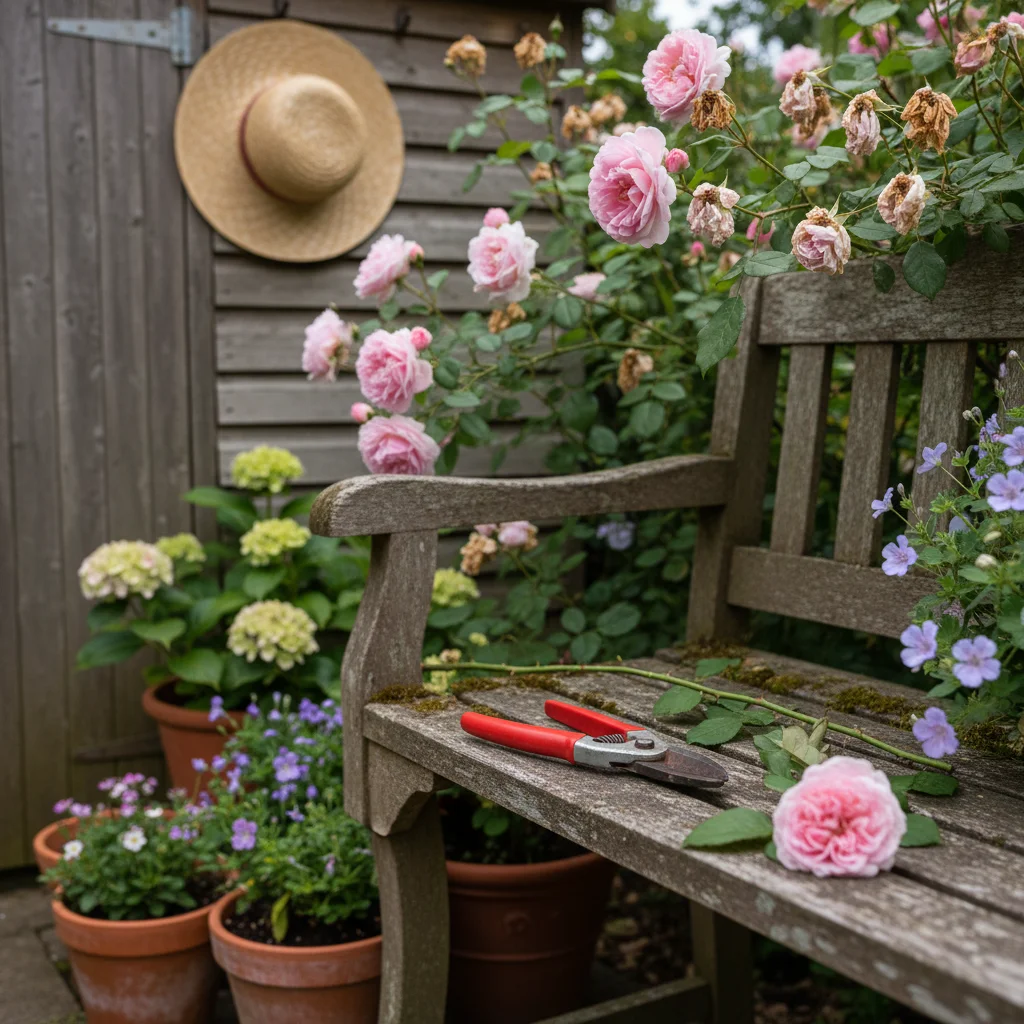
Many gardeners feel a sense of trepidation when they approach a rose bush with a pair of secateurs. There is a common worry that a wrong cut might kill the plant or prevent it from flowering for a year. In reality, roses are remarkably resilient plants that respond vigorously to a good tidy-up, and even a heavy-handed approach is rarely fatal.
Pruning is simply the process of removing old or unproductive wood to make room for fresh, healthy growth. By clearing out the centre of the plant, you improve airflow and allow sunlight to reach the stems, which is the best natural defence against common fungal issues. Once you understand the basic principles of where and when to cut, you can transform a tangled thicket into a productive, beautiful shrub.
Why We Prune Our Roses
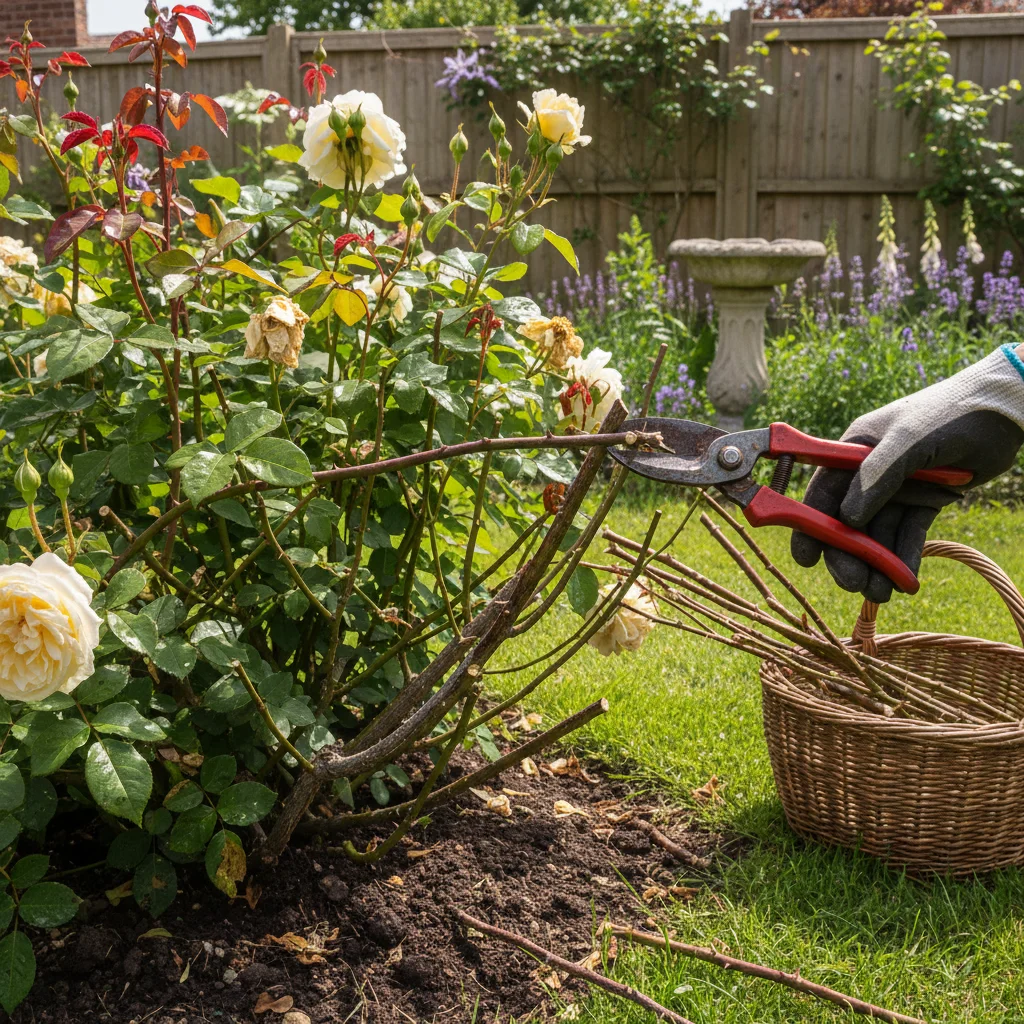
The primary reason we prune is to maintain the health and longevity of the plant. Without intervention, many rose varieties become a congested mess of thin, spindly stems that produce fewer and smaller flowers. By removing older wood, we encourage the plant to divert its energy into producing strong new shoots that will carry the best blooms.
We also prune to manage the size and shape of the plant so it fits comfortably within its allocated space in the garden. For those of us focused on sustainability, pruning is an essential part of organic pest and disease management. Better air circulation through the canopy significantly reduces the risk of black spot and powdery mildew, reducing the need for any chemical interventions.
Tools You Need for the Job
Having the right equipment makes the task significantly easier and ensures that the cuts you make are clean and quick to heal. A ragged cut can become an entry point for disease, so keeping your blades sharp is the most important part of tool maintenance. I always recommend spending a few minutes with a sharpening stone before you head out into the garden.
Quality tools are an investment that will last for decades if treated with respect. After each use, wipe your blades with an oily rag to prevent rust and remove any sap that might have built up. If you have been working on a plant that looks diseased, it is wise to wipe the blades with a mild disinfectant before moving to the next rose to prevent cross-contamination.
- Bypass secateurs: These work like scissors with two blades passing each other, providing the cleanest cut for most stems.
- Loppers: Essential for thicker branches that are too tough for handheld secateurs, offering better leverage.
- Pruning saw: A small, narrow saw is useful for removing very old, woody stumps at the base of the plant.
- Heavy-duty gloves: Choose gauntlet-style gloves that protect your wrists and forearms from thorns.
- Sharpening stone: A simple diamond file or whetstone will keep your edges keen and your cuts precise.
The Best Time to Prune
For most roses in the UK, the ideal window for pruning is late winter or early spring, usually between February and March. This is the point when the plant is just beginning to wake up from its winter dormancy but before it has put too much energy into new leaves. You can look for the "breaking" buds—the small, reddish bumps on the stems—as a sign that it is time to start.
Pruning too early in the winter can leave the fresh cuts vulnerable to hard frosts, which may cause the stems to die back further than intended. Conversely, pruning too late in the spring means the plant has already wasted energy on growth that you are simply going to cut away. Always aim for a dry, clear day to help the cuts dry quickly and begin the healing process.
There are a few exceptions to this spring rule, most notably rambling roses. These are the vigorous growers that typically flower only once in midsummer. Ramblers should be pruned immediately after they have finished flowering in late summer, as they bloom on wood produced during the previous growing season.
Identifying What Needs to Go
Before you start shaping the plant, you need to clear away the material that is actively harming it. This initial "cleaning" phase is the same for almost every type of rose. It allows you to see the structure of the plant more clearly so you can make informed decisions about the remaining stems.
We focus on the health of the wood first, looking for any signs of decay or damage that occurred over the winter. Rubbing stems are a particular concern, as the friction wears away the bark and creates an open wound. By removing one of these crossing stems, you protect the integrity of the other.
- Dead wood: Stems that are brown, brittle, and dry all the way through should be removed at the base.
- Damaged wood: Any stems broken by wind or frost should be cut back to a healthy bud.
- Diseased wood: Look for dark blotches or cankers and prune back until you see healthy white pith inside the stem.
- Crossing stems: Remove any branches that are growing inwards or rubbing against another stem to prevent future injury.
Master the Basic Pruning Cut
The technique of the cut itself is where many beginners feel the most pressure, but it is quite straightforward once you know the logic. You should always aim to cut roughly 5mm above a bud, which is the point where new growth will emerge. If you cut too close, you might damage the bud; if you leave too much of a stub, it will die back and potentially rot.
The cut should be made at a 45-degree angle, sloping away from the bud. This ensures that rainwater runs off the cut surface rather than sitting on top of the bud, which can cause it to decay. It is a small detail, but it makes a significant difference in the success of the plant's recovery.
Whenever possible, choose an outward-facing bud as your cutting point. This encourages the new branch to grow away from the centre of the plant, maintaining that open "goblet" shape that we strive for. This keeps the middle of the shrub clear for light and air, which is the gold standard for rose health.
Caring for Bush Roses
Hybrid Tea and Floribunda roses are the most common types found in UK gardens, and they both respond well to a fairly firm prune. For Hybrid Teas, which produce one large flower per stem, you can be quite bold. I usually reduce the previous year's growth by about two-thirds, leaving a strong framework of three to five main stems.
Floribundas produce clusters of flowers and generally prefer a slightly lighter touch. Aim to reduce the height by about one-third, focusing on creating a balanced, rounded shape. If the plant is very old and has become unproductive, you can remove one or two of the oldest, woodiest stems right down to the ground to stimulate fresh growth from the base.
Regardless of the variety, always check the centre of the bush as you work. If it looks crowded, don't be afraid to remove a perfectly healthy stem if it is growing across the middle. A well-pruned bush rose should look like a tidy skeleton in early spring, ready to burst into life as the soil warms up.
Techniques for Climbers and Ramblers
Climbing roses are different from ramblers in that they usually repeat-flower throughout the summer and have much stiffer, permanent frameworks. The goal here is to maintain a series of horizontal "leads." When you train a rose horizontally, it encourages the plant to produce flowering side-shoots all along the length of the stem, rather than just at the very tip.
Prune the side-shoots that flowered the previous year back to two or three buds from the main framework. This creates short "spurs" that will carry the new season's blooms. If the plant has become too tall or leggy at the bottom, you can untie one of the main stems and lower it, or remove it entirely if there is a fresh new shoot ready to take its place.
Ramblers are much more flexible and vigorous, often used to cover sheds or large pergolas. Since they flower on the previous year's wood, your main task in late summer is to remove the stems that have just finished flowering. You then tie in the long, flexible new green shoots that have grown from the base, which will provide the floral display for the following year.
Sustainable Post Pruning Care
Once the pruning is finished, the work isn't quite done. The plant has just undergone a significant "operation," and it needs the right nutrients to recover and grow. I always recommend applying a balanced organic fertiliser around the base of the plant in March, just as the new leaves begin to unfurl.
A thick layer of mulch is the next step in a sustainable gardening routine. Use well-rotted garden compost or a peat-free soil conditioner, spreading it about 5-8cm thick around the root zone. This helps to retain moisture during the summer months, suppresses weeds, and gradually improves the soil structure as worms pull the organic matter down.
Be careful not to pile the mulch directly against the stems of the rose, as this can cause the bark to soften and rot. Leave a small gap of a few centimetres around the base. This mulch also acts as a barrier, trapping any fungal spores that might be lurking on the soil surface and preventing them from splashing back up onto the new foliage during spring rain.
Managing Garden Waste
The clippings from your roses should be handled with a bit of care, especially if the plant showed signs of black spot or rust in the previous year. While I am a huge advocate for home composting, rose thorns and diseased leaves can be problematic in a standard garden heap. The thorns take a long time to break down and can be a painful surprise when you eventually use the compost.
If your roses were healthy, you can shred the stems and add them to your compost heap, but most gardeners find it easier to put them in the green waste bin provided by the local council. These industrial composting facilities reach much higher temperatures than a home heap, which effectively kills off pathogens. Alternatively, if you have a dedicated "wild corner," a pile of rose clippings can provide a wonderful habitat for insects and small mammals.
Taking the time to prune your roses correctly is one of the most rewarding tasks in the gardening calendar. It provides a moment of quiet focus in the late winter garden and sets the stage for a spectacular summer display. Once you see the first flush of healthy, vibrant blooms in June, any lingering fear of the secateurs will vanish, and you will find yourself looking forward to this annual ritual.