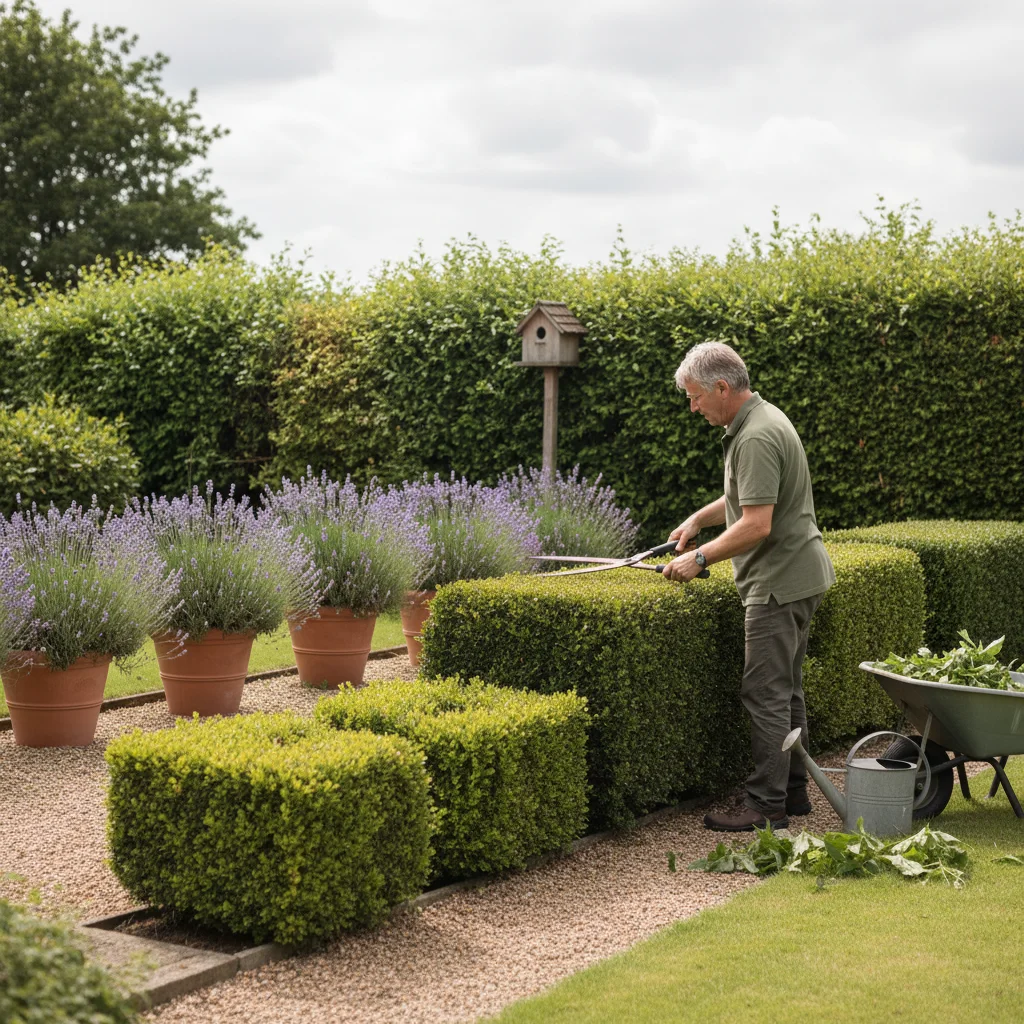
Hedge trimming hire covers routine shaping and, separately, reductions that take height or width off a neglected hedge. Timing matters for nesting birds and for the plant actually surviving a hard cut.
Hedge work sits in two buckets for most homeowners: keeping an established hedge neat (routine trimming) and bringing an overgrown hedge back under control (reduction or reshaping). This article is for UK homeowners who are hiring — what to expect, what to ask, and how it fits alongside wider garden maintenance. For practical cutting and plant-by-plant how-tos, see the DIY links at the end.
Trimming vs reduction — what you’re actually booking
Routine trimming keeps the hedge at roughly its current size and shape: removing soft new growth so the plant stays dense. That might be once or twice a year depending on species and how formal you want the line.
Reduction (cutting back into older wood to lower height or narrow width) is a bigger job. It stresses the plant more, recovery varies by species (yew vs many conifers, for example), and it almost always produces more waste and needs clear access and safe working at height.
Be explicit in your brief: “neaten the face” is not the same as “take two metres off the height.” Misunderstandings here are a common source of disputes.
UK law: nesting birds
Under the Wildlife and Countryside Act 1981, it is an offence to damage or destroy an active nest. The main nesting period is typically March to August, but it can vary.
Anyone you hire should check for nesting birds before cutting. If a nest is active, work in that area should stop until young birds have fledged. Ask how they handle this — it’s non-negotiable for responsible hedge work.
Timing for plant health (e.g. avoiding drought stress or hard frost) is separate from but equally important to the legal point — a good tradesperson will weigh both.
What your gardener will need to know
Species matters: fast growers (e.g. privet) may need more frequent trims; beech and hornbeam are often managed for winter screening; many conifers won’t regrow from bare wood — “a quick chop” can leave permanent brown patches. Box has extra disease and pest considerations in the UK.
You don’t need to be an expert. You do need to share:
- Rough height and width you want (or photos from previous years).
- Whether the hedge has been regularly trimmed or left for years.
- Access issues — steps, tight side passages, overhead cables, shared boundaries.
Waste adds cost: agree whether clippings are taken away, chipped on site, or left for council green waste.
Safety and equipment (why pros charge for tall hedges)
Working above head height on uneven ground is where injuries happen. Long-reach trimmers, stable platforms, and PPE (eye and ear protection, gloves) are standard for reputable operators — not optional extras.
If you’re quoted a surprisingly low price for a tall hedge, ask how they’ll access the top safely.
Sustainability and clippings
Large trims generate a lot of green waste. Options include on-site composting, shredding for mulch, or licensed removal. Leaving a small brush pile in a quiet corner can support wildlife — but that’s a choice to agree, not an accident left on the lawn.
How to brief your gardener or tradesperson
Clear communication gets better quotes and fewer surprises:
- Formal straight edges versus a softer, informal outline.
- Height and width targets, especially if you’re recovering an overgrown boundary.
- History — years of neglect often mean two-stage reduction rather than one brutal cut.
- Hidden services — irrigation, lighting, or old wire in the hedge line.
Questions to ask before work starts
- How will you check for nesting birds before cutting?
- Is green waste removal included, and where does it go?
- Is this a routine trim or a structural reduction — and how will that affect the price?
- What access and safety approach will you use for the full height?
- For conifer hedges, how do you avoid cutting into non-regrowing wood?
If you’re doing it yourself: related Spadeshire guides
These focus on plants and timing for home gardeners rather than hiring:
- Pruning in autumn and winter — seasonal timing that also applies to many hedging plants.
- Pruning hydrangeas explained — shrub pruning (not a hedge primer, but useful if you’re mixing borders and boundaries).
If a hedge looks sick rather than overgrown, start with problem-solving content such as hedge turning brown inside before heavy cutting.
For routine garden help that often includes hedges plus lawns and borders, see professional garden maintenance.
To hire locally, use Find a gardener near you.
Frequently asked questions
What is included in hedge trimming hire?
A scheduled cut to an agreed height and line, plus waste. Reductions, dead sections, and stump work are different jobs and should be priced that way.
When can hedges be cut in the UK?
Avoid the main bird nesting season unless you have checked the hedge is clear. Many gardeners cut after flowering or in late summer, depending on species.
Why is my hedge brown inside after cutting?
Old, leafless wood does not always reshoot, especially conifers. A reduction may need to happen in stages, or you replace the hedge.