There is something incredibly grounding about hearing the low hum of a bumblebee while you sip your morning coffee. Even if you are ten floors up in a city flat or looking out over a tiny paved courtyard, that sound connects you to the wider world. We often think we need a rolling wildflower meadow to help our struggling pollinators, but that simply isn't the case.
In our busy urban environments, every window box and hanging basket acts as a vital stepping stone. Bees in the city often have to fly much further to find food than their country cousins. By filling our small spaces with the right nectar-rich flowers, we create a floral corridor that helps them survive and thrive.
You don't need a shed full of tools or a massive lawn to make a difference. A few well-chosen pots and a bit of peat-free compost are all you need to turn a grey corner into a buzzing sanctuary. Let’s look at how we can make our limited outdoor spaces work harder for us and the bees.
Why Your Small Space Matters
It is easy to feel that a few pots on a balcony won't make a dent in the decline of UK bee populations. However, urban gardens and balconies actually provide a more diverse range of food than many areas of intensive farmland. Because we gardeners love variety, we often provide a longer flowering season than a single-crop field ever could.
Small gardens are often warmer than the open countryside thanks to the "urban heat island" effect. This means our plants might flower a little earlier, providing a crucial early-season snack for queen bees emerging from hibernation. Your patio could be the first pit stop a hungry bee finds after a long winter.
We also have the advantage of being able to micro-manage our plants. When you only have five or six pots, it is easy to keep them watered and deadheaded. This keeps the flowers coming for longer, ensuring a steady supply of nectar from March right through to the first frosts of November.
Spring Flowers for the Hungry Gap
The most dangerous time for bees is early spring. Queen bumblebees emerge from their winter slumber with very little energy and need immediate access to nectar to start their new colonies. In a small space, the best way to provide this is through spring bulbs planted in containers or window boxes.
Crocuses are the absolute champions of the early spring balcony. They are small, inexpensive, and take up almost no room at all. You can even "layer" them in a pot underneath later-blooming plants. When the sun hits their petals, they open wide, offering a sugary drink to the very first bees of the year.
Another fantastic option for small pots is the Grape Hyacinth, or Muscari. These sturdy little blue spikes are tough as boots and don't mind the wind that often whips around high-rise balconies. They provide a dense source of pollen and look beautiful paired with miniature daffodils in a window box.
If you have a bit more room for a larger pot, consider a Hellebore. Often called the Christmas Rose or Lenten Rose, these plants have large, open flowers that are very easy for bees to land on. They prefer a bit of shade, making them perfect for those north-facing balconies or shadowed courtyards that struggle with sun-loving flowers.
The Power of Single Flowers
When you are choosing plants at the garden centre, there is one golden rule to remember: go for "single" flowers. Many modern plant varieties have been bred to have "double" flowers, which means they have extra rows of petals. While these look very full and blousy to us, they are a nightmare for bees.
Those extra petals often block the entrance to the nectar at the heart of the flower. A bee will land on a double rose or a fluffy dahlia and find it impossible to reach the food. It’s like arriving at a restaurant only to find the doors are bolted shut.
Instead, look for flowers where you can clearly see the yellow "eye" or the stamens in the middle. These open-access flowers allow bees to land, feed, and move on without wasting precious energy. Simple, old-fashioned varieties are almost always better for wildlife than the highly-engineered modern hybrids.
Herbs that Bees and Cooks Love
If you only have space for one type of plant, make it herbs. Most Mediterranean herbs are absolutely adored by bees, and they are incredibly well-suited to the conditions of a sunny UK balcony. They generally prefer poor soil, don't mind getting a bit dry if you forget to water them, and they provide us with fresh flavours for the kitchen.
Lavender is the classic choice for a reason. It is drought-tolerant, loves the sun, and the scent is heavenly on a warm evening. For pots, look for compact varieties like 'Munstead' or 'Hidcote' so they don't become too leggy. The sight of a Lavender bush covered in honeybees is one of the great joys of summer gardening.
Rosemary is another brilliant multi-tasker. It often starts flowering as early as February or March, providing that vital early-season food we talked about. It is a sturdy evergreen, so it provides a bit of structure and green colour to your balcony even in the depths of winter when everything else has died back.
Don't forget the smaller herbs that can tuck into the edges of your pots. These five are particularly effective:
- Chives: Their purple globe-shaped flowers are a magnet for all kinds of bees.
- Thyme: A low-growing carpet of tiny flowers that is perfect for window boxes.
- Oregano: If you let this go to flower, the bees will practically queue up for it.
- Mint: Keep this in its own pot so it doesn't take over, and enjoy the white or lilac flower spikes.
- Borage: Often called the "starflower," it produces nectar so fast that a bee can return to the same flower every few minutes.
Summer Superstars for Sunny Windowsills
As we move into the height of summer, we want plants that can stand the heat of a south-facing spot. The Erysimum 'Bowles's Mauve', also known as the perennial wallflower, is perhaps the hardest-working plant in any small UK garden. It starts flowering in early spring and, if you keep snipping off the dead heads, it can keep going right until the frosts.
Salvias are another fantastic group of plants for urban pots. Varieties like 'Hot Lips' or 'Caradonna' are elegant, upright, and produce dozens of nectar-rich spikes. They are relatively light, which is a big consideration if you are worried about the weight limit on a balcony or a window ledge.
If you have a wall or a railing to cover, why not grow a climber? A honeysuckle grown in a large, deep pot can provide vertical interest without taking up much floor space. The scent in the evening is incredible, and it attracts moths as well as bees, helping a wider range of our nocturnal pollinators.
For a splash of bright colour, you can't beat the common Nasturtium. These are incredibly easy to grow from seed—even a child can do it. They have large, open flowers that are perfect for bumblebees, and you can even eat the leaves and flowers in your summer salads. They are the ultimate "low effort, high reward" plant for a busy city dweller.
Late Season Food for Busy Bees
As summer fades into autumn, many gardens start to look a bit tired. This is another "hungry gap" for bees who are trying to build up their final reserves before winter. Ivy is one of the most important plants at this time of year. While we often think of it as a bit of a nuisance, its late-autumn flowers are a vital source of nectar for the Ivy Bee and late-flying queens.
If you don't want ivy climbing up your walls, you can grow it in a hanging basket where it will trail beautifully. It is tough, evergreen, and provides shelter for insects during the colder months. It is the unsung hero of the urban wildlife garden.
Asters, or Michaelmas Daisies, are another great late-season choice. They provide a burst of purple, pink, or white just when everything else is finishing. Look for the shorter, more compact varieties that won't flop over in a pot. They are sturdy, reliable, and will keep your balcony buzzing well into October.
Sedums, also known as stonecrops, are perfect for those of us who sometimes forget to water. These succulents store water in their fleshy leaves and produce flat, plate-like flowers that act as a perfect landing pad for butterflies and bees. They are virtually indestructible and look great in modern, minimalist pots.
The Secret to Successful Container Gardening
Growing in pots is different from growing in the ground. The main challenge we face in small spaces is that our plants are entirely dependent on us for food and water. In the height of a British summer, a small pot can dry out in a matter of hours, especially if it is in a windy spot on a balcony.
To give your bee-friendly plants the best start, always use the largest pots you can fit. More soil means more moisture retention, which makes your life easier. If you are worried about weight on a balcony, look for lightweight resin or fibreglass pots rather than heavy terracotta or stone.
Always use a good quality, peat-free compost. Peat bogs are incredibly important carbon stores and wildlife habitats, so using peat-based compost to save bees is a bit of a contradiction. You can find excellent peat-free options in most UK garden centres now that perform just as well as the old stuff.
Watering is best done in the early morning or late evening. This prevents the water from evaporating before it reaches the roots and avoids scorching the leaves in the sun. If you have a busy schedule, consider setting up a simple drip irrigation system or using "self-watering" pots that have a reservoir at the bottom.
Simple Ways to Help Urban Wildlife
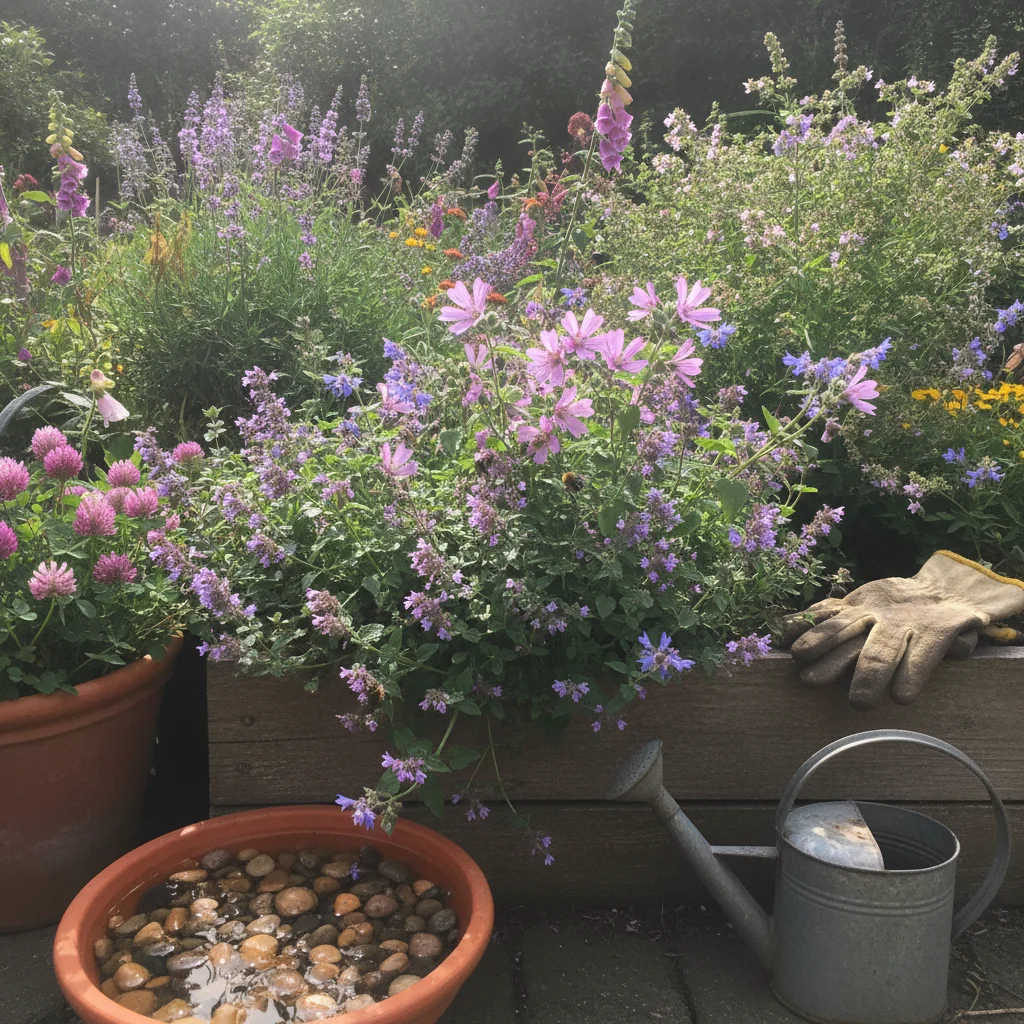
Beyond just planting flowers, there are a few extra things we can do to make our small spaces more inviting. Bees get thirsty too, especially in the middle of a hot city. A shallow saucer filled with pebbles and a bit of water creates a "bee bar" where they can land and drink without the risk of drowning.
Try to avoid using pesticides or bug sprays. Even those labelled as "organic" can be harmful to bees. In a small space, it is usually easy to pick off any unwanted pests by hand or blast them off with a quick spray from a water bottle. A few aphids are a small price to pay for a healthy, buzzing balcony.
Leave the "dead" stems of your plants over the winter rather than cutting everything back to the ground in October. Many solitary bees and other beneficial insects use hollow stems as a place to hibernate. You can do your big garden tidy-up in the spring once the weather has warmed up and the inhabitants have moved on.
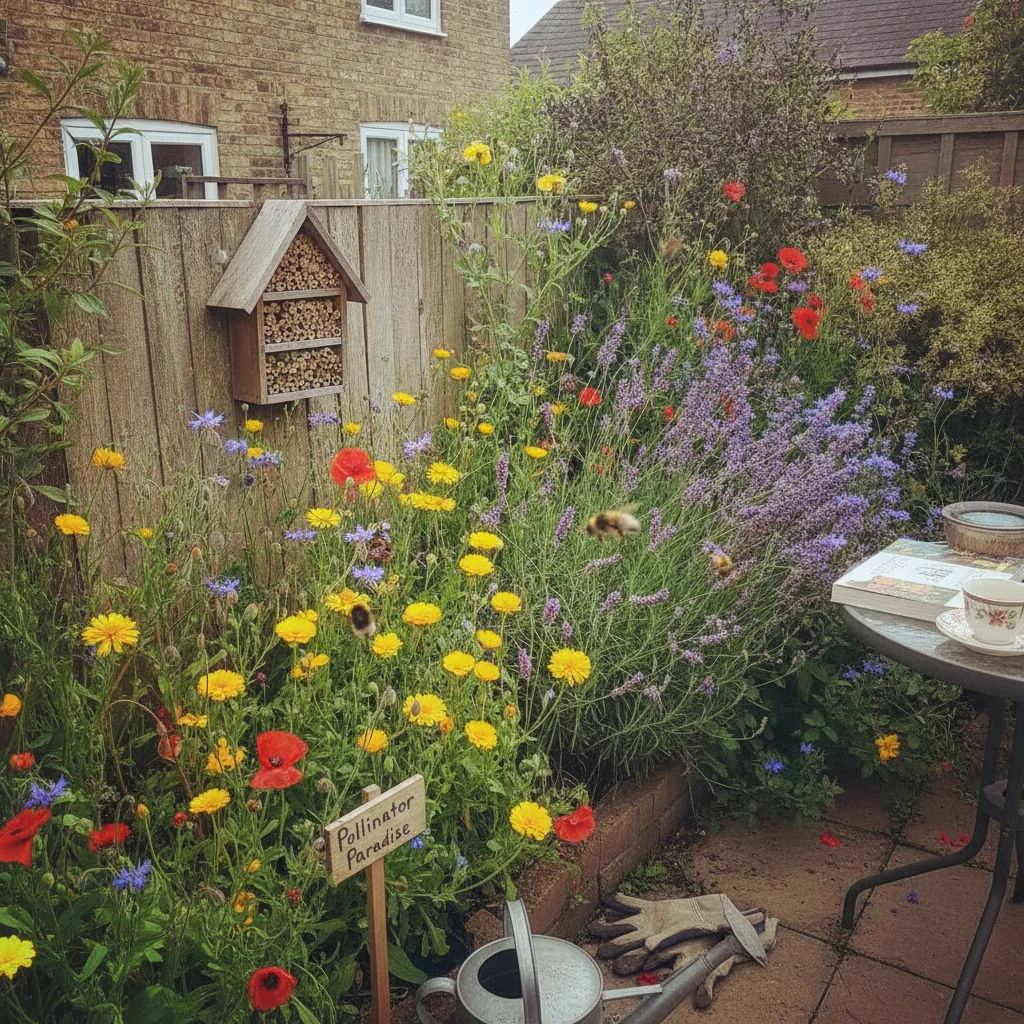
If you have a spare bit of wall, you could even put up a small "bee hotel." These are great for solitary bees like Red Mason bees, which don't live in hives but nest in small holes. They are fascinating to watch as they check in and out, and they are very unlikely to sting, making them perfect for close-quarters gardening.
- Group your pots: Putting containers together creates a small microclimate that holds humidity and makes the flowers more obvious to passing bees.
- Deadhead regularly: Snipping off faded flowers encourages the plant to produce more, extending the feeding window for pollinators.
- Think vertically: Use wall-mounted planters or trellis to maximise your growing area without losing floor space.
- Stay peat-free: Protect vital UK habitats by choosing sustainable compost options for your containers.
- Provide water: A simple pebble-filled saucer can be a lifesaver for a thirsty bee on a hot afternoon.
- Embrace the seasons: Aim to have at least one thing in flower in every month from March to November.
You don't need to be an expert or have a huge budget to start your own pollinator paradise. Start with just one or two pots of herbs or a window box of spring bulbs and see what happens. Once you see that first bee land on a flower you grew yourself, you’ll be hooked on the magic of making your city space a little bit greener.
Every single flower you plant is a helping hand for our bees, and in return, they will bring life, movement, and that wonderful summer sound to your home. So, grab a trowel and a couple of pots this weekend—your local bees will certainly thank you for it.